










Azerbaijan’s art of statecraft: from victory to regional peace Analysis by Teymur Atayev
Modern politics is not about grand statements. It is about finding concrete solutions — and having the determination to see them through. Azerbaijan’s experience in recent years offers a clear example of how such an approach can deliver results.
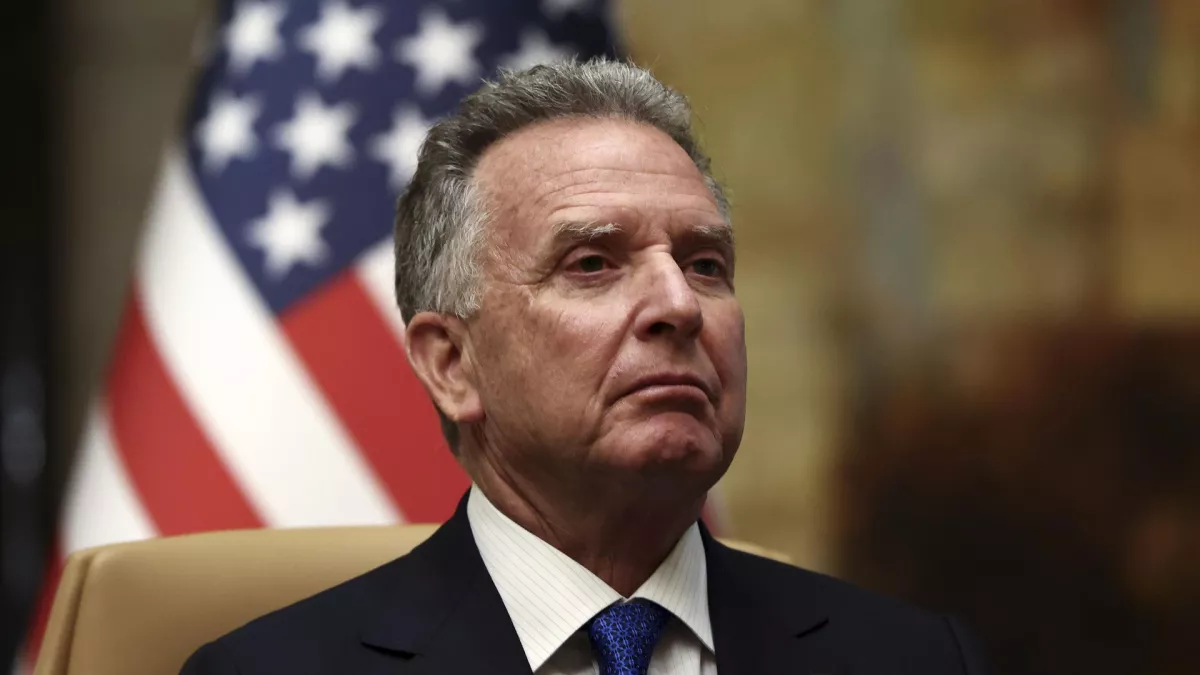
A telling example came in an interview that U.S. President Donald Trump’s special envoy, Steve Witkoff, gave to Fox News.
Recalling August 8, 2025 — the day Azerbaijan and Armenia initialled the text of their peace agreement — Witkoff recounted a question President Trump had put to Azerbaijani President Ilham Aliyev: “Why did you stop? You had them on the run. You have got a bigger military.”
According to Witkoff, Aliyev replied: “Because that’s all I wanted back — what they took. I didn’t need more.”
Witkoff described Aliyev’s decision as “amazing,” saying it demonstrated “an example of statesmanship.”
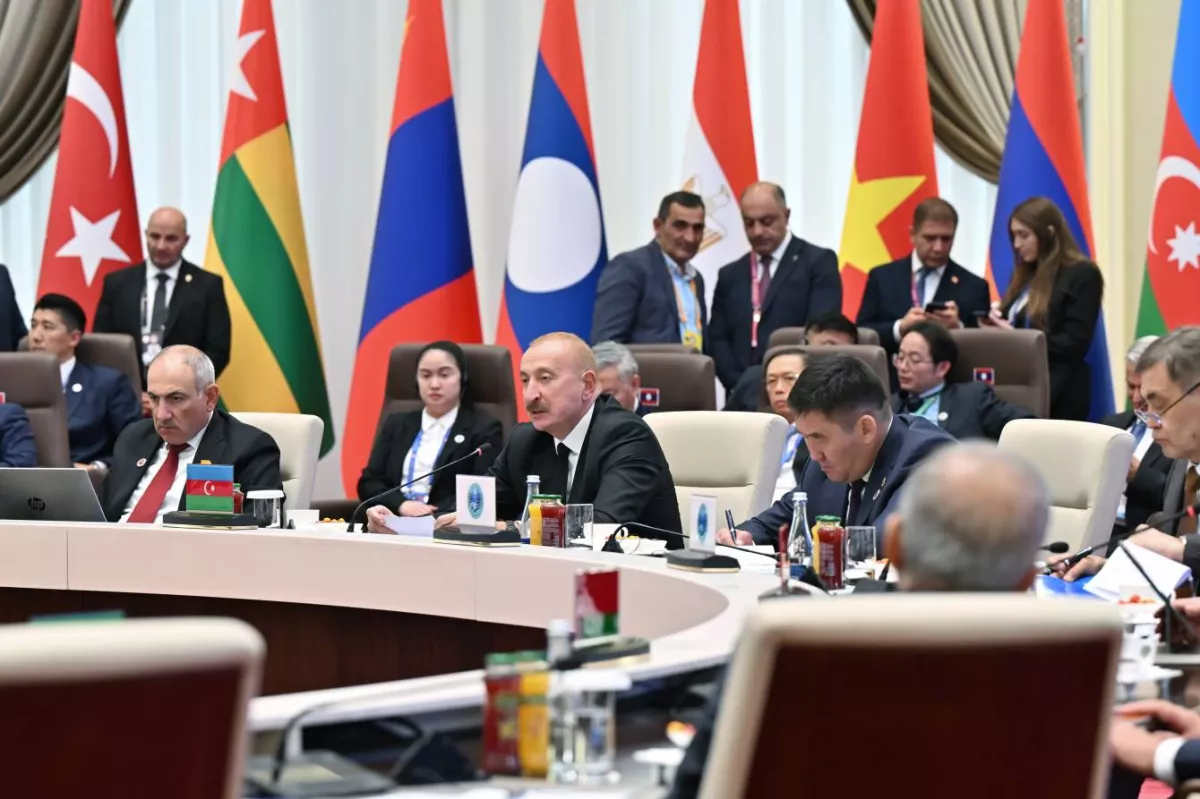
This is particularly significant in light of a statement President Ilham Aliyev made recently during his address to the Shanghai Cooperation Organisation (SCO) Plus meeting in Bishkek. The head of state noted that, in August last year, Azerbaijan and Armenia brought an end to a conflict that had lasted for more than 30 years by initialling the text of a peace agreement. As a result, “the South Caucasus region, which had long been a conflict zone, is becoming a zone of peace.”
Three decades after the adoption of the four UN Security Council resolutions in 1993, Azerbaijan has fulfilled the demands set out in those resolutions. Today, it is supplying petroleum products to Armenia while also facilitating the transit of goods from third countries. Meanwhile, the two countries are working to establish new land transport links.
Against this backdrop, it is worth noting that, according to Armenia’s Foreign Ministry, the official Facebook page of the “Trump Route for International Peace and Prosperity” (TRIPP) programme was launched on September 1. The initiative was established through cooperation between Armenia’s Foreign Ministry and the U.S. Embassy in Armenia.
President Ilham Aliyev has repeatedly emphasised: “Unfortunately, these resolutions remained on paper for 27 years, and probably, would have remained on paper for another 27 years if Azerbaijan did not itself restore its territorial integrity, using chapter 51 of the UN Charter which provides the right for self-defense using the international legal framework.” At the same time, as the head of state pointed out in his address in Bishkek, the UN played no role in implementing these documents, underscoring the need to develop appropriate mechanisms to ensure that UN Security Council decisions are implemented within a reasonable timeframe. Only such a development would help strengthen the authority of the UN and enhance its role in conflict resolution.
The significance of the President’s remarks lies in the fact that the central theme of the current expanded “SCO Plus” meeting is “The UN as a Key Element of a Just World Order: The Contribution of the SCO Plus States to the Formation of a Multipolar World.” The agenda of the event is focused on strengthening the UN’s role in global governance, reforming international institutions, and developing broad Eurasian partnerships. In this context, it is worth recalling that President Ilham Aliyev has repeatedly stressed the need to reform not only the UN as an organisation, but also its Security Council.
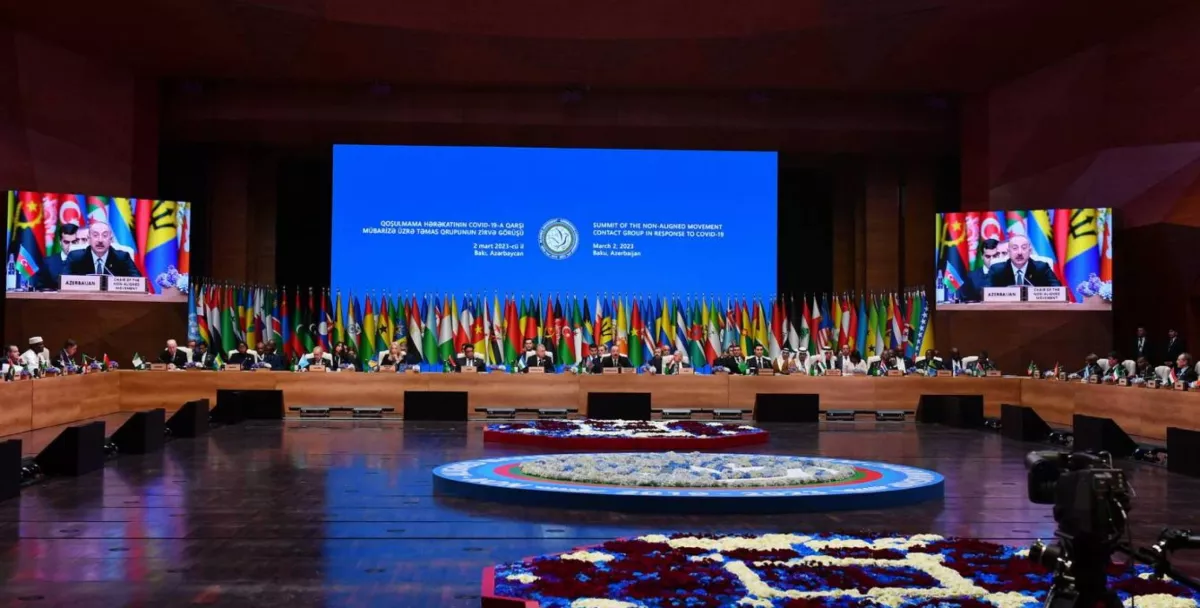
In particular, in 2023, the head of state stressed that the “composition of the Security Council should be expanded to make it more representative and more geographically fair.” President Ilham Aliyev has called for the Non-Aligned Movement to be granted one permanent seat on the UN Security Council, on a rotating basis, as well as for Africa to be allocated permanent seats on the Council. The Azerbaijani leader has also repeatedly emphasised the importance of granting the Organisation of Islamic Cooperation (OIC) permanent representation on the UN Security Council, likewise on a rotating basis.
As for the formation of a multipolar world, Baku, according to the head of state, will continue to contribute to strengthening the principles of multilateralism in international affairs. This is particularly evident in light of the role Baku plays across the Eurasian space as a major transport and logistics hub connecting China with the European continent. Amid the transformation of the global geopolitical landscape, this factor plays a significant role in shaping a new security architecture extending far beyond Eurasia.
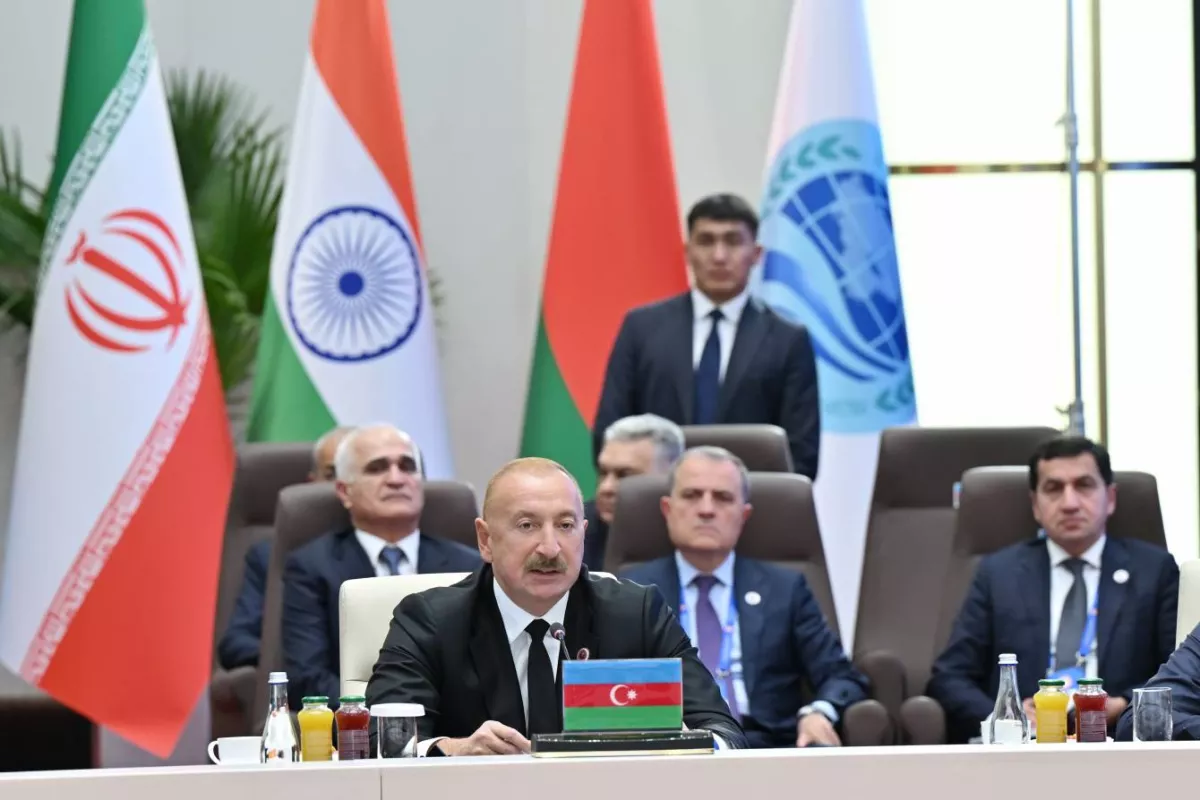
At the same time, in his address, President Ilham Aliyev stressed that the historic Treaty on Allied Relations, signed during his state visit to Kyrgyzstan, had elevated relations between Baku and Bishkek to a new level. Bilateral ties are further strengthened by the steady progress made by Azerbaijan and Kyrgyzstan within the Organisation of Turkic States (OTS) and the C6 framework, both of which are increasingly emerging as important regional platforms for decision-making on issues of international significance.
In this context, President Aliyev placed particular emphasis on Kyrgyzstan’s election as a non-permanent member of the UN Security Council for the 2027–2028 term, describing it as evidence of the international community’s support for the policy pursued by Bishkek.
Experts note that President Aliyev’s address conveyed important messages to a broad range of stakeholders. The geopolitical significance of his remarks was underscored by Kyrgyz President Sadyr Japarov, who described the Azerbaijani leader’s speech as “comprehensive.” The substance of the address made clear that broad-based dialogue and cooperation are essential to building a fairer and more multipolar world order.
Taken together, these developments once again highlight Azerbaijan’s growing role in the Eurasian geopolitical landscape. As a middle power, Baku is increasingly pursuing initiatives across a broad range of regional and international issues, seeking to translate its diplomatic engagement into concrete outcomes.







 editor@caliber.az
 +994 55 444-88-98
 Азербайджан, Баку, ул. Низами, 203, Af Business House, 5-й этаж