










The shadow is shrinking: Azerbaijan cracks down on counterfeit excise goods Analysis by Khazar Akhundov
One of the key objectives of Azerbaijan’s ongoing economic reforms is to combat the “shadow” economy and curb the concealment of taxable income. The efforts of the State Tax Service (STS) under the Ministry of Economy in this area have produced positive results, helping broaden the tax base and, in turn, increase state budget revenues.
Over the past four years, Azerbaijan has significantly intensified efforts to crack down on violations in the production and sale of excise goods, while introducing mechanisms to regulate the alcohol and tobacco markets. The latest step in this campaign came in August, when the STS carried out large-scale inspections of wholesale and retail outlets as well as catering establishments. The inspections uncovered violations of excise-goods circulation rules at 57 businesses.
In implementing the long-term strategy “Azerbaijan 2030: National Priorities for Socio-Economic Development,” the government is pursuing a broad transformation of the national economy. A series of legislative and administrative reforms have been introduced to improve the business environment, liberalise tax regulations, strengthen public-private partnerships, and promote greater voluntary compliance with tax obligations. Another key objective has been to broaden the tax base by bringing economic activity and capital that had remained in the “shadow” economy for years into the formal economy.
These efforts have also focused on the production and sale of alcoholic beverages and tobacco products. Alongside measures to improve product quality, the authorities have introduced a comprehensive package of reforms aimed at streamlining regulations governing the circulation of excise goods and increasing transparency across the sector. Through sustained action against illicit producers, the fiscal authorities have strengthened oversight of excise alcohol products sold through retail outlets and catering establishments. These measures have also helped reduce the inflow of counterfeit alcoholic beverages to a minimum.
Since 2020, alongside efforts to increase transparency in the production and trade of excise goods, Azerbaijan has gradually raised excise duty rates on alcoholic beverages and tobacco products. In February 2024, the government took further steps to streamline regulation of the alcohol and tobacco markets.
Under Azerbaijani President Ilham Aliyev’s Order “On Strengthening State Control in the Field of Import and Production of Tobacco Products and Alcoholic Beverages,” a licensing regime was introduced for the production and import of alcoholic beverages and tobacco products. The order also placed greater emphasis on the use of locally sourced raw materials in these sectors.
The document introduced tougher measures against violations of the law, including the smuggling and import of counterfeit products, while also providing for further increases in excise duty rates.
In addition, under amendments to the Law on Food Safety adopted around two years ago, food-industry facilities and entities seeking registration as producers or importers of alcoholic beverages are required to obtain special permits in accordance with the Law on Licenses and Permits. A key requirement for registration as an importer or producer of alcoholic beverages is that the applicant have no outstanding tax liabilities or other overdue mandatory payments. Such entities must also not be classified as high-risk taxpayers.
As in most developed countries, these measures contribute to higher budget revenues through excise duties, which help finance important social and humanitarian priorities. However, it has not yet been possible to completely eliminate “shadow” schemes from the circulation of excise goods. Violations continue to be identified periodically, including the sale of excise goods without the required markings or bearing counterfeit excise stamps, as well as the illegal circulation of such products without fiscal receipts or other mandatory documentation. For this reason, the tax authorities continue to strengthen market oversight, tighten controls, and close loopholes exploited by violators.
In particular, during inspections conducted this August at 57 wholesale and retail outlets and catering establishments in Baku and various regions of the country, STS officials identified alcoholic beverages and tobacco products subject to mandatory excise-stamp marking that were being sold either without the required stamps or with counterfeit ones. They also found products that were legally required to bear special markings but lacked them altogether.
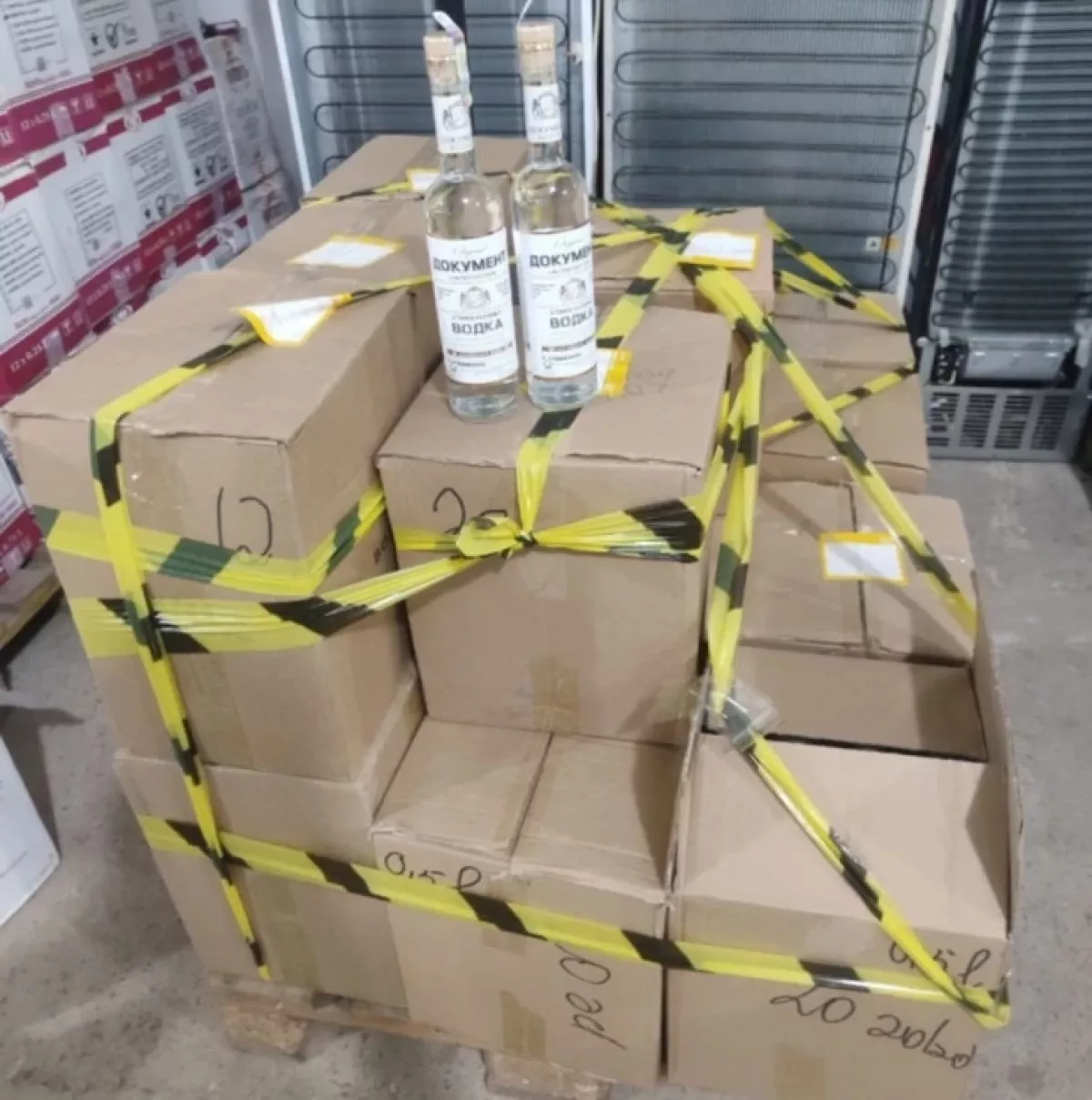
According to recently released information, the STS inspections resulted in the seizure and removal from circulation of 6,192 alcoholic beverages in various types of packaging, with a total volume of 4,300 litres; 132 barrels of beer of different capacities, totalling 4,980 litres; and 99 boxes containing various types of tobacco products.
In addition, an inspection at a production facility in the Kurdamir district revealed that alcoholic beverages were being produced without the facility being registered with the tax authorities. Inspectors discovered 1,288 counterfeit excise stamps, 25,000 litres of unpackaged alcohol of unknown origin, as well as equipment and other material assets used in the production process.
Following the violations identified, the relevant measures were taken in accordance with the law, and legal proceedings were initiated.
The need to strengthen oversight and identify “shadow” facilities involved in the production of counterfeit goods and their sale using fake excise stamps is particularly pressing, especially given that two cases involving violations of fiscal legislation on an unprecedented scale were uncovered in July this year.
In Mingachevir, for example, employees of the State Tax Service’s Main Department for Control over the Circulation of Excise and Marked Goods uncovered an unregistered production facility. An inspection of the production and warehouse premises revealed 198,000 litres of finished beer, a large number of kegs used for its distribution, 14 tons of barley malt, 300 kilograms of brewer’s yeast, and more than two tons of other raw materials whose origin could not be verified through the relevant documentation. Appropriate procedural measures were taken against Khayyam Aydin oglu Taghiyev, who was involved in the illicit production of beer.
Meanwhile, during operational tax-control measures in the village of Garabaghlar, Kangarli district, employees of the State Tax Service under the Ministry of Economy of the Nakhchivan Autonomous Republic uncovered an especially large quantity of alcoholic beverages intended for sale and bearing counterfeit excise stamps.
The cases cited above are far from isolated. The media has repeatedly reported violations involving excise goods in the catering sector. In some cases, for example, banquet halls have been found selling wine and vodka that were not produced in licensed factories but were instead counterfeit products manually bottled into genuine containers and, naturally, sold without the required excise markings.
Against this backdrop, the State Tax Service calls on businesses to strictly comply with tax and other legal requirements. Such compliance is essential to reducing the “shadow” economy, combating the counterfeiting of excise goods and excise stamps, promoting fair competition, and protecting consumers’ rights and legitimate interests.
Consumers can also play a direct role in identifying counterfeit products that may pose a health risk. The State Tax Service has introduced a new feature in its “E-Vergi” mobile application. Through the “Tracking and Monitoring System” in the app’s “Services” section, users can obtain information about a product by scanning the mandatory marking codes (QR codes) placed on excise goods packaging or excise stamps. If the information displayed does not match the product, users can submit an electronic complaint to the State Tax Service directly through the application







 editor@caliber.az
 +994 55 444-88-98
 Азербайджан, Баку, ул. Низами, 203, Af Business House, 5-й этаж