










Politics of emotion Pashinyan and the streets of Yerevan
Recent days have been marked by a sharp escalation in Armenia’s socio-political discourse. This is hardly surprising, as the June 7 parliamentary elections draw nearer and the election campaign grows increasingly intense.
Prime Minister Nikol Pashinyan has been actively campaigning at election rallies and walking through the streets of Yerevan, engaging directly with ordinary citizens. Yet these encounters do not always unfold smoothly. Time and again, the prime minister is approached by people expressing revanchist sentiments and accusing him of betrayal. Pashinyan attempts to patiently explain to them that there is no viable alternative to a peaceful settlement with Azerbaijan. But when his arguments fail to resonate, his composure occasionally gives way.
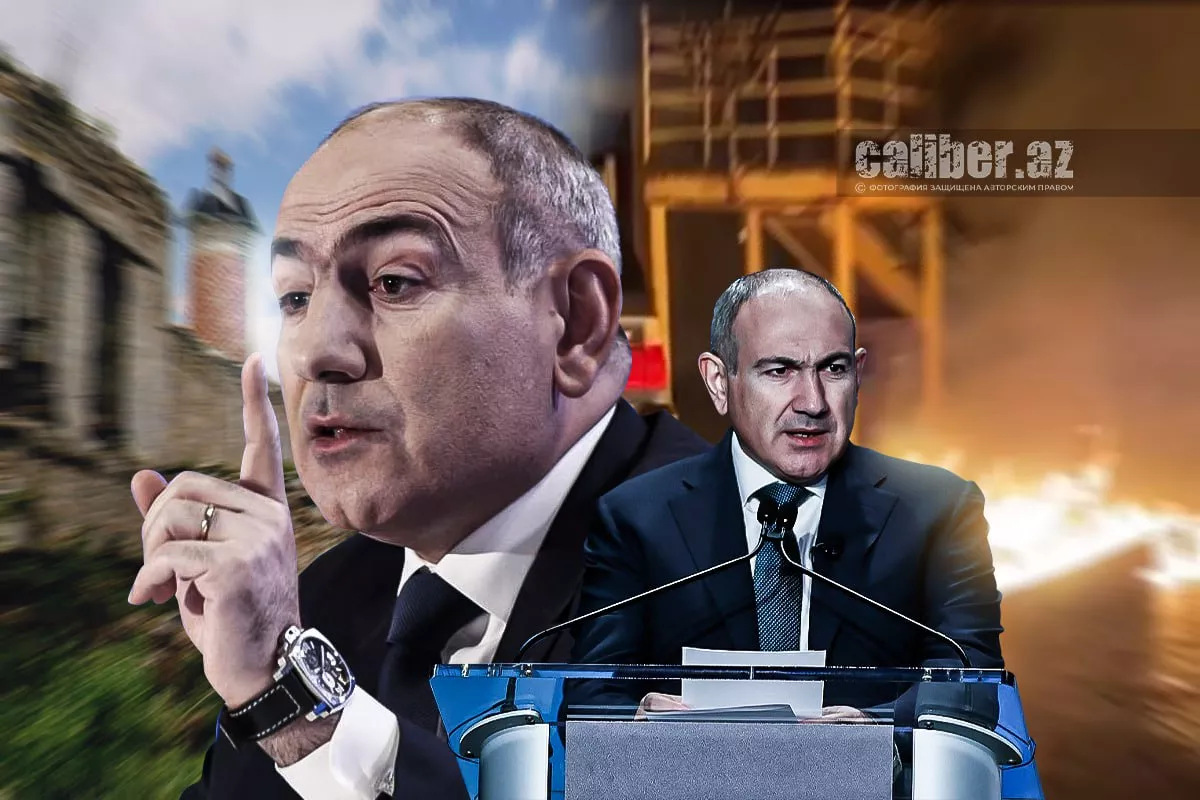
In one such incident, he lashed out after a woman accused him of having “taken away her homeland, her brother, and her joy,” while also “trampling on Armenian dignity.” “You destroyed the country, you took away our sons, you are an enemy of the people!” she shouted. At that point, Nikol Pashinyan could no longer restrain himself. During the heated exchange, he launched into a fierce attack on his political opponents, including former presidents Robert Kocharyan and Serzh Sargsyan, accusing them of cowardice and desertion, and vowing to “crush and humiliate them all.” “You are runaway degenerates — tear off your masks, I’ll bend every one of you to my will,” the prime minister raged.
This raises the question of whether Nikol Pashinyan’s emotional outbursts are part of a carefully staged election strategy or merely spontaneous reactions that could ultimately damage his approval ratings ahead of the vote. The answer, it seems to me, is far from straightforward.
There is little doubt — and it has long since been confirmed, including in analyses published by Caliber.Az — that for months, perhaps even for over a year, Pashinyan has been operating in the public sphere within the framework of a calculated PR campaign. His toolkit includes bicycle rides, listening to music, wearing a hat reminiscent of a “1950s intellectual,” playing the drums, and, of course, the familiar hand gesture forming a heart shape.
To assume that a politician so disciplined in following this strategy has simply “lost control” of himself during campaign events would be the height of naivety. That does not necessarily mean, however, that Pashinyan is merely pretending to feel irritation or anger toward citizens entrenched in revanchist views. Rather, it suggests that his advisers may have encouraged him not to restrain such emotions, calculating that these displays fit perfectly into the broader electoral image the incumbent prime minister is seeking to project.
Alen Simonyan, Chairman of the National Assembly, has also played along with his political chief. According to Simonyan, the prime minister is in fact showing remarkable restraint. “I am amazed by the Prime Minister’s nerves; I think they are made of concrete, of iron. I am amazed that he endures everything we are going through — I often cannot endure it myself,” he told journalists.
Yet emotions are a political resource not only for Nikol Pashinyan, but also for his opponents. The political struggle is unfolding between the ruling, broadly pro-European Civil Contract party and a trio of pro-Russian forces, including the Armenia Alliance led by Robert Kocharyan, the Strong Armenia party associated with Russian billionaire Samvel Karapetyan, and Prosperous Armenia of Armenian oligarch Gagik Tsarukyan.
Even if one assumes that the people publicly confronting the prime minister are not planted operatives of these political forces, Pashinyan’s emotional reactions to such attacks are nevertheless being actively amplified for propaganda purposes not only by pro-Russian political forces in Armenia, but also by Moscow itself.
Thus, Maria Zakharova, commenting on reports in Western media alleging that Russia is conducting a campaign against Armenian Prime Minister Nikol Pashinyan, urged observers to focus instead on “the citizens of Armenia at whom Pashinyan was shouting: the woman who, as he himself said, should be grateful that her head was not smashed in the restroom around the corner, and that man — honestly, my heart bleeds for him, just look at this footage — whose grandson was killed and who came to the rally at Pashinyan’s own invitation to ask a question, only to be accused of showing up there for $550.” She added: “Surely there are limits to cynicism when people try to pin this situation on Russia. What does Russia have to do with it? No, this is not us — this is simply the kind of person Pashinyan is.”
In other words, the official spokesperson of the Russian Foreign Ministry not only accused Pashinyan of treating his own citizens harshly, but also deliberately emphasized the emotional backdrop surrounding these confrontations — particularly the tragedy of “the man whose grandson was killed” — within which grievances against the prime minister are being voiced. The political game may appear crude to some observers. Yet it is precisely this emotional rawness that can prove effective in shaping the preferences of undecided voters, who are often drawn to those capable of provoking the strongest emotional response. Emotions, indeed, have become a central instrument of political struggle. And in Armenia today, this is visible to the naked eye.







 editor@caliber.az
 +994 55 444-88-98
 Азербайджан, Баку, ул. Низами, 203, Af Business House, 5-й этаж