










Pashinyan’s image, Edelman, and Ararat Mirzoyan’s own game When the hidden becomes visible
Recently, Armenian Prime Minister Nikol Pashinyan has noticeably changed his image. And it’s not just about him shaving his beard, although this detail was eagerly picked up by Armenian and international media. What matters more is another, seemingly minor detail: wherever Pashinyan travels, he accompanies his social media posts with music videos styled according to the cultural code of the host country. In Berlin, he shared heart emojis under the timeless hit “You're My Heart, You're My Soul” by the German group Modern Talking; in Moscow, he featured “Belye Rozy” by the band Laskovyi Mai. At first glance, this may seem like a harmless play with nostalgia and local symbols, but in reality, it points to a carefully crafted communication strategy where every emotion, every visual cue is deliberately planned in advance.
According to sources in expert circles, the transformation is backed by the international PR company Edelman—already familiar to our readers from previous publications. On November 5, Yegor Bolkonsky, CEO of the agency tvi and a strategic management consultant, recounted a report by an American PR specialist at a professional conference. The report stated that the unusual videos posted by Pashinyan on social media are the work of the New York-based company Edelman. Moreover, “in August, the Armenian Prime Minister paid a working visit to the United States, where, among other things, he met with PR consultants from Edelman. They discussed his PR strategy, sketched out several ideas, and flew back to him. During the meeting, among other recommendations, they advised the Prime Minister to keep things simple.”
If this is indeed the case, much of the Armenian Prime Minister’s behaviour becomes easier to explain. What we are seeing is not a spontaneous change of style, but an attempt to package a political leader in the image of someone who is “one of us” for different audiences—someone who senses the cultural context and allegedly blends into it naturally. In this case, music serves as a universal and simplest tool for eliciting sympathy among social media users, bypassing complex political issues.
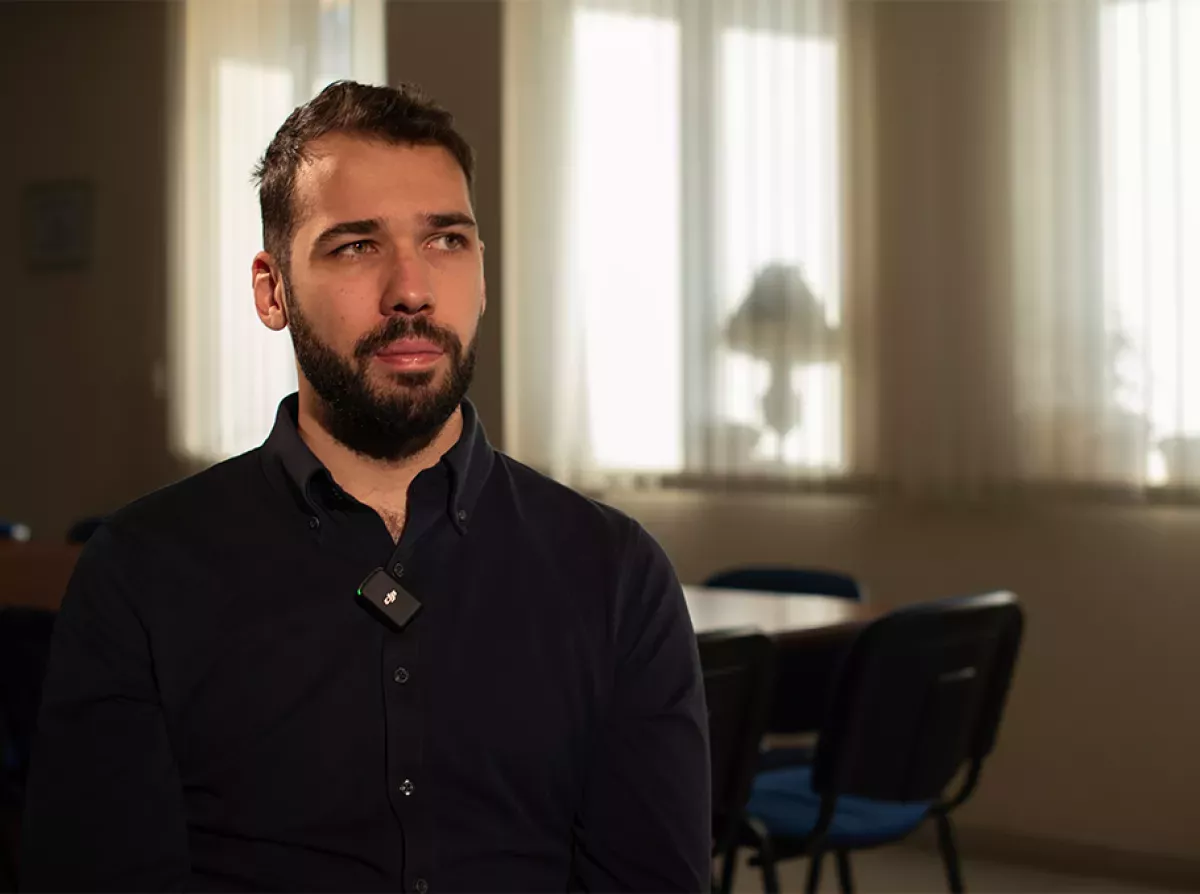
Against this backdrop, particular attention has been drawn to a report by the Milli Majlis (Azerbaijan’s parliament) Commission on Countering Foreign Interference and Hybrid Threats, which provides a detailed analysis of the mechanisms behind information campaigns targeting Azerbaijan. The document states that David Vardanyan—the son of Armenian citizen Ruben Vardanyan, who faces multiple charges under Azerbaijan’s Criminal Code, including crimes against peace and humanity, war crimes, terrorism, financing of terrorism, and other serious offences—financed and coordinated campaigns that intensified in the lead-up to, and during, the international climate conference COP29 held in Baku.
This was not about scattered publications, but about systematic work involving one of the world’s leading PR structures. It was precisely the Edelman agency that was engaged in a large-scale propaganda campaign aimed at glorifying and promoting the narrative of Ruben Vardanyan’s “release.” International media outlets, political analysts, and retired political figures were drawn into the effort, along with the well-known former prosecutor Luis Ocampo, whose names and signatures created the illusion of broad international support. Hashtags such as #FreeRubenVardanyan and #FreeArmenianPrisoners became part of a well-oiled pressure mechanism in which rhetoric untethered from facts substituted for legal and political reality.
The report also states that David Vardanyan did not act alone. Together with Noubar Afeyan, he used financial resources and personal connections to organise hybrid attacks against Azerbaijan. The tools employed included not only PR firms on the scale of Edelman and Havas, but also legal entities such as Perseus Strategies, which specialises in handling politically sensitive cases in Western jurisdictions. Taken together, this amounted to a classic example of external information pressure disguised as a campaign of “public outrage.”
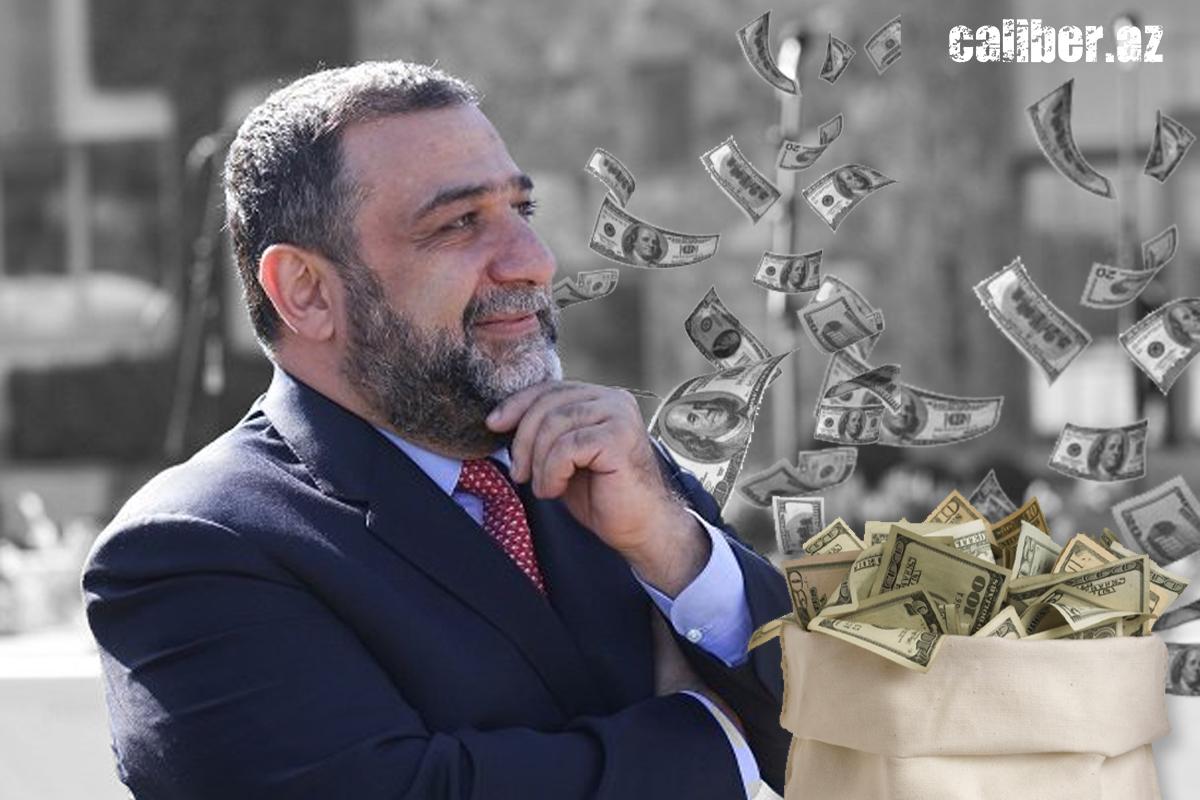
However, the history of Edelman’s cooperation with Armenian revanchist circles did not begin yesterday. As early as 2015, the agency provided PR support for the so-called “National Commemorative Event on the Centenary of the Armenian Genocide” in Washington. The organiser at the time was Ruben Vardanyan, then a Russian billionaire. The event cost a quarter of a million US dollars and became a telling example of how private capital and professional communications structures can shape a political agenda beyond their country of origin.
Against this backdrop, the possible—the key word here being “possible,” as we will explain below—work of Edelman with Nikol Pashinyan appears not as an isolated episode, but as part of a broader logic. The image of a “simple and sincere” politician who adapts to the host country's mood may be useful in softening Armenia’s reputational problems on the international stage. Musical clips and visual symbols thus become a kind of smokescreen, behind which unresolved issues of regional security, responsibility for past conflicts, and real political and economic commitments remain obscured.
And this is where we come to the most important point. The Armenian government categorically denies any cooperation with the Edelman agency. “The idea of filming videos set to music belongs to Pashinyan himself, and he personally selects the music for them,” Prime Minister’s spokesperson Nazeli Baghdasaryan told the BBC in a comment.
“No PR companies or consultants are involved in developing the Prime Minister’s social media strategy. All relevant work is carried out by the media team of the Prime Minister’s Office,” she added.
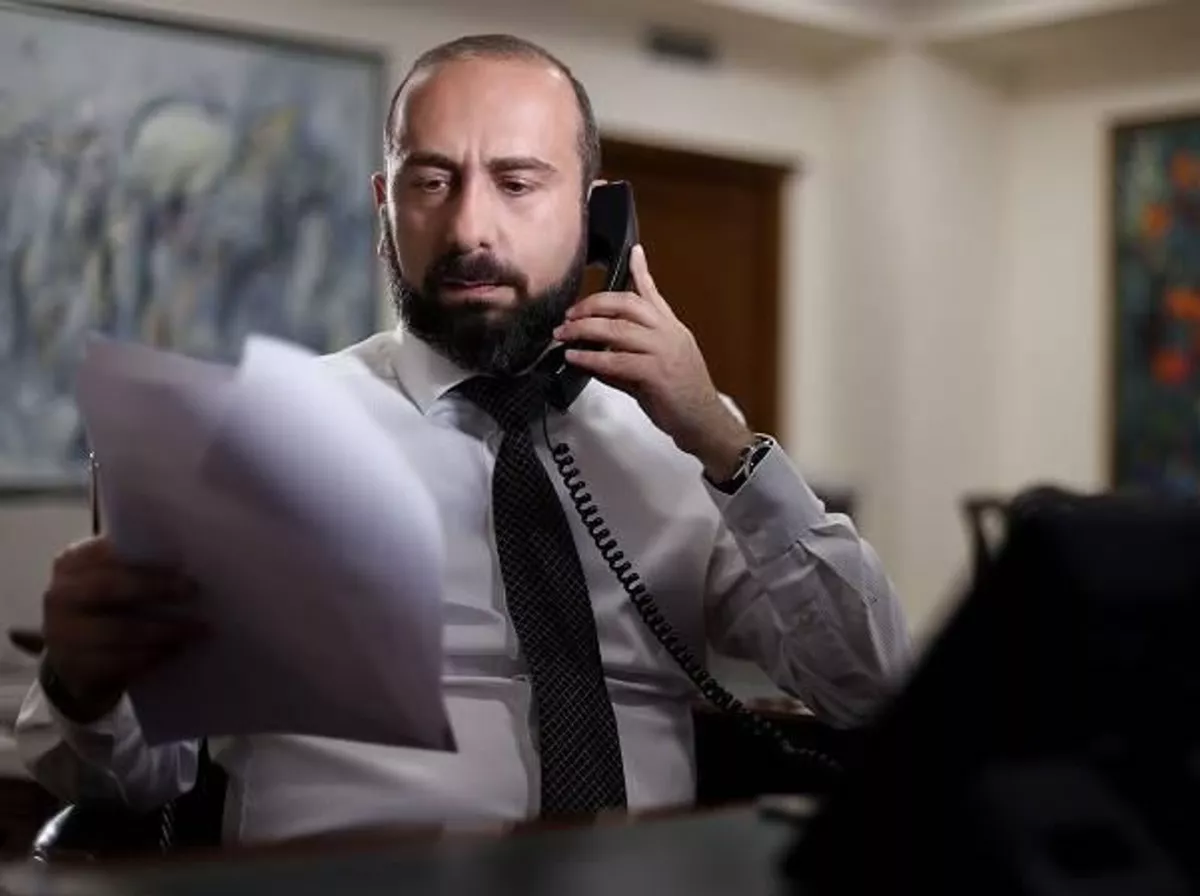
However, according to certain reports, the threads linking Edelman, Luis Ocampo, and other figures associated with revanchist circles both inside and outside Armenia lead to Pashinyan’s closest inner circle. But who is this person? We have an answer to that question as well. That figure is Armenia’s Foreign Minister, Ararat Mirzoyan. This, in turn, prompts another question: is the prime minister himself aware of this? If he is, that is one scenario. But if he is not, a far more intriguing—and troubling—situation emerges, one that should surely alarm Pashinyan personally.
Under such circumstances, it would suggest, first, that he is being deliberately misled: the media strategy of the prime minister’s office is being covertly shaped by the PR firm Edelman, which, at the behest of its clients, could at any moment severely damage the head of government’s approval ratings. Second—and no less dangerous for Pashinyan—it would imply that a person he fully trusts has begun playing his own political game ahead of the June 2026 elections. It is also unlikely that such a move would be undertaken alone. Edelman’s services do not come cheaply, which suggests that Mirzoyan is being backed both by well-funded representatives of revanchist circles and by power centres operating beyond Armenia’s borders.
Incidentally, this kind of multi-move manoeuvre is not new in Armenia’s case. One may recall that Ruben Vardanyan’s appearance in the “grey zone” of Azerbaijan’s Karabakh region was by no means spontaneous either. Ruben Karlenovich did not suddenly develop feelings of love or compassion for Armenians in Karabakh; a specific role had been scripted for him in Moscow. He was being prepared as a replacement for Prime Minister Nikol Pashinyan, who had alienated Moscow by reorienting Yerevan’s foreign policy towards the West. An attempt was made to mould Vardanyan into a “new national leader.” It failed.
Now, it appears that certain forces have placed their bet on Ararat Mirzoyan. At his disposal are both the financial resources of Pashinyan’s opponents and political backing from within Armenia as well as from abroad. As for the media component, there is little cause for concern at all—Edelman’s bosses, long known for their close ties to Armenian circles, are always at the service of those willing to pay generously. We believe that Pashinyan would do well to take a hard look at his closest entourage and not forget the well-known saying that betrayal always comes from one’s own ranks.







 editor@caliber.az
 +994 55 444-88-98
 Азербайджан, Баку, ул. Низами, 203, Af Business House, 5-й этаж