










Moment of truth in the European Parliament Pashinyan confronts populism
In his address to the European Parliament, Armenian Prime Minister Nikol Pashinyan publicly reaffirmed the principles and initiatives that Azerbaijan has been advocating for many years and consistently promoting on the international stage.
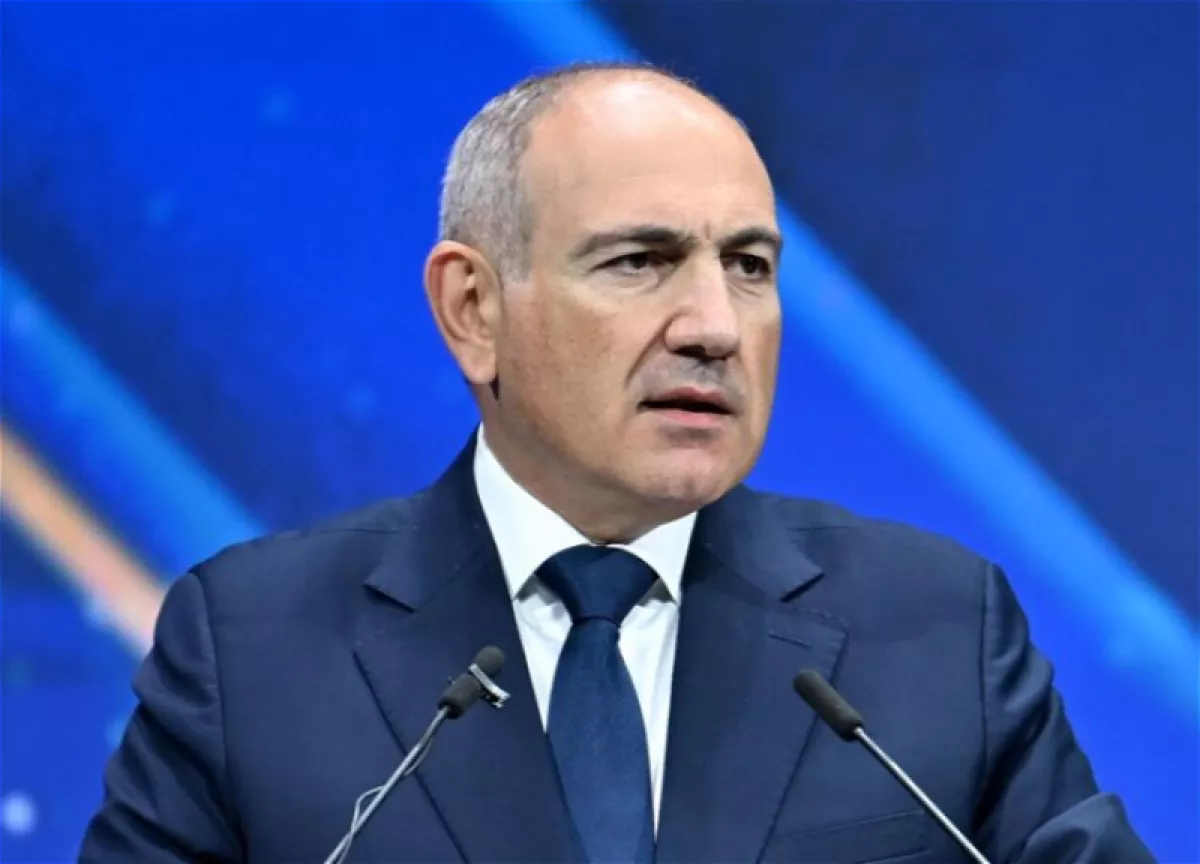
One of the most notable statements by Pashinyan was his acknowledgement that Armenia is now importing petroleum products from Azerbaijan, which has led to lower fuel prices in the Armenian market and broken monopolies that had existed for decades.
In his speech, the Armenian leader also highlighted that in November 2025, for the first time since gaining independence, a freight train transited through Azerbaijan and Georgia and reached Armenia.
“This happened after the president of Azerbaijan announced in October 2025 that he was lifting the restrictions on rail transportation to Armenia via the territory of Azerbaijan, and I am grateful to the president of Azerbaijan for such a decision,” the prime minister said.
No less demonstrative was Pashinyan’s statement that Armenia is already ready to provide road communication between the western regions of Azerbaijan and the Nakhchivan Autonomous Republic through its territory. The Armenian leader also emphasised that Yerevan has neither the intention nor any reason to delay the implementation of the TRIPP project, noting that it fully corresponds to Armenia’s short-, medium-, and long-term objectives.
All of this carries enormous symbolic significance, as for decades, Yerevan has based its political rhetoric on complaints about the country’s “isolation” by Azerbaijan. Baku, in turn, has consistently stated that the unblocking of communications and regional cooperation can bring tangible benefits to all countries of the South Caucasus, representing a mutually beneficial process capable of transforming the economic and transport map of the entire region.
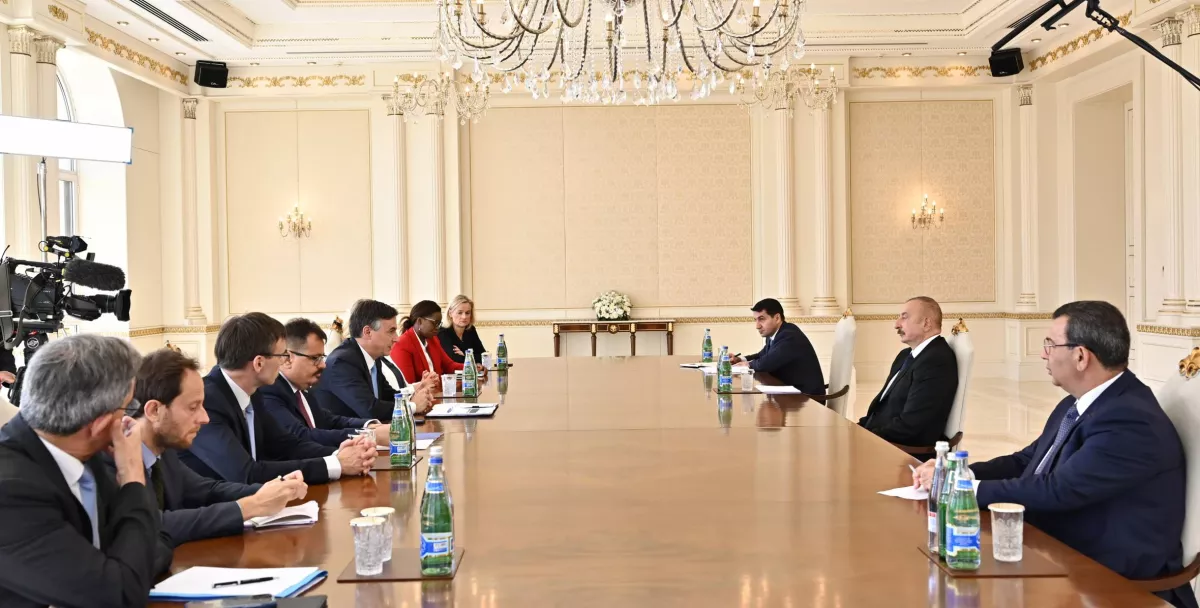
Particularly significant in all this is the fact that these statements by Armenia’s prime minister were made precisely in the European Parliament—a venue where, for many years, anti-Azerbaijani policies have been actively promoted, as President Ilham Aliyev has repeatedly pointed out.
In particular, in July 2022, during a meeting with a delegation led by the Chair of the European Parliament’s Committee on Foreign Affairs, David McAllister, the head of the Azerbaijani state openly highlighted the bias of the European Parliament.
“We cannot understand the actions of the European Parliament. In fact, the European Parliament is more aggressive towards Azerbaijan than the Armenian Parliament. Sometimes it seems that these resolutions are adopted by the Armenian parliament or perhaps some Armenian lobby groups have some influence on them. Otherwise, it is very difficult to understand that,” the Azerbaijani leader stated.
There is ample evidence to support this claim. It is enough to recall how the European Parliament, for many years, systematically adopted resolutions directed against Azerbaijan, including during the 44-day war in the autumn of 2020 and in the post-conflict period. Moreover, all these so-called “documents” effectively ignored or even denied the principle of Azerbaijan’s territorial integrity—one of the fundamental principles of international law.
Moreover, within the walls of this European Union institution, calls have repeatedly been made to support representatives of the Karabakh separatist “administration” — those responsible for numerous crimes against the Azerbaijani people and state. This clearly indicates that the European Parliament was, in effect, encouraging separatism.
Another line of pressure against Azerbaijan involved attempts to internationalise the issue of Armenians who voluntarily relocated from Azerbaijan’s Karabakh region to Armenia, despite the fact that these individuals had been living on Azerbaijani territory illegally. Against this backdrop, the words of Nikol Pashinyan, delivered from the podium of the European Parliament, are particularly revealing: “Our strategy in this regard is very clear: our Karabakh sisters and brothers must receive Armenian citizenship and be permanently settled in the Republic of Armenia.”
Summing up all of the above, it can be stated with confidence that today the Armenian authorities are effectively abandoning the political speculations that for a long time were actively supported by a number of European politicians. As a result, a rather unique situation is emerging: official Yerevan is demonstrating a far more pragmatic and realistic approach than many Members of the European Parliament, who for years have built political — and perhaps even financial — capital on discrediting Azerbaijan.
This once again confirms the enduring truth that justice ultimately prevails over falsehood and the distortion of reality — tools that have been used by some European parliamentarians unwilling to acknowledge the new realities that have emerged in the South Caucasus following the restoration of the Republic of Azerbaijan’s territorial integrity and sovereignty.







 editor@caliber.az
 +994 55 444-88-98
 Азербайджан, Баку, ул. Низами, 203, Af Business House, 5-й этаж