










Azerbaijan’s non-oil exports surge: from farms to polymers Overview by Khazar Akhundov
The beginning of 2026 has seen a significant increase in Azerbaijan’s non-oil exports, which have risen by nearly 20%, according to the Center for Analysis of Economic Reforms and Communications (CAERC). At the same time, the ongoing large-scale conflict in the Persian Gulf and the second week of the Strait of Hormuz blockade have driven up global prices for oil and related products, including fuels, petrochemicals, polymers, fertilizers, and construction materials. Depending on the duration and intensity of the conflict, these developments could act as a short-term catalyst, boosting the value of many types of non-oil exports.
In 2025, global market tensions—from trade wars, commodity price fluctuations, and supply chain disruptions—also impacted Azerbaijan. Reduced oil production and lower energy prices contributed to a decline in energy exports to international markets.
In recent years, the Azerbaijani government has prioritised shifting from an energy-dependent model toward expanding non-oil exports. In this context, efforts to diversify the export portfolio are underway, fostering growth across non-commodity sectors such as agro-processing, industry, transport, ICT, green energy, energy efficiency, and IT.
The strategic goal is to increase the total volume of non-oil exports to $5.3 billion by 2027. Achieving this objective will require boosting non-oil exports by 1.8 times, expanding non-oil GDP by 1.3 times, and raising the private sector’s share of the economy to 88%.

The effectiveness of these efforts is evident in CAERC’s 2025 “Export Review.” During that year, Azerbaijan increased non-oil exports by 8.1%, reaching $3.6 billion. This positive momentum continued into early 2026: in January–February, non-oil exports totalled $580.7 million, up 19.7% compared to the same period last year.
Agricultural exports saw the highest growth, rising 34.6% to $160.9 million. Agro-industrial products reached $52.5 million, a 22% increase. Combined, agricultural and agro-industrial exports grew 31.2%, totalling $213.4 million.
Key export gains included sugar, which surged 4.3 times; vegetable and animal fats and oils, up 2.1 times; cotton fibre, up 33.3%; fruits and vegetables, up 32.7%; alcoholic and non-alcoholic beverages, up 10.9%; and tea, up 5.1%.
In January–February 2026, exports of industrial products showed strong growth. Aluminium and aluminium product exports rose 34.7%, while cotton fibre exports increased 33.3%. Driven by rising global precious metal prices, Azerbaijan’s gold concentrate exports reached $33 million in January, up 56.4% compared to January 2025.
Copper ore and concentrate exports also performed exceptionally. According to the State Customs Committee of Azerbaijan (SCC), shipments exceeded $20.5 million, with export volumes increasing 4.7 times and export value rising 8.5 times year-on-year.
Azerbaijan also recorded strong results in construction materials last year. According to the Azerbaijan Construction Manufacturers Association, domestic construction material exports approached 20% in 2025. Cement production exceeded 4.142 million tonnes, with exports of cement and clinker reaching roughly 957,000 tonnes—a 12.5% year-on-year increase. Nearly a quarter of the country’s cement production now goes to foreign markets.
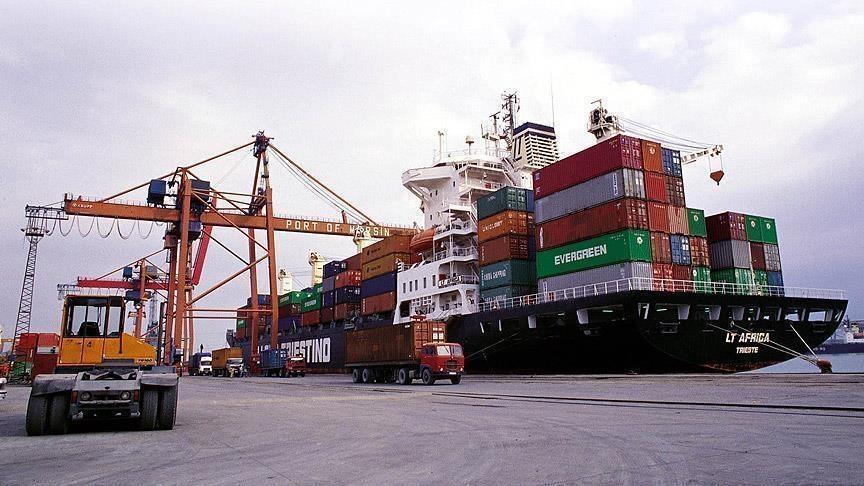
Foreign demand for Azerbaijani construction materials, particularly cement, is expected to continue rising in 2026. This sector is highly energy-intensive, and with oil, fuel, and gas prices surging in many European and CIS countries, production costs for their cement industries have increased sharply, driving up prices. In contrast, Azerbaijani producers rely on domestic energy resources, keeping production costs significantly lower and providing a strong competitive advantage.
A similar trend is seen in the petrochemical sector. In 2025, Azerbaijan exported 735,806 tonnes of petroleum products worth nearly $432 million, up 36.9% in volume and 28.9% in value compared to 2024. This momentum continued in January 2026: over 44,723 tonnes of petroleum products were exported, 7.4% more than in January 2025, with a value exceeding $32.2 million—a 1.7-fold increase. Notably, petroleum coke exports reached 23,523 tonnes, valued at $9.64 million, marking an unprecedented 23.5-fold growth.
The war in the Persian Gulf and disruptions in fossil fuel supplies have caused raw material shortages, forcing some Asian petrochemical producers to declare force majeure. As a result, propylene prices in South Korea and China have surged to $885–895 per tonne. This situation gives SOCAR Polymer in Sumgait a competitive advantage, allowing it to expand propylene production and exports to Türkiye, China, and CIS countries.
A similar dynamic is unfolding in the nitrogen fertiliser sector. The conflict and the closure of the Strait of Hormuz have cut off Gulf countries from supplying roughly 45% of the world’s urea. SOCAR Karbamid, with well-established domestic production, exported $170.8 million worth of fertiliser last year—a 35% increase over 2024.
With the upcoming agricultural season and global fertiliser shortages, rising prices create strong profit opportunities for SOCAR Karbamid. Azerbaijan’s independence from imported gas ensures stable nitrogen fertiliser production.







 editor@caliber.az
 +994 55 444-88-98
 Азербайджан, Баку, ул. Низами, 203, Af Business House, 5-й этаж