










Jet fuel crisis: global aviation shock and Azerbaijan Analysis by Khazar Akhundov
Amid the unresolved geopolitical confrontation in the Middle East, the fuel crisis continues to intensify. A shortage of aviation kerosene is pushing up the cost of passenger air transport worldwide. Among the most affected are European countries, which have traditionally imported around a quarter of their aviation fuel supplies from Persian Gulf states. As the summer holiday season approaches, airlines, airports, and tourism operators are facing a serious challenge: a sharp decline in bookings and, consequently, reduced revenues during one of the industry’s key peak periods.
Meanwhile, Azerbaijan, with its domestic crude oil resources and refining capacity, remains comparatively stable. Local airlines continue to purchase fuel at fixed tariffs, although prices for foreign carriers operating in the country have seen a moderate increase.
Ongoing disruptions in oil and fuel supplies through the Strait of Hormuz are exerting noticeable pressure on the global air transport market. Prior to the current conflict, Gulf countries accounted for roughly a quarter of all aviation fuel supplies to Europe. Today, these shipments have become largely inaccessible, and according to Reuters, citing the International Energy Agency (IEA), the global oil market could face a shortage of jet fuel supply this year due to the ongoing conflict in the Middle East.
European Energy Commissioner Dan Jørgensen also warned that European airlines may face fuel supply disruptions as early as early June, posing risks to summer air travel. "Already now we see companies canceling flights and routes and we see prices going up," Jorgensen said in an interview with Politico.
By late April, global airlines had already begun reducing the number of seats in their May schedules by approximately two million passengers amid concerns over fuel availability in the coming days. According to data from the Financial Times (FT), citing aviation analytics firm Cirium, the total number of available seats on flights in May declined from 132 million to 130 million compared to mid-April.
Thousands of flights have reportedly been cancelled, while some carriers have started deploying smaller aircraft or models with more fuel-efficient engines in order to reduce fuel consumption amid the growing shortage.
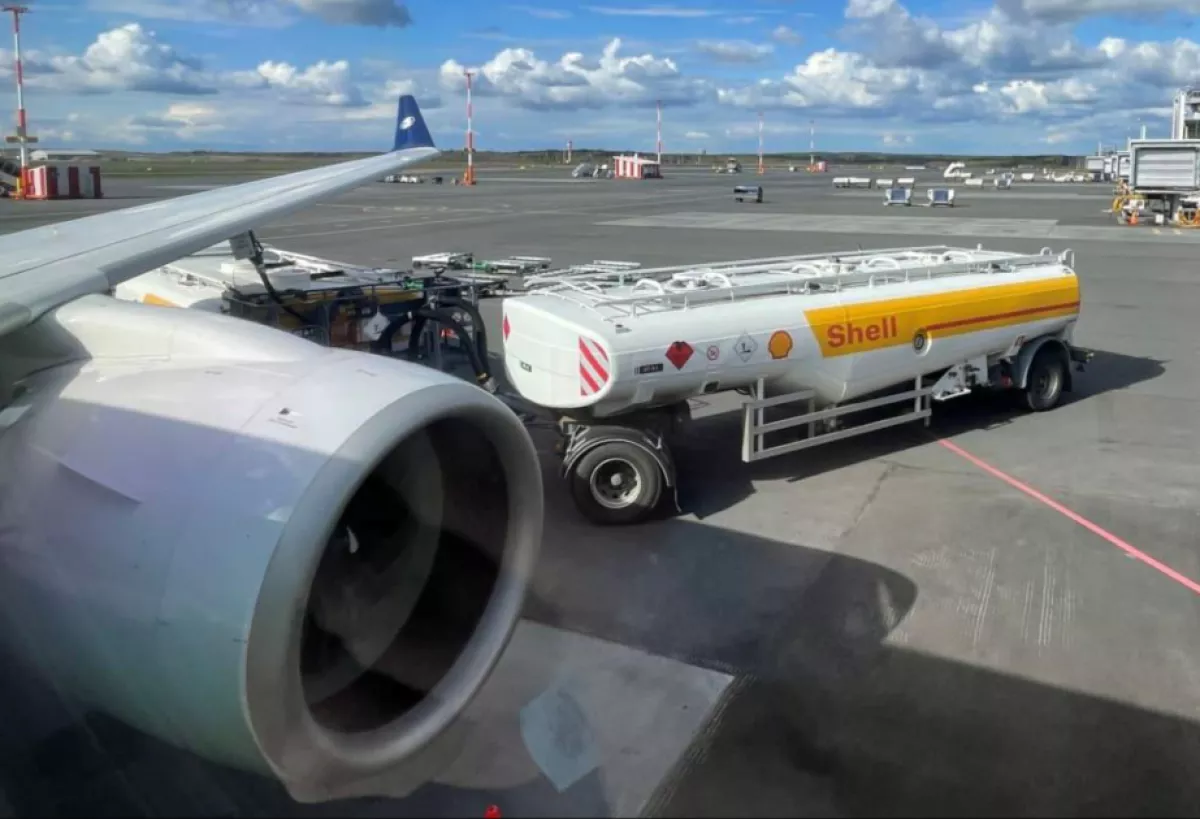
In any case, since the beginning of the conflict, jet fuel prices have almost doubled, forcing airlines to raise ticket prices. Another issue affecting pricing and flight profitability is the extension of airline routes due to the closure of certain airports in Gulf countries, through which one-third of Europe–Asia flights previously passed before the war.
Major Gulf carriers, including Emirates, Etihad, and Qatar Airways, have already revised their May schedules and cancelled part of their flights. Leading global airlines such as British Airways, United Airlines, Air China, and ANA have also adjusted their route networks, reducing or redistributing flights to ease pressure on these affected corridors.
The reduced use of transit hubs in Gulf countries has significantly lengthened global aviation logistics routes, increasing fuel consumption.
The most difficult situation is unfolding in Europe. According to LSEG Workspace, in some parts of the Old Continent — including the Amsterdam–Rotterdam–Antwerp hub — aviation fuel inventories have already fallen to near-record low levels. Lufthansa CEO Carsten Spohr stated that the company’s fuel reserves would be sufficient only until mid-July.
Notably, the highest number of flight cancellations within EU countries has been recorded by Lufthansa, which has cut around 20,000 flights between May and October due to rising fuel prices that have made certain routes unprofitable. Lufthansa has also indicated that air ticket prices are expected to increase this year as aviation fuel costs continue to rise, with additional expenses estimated at approximately €1.7 billion.
The prolongation of a blockade of the Strait of Hormuz only amplifies these risks. In this context, in early May, Ryanair CEO Michael O’Leary warned that some European airlines could face bankruptcy as early as autumn if high fuel prices persist throughout the summer. “If it continues at $150 a barrel into July, August, September, then you'll see European airlines fail,” O’Leary stressed.
The situation with access to aviation fuel is also becoming increasingly difficult in Asia and Africa. The energy crisis has significantly affected airlines in Japan, the Republic of Korea, India, Pakistan, and Bangladesh. In particular, Japan’s ANA recently stated that additional fuel costs would exceed $880 million by March next year, while Japan Airlines warned of an approximate 20% decline in profits.
Against the backdrop of the global crisis, the situation with passenger air transport in Azerbaijan can be described as quite stable. The country operates a network of nine international airports equipped with advanced technology and staffed by qualified personnel, and for many years has served as a leading aviation hub in Eurasia, ensuring safe overflights and services for dozens of international airlines.
A key role in this system is played by Heydar Aliyev International Airport, which is known for its high level of service, strong passenger orientation, and elevated security standards ensured by modern infrastructure and innovative technologies. These qualities are particularly important today, amid the growing instability at aviation hubs in the Middle East.
At the same time, in March 2026, Baku Airport once again confirmed its status as a leading regional aviation hub, winning the prestigious Skytrax World Airport Awards 2026 in the category of “Best Airport in Central Asia and the CIS.”
Another key advantage of the country is its energy and raw material independence, including the availability of domestic aviation fuel production capacities. It should be recalled that the modernisation and reconstruction project of the Heydar Aliyev Baku Oil Refinery implemented in recent years has significantly strengthened import substitution in the domestic fuel market.
Today, Azerbaijan already produces Euro-5 standard diesel fuel and gasoline, while work continues on upgrading production facilities for aviation fuel. Once the refinery reaches full capacity, output of aviation kerosene is expected to reach 1 million tonnes per year; however, at present, its capacity remains limited to around 0.7 million tonnes.
The aviation fuel produced in the country meets international jet fuel standards, including kerosene fractions such as TS-1.
In particular, aviation kerosene production at the Baku Oil Refinery facilities amounted to 690,700 tonnes in 2025, marking a 22.9% increase. However, in January–March 2026, output declined by 15.5% to 125,800 tonnes compared to the same period last year. This shortfall is likely to be offset during the year, taking into account growing export demand for aviation kerosene and increased domestic consumption.

It is also worth noting that a key benchmark for the country’s energy market is the maintenance of a fuel balance principle, under which export supplies are carried out only when there is a domestic surplus. Accordingly, in recent years, the bulk of locally produced aviation kerosene has been used to meet the growing needs of Azerbaijani air carriers — AZAL, Silk Way, and Buta Airways — as well as to service transit and other flights of foreign airlines operating stopovers in the country.
As for exports of domestically produced aviation fuel to external markets, 64,847 tonnes were exported in 2024, with 52% of this volume going to Luxembourg. For comparison, amid rising domestic demand, exports of aviation kerosene in 2025 amounted to 26,970 tonnes, reflecting a 58% decline in volume.
The largest buyers last year, apart from Luxembourg, included Russia and Türkiye, while shipments to the United States and France increased fivefold and fourfold respectively.
Against the backdrop of the current fuel crisis, it is difficult to predict to what extent the country will be able to increase its aviation kerosene exports in 2026. Jet fuel has become a scarce commodity, and this is already affecting price dynamics. In particular, Azerbaijani airlines are refuelled at specially regulated domestic tariffs, and so far, no significant changes have been observed in this regard.
Notably, before the Gulf crisis, foreign airlines refuelling their aircraft at Azerbaijani airports paid approximately $1,200 per tonne of aviation fuel. These rates have now increased to around $1,500 per tonne. Notably, prices at airports in neighbouring countries are even higher: for example, in Georgia, they have reached close to $2,000 per tonne.
Overall, the current dynamics in aviation fuel prices are contributing to higher ticket costs across most neighbouring countries as well as in more distant markets. The factor of imported inflation should also not be overlooked: Azerbaijani carriers refuelling in countries where fuel is significantly more expensive are facing rising operational costs, which could eventually be reflected in ticket prices as well.







 editor@caliber.az
 +994 55 444-88-98
 Азербайджан, Баку, ул. Низами, 203, Af Business House, 5-й этаж