










The Cyprus knot: How the EU plots against Türkiye Analysis by Artem Kirpichenok
The geopolitical rivalry in the Eastern Mediterranean, which has intensified in recent years, is prompting efforts to establish a new regional security system centred on the island of Cyprus.
On the initiative of Athens and Nicosia, the issue of the island’s security is now being framed beyond the bilateral conflict between Greece and Türkiye, becoming a broader international concern involving European Union member states. The Greek side appeals to regional security concerns, while Türkiye perceives this strategy as part of a wider geopolitical plan aimed at undermining its regional position.
At the heart of the discourse promoted by Nicosia and Athens is the notion that “the security of Cyprus is the security of Europe.” This approach implies that any threat to the island would be treated as a direct attack on the European Union. Consequently, the Cyprus issue is no longer solely a regional security problem but is tied to Europe’s collective security.
Within this framework, plans envisage the deployment of a multinational military contingent to Cyprus, including troops from Italy, Spain, France, the Netherlands, and Germany to the Eastern Mediterranean. A substantial naval grouping, including aircraft carriers and frigates, would complement these land forces. As a result, the island would become a new “European security belt.”
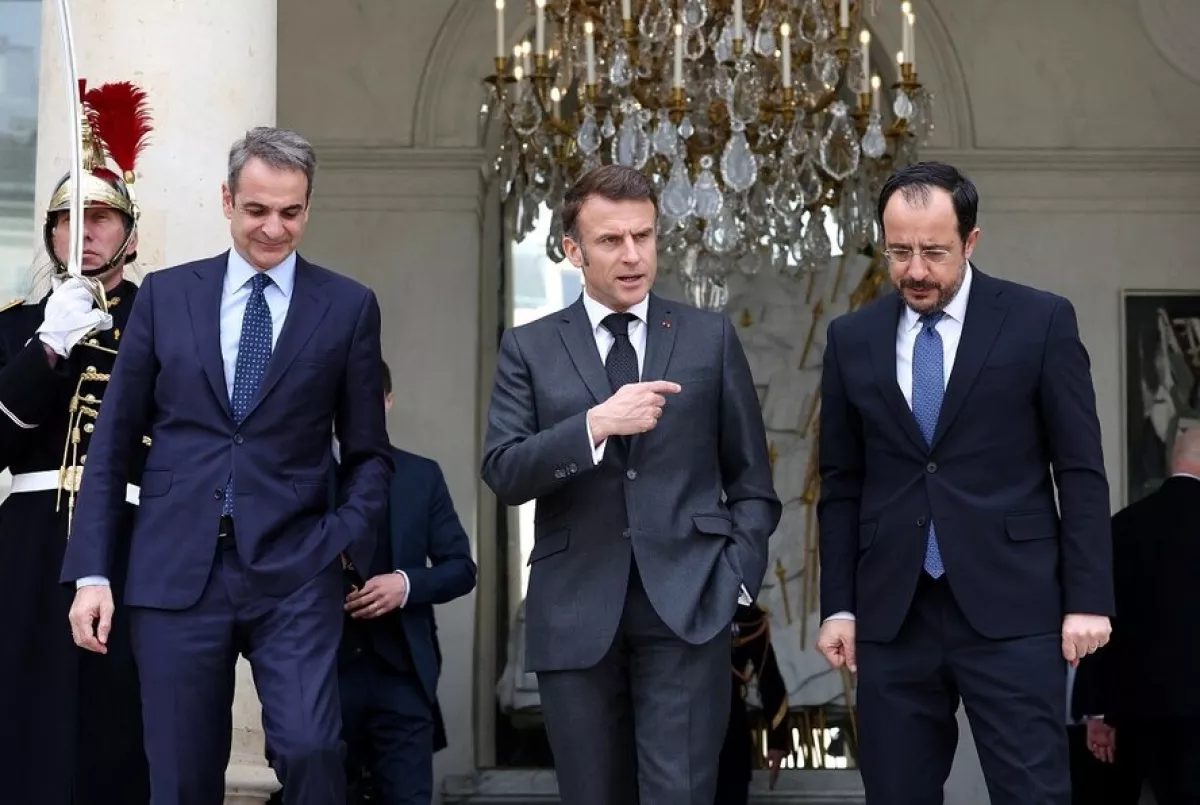
The military dimension of this strategy was particularly evident during the recent visit to Cyprus by French President Emmanuel Macron, who arrived on the island alongside Greek Prime Minister Kyriakos Mitsotakis. One of the stated objectives of the visit was to “strengthen security around the island and in the Eastern Mediterranean.” This was complemented by the recent deployment of new Greek units on Cypriot territory. Specifically, two F-16 fighter jets and two frigates—including the recently acquired Kimon, an ocean-class combat ship of the DFI project (Frégate de Défense et d'Intervention), considered one of the most advanced in the world in its class—were sent to the Andreas Papandreou airbase in Paphos.
In addition, London deployed Wildcat fighter jets to the island, equipped with Martlet air-to-air missiles designed to counter drones. These forces were joined by the French aircraft carrier Charles de Gaulle, whose presence indicates the activation of all elements of the European security framework.
Meanwhile, Turkish analysts argue that Paris, Athens, and Nicosia have created a tripartite mechanism aimed not only at military coordination but also at harmonising a unified political stance on the diplomatic front. The Greek deployment to Cyprus is not framed as an act of defending “national interests” but presented as a “mission to protect European security.” This clearly signals that the Greek side intends to deliberately elevate the Cyprus issue from a bilateral dispute to a pan-European matter.
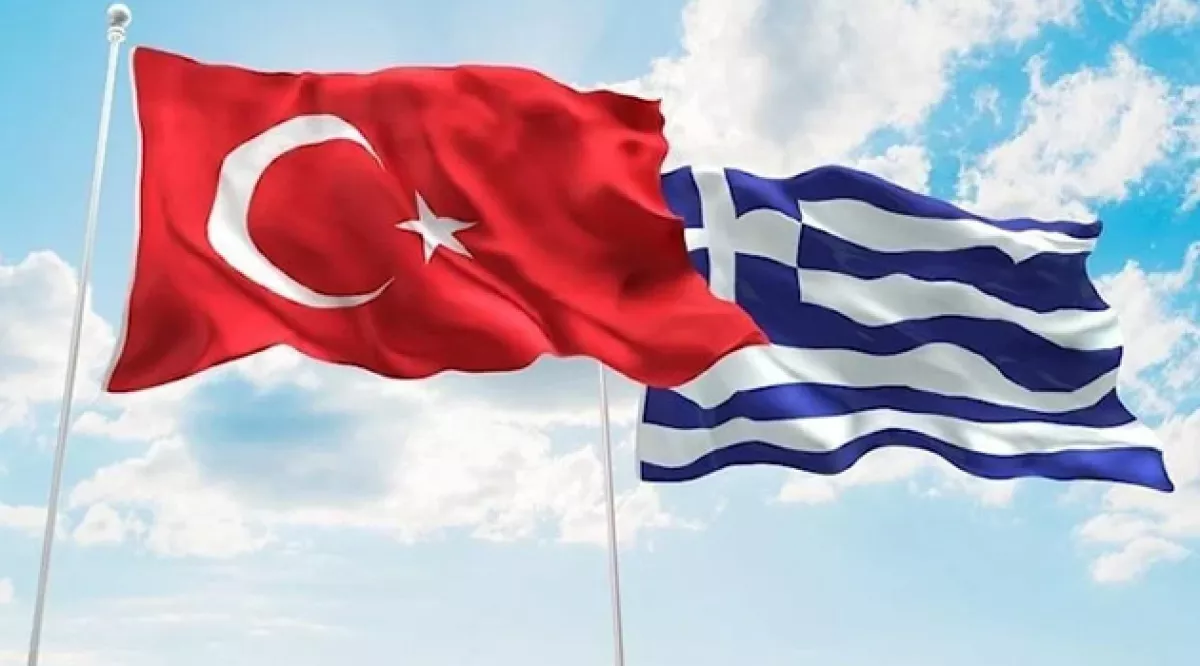
At the core of this strategy are not only security considerations but also competition over energy resources in the Eastern Mediterranean and disputes over maritime boundaries. The attempt by Athens and Nicosia, backed by the EU, to turn Cyprus into a European military outpost in the Eastern Mediterranean is viewed by Ankara as an effort to sideline Türkiye in the region. Meanwhile, the presence of Turkish troops on the island is portrayed by Greece on international platforms as a potential threat, thereby challenging the legitimacy of the Turkish Armed Forces’ presence in Cyprus in Brussels.
At the same time, it is noteworthy that Greece is expanding its military cooperation not only with European countries but also with actors such as India and Egypt. Additionally, Greece has acquired from Israel air defence systems of short-, medium-, and long-range capabilities and has deployed a Patriot missile battery on several islands in the Aegean Sea. This can be seen as part of a broader defensive network designed to restrict Türkiye’s aerial and maritime mobility. Ultimately, Cyprus is intended to become the central point of two anti-Türkiye blocs: the EU forces contingent and an anti-Türkiye alliance among Eastern Mediterranean and Asian countries.
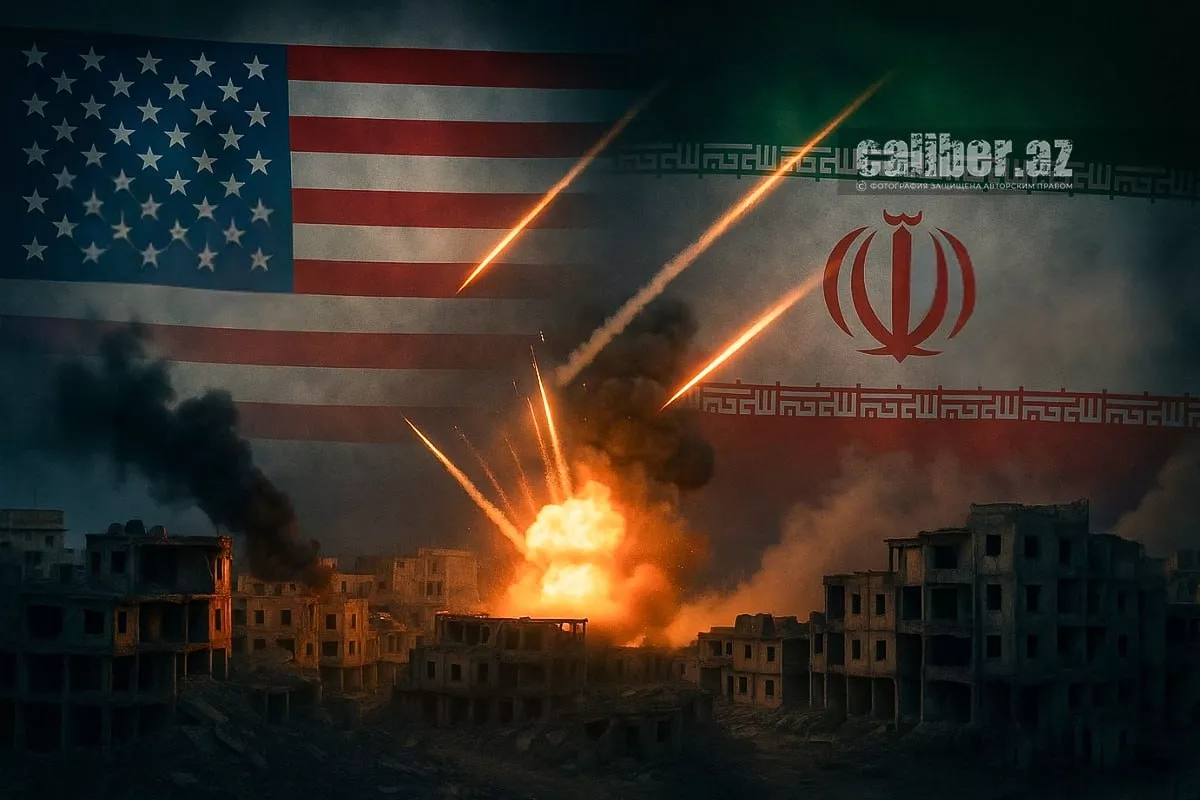
Meanwhile, the war in the Middle East and the threat of missile and drone strikes are being used to justify the arms buildup around Cyprus. European media contribute to this narrative, noting that “Europe finds itself at the epicentre of the war and faces an obvious question: could European cities be targeted, and would NATO be able to prevent it?”
According to military experts, cities within reach could include Athens, Sofia, and Bucharest, while missiles could potentially reach Vienna, Rome, and Berlin. Analysts within the North Atlantic Alliance fear targeted strikes on the bloc’s logistics hubs, as well as attacks on Mediterranean port infrastructure or LNG terminals in Italy, Greece, and Romania.
In response to this frenzy, Ankara points out that these reactions indicate the measures are not primarily defensive, but rather provide a pretext for militarising the island. With counter-drone systems deployed on frigates and advanced military technologies, the Greek-controlled part of Cyprus is being transformed into an unsinkable aircraft carrier. These technologies are primarily intended to counter the types of weapons most prevalent in the Turkish Armed Forces—namely, drones.
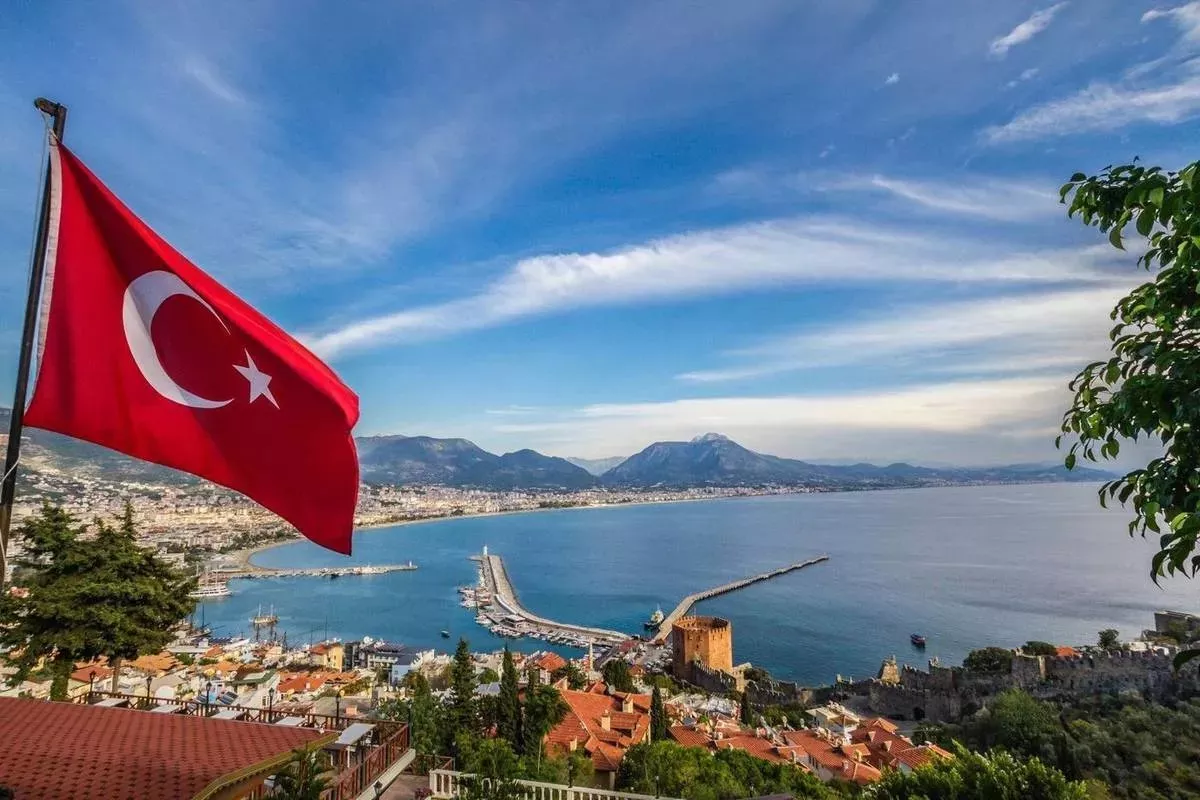
The current security scheme that European powers aim to establish on Cyprus delineates new boundaries that could indirectly challenge Ankara’s rights under the 1960 Treaty of Guarantee for the independence of Cyprus, which forms part of the 1959 Zurich–London Agreements. The Cyprus issue is increasingly being framed as an “EU border security problem” and “an internal matter of the European Union,” carrying the potential to weaken Türkiye’s geopolitical position in the Eastern Mediterranean.
According to Turkish experts, there is a risk that the emerging international discourse could be used to veto Türkiye’s activities in maritime influence demarcation and hydrocarbon exploration, portraying them as “illegal” and “potentially threatening.”
In light of this, the growing military and diplomatic activity around Cyprus signals a broader strategic transformation that goes beyond merely securing the island. Nevertheless, authorities in Türkiye are fully aware of Europe’s heightened involvement and that of several other countries around Cyprus, and they have likely developed contingency plans to respond to any scenario regarding the island.







 editor@caliber.az
 +994 55 444-88-98
 Азербайджан, Баку, ул. Низами, 203, Af Business House, 5-й этаж