










Trump and Xi: A grand bargain or great competition? Analysis by Artem Kirpichenok
The global rivalry between the United States of America and the People’s Republic of China has become, in today’s world, a central issue of global politics and economics, affecting the lives of hundreds of millions of people worldwide. The leaders of the United States and China have long needed to sit down at the negotiating table and resolve contentious issues in order to reduce international tensions. Against this backdrop, the global political establishment is currently focusing its attention on whether the head of the White House will travel to Beijing in May for a visit.
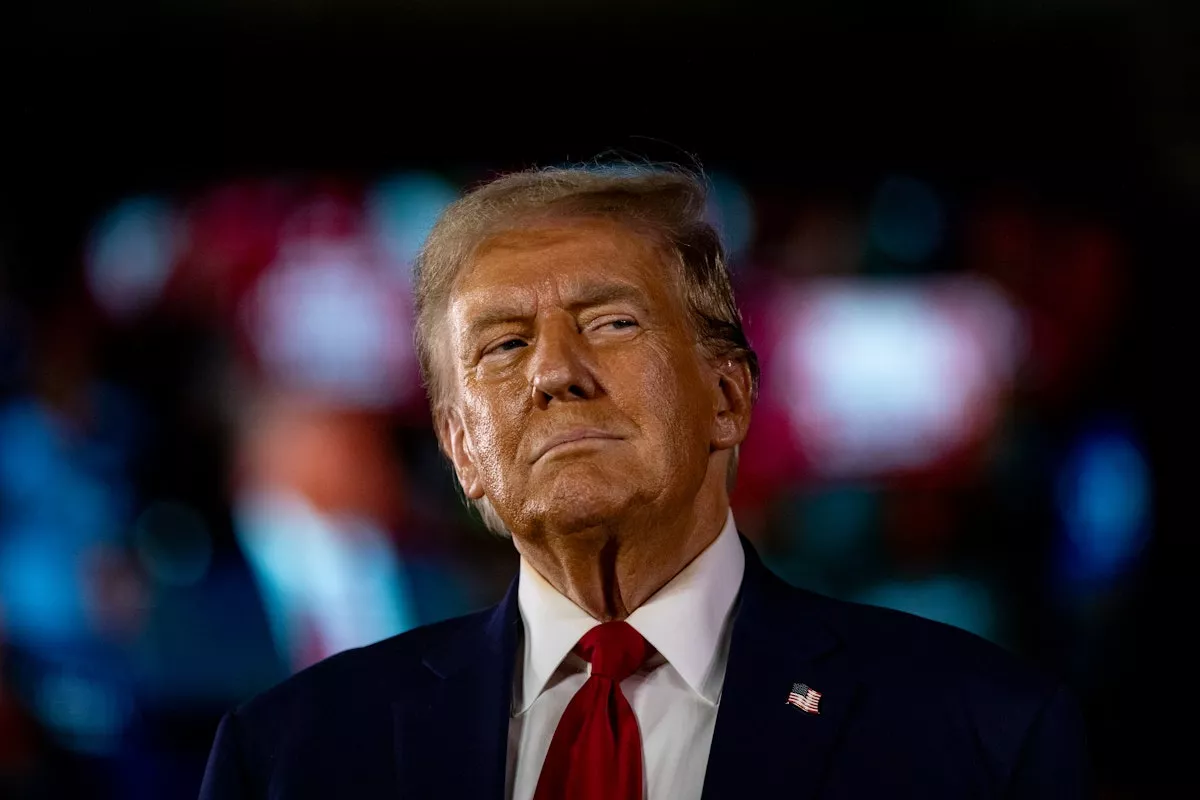
At the beginning of his first presidential term, Donald Trump presented himself as a proponent of a tough approach toward China, justifying his position by arguing that he was acting in American interests, since other countries—primarily China—were receiving unfair benefits and privileges from the United States. By taking certain steps in this direction, Trump sought to secure access to rare earth minerals used in modern high-tech industries and aimed to prevent the consolidation of forces capable of threatening U.S. global hegemony.
In turn, China steadily strengthened its position on the international stage as the world’s second-largest economy and a global actor capable of challenging the United States on nearly every continent.
After Donald Trump’s return to the Oval Office, many argued that relations between Washington and Beijing would never be the same, and that an inevitable trade war awaited the two countries. To reduce tensions, the sides held negotiations in October 2025 in the capital of Malaysia and reached a “framework consensus” on resolving trade issues.
“Chinese Foreign Minister Wang Yi expressed hope that China and the United States would move toward each other, prepare for high-level engagement, and create conditions for the development of bilateral relations,” the Chinese Xinhua News Agency reported at the time, following a phone call between China’s foreign minister and U.S. Secretary of State Marco Rubio, which took place after talks between the delegations of the two countries.
Soon after, a meeting between Donald Trump and Xi Jinping was held in Busan, South Korea. According to the American president, they managed to resolve many important issues related to trade and security, including easing controls over rare earth metals and reducing tariffs to ensure stability in trade between the two countries. In addition, the U.S. and Chinese leaders agreed to hold a new round of high-level negotiations.
Today, the leaders of the two powers understand that confrontation could lead not only their bilateral relations into a dead end but also pose a threat to the current global order. In particular, as noted by Responsible Statecraft, “[...] the U.S. and China are not enemies and in this case share a number of goals, not least keeping the global economy from careening off the looming cliff. Thus, there is considerable evidence that Beijing is attempting, behind the scenes, to help mitigate the conflict and even bring it to a swift conclusion.”
Thus, the tentative dates for the American president’s visit to China have been set for May 14–15, and experts express hope that during the meeting between Donald Trump and Chairman Xi Jinping, agreements will be reached on key issues.
At the same time, the U.S. president wrote on social media that “President Xi will give me a big, fat, hug when I get there in a few weeks. We are working together smartly, and very well!” This optimistic tone from the head of the White House is encouraging for the expert and analytical community, but most of it is asking the following question: “Why is Trump’s visit to China scheduled for this particular period?”
On the other hand, experts outline the following picture of the current priorities of the two powers: Donald Trump aims, before the midterm elections, to sign a major mutually beneficial trade agreement, strengthen the export position of the American agricultural sector, secure purchases of high-tech components for Boeing, and guarantee access to reserves of rare earth metals held by China.
Meanwhile, the leadership of the Communist Party of China seeks to balance U.S. objectives in Southeast Asia, prevent the sale of American weapons and ammunition to Taiwan worth $11 billion, act as a mediator between Washington and Tehran, and take steps necessary to expand trade between the two countries.
In particular, according to Konstantin Blokhin, a leading researcher at the Center for Security Studies of the Russian Academy of Sciences, the main issue in China–U.S. relations remains the economy: “At the core of U.S.–China relations are, above all, economic considerations. The explanation is simple: the United States has its largest trade turnover precisely with China, and it is with this country that America has the strongest economic interdependence.”
From the American perspective, the main problem for Washington is the long-standing trade deficit. Thus, in January 2026, the U.S. trade balance deficit amounted to $54.5 billion, with the deficit with China at $12.5 billion, compared to $12.4 billion in December 2025. Therefore, Donald Trump and his team are expected to make every effort during their meeting with Xi Jinping to reduce this gap.
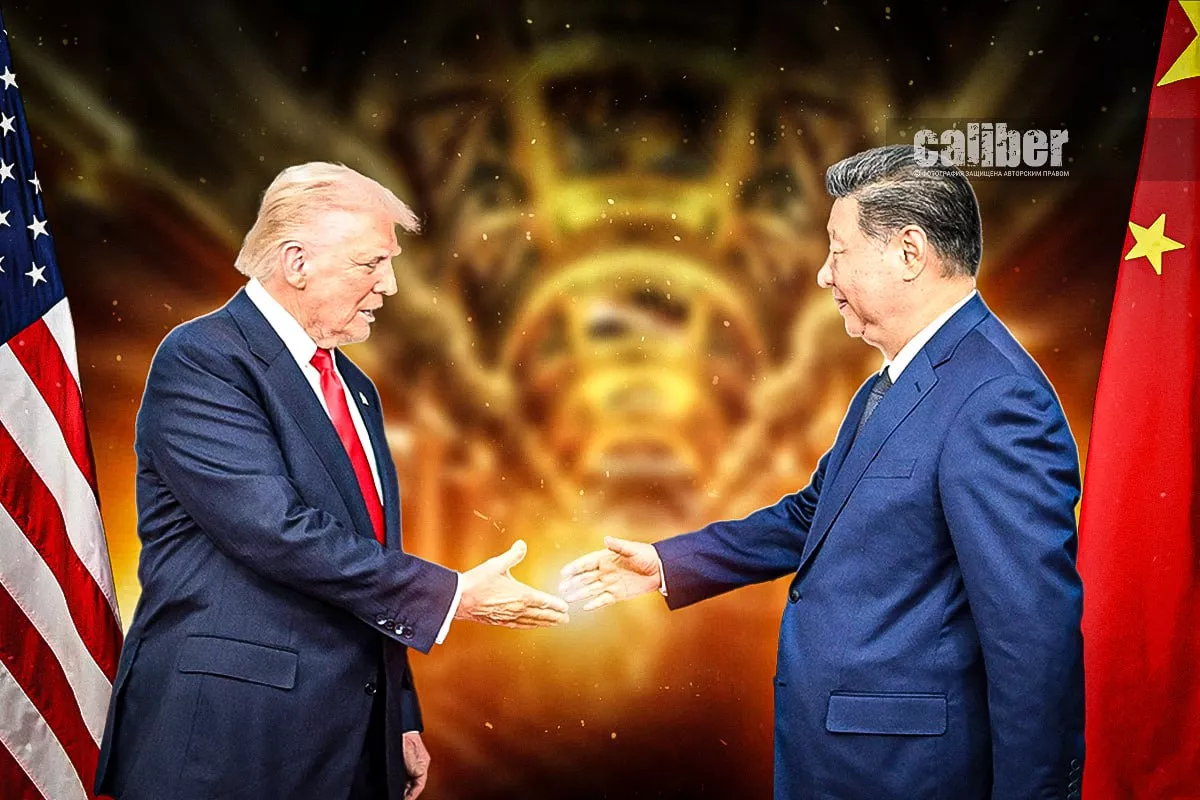
As for the geopolitical dimension, Americans view China as a key factor in relations with Russia, Iran, and North Korea, and these topics will undoubtedly be addressed during the negotiations. For example, Washington has long hoped that Beijing would exert pressure on Moscow regarding the Ukrainian issue. The Iranian question has also come to the forefront—Trump wants Tehran to scale back its military activities and nuclear program, and believes that China should help persuade the Iranian side.
In turn, the Chinese leadership, which often emphasises that global and regional problems can only be resolved through diplomatic means, views high-level negotiations with the United States as an important step toward resolving ongoing crises.
Thus, at present, both Beijing and Washington are guided largely by pragmatic considerations: the superpowers are focused on the single unifying economic imperative. However, ideally, during a new meeting—if it does indeed take place—they may also find time to discuss the truly dangerous points of contention that divide them, whether it be the situation in the South China Sea or the “Gordian knot” of Taiwan. The war in the Middle East has clearly demonstrated to both Washington and Beijing, as well as to the entire world, the necessity of seeking compromise and the importance of keeping rivalry under control.







 editor@caliber.az
 +994 55 444-88-98
 Азербайджан, Баку, ул. Низами, 203, Af Business House, 5-й этаж