










Mirror of hybrid warfare European Parliament undermines peace in the South Caucasus
On April 21, the Council of the European Union established the EU Partnership Mission in Armenia (EUPM Armenia) — a civilian structure of twenty to thirty personnel, whose formally stated purpose, according to the official communication, is to counter “foreign information manipulation and interference, cyber-attacks and illicit financial flows” ahead of Armenia’s parliamentary elections scheduled for June 7.
Just three days later, on April 24, a draft resolution titled “Supporting democratic resilience in Armenia” was introduced in the European Parliament. This “document,” presented as a programme of assistance to an ally, in substance functions as an act of hybrid pressure on the peace process between Baku and Yerevan. Precisely the scenario that Brussels officially declares a threat to regional stability is now being set in motion by its own parliamentary platform in the South Caucasus.
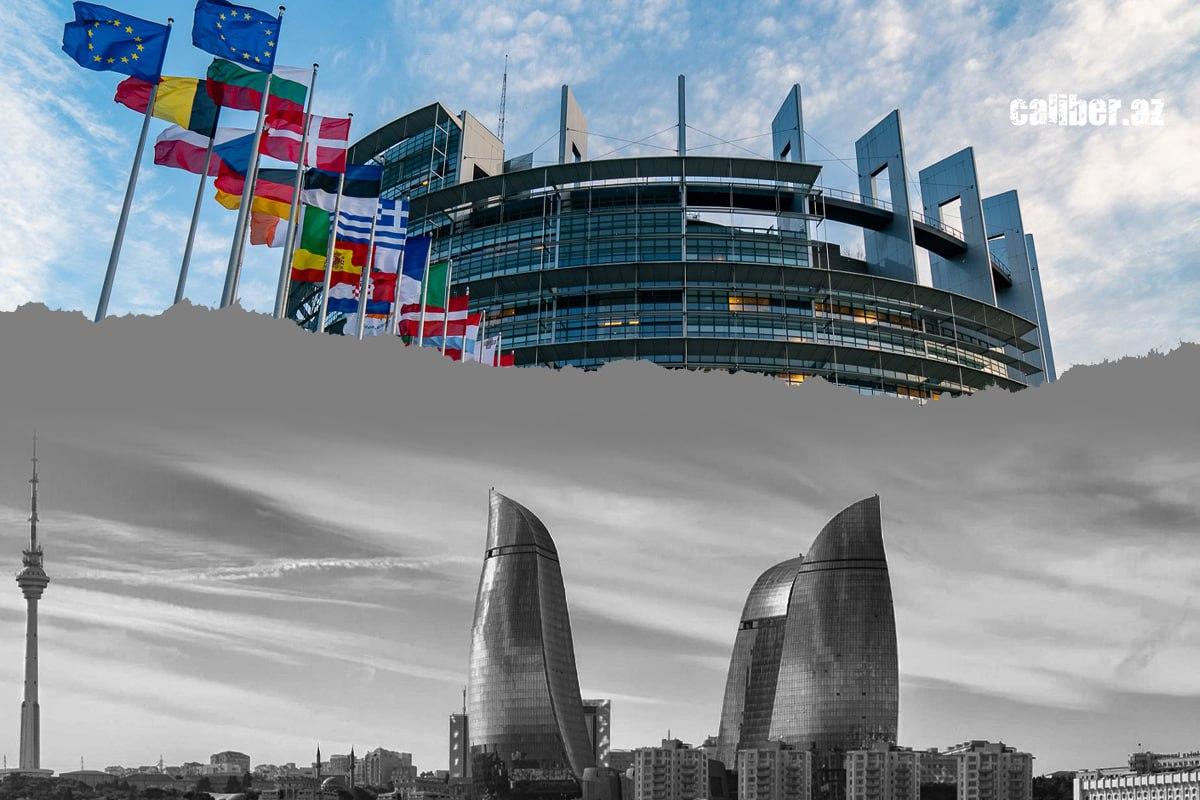
Of the twenty-four provisions in the draft, seven — points 14, 15, 16, 18, 19, 20, and 21 — contain direct accusations and unacceptable demands directed at Azerbaijan. These are reinforced by the preamble and two paragraphs within it — H and I — which are likewise built around an anti-Azerbaijani narrative. This amounts to roughly one-third of the resolution by volume and more than half in terms of political weight, as these very clauses define its overall agenda. While Armenia appears in the title, in substance the document reads as an indictment against Azerbaijan, packaged in the form of a support programme for Armenia.
The authors are from the ECR Group (European Conservatives and Reformists), comprising eighty-four Members of the European Parliament and ranking as the third-largest political group in the chamber. The co-chairs are Nicola Procaccini of the Brothers of Italy party and Joachim Brudziński of Poland’s Law and Justice party. A closer look at these seven points reveals how exactly the resolution’s political line has been constructed.
Point 14 is the core of the document. It “invites the attention of the stakeholders to the urgency of such a process given the increasing threat of hybrid warfare, disinformation, and foreign interference, particularly from Russia and Azerbaijan.” In other words, in black and white, the draft resolution places Russia and Azerbaijan side by side as two sources of the same threat. The logic here, one must admit, is entirely absent. Moscow is conducting an operation against Armenia aimed at undermining Prime Minister Pashinyan’s pro-Western course — the EU’s High Representative for Foreign Affairs, Kaja Kallas, explicitly identifies Russian interference as the main risk to the parliamentary elections in justifying the EUPM mission. Baku, by contrast, is interested in a stable Armenia capable of bringing the peace agreement initialled in Washington to full signature through a constitutional referendum.
Point 15, which overlaps with Point 15 “strongly condemns the rhetoric and promotion of the so-called ‘western Azerbaijan’ and ‘Zangezur Corridor’ narratives, which constitute a form of hybrid threat by promoting unfounded territorial claims against Armenia and by undermining peace, stability, and dialogue in the South Caucasus,” and also “calls on the Commission and the Member States to actively counter and address activities aimed at promoting this false narrative; Encourages the European Union to ensure that its agreement with Azerbaijan on a feasibility study for the Nakhchivan railway project is linked to routes through Armenia, thereby contributing to regional stability, peace, and mutual trust; stresses that all regional connectivity must respect sovereignty, territorial integrity, jurisdiction and reciprocity, and should reinforce rather than bypass Armenia’s Crossroads of Peace approach.”
Thus, Members of the European Parliament are effectively assigning a legal characterisation of “hybrid threat” to Azerbaijani foreign policy concepts. However, Baku's official position does not include demands for the annexation of Armenian territories. The term “Western Azerbaijan” does not refer to a territorial claim; rather, it describes the historical heritage of Azerbaijanis whose expulsion from Armenia took place throughout the 20th century. The “Zangezur corridor” is a working designation for a transport route connecting the mainland of Azerbaijan with the Nakhchivan Autonomous Republic via Armenian territory. The principles of this route were agreed upon by Presidents Ilham Aliyev and Nikol Pashinyan with US mediation in Washington on August 8. Baku emphasises that one of the key outcomes of the Washington summit is the “Trump Route for International Peace and Prosperity” (TRIPP), which is intended to ensure unobstructed transit through the Zangezur corridor and strengthen regional connectivity.
Strikingly, the European Parliament considers this to be a “form of hybrid threat” and a risk to Armenia’s sovereignty.
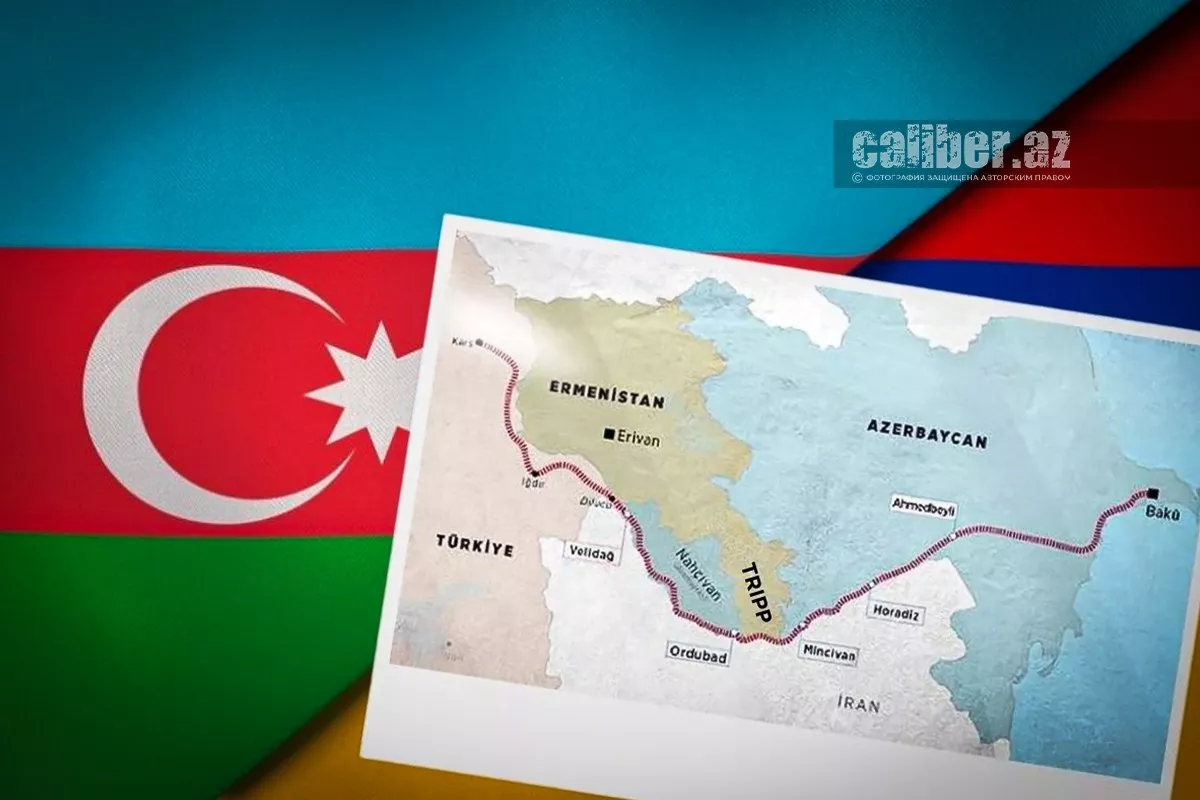
Point 18 “welcomes the outcomes of the Washington Peace Summit and Armenia’s readiness to sign the agreed peace text; calls on Azerbaijan to reciprocate in good faith, to refrain from inflammatory rhetoric and threats, and to recognize that peace institutionalization is indispensable to democratic stability in the region.”
The formulation is standard. Armenia is presented as already ready to sign, while Azerbaijan is portrayed as the side obstructing the process. In reality, the peace agreement text has been initialled by the foreign ministers of both countries. The final signing has not been delayed due to an alleged “reluctance by Azerbaijan”, but rather, according to the Azerbaijani position, because of a constitutional obstacle in Armenia: the preamble of the Armenian Constitution contains a reference to the Declaration of Independence, which includes territorial claims over the Azerbaijani region of Karabakh.
It is argued in Baku that until these claims are removed, the signing of a final peace treaty would lack legal coherence, as any signature by the Armenian leadership would conflict with the country’s own constitution. It is also suggested that this is well understood by President Ilham Aliyev, Prime Minister Nikol Pashinyan, as well as in Brussels, yet this aspect is not mentioned in the European Parliament’s framing, which instead presents the issue as if the sole obstacle lies with Baku.
Point 19 “demands a more substantial engagement of the European Commission in the immediate and unconditional release of remaining Armenian hostages illegally held by Azerbaijan, and regards this an impediment to the institutionalization of peace.”
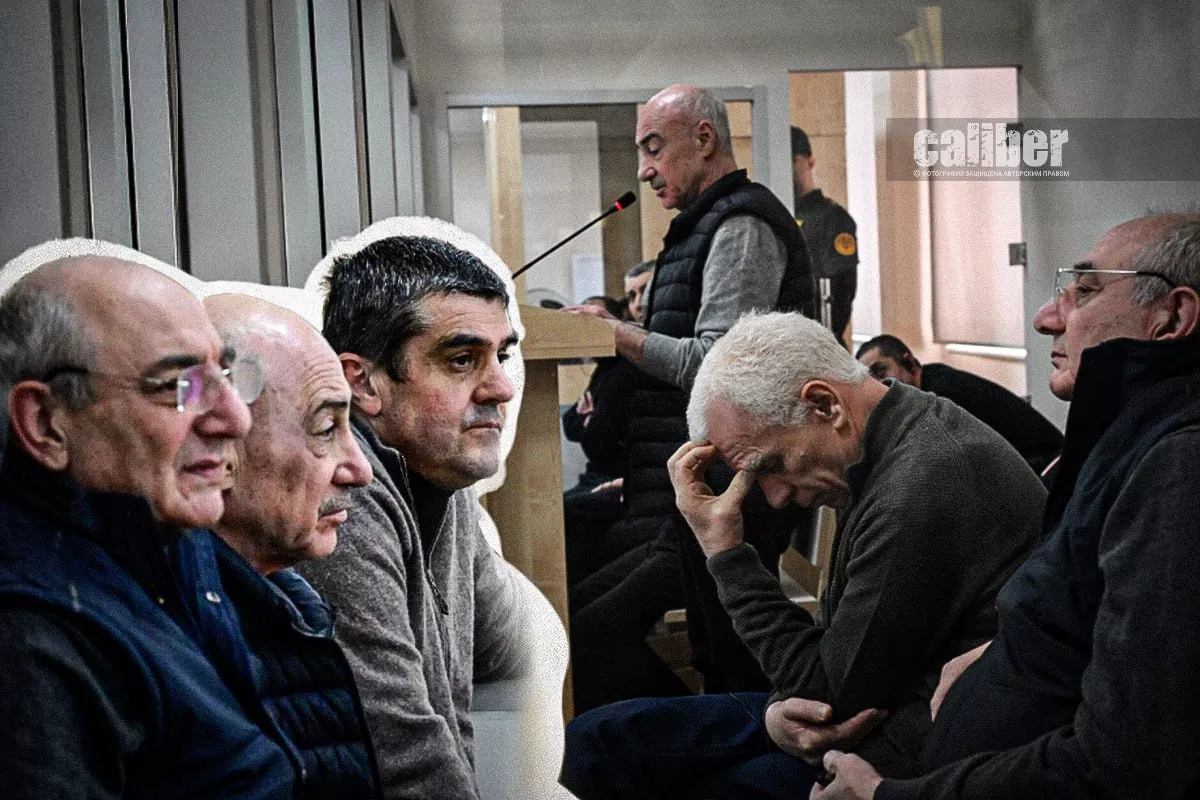
The wording “Armenian hostages illegally held” directly contradicts the logic of the trials in Baku concerning the leadership of the former separatist entity. The individuals referred to include former leaders of the so-called “Nagorno-Karabakh Republic” — Arkadi Ghukasyan, Bako Sahakyan, Ruben Vardanyan, Arayik Harutyunyan, Davit Ishkhanyan, and others — who have been convicted by Azerbaijani courts of war crimes and crimes against humanity.
The proceedings were held publicly and with legal defence present. From this perspective, they are not “hostages” in the sense defined under international humanitarian law. The term “hostage” is reserved for civilians unlawfully detained for coercion or leverage. Applying it to individuals convicted of serious crimes by a competent court represents a deliberate distortion of legal terminology without a basis in law. It is argued that the European Parliament is aware of this distinction but nevertheless chooses a framing that alters the legal and factual context.
Point 20 “supports the Government of Armenia in its efforts to provide essential assistance to Nagorno-Karabakh Armenians affected by ethnic cleansing, and demands the allocation of sufficient funding and resources to ensure the effectiveness of this support; reiterates that the rights of those forcibly displaced include dignity, security, property protection, identity and the possibility of safe, unimpeded return under international guarantees.”
The allegation of “ethnic cleansing” has not been legally confirmed by any international court. Following September 2023, no court ruling, no Council of Europe investigation, and no active International Criminal Court decision has made such a qualification. Armenians left the Karabakh region voluntarily. Azerbaijan publicly guaranteed the security of all those who chose to remain and offered a concrete reintegration framework, which was rejected by Armenians under the influence of the separatist leadership.
At the same time, members of the European Parliament should also take into account the UN mission report, according to which civilian and public infrastructure in Karabakh was not damaged.
Point 21 “calls for accountability for the destruction and alteration of Armenian cultural, historical and religious heritage in Nagorno-Karabakh, and supports renewed international pressure for a UNESCO mission to assess relevant sites.”
Once again, the formula of “destruction and alteration of heritage” is presented as fact without evidence, whereas the documented reality is entirely different. The Aghdam and Fuzuli mosques, the Juma Mosque in Shusha, Azerbaijani cemeteries, and hundreds of other sites were destroyed or turned into livestock shelters during the years of Armenian occupation.
All seven points are constructed in the same way, each based on the denial or distortion of established facts confirmed by legal and on-the-ground assessments. Taken together, they function in a coordinated manner aimed at rewriting, retroactively, the outcomes of a thirty-year conflict that Armenia lost on the battlefield.
Since the military option is closed, a parliamentary one is being pursued instead: to embed through European institutional resolutions a version of events that cannot be substantiated in international courts. This represents a coordinated political operation, in which the European Parliament functions as a platform for relaying a one-sided agenda.
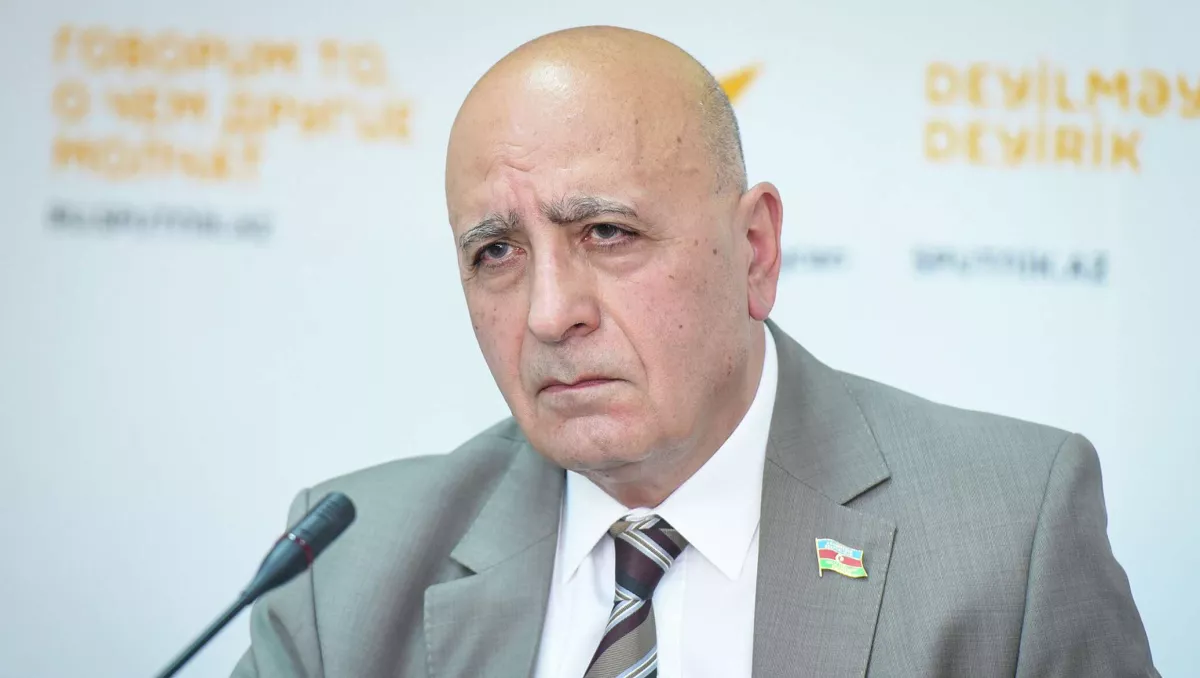
Azerbaijani political scientist and MP Rasim Musabayov, in an interview with Caliber.Az:
“The European Parliament has turned into a meaningless talking shop, and with such pointless actions it is merely reminding everyone of its own existence. The more often MEPs behave in this way, the less respect they receive in countries they seek to influence in one way or another. While lightweight parliamentarians adopt equally lightweight resolutions, real politicians are visiting Baku, building relations with our country, and finding solutions to genuinely existing problems both in the region and in the context of Europe’s own communication and energy security.
In essence, through such actions the European Parliament is effectively playing into the hands of opponents of Nikol Pashinyan. The Armenian Prime Minister says: ‘The conflict is over, a full stop has been placed.’ MEPs, however, continue to reopen old wounds, effectively stimulating revanchist sentiments. I do not rule out that this is being lobbied by Dashnaks, who finance all these information and propaganda attacks in the European Parliament and in the parliaments of several European countries. They are controlled by businessmen who worked with Kocharyan and Sargsyan and are partners of Samvel Karapetyan.
But they can do nothing to Azerbaijan—neither physically nor in terms of information warfare.”
Notably, coordination with other structures is visible in the chronology. On April 16, two resolutions were adopted, simultaneously prepared by the parliaments of Belgium and the Netherlands against the new realities in the South Caucasus. On April 24, the ECR group submitted a resolution to the European Parliament. Three separate institutions, yet an identical set of demands and similar wording.
To this series are added Swiss initiatives: in February 2026, the parliament of this country discussed a so-called “peace initiative” on Karabakh, which in substance repeated the same theses.
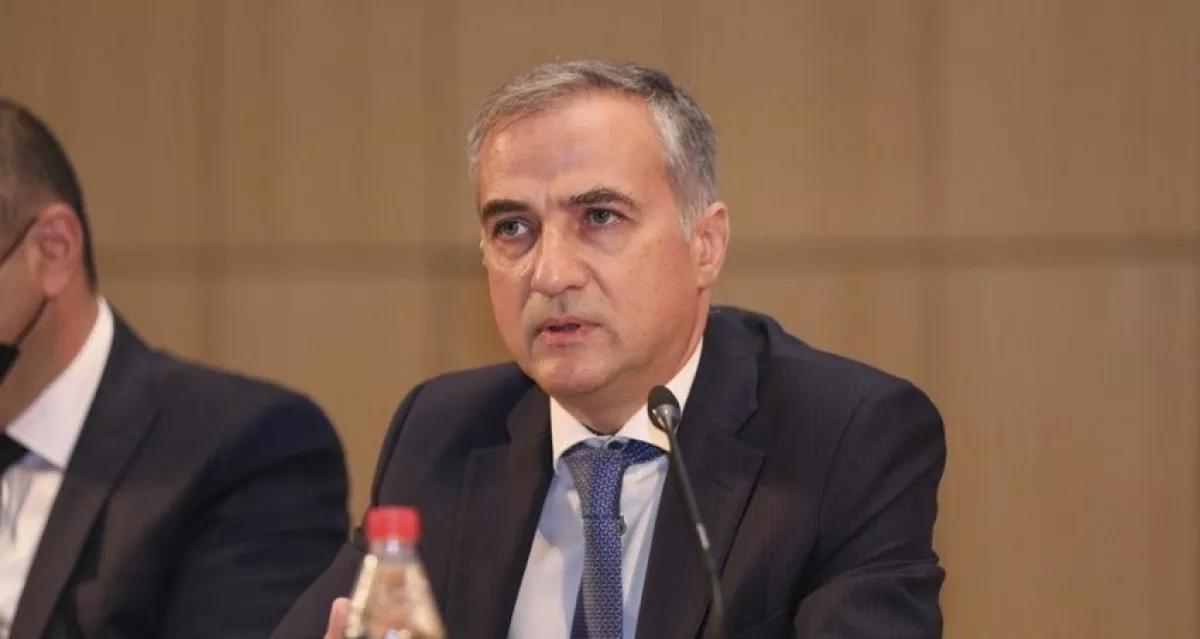
Director of the Center for Analysis of International Relations (Air Center), diplomat Farid Shafiyev, believes that the resolution was prepared in coordination with the Armenian diaspora, especially given the adoption of similar resolutions by the parliaments of Belgium and the Netherlands.
“This resolution is ostensibly aimed at supporting democratic processes in Armenia, but several of its provisions in fact revive a conflict-driven agenda between Baku and Yerevan. European parliamentarians are acting as ‘useful idiots’ because, at a time when the Pashinyan government has taken a course toward normalisation of relations with Azerbaijan and Türkiye, raising issues related to a conflict that has already ended means playing into the hands of those who continue to instrumentalise it.
I believe this entire campaign is directed against the current Armenian government and its peace agenda. It fundamentally contradicts what we hear from high-ranking European politicians, including those visiting Azerbaijan. For example, during the recent visit of the President of Latvia, rhetoric was voiced that is in no way aligned with the ideology of the European Parliament,” the political scientist stressed.
In his view, this does not serve peace; moreover, Azerbaijan’s position will become even firmer: “There may also be forces within the Armenian government that are playing a certain game, and I am confident that everything will become clear after June 7, that is, after the elections. Azerbaijan, for its part, will continue to respond firmly to such actions by the European Parliament. And I believe that, in the end, only Armenia will lose from the actions of the Europeans.”
It is also notable that on April 16 — the same day when the Belgian and Dutch resolutions were initiated — the sixth meeting of the EU–Azerbaijan Partnership Council was held in Brussels. At this meeting, the Azerbaijani delegation discussed a draft of a new Enhanced Partnership Agreement.
This already represents the executive agenda of the European Union, driven by its own strategic interests. Azerbaijan is needed by Brussels as a reliable energy partner, as a key node of the Middle Corridor around which the logistics of the Global Gateway initiative are being structured, and as an independent geopolitical actor in the South Caucasus — not affiliated with either Moscow or Tehran, and therefore capable of engaging simultaneously with the West, the North, and the South.
At the same time, the European Parliament places Azerbaijan among the sources of “hybrid threats”, grouping it together with Russia. For any country, such duality would appear as a signal of the unreliability of Brussels itself.
It is difficult to speak seriously about an Enhanced Partnership Agreement when one EU institution conducts substantive dialogue while another, at the same time, prepares politically accusatory documents. This points to a simple reality: within the European Union, either there is no even basic coordination on the issue of Azerbaijan, or there is a formally agreed line that combines pragmatic cooperation with public political pressure.
The response from Azerbaijan to the Belgian and Dutch resolutions followed on April 20: the ambassadors of both countries were summoned to the Ministry of Foreign Affairs, an official protest was lodged, and the Azerbaijani parliament issued a strongly worded statement of condemnation. It is expected that the European Parliament resolution to be adopted in the coming days will provoke an even firmer reaction. The erosion of trust will inevitably affect specific tracks of Azerbaijan–EU relations.
Brussels is left with a choice. Either the European Union establishes a coherent and consistent line, in which strategic partnership with Azerbaijan and support for the peace process do not contradict the rhetoric of its institutions. Or the current duality is maintained, where some structures speak of cooperation while others continue to produce politicised and unsubstantiated accusations.
In the second scenario, the European Union risks losing what matters most — trust as a serious and predictable partner.







 editor@caliber.az
 +994 55 444-88-98
 Азербайджан, Баку, ул. Низами, 203, Af Business House, 5-й этаж