










Colonial morality versus peace in the South Caucasus Don Ceder and Michel de Maegd in the role of arsonists
On April 16, lawmakers in two European capitals, clearly driven by the same impulse, carried out an almost simultaneous “operation” against the new realities in the South Caucasus. In Amsterdam, the House of Representatives of the States General of the Netherlands, late in the evening, put to a vote and adopted two parliamentary motions by MP Don Ceder of the Christian Union party — one calling for the release of so-called “Armenian prisoners of war” in Azerbaijan and another recognising the “Armenian genocide.” On the same day in Brussels, the Chamber of Representatives of the Belgian Federal Parliament adopted a resolution introduced by MP Michel de Maegd, broadly echoing the agenda of the “big Armenian dossier”: the “right of Karabakh residents to return under international security guarantees,” the creation of an effective international monitoring mechanism, the withdrawal of Azerbaijani armed forces to positions as of May 12, 2021, and the resolution of the issue of Armenian prisoners and civilians allegedly held in Baku.
Two parliamentary genres merged into a single score.
It was performed for internal party agendas, Armenian diaspora organisations, and those segments of the European political audience that require a clearly identified antagonist in the geopolitical theatre. Azerbaijan fits this “role” for several reasons: it is located far from the “garden of paradise”, does not belong to the club of Christian states, yet remains sensitive to reputational attacks, which makes it an ideal target for such pressure. MPs Ceder and de Maegd are not incidental figures in this context.
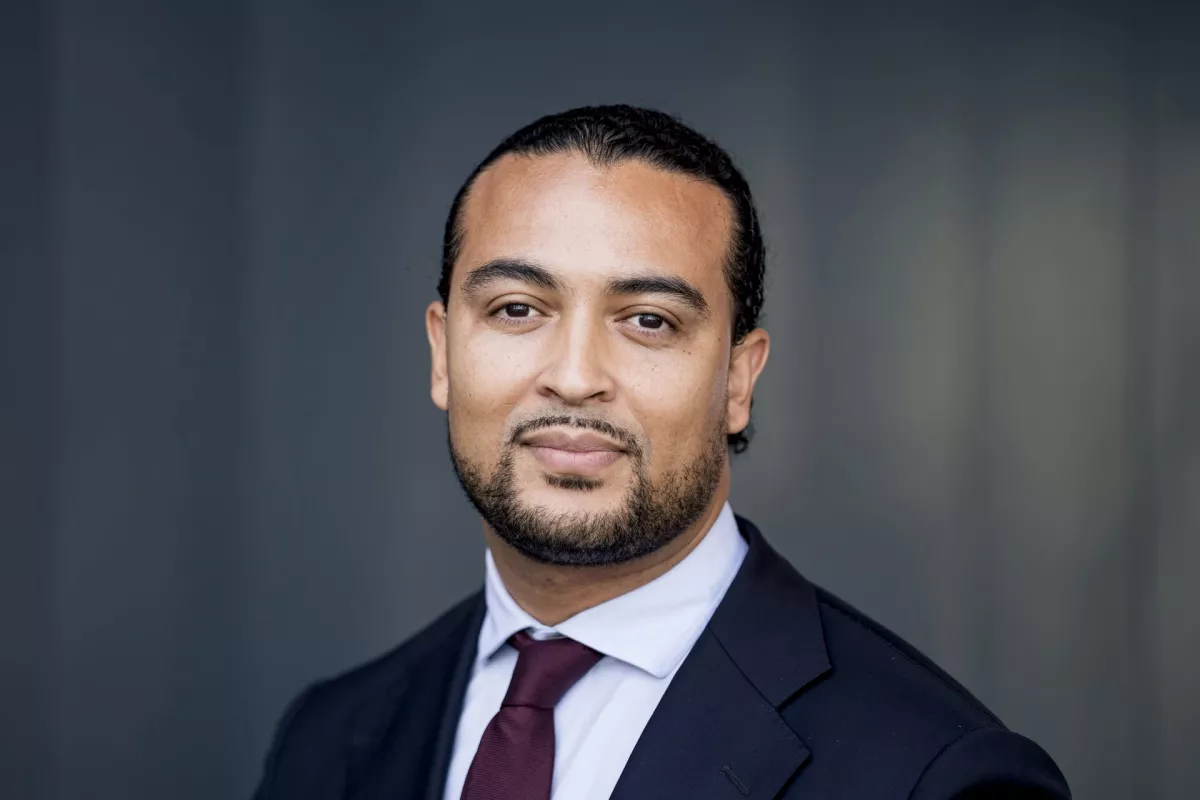
Since 2021, Ceder has signed eight out of the nine anti-Azerbaijani documents adopted by the lower house of the Dutch Parliament.
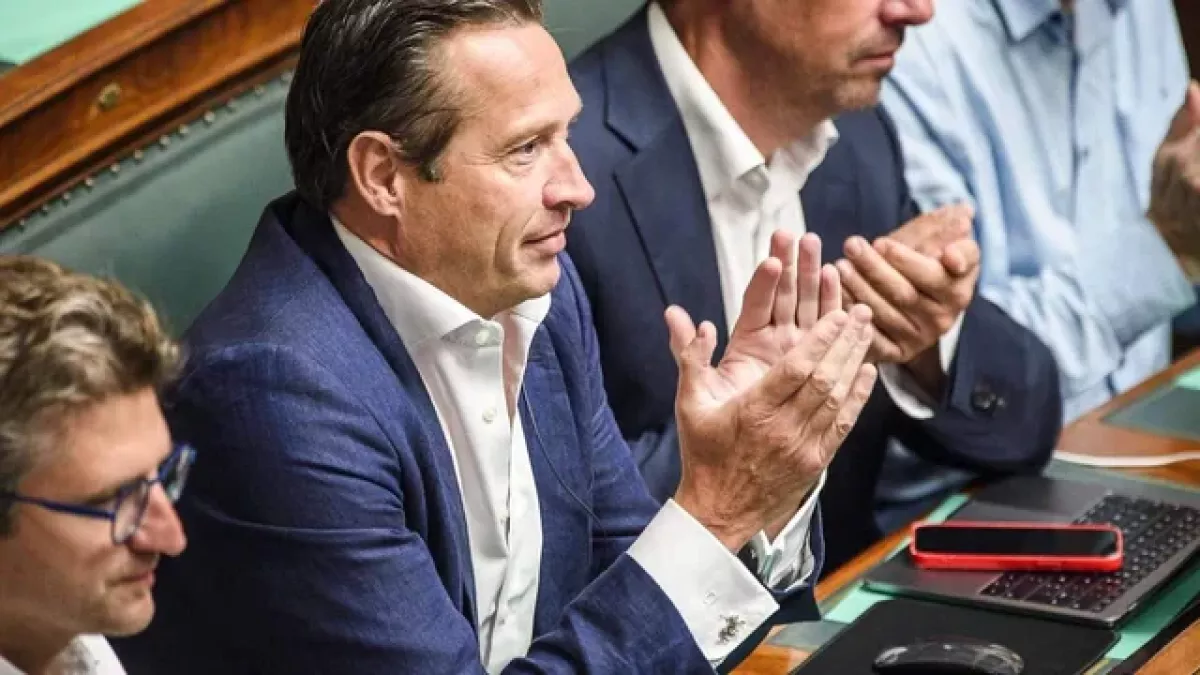
As for de Maegd, during his seven years in the Belgian Chamber of Representatives he has already introduced his fifth resolution of a similar nature — something he, as he himself reportedly acknowledges in conversations with Armenian journalists, takes pride in. Political bias and an anti-Azerbaijani stance have become their main political calling card.
However, the Karabakh region of Azerbaijan, in factual terms, can no longer be a subject of parliamentary debates in Europe. On August 8, 2025, at the White House, Armenian Prime Minister Nikol Pashinyan and Azerbaijani President Ilham Aliyev, in the presence of the US President Donald Trump, signed a joint declaration, while the foreign ministers of the two countries initialled the text of a seventeen-point peace agreement. This marked a moment that effectively removed the ground from under any alternative interpretations: Armenia and Azerbaijan are in an active phase of normalisation, Karabakh was fully reintegrated into the Azerbaijani state as of September 2023, the Armenian population left the region voluntarily, and Pashinyan himself — contrary to the logic of anti-Azerbaijani European resolutions — has explicitly stated that the return of Armenians to Karabakh carries the risk of a new war. In other words, the Armenian prime minister himself does not align with the rhetoric of the Dutch and Belgian parliaments. However, this is a reality that MPs Ceder and de Maegd are compelled to carefully bypass.
There is another detail that both resolutions elegantly bypass — the thirty-year history of occupation of Azerbaijani territories. Since the late 1980s, around 250,000 ethnic Azerbaijanis were expelled from Armenia; their homes, villages, mosques, and cemeteries were erased from the map. Karabakh and the seven surrounding districts, occupied by Armenia in the early 1990s, were largely turned into a scorched landscape: more than 700,000 Azerbaijanis were forced to flee from Fuzuli, Aghdam, Jabrayil, Zangilan, Kalbajar, Gubadli, and Lachin, compelled to start life anew within the borders of their own country. None of the resolutions introduced by Ceder and de Maegd over the course of their parliamentary careers even mentions this reality. Their “right of return” applies only to Armenians, and their “international security guarantees” are extended only to Armenians.
But there is also a more fundamental dimension to this dual voting — one that European parliamentarians prefer not to dwell on when they raise their hands for resolutions on others’ “sins”. It concerns the moral right to lecture. The Netherlands and Belgium are two countries whose colonial legacy is not dissolved into the broader European background, but rather constitutes a dense, well-documented core filled with concrete historical events.
In the case of the Netherlands, this includes the Dutch East India Company, which for two centuries built in Southeast Asia a system that today is described in the language of international criminal law; the 1621 massacre on the Banda Islands — the effective extermination of the indigenous population of the Banda archipelago; and the “police actions” in Indonesia after the Second World War, including mass executions carried out by Raymond Westerling’s units in South Sulawesi — war crimes for which the Netherlands bears direct responsibility. Suriname, Curaçao, Aruba — slave trade routes through which Dutch companies transported, according to the most modest historical estimates, over half a million Africans over two centuries. In 2023, Prime Minister Mark Rutte issued apologies for this legacy, without, however, mentioning any obligations regarding reparations.
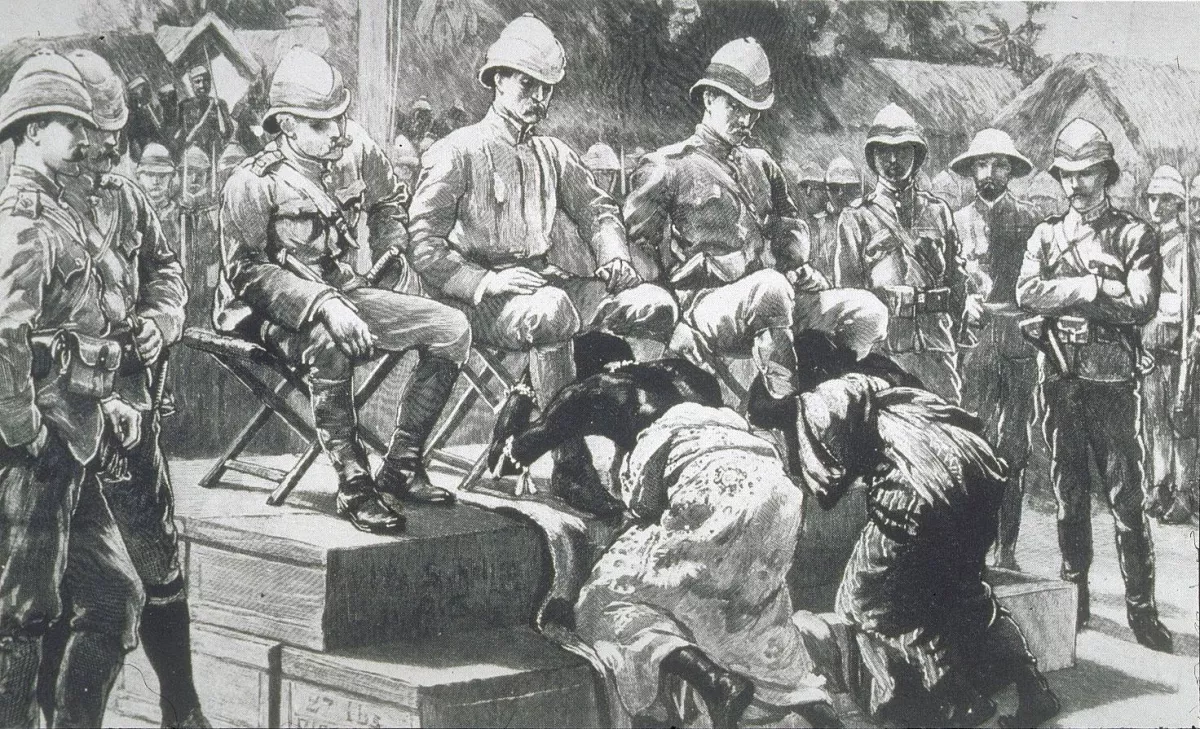
Incidentally, there remain six territories in the Caribbean basin that are still under Dutch jurisdiction: Bonaire, Sint Eustatius, Saba, Sint Maarten, Aruba, and Curaçao. A model operates there which the Baku Initiative Group has characterised as a continuation of colonial policy — assimilation, the marginalisation of indigenous populations, suppression of pro-independence voices, and the gradual erosion of local languages in schools.
The United Nations has periodically noted this legacy as being at odds with contemporary standards of self-determination, while the Dutch parliament has consistently chosen to ignore these assessments.
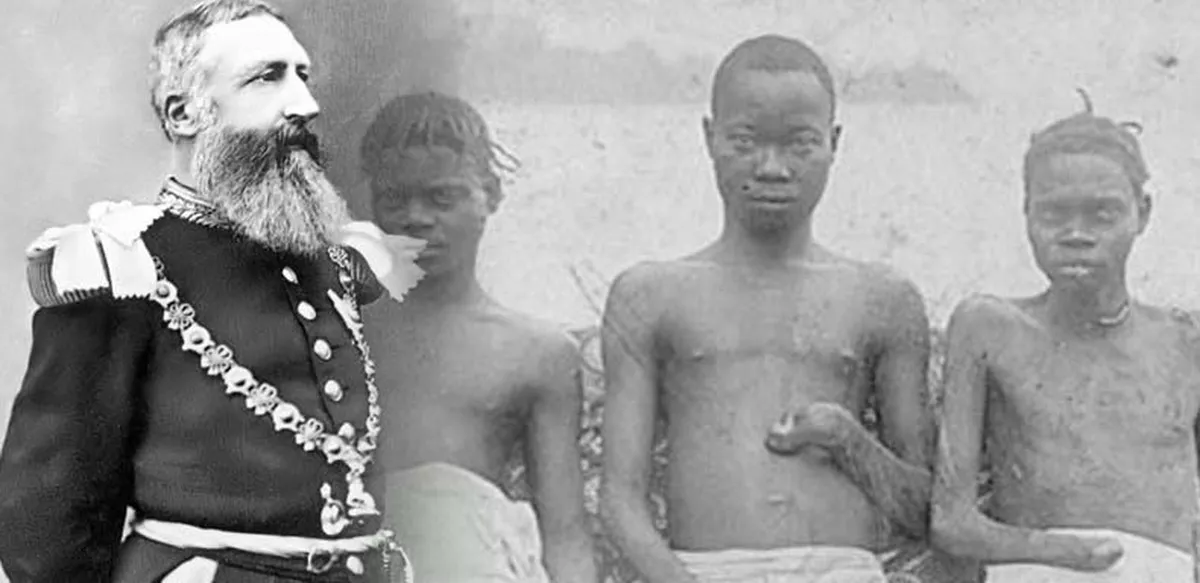
The case of Belgium is even more illustrative, because its colonial history stands out even within the broader European context due to its exceptional brutality. The Congo Free State was not a colony of the Belgian state: it was the personal possession of King Leopold II, the only known case in history in which a vast African territory was owned by a European monarch as private property.
During decades of this “rule”, the local population is estimated by historians to have decreased by around ten million people — roughly half of the region’s inhabitants. The system of forced rubber collection, enforced through mutilation such as the severing of hands as a form of punishment, became one of the most thoroughly documented atrocities of the colonial era, described by contemporaries including Roger Casement, Mark Twain, and Edmund Dene Morel.
When, under international pressure in 1908, Leopold was forced to transfer the territory to the Belgian state, the king’s archives were destroyed in order to prevent the full scale of the inflicted violence from being properly documented.
But Belgium’s colonial era does not end there. One of its darkest chapters was the so-called “human zoos”. In 1897, by direct order of Leopold II, 267 inhabitants of the Congo were forcibly taken to Brussels and displayed at the World Exhibition in Tervuren as “living exhibits” — behind wooden fences, partially dressed, in the cold European climate, treated as objects of public curiosity. Some of them, including children, died from pneumonia and influenza; their bodies were secretly buried.
On the site of this “zoo”, the so-called “Museum of the Congo” was later established, which became the Royal Museum for Central Africa — a propaganda centre of colonial ideology that functioned in this capacity effectively until the end of the twentieth century.
In 1958, Belgium repeated this practice: at the Brussels World Exhibition Expo 58, 598 people were brought from the Congo, including 197 children, and once again they were exhibited to the public as “living displays”.
From 1959 to 1962, in Burundi, the Congo, and Rwanda — territories under Belgian colonial administration — around twenty thousand children born to white fathers and Black mothers were forcibly separated from their families, taken to Belgium, and placed for adoption without parental consent. The system was designed with the aim of preserving so-called “white identity”.
Belgium officially apologised for this practice only in 2019 — sixty years later — and even then in carefully worded terms that deliberately avoided the expression “crime against humanity”.
When, seven years later, the Belgian Chamber of Representatives proclaims principles of “international security guarantees” exclusively for Armenians, one is left to ask: by what instruments of international monitoring was this principle applied to those twenty thousand Burundian and Rwandan children whose biographies were reduced to files of anonymous adoptions?
The answer is known in advance — none at all.
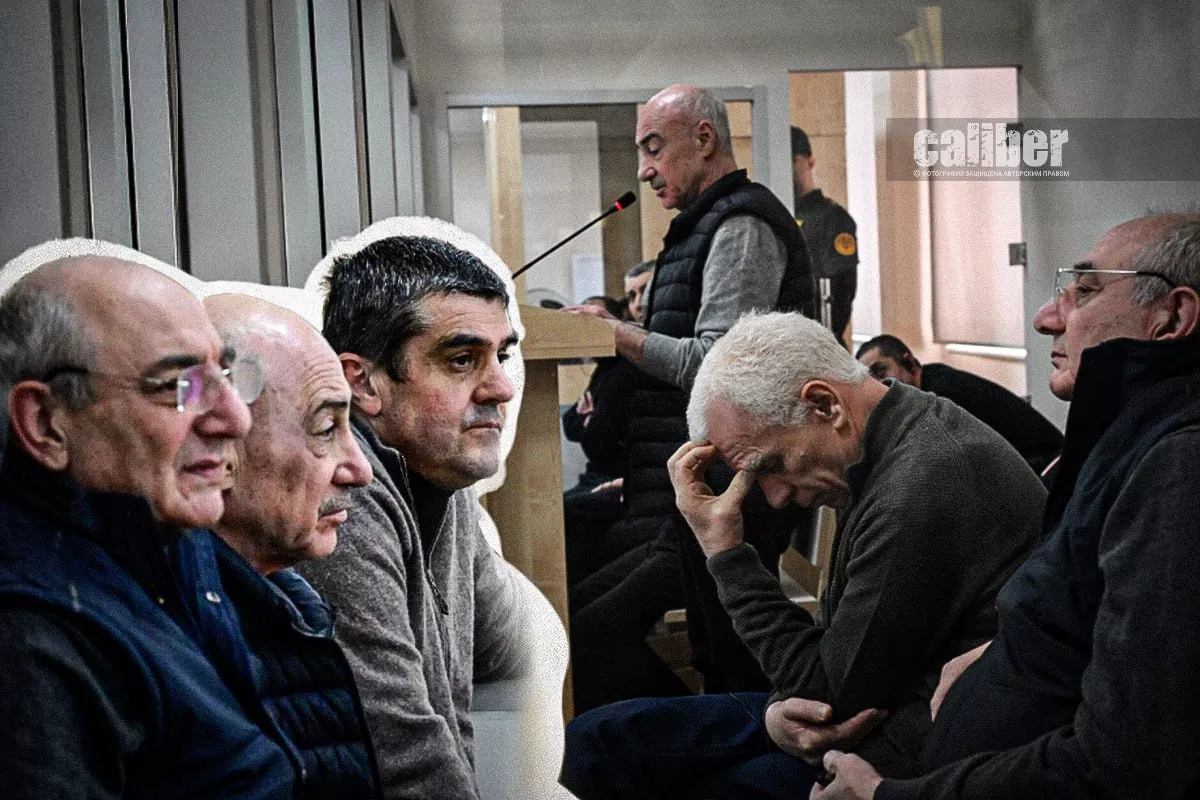
For the formulation “Armenian prisoners of war and civilians held in Baku”, simultaneously repeated in Brussels and Amsterdam, there are concrete individuals behind it with concrete court verdicts. On February 5, 2026, the Baku Military Court issued sentences for fifteen former leaders of the now-defunct separatist regime in Karabakh. Five of them — Araik Harutyunyan, David Babayan, David Ishkhanyan, Levon Mnatsakanyan, and David Manukyan — were sentenced to life imprisonment. The others received prison terms ranging from fifteen to twenty years.
On February 17, a separate trial concluded with the sentencing of Ruben Vardanyan: twenty years in prison under more than forty charges. The classification of the accusations includes crimes against peace and humanity, war crimes, financing terrorism, creation of illegal armed formations, and violent seizure of power.
These individuals are not prisoners of war. They are convicted persons under the Criminal Code of Azerbaijan for actions committed on its territory. The call from Brussels and Amsterdam to “resolve their issue” is, in essence, a demand for the pardoning of defendants from a Nuremberg-style process — individuals who, incidentally, were involved in the occupation of Belgium and the Netherlands.
Azerbaijan, of course, will withstand both the Belgian resolution and the Dutch motions, as well as the next wave of political attacks that will inevitably follow. The peace process will also endure — it is already moving along its established trajectory and internal logic. Ultimately, the peace emerging in the South Caucasus is not being written in Amsterdam or Brussels. It is being written in Baku and Yerevan. Everything else is background noise to which the country has already developed immunity.







 editor@caliber.az
 +994 55 444-88-98
 Азербайджан, Баку, ул. Низами, 203, Af Business House, 5-й этаж