










A vandal preaching decency Kocharyan’s warped mirror
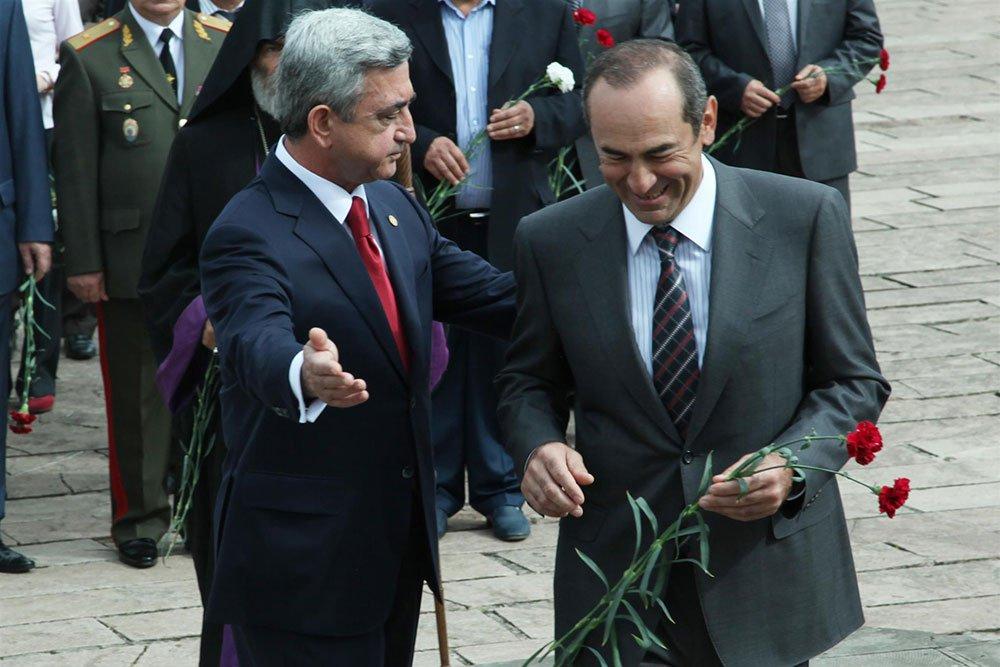
When a politician has nothing left but the right to remain silent—and still refuses to use it—you get what we’ve just seen from Robert Kocharyan. Five weeks before the parliamentary elections scheduled for June 7, Armenia’s former president appeared on his YouTube project Big Politics and began lecturing on propriety.
According to him, President of Azerbaijan Ilham Aliyev speaks of peace while allegedly pursuing a policy of “vandalism.” At the same time, Kocharyan claims that, having “won the First Karabakh War,” he never allowed himself to insult the Azerbaijani people or, even more so, to touch their cultural heritage. His words, verbatim. One could have ignored it: a political relic, a marginal voice, a video format for a shrinking audience. But the falsehood is so blatant that silence would amount to complicity.
Let’s begin with “decency.” On January 16, 2003, at the Diplomatic Academy of the Russian Foreign Ministry, Robert Kocharyan made the claim that Armenians and Azerbaijanis are “ethnically incompatible.” He was criticised for this by the Secretary General of the Council of Europe, Walter Schwimmer, who stated that “Kocharian's comment was tantamount to warmongering.”
Kocharyan’s words were neither a slip of the tongue nor a sentence taken out of context. They were a public statement by the then head of the Armenian state. To grasp how monstrous this formulation is, one need only switch the subject: imagine a president of a European country declaring genetic incompatibility with a neighbouring nation. Such a politician’s career would end that very evening—and not on a YouTube channel, but quite possibly in a courtroom. Kocharyan, however, went on to serve out his full second term after that speech.
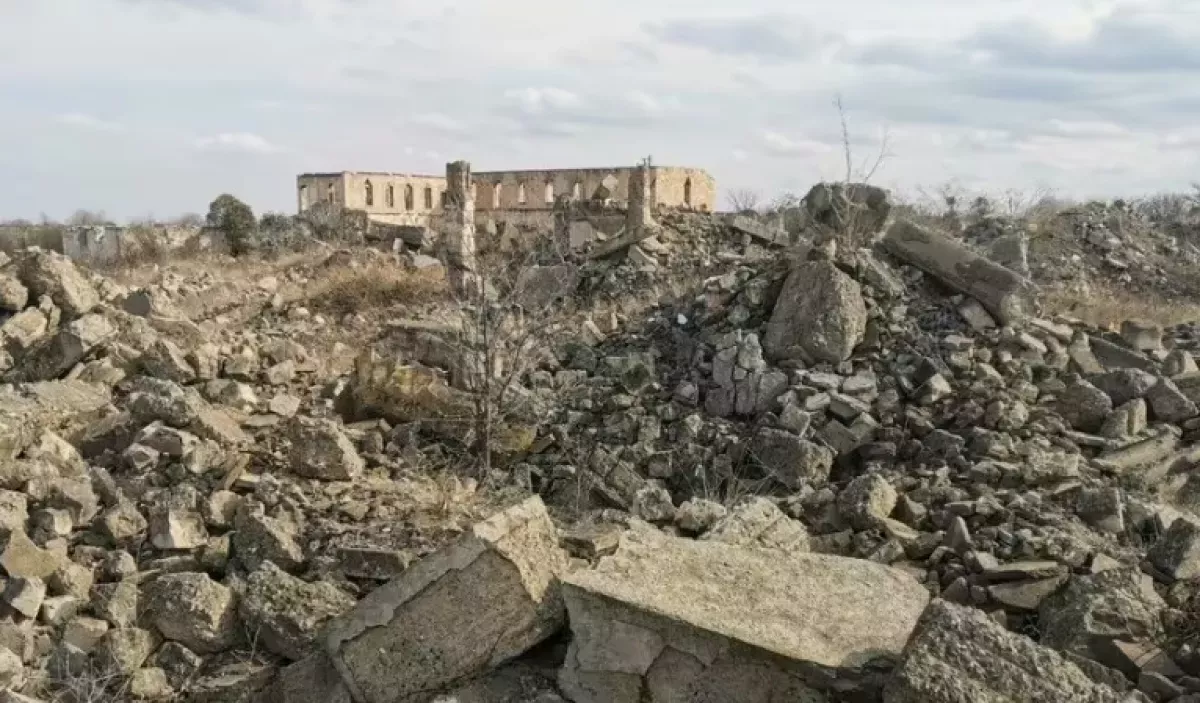
Now to the “vandalism” that, according to Kocharyan, Baku is guilty of. Here it is worth turning to history and geography. In July 1993, Armenian forces captured Aghdam—a city of forty thousand people, just forty minutes’ drive from Khankendi. Decades later, journalists and observers—including those hardly suspected of pro-Azerbaijani sympathies—described what they saw in strikingly similar terms: the city had been dismantled stone by stone.
Thomas de Waal, a British journalist often cited in Yerevan, writes in his book Black Garden that after the capture of Aghdam, Armenian forces “slowly stripped every street and house.” In 2001, the American co-chair of the OSCE Minsk Group, Carey Cavanaugh, after visiting Aghdam, put it even more bluntly: the destruction did not occur during the fighting, but after it; brick by brick, the city was taken apart for building materials, which were then transported to Armenia for sale. As he was leaving, Cavanaugh took a stone from the Aghdam Juma Mosque and handed it to Heydar Aliyev.
This, in essence, is the documented record of events—one referenced not by Baku, but by Western diplomats and journalists.
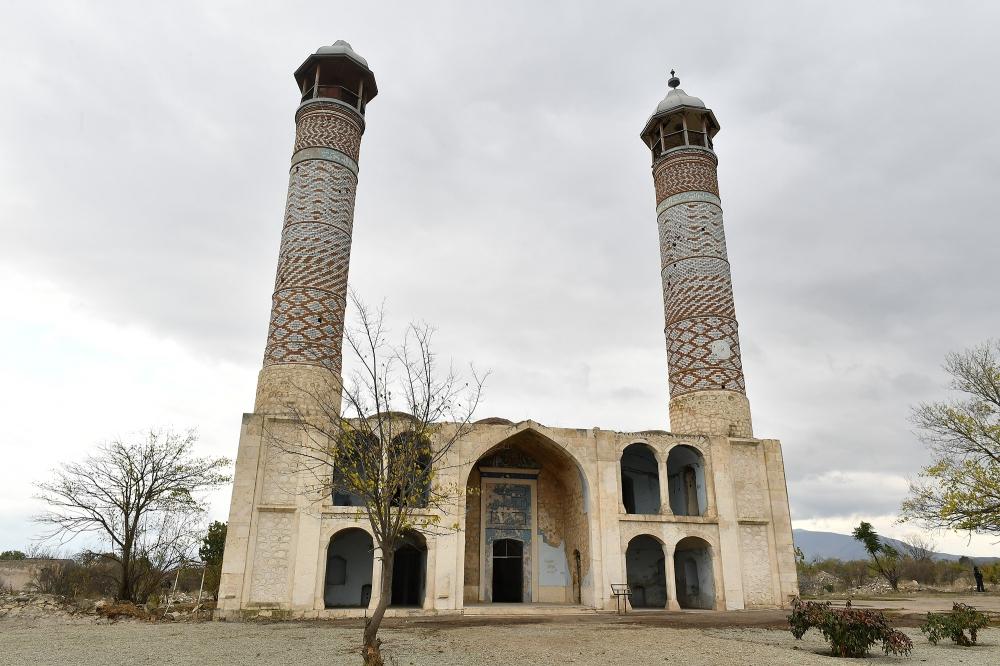
The Aghdam Juma Mosque itself—an outstanding architectural monument built in 1868–1870 by the architect Karbalayi Safikhan Karabakhi—was the only structure in the city to survive physically. And even that was only because Armenian forces turned it into an observation post and, at the same time, a cattle shed. The Associated Press, hardly a pro-Azerbaijani outlet, documented that the mosque served for years as a barn for cattle and pigs. On the floor of the sanctuary—manure. It bears repeating. So what does a man look like who claims he “never allowed himself what Azerbaijan allows itself”?
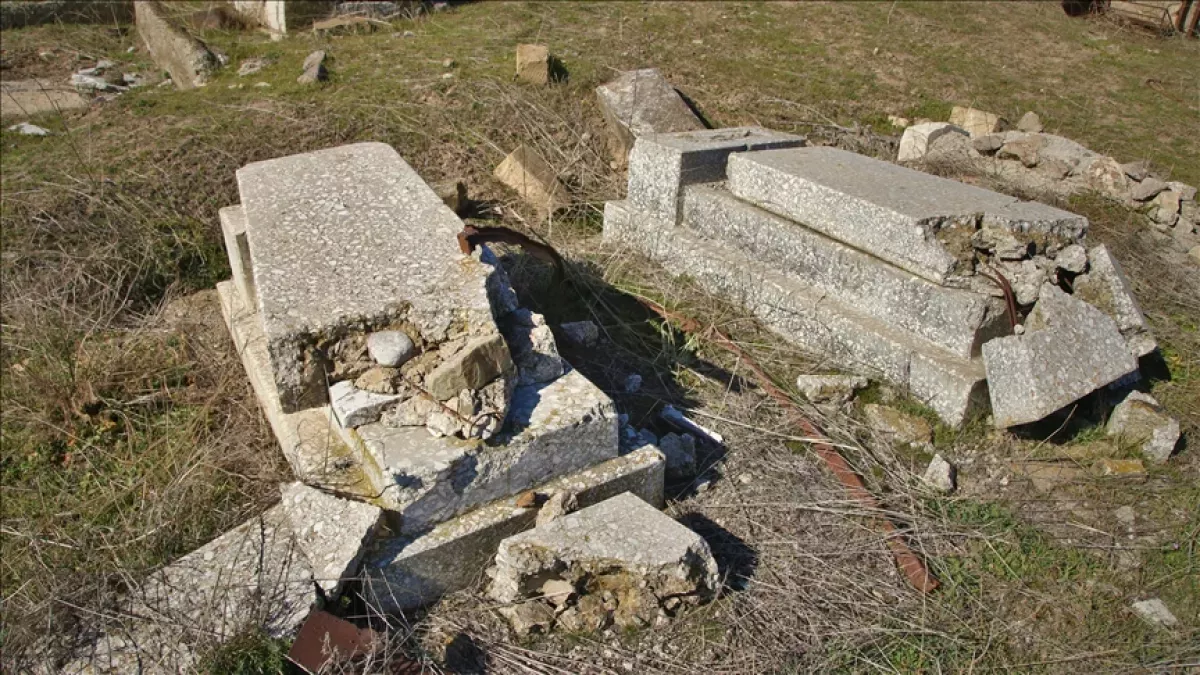
If this were only about Aghdam, one might—however implausibly—try to explain it away as a “fog of war” incident. But this was a system. In the Aghdam district alone, 145 historical and cultural monuments were destroyed over 27 years of occupation. Across the liberated territories, most villages were razed to their foundations; cemeteries desecrated, tombstones used as construction material, mausoleums dismantled. Albanian churches—historically unrelated to the Armenian Apostolic Church—were altered and repurposed as Armenian. This is precisely the “Armenianisation” now examined in academic research, including reports by Caucasus Heritage Watch, a joint initiative of Cornell University and Purdue University.
Kocharyan is no detached observer of these processes. He is one of their architects. In 1992, he served as the “chairman of the state defence committee” of a self-proclaimed entity. From that same year, he became the de facto head of a puppet regime. From 1998 to 2008, he was president of Armenia—responsible, in that capacity, for the continuation on the occupied territories of everything that had begun under his watch. For 27 years, four United Nations Security Council resolutions—822, 853, 874, and 884—demanded the immediate and unconditional withdrawal of occupying forces from Azerbaijani districts. Those demands went unheeded. And when the former Armenian president now utters the word “vandalism” with regard to Baku, he is, in effect, addressing his own reflection.
What Azerbaijan is doing today in the liberated territories is well known. Aghdam is being rebuilt from the ground up; the Baku–Aghdam railway line, severed in 1993, was restored in August 2025, with bus services resuming the following month. Zangilan, Fuzuli, Lachin, Shusha, and dozens of villages are being rebuilt or constructed anew, as internally displaced persons return to their homes. The Juma Mosque has been restored and once again welcomes worshippers. In April 2024, the stone taken by Carey Cavanaugh in 2001 was returned to its original place—23 years after it had been removed.
This is the “vandalism” Robert Kocharyan accuses Baku of: the restoration of what he and his associates destroyed, financed by the very state whose territory his forces once occupied.
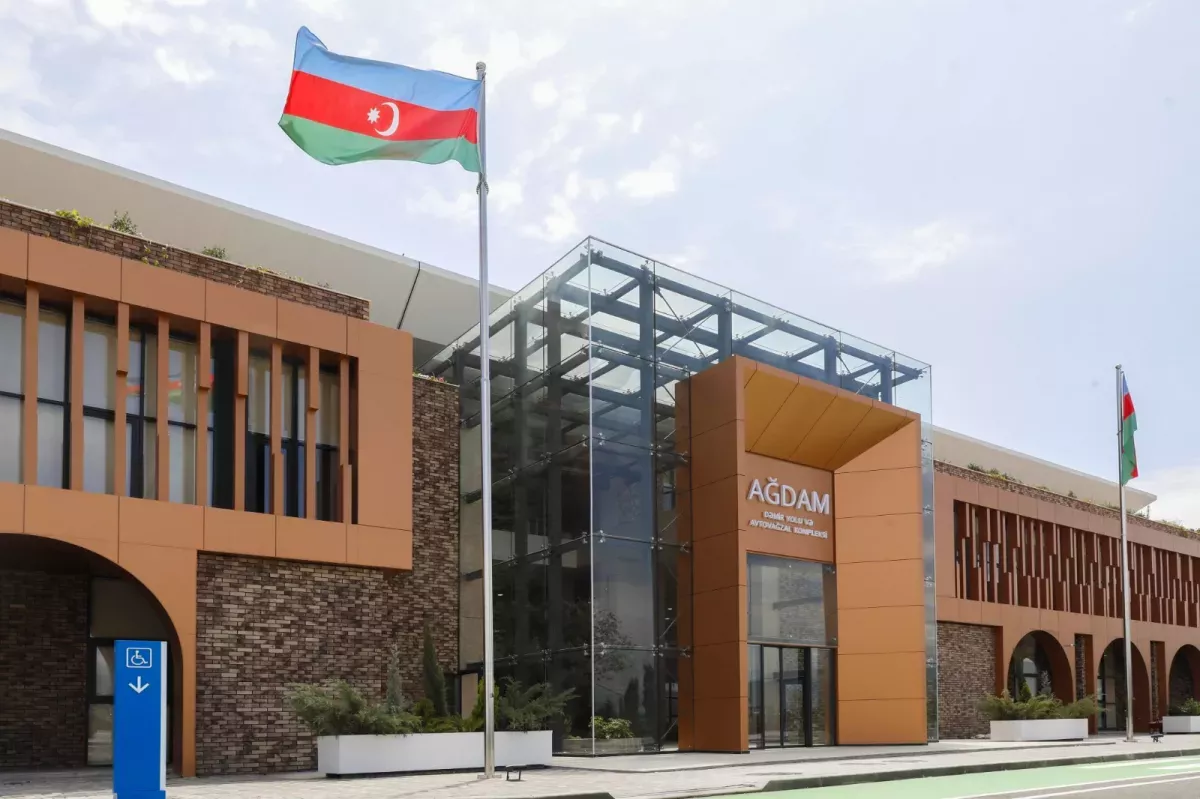
Of course, not everything Baku is doing in the liberated territories is universally welcomed in Armenia. Not every structure is being preserved indiscriminately—particularly those deemed to have no historical value and erected during the period of occupation. This is not vandalism. It is a standard policy of memory for a state restoring jurisdiction over its territory. Any European country in a similar situation would act the same way: Paris removed the symbols of the Vichy regime; Berlin dismantled everything associated with Nazism—and no one called that vandalism, because vandalism is something else entirely.
That leaves the question of why the former Armenian president felt the need to make such a statement in the first place. The answer, it seems, is obvious. On June 7, Armenia will hold parliamentary elections. For the “Armenia” bloc led by Kocharyan, this is a last opportunity to return to frontline politics. The campaign’s main resource is a cultivated sense of grievance. The remark about “Aliyev’s vandalism” serves precisely as that kind of fuel. Its target audience is the Armenian voter, who is meant to see in Prime Minister Nikol Pashinyan’s peace agenda not a way out of a deadlock, but an alleged “surrender” of the country.
When there is nothing substantive to say—and Kocharyan has nothing of substance to offer—such statements are all that remain. Directed at a country that has long had no reason to take him seriously.







 editor@caliber.az
 +994 55 444-88-98
 Азербайджан, Баку, ул. Низами, 203, Af Business House, 5-й этаж