










Azerbaijan – Czech Republic: from stability to strategic dynamics On Andrej Babiš’s visit
In recent weeks, there has been a noticeable intensification of Azerbaijan–Europe relations, and the official visit of the Czech Prime Minister to Azerbaijan fits logically into this trend. Today, on April 27, an official welcoming ceremony for Czech Prime Minister Andrej Babiš was held in Gabala.
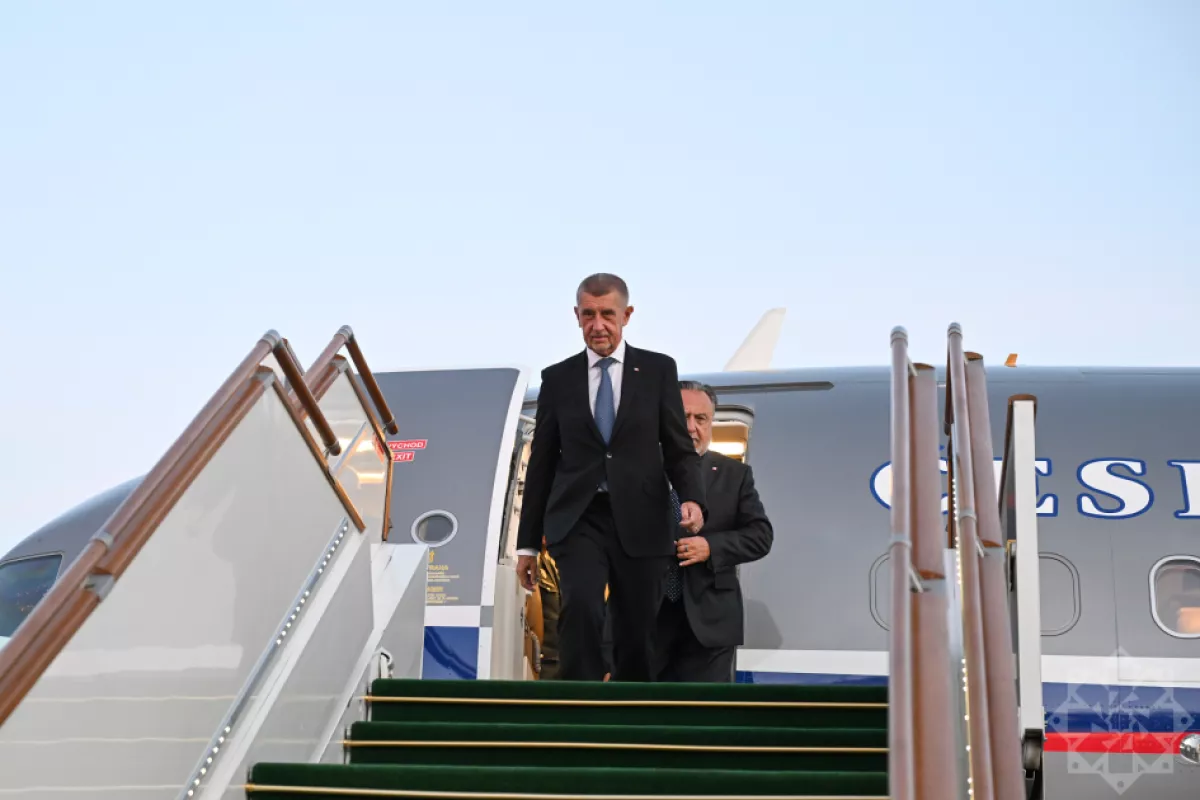
As Andrej Babiš himself noted on the social media platform X, Azerbaijan became his first destination outside the European Union. This statement carries clear symbolic weight. It is increasingly evident that the Czech Prime Minister’s visit goes beyond formal diplomatic protocol. Rather, it signals Prague’s growing interest in Azerbaijan and the broader South Caucasus region as a promising space for economic engagement and logistics cooperation.
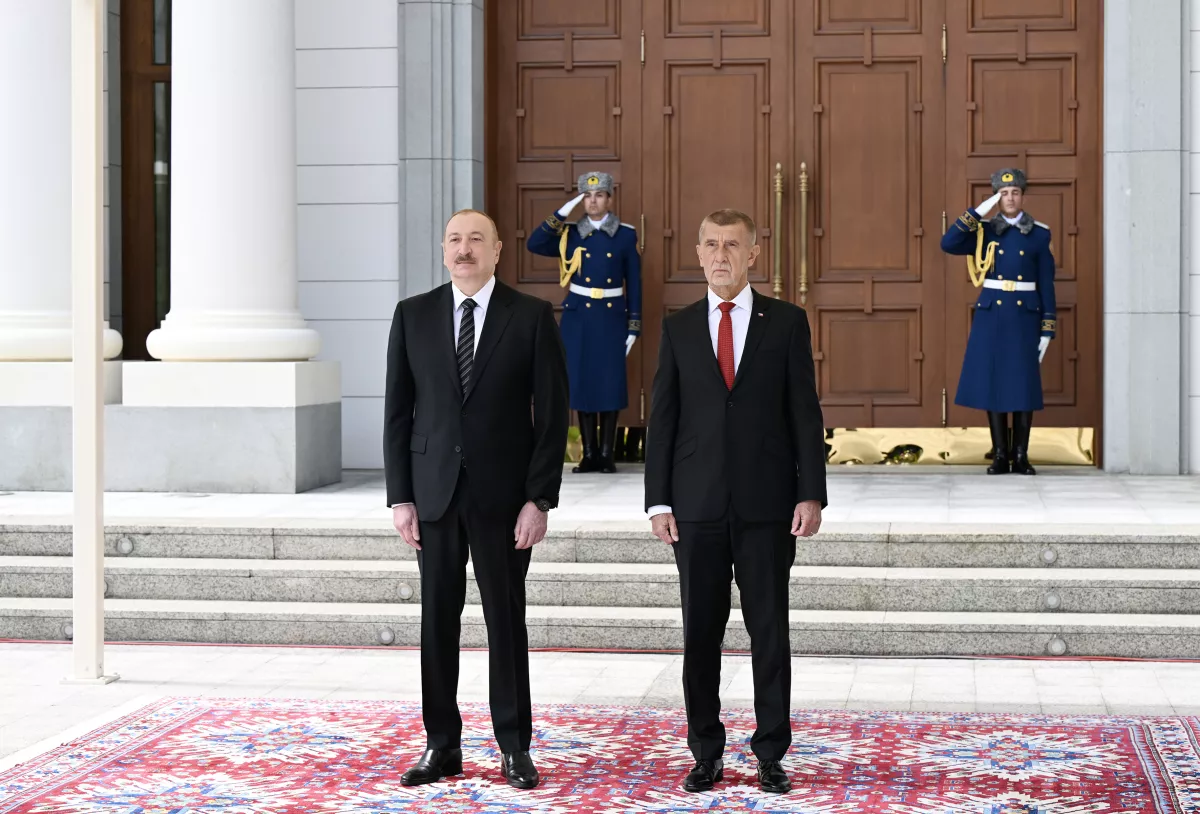
An important aspect of the visit is the composition of the Czech delegation, which includes First Deputy Prime Minister Karel Havlíček as well as representatives of the business community. This underlines the central focus of the trip – economic cooperation and the expansion of bilateral trade and investment ties.
In principle, relations between Baku and Prague can be described as stable and free of deep crises: since the early 1990s, the two sides have consistently developed cooperation in energy, trade, humanitarian, and educational spheres. However, despite this stability, the relationship has long remained rather inertial in nature, as there were no large-scale projects capable of qualitatively transforming the level of engagement, even though both economic and geopolitical potential remained significant.

For example, the volume of mutual trade between Azerbaijan and the Czech Republic amounted to $807.57 million in January–November 2025. The basis of this trade was crude oil exports: Azerbaijan became the largest supplier of oil to the Czech Republic, accounting for 42% of the market. In the context of volatile global markets, geopolitical crises, and risks in the Strait of Hormuz region, the importance of this factor is only increasing.
The gas component is equally important. Following the start of Azerbaijani gas supplies to Central European countries, including Austria and Germany, a new energy configuration is emerging across the continent. In this logic, the Czech Republic could well become the next link in the chain of importers.
From a technical standpoint, this appears quite feasible: the Southern Gas Corridor is already operational, Italy acts as a key receiving hub, while Austria’s geography allows it to serve as a transit link for further supplies to the Czech Republic. Thus, this is not merely a bilateral project, but rather the integration of Prague into a broader energy architecture in which Baku is playing an increasingly significant role.

In the Czech Republic, there is also an understanding that modern Azerbaijan is not only the largest economy in the South Caucasus, but also one of the key transport and logistics hubs of Eurasia. Over the past two decades, the country has implemented a number of infrastructure projects of global scale, such as the Baku–Tbilisi–Ceyhan oil pipeline, the Southern Gas Corridor, and the Baku–Tbilisi–Kars railway, which have effectively reshaped the economic geography of the region by connecting Europe with Central Asia and the Middle East. In this context, the interest of European countries, including the Czech Republic, in Azerbaijan appears entirely logical.
An additional dimension in the overall framework of Baku–Prague relations is provided by the Military Cooperation Plan for 2026, signed between the two countries on the eve of Andrej Babiš’s visit.
As noted above, the Czech Prime Minister’s visit is taking place against the backdrop of a series of other significant contacts between Baku and European partners. In particular, Ukrainian President Volodymyr Zelenskyy arrived in Azerbaijan on a working visit on April 25. In addition, Latvian President Edgars Rinkēvičs visited the Azerbaijani capital last week, while Lithuanian Prime Minister Inga Ruginienė visited earlier.
Each of these visits was accompanied by the signing of packages of agreements covering a wide range of areas—from security to agriculture and logistics. Taken together, this reflects a clear and steady trend: Azerbaijan is consistently expanding its engagement with European countries, including EU and NATO member states.
Overall, Azerbaijan’s current foreign policy represents a complex but carefully calibrated system of bilateral relationships. Baku does not rely on integration into supranational structures; instead, it prioritises a flexible network of partnerships, seeking to maximise the benefits of its geographic and economic position.
In this context, the Czech Republic, as a member of the EU and NATO, becomes an important component of Azerbaijan’s European diplomatic vector. Against this backdrop, Andrej Babiš’s visit to Azerbaijan can be seen as a “window of opportunity” for a shift from stability to dynamism, from declarations to concrete projects, for which both sides possess all necessary resources.
In a broader sense, it can be stated that Azerbaijan is not merely strengthening its ties with Europe, but is shaping a new model of engagement in which pragmatism, flexibility, and strategic calculation play a key role. The visit of the Prime Minister of the Czech Republic thus becomes an important element of this emerging geopolitical architecture.







 editor@caliber.az
 +994 55 444-88-98
 Азербайджан, Баку, ул. Низами, 203, Af Business House, 5-й этаж