










Destroyed cities, dreams, and lives How war changed Ukraine
The 13th session of the World Urban Forum (WUF13), held in Baku and bringing together more than 40,000 participants from 182 countries, reflects the strong trust of the international community in Azerbaijan as a platform where decisions of global significance for civilisation are shaped.

Ukraine is represented at the event by Deputy Prime Minister for Reconstruction and Minister for Communities and Territories Development Oleksii Kuleba, whose participation in such a high-level forum is also explained by the fact that Azerbaijan has truly unique experience in the reconstruction of liberated territories—an experience that is of no less interest to the Ukrainian side than the experience of our country’s historic victory in the 44-day war of autumn 2020.
In an exclusive comment to AZERTAC, the minister emphasised the importance of WUF for the world in general and for Ukraine in particular, noting that today “Ukraine is effectively forming a new approach: recovery during wartime.” He stressed that the country is now able to share not only the painful experience of destruction but also concrete solutions. For example, under the state compensation program for damaged or destroyed housing, nearly 360,000 people have already received support.
Oleksii Kuleba also presented striking figures: by the end of 2025, losses in Ukraine’s housing sector are expected to exceed $61 billion. More than 338,000 private houses have been partially damaged or completely destroyed, along with over 41,000 apartment buildings and around 900 dormitories. To date, more than 293,000 residential properties have already been entered into the Register of Damaged and Destroyed Property. At the same time, over 4.6 million internally displaced persons are officially registered in Ukraine. These figures are likely to rise, as no one can currently say when this bloodshed will end.

In this context, it is worth noting that over the past week alone, the Russian side reportedly launched more than 3,170 strike drones, over 1,300 guided aerial bombs, and 74 missiles of various types against Ukraine, most of them ballistic. The majority of strikes reportedly hit residential buildings and other civilian infrastructure. In simple terms, this means even more Ukrainians have been left without a roof over their heads.
These statistics, cited by President Volodymyr Zelenskyy on his Telegram channel, are alarming, but even more devastating are the figures on casualties from Russian strikes: 52 people were killed and 346 injured over the week, including 22 children. Behind each of these numbers lie unfulfilled dreams and shattered destinies.
These are the current realities in which Ukrainians live, having for more than four years become potential targets of Russian missiles and drones on a daily basis, which inevitably affects their psychological well-being.

As a result, since 2023, the number of psychiatric consultations in Ukraine has increased by 173 per cent; according to the Ministry of Health, nearly 90 per cent of citizens show symptoms indicating a need for psychological support—from sleep disturbances to chronic fatigue. This was stated by psychotherapist Olena Shershnyova on the Apostrophe TV channel, noting that over the years of war, Ukrainians have moved from acute stress to a stage of deep psychological exhaustion.
She emphasised that the most common issues include insomnia, constant fatigue, emotional burnout, and depression. According to the specialist, most Ukrainians are unable to seek psychological help due to financial difficulties and a lack of clear guidance on how to do so.
“People still lack financial means and often do not know where to turn. Although there are now volunteers and non-profit organizations providing support, people are not always aware of the necessary steps—where to go, how to apply, where to find a psychologist. Therefore, these services and this support should be provided in the workplace. I personally believe that Ukrainians are becoming exhausted, the entire nation is becoming exhausted,” the psychologist said.
Previously, Ukraine’s Health Ministry reported that more than 15 million Ukrainians would require psychological assistance as a result of the war. Health Minister Viktor Liashko also noted that the war will have a significant impact on people’s mental health, including those who believe they are coping well with its consequences. All these facts are deeply shocking and clearly point to a nationwide crisis.
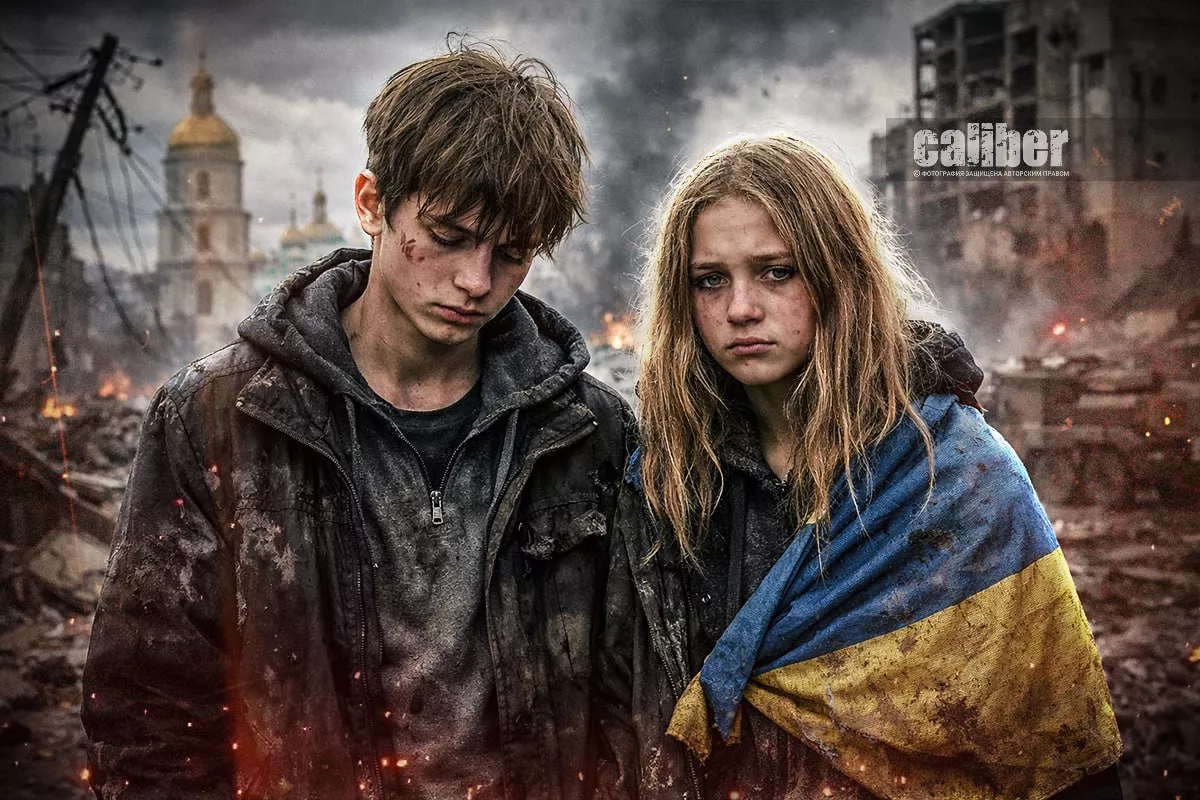
However, an even more tragic reality is the emergence of an entire generation of “children of war” in Ukraine. These children have seen burning buildings with their own eyes, heard the cries of mothers who have lost their sons, and many of them have experienced the pain of losing a loved one themselves.
Almost every night, these children wake up to air raid sirens—now a familiar part of their lives—rushing to shelters to avoid becoming yet another victim of this ongoing, seemingly endless war with no clear end in sight.







 editor@caliber.az
 +994 55 444-88-98
 Азербайджан, Баку, ул. Низами, 203, Af Business House, 5-й этаж