










Germany rearms: Bundeswehr takes on responsibility for Europe Analysis by Limansky
As Donald Trump withdraws U.S. troops from Germany, Berlin has adopted a plan to turn the Bundeswehr into “the strongest conventional army in Europe.” For the first time in Germany’s postwar history, a comprehensive military strategy has also been formally approved. What, then, will the German armed forces and their new doctrine look like now?
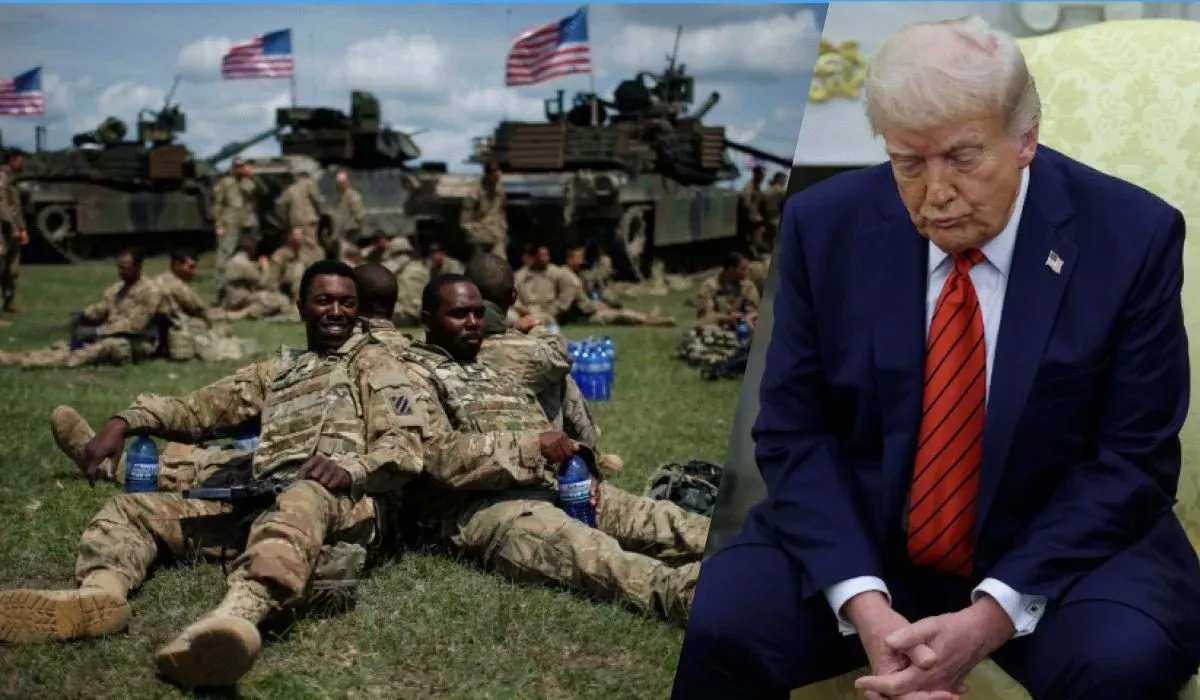
Goodbye, Germany?
On May 1, U.S. Secretary of Defense Pete Hegseth announced the planned withdrawal of 5,000 American troops from Germany. At the same time, nearly half of the entire U.S. military presence in Europe is stationed in Germany — over 36,000 personnel.
The headquarters of the U.S. European and African Commands is located in Stuttgart, while Ramstein hosts the largest American airbase outside the United States. From this German strategic hub, thanks to its location and developed infrastructure, it is convenient to operate both on the eastern and African theaters.
The first units of a U.S. mechanized brigade stationed at the Grafenwöhr training area — the largest American training ground outside the United States — have already begun preparations for withdrawal. Previously, Trump also canceled plans to deploy a U.S. Tomahawk missile division in Germany.
Recent tensions between the allies escalated over a proposed operation against Iran, which Germany did not support. Chancellor Friedrich Merz criticized both the conduct of military actions in the Middle East and the peace negotiation process, stating that the United States had been “humiliated by the Iranian leadership.”
In response, on April 30, Donald Trump wrote on his Truth Social account that Merz “should spend more time on ending the war with Russia/Ukraine (Where he has been totally ineffective!), and fixing his broken Country.”
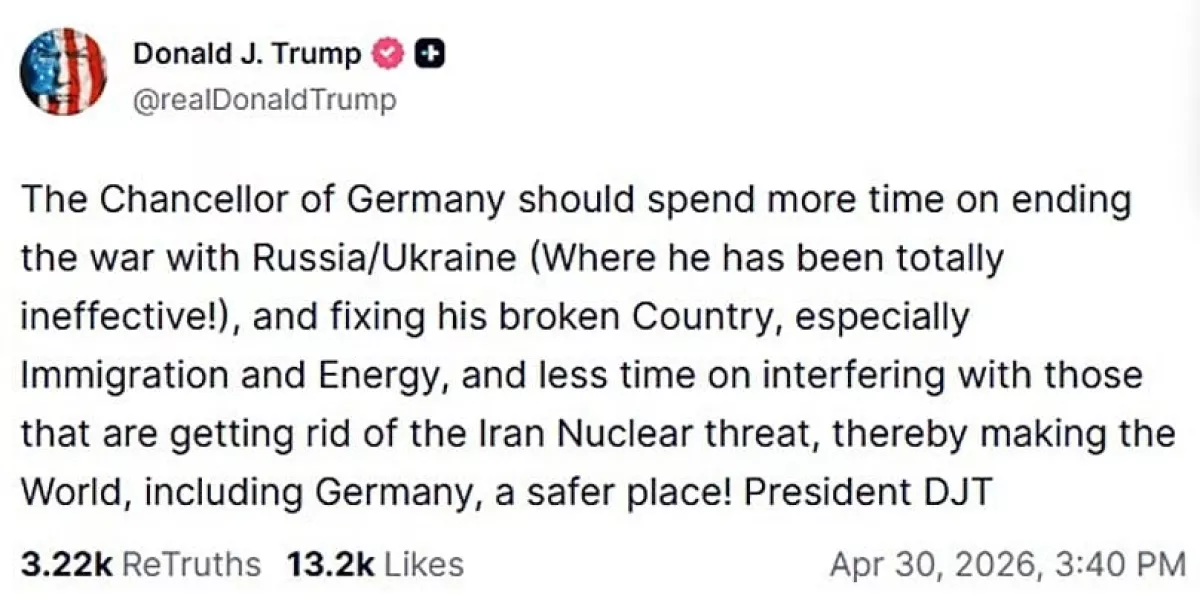
According to the U.S. president, the German chancellor is “doing a terrible job” and “he's got a big problem with Ukraine.”
On May 2, Trump further pledged to withdraw even more troops from Germany than initially announced. However, it remains unclear whether these forces will return to the United States or be redeployed to other Eastern European countries. Poland, for example, has already expressed strong interest in hosting them.
Notably, the United States decided to raise tariffs on imports of European Union automobiles by 25 per cent, a move that could seriously damage Germany’s already struggling automotive industry.
The Bundeswehr — Europe’s leading army?
However, differences between the allies have been emerging for a long time, and preparations for a kind of military “divorce” began in advance. And while Berlin has not been particularly successful in addressing economic and social challenges, it has made more progress in its plans for militarisation.
On April 22, German Defence Minister Boris Pistorius promised to turn the Bundeswehr into the strongest army in Europe. On that day, at a press conference, he presented Germany’s comprehensive military strategy under the ambitious title “Responsibility for Europe.” This marks the first comprehensive military doctrine in Germany’s postwar history.
“We are developing the Bundeswehr into the strongest conventional army in Europe,” Pistorius declared.
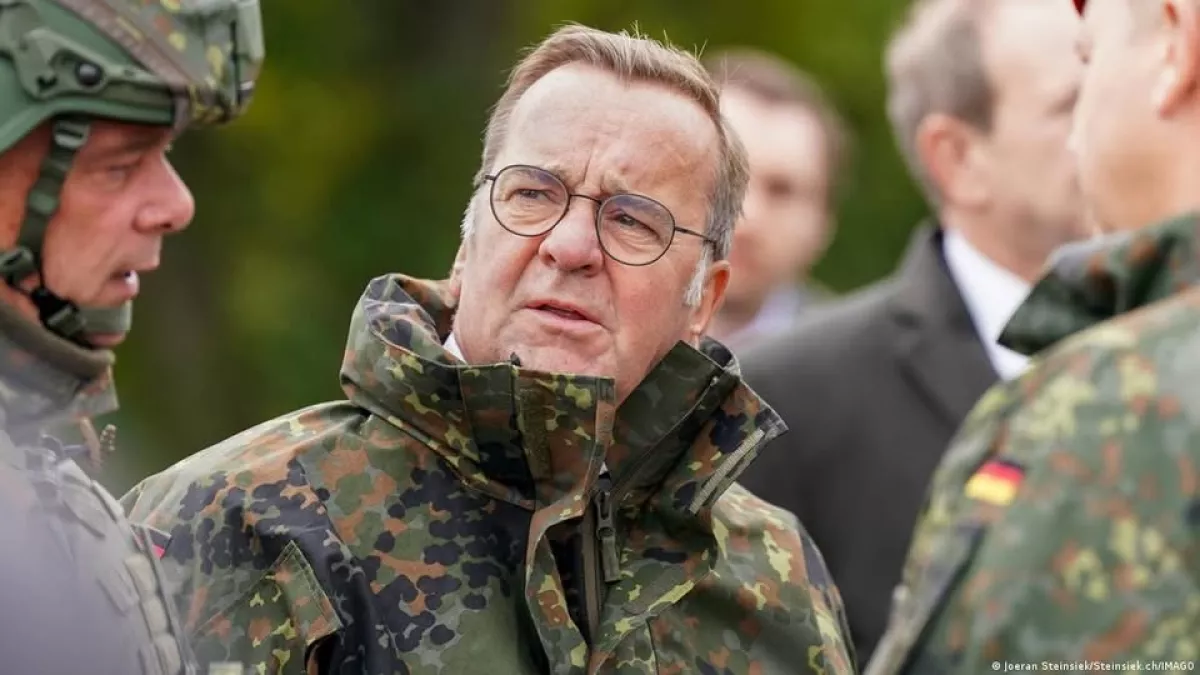
The defence minister also announced that the German armed forces would expand to 460,000 personnel, including 260,000 active-duty soldiers. This would mean an increase of more than one third — today, the Bundeswehr numbers around 185,000 troops. The transformation of the Bundeswehr into Europe’s strongest conventional army is expected to be completed by 2039.
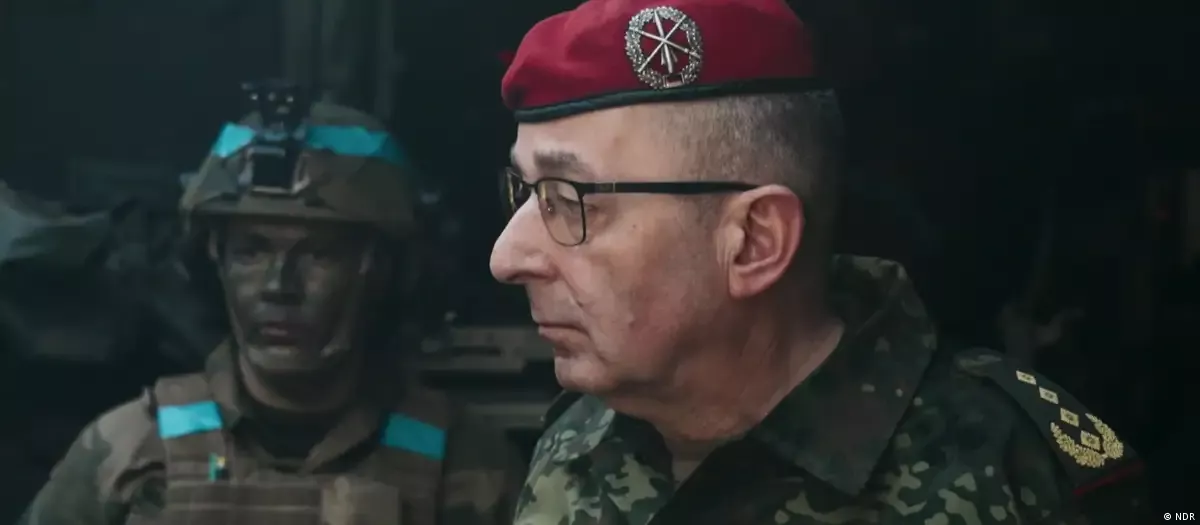
The United States Department of Defense has confirmed that Germany’s armed forces are taking on a leading role in Europe. In this context, the Inspector General of the Bundeswehr, Carsten Breuer, has been nominated to head the NATO Military Committee in 2027.
Notably, the new strategy and the “Armed Forces Development Plan” were also developed by Carsten Breuer himself.
Germany’s “secret doctrine”
What does Germany’s new strategic concept actually look like?
In general, the new military doctrine remains classified, and only selected fragments have been made public. However, even these excerpts provide an idea of its overall direction. “Germany plays a leading role in NATO,” the document states without false modesty. Instead of the United States, the foundation of the North Atlantic Alliance is now effectively described as Germany and the Bundeswehr. This is framed as Germany’s “traditional strategic responsibility” for Europe.
Such an approach is also justified by the fact that Germany is the largest economy in Europe. One example cited as part of Germany’s new mission as “guardian of Europe” is the deployment of a Bundeswehr tank brigade in Lithuania near the Belarusian border, which German military command has described as a “beacon of hope.”
The concept places significant emphasis on threats to Germany. Undoubtedly, Russia is presented as the primary security concern. At the same time, the document appears to assume that Russian armed forces have already lost meaningful momentum in Ukraine, and that the war is increasingly heading toward a strategic defeat.
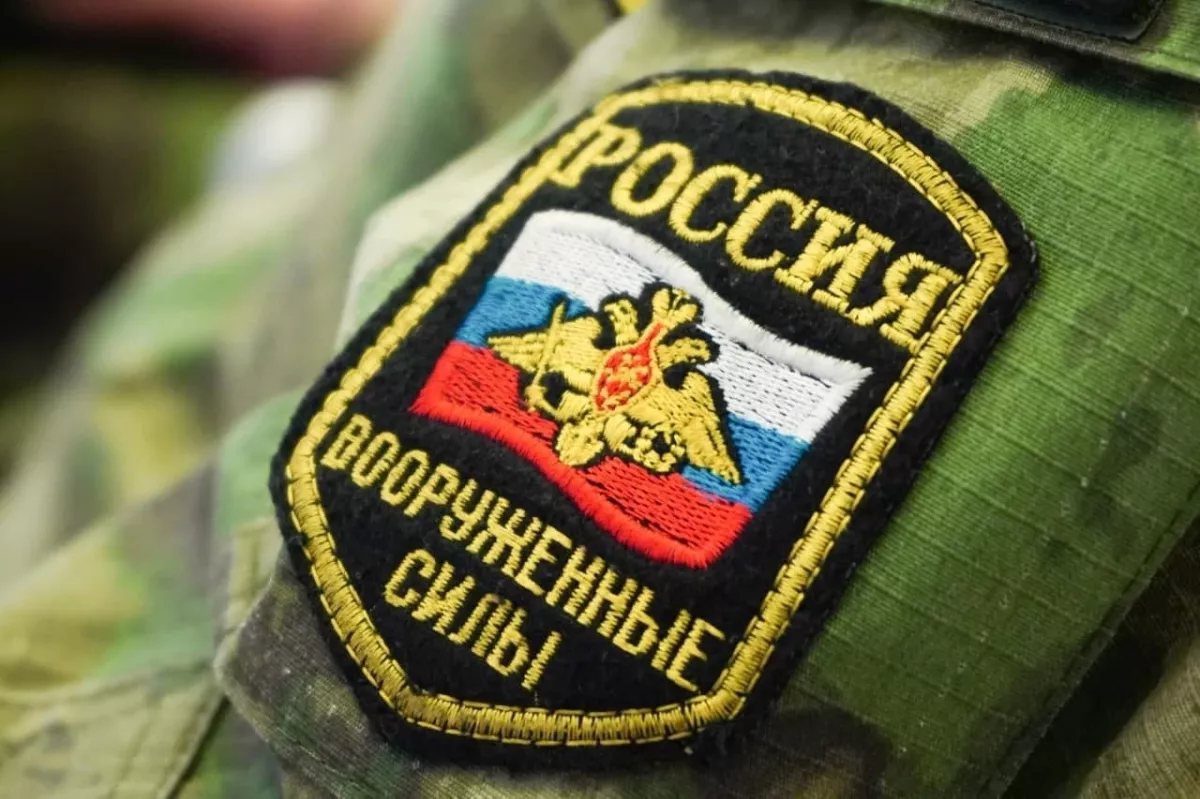
However, German and NATO assessments proceed from the assumption that Russia is allegedly expanding its military capabilities and could potentially pose a threat to Europe in the future. The document states that “Russia exploits conflicts on its periphery and, moreover, threatens Europe from all sides with its far-reaching capabilities.” In Germany, even a tentative timeline for a possible conflict with Russia is mentioned — 2029.
Another particularly notable formulation appears in the new strategy: “In conditions where the boundaries of war are becoming blurred, compliance with universally accepted ethical and legal principles can no longer be considered a norm.” Is this a statement of fact or already a guideline for action?
Strategic reserve
As for increasing the size of the Bundeswehr, this is already provided for under Article 91 of the “Military Service Modernisation Act,” which came into force earlier this year. With typical German precision, the law sets out a clear schedule for an annual increase in the number of service members by several thousand. Moreover, the growth is set to accelerate progressively: by 2026 — an increase of 4,000 personnel, and by 2034 — up to 16,000 new soldiers.
But how is it planned to attract Germans who are largely pacifist in outlook into the armed forces? To make military service more attractive, various measures are being introduced — benefits are being expanded, and the minimum starting salary has been raised to €2,600. At the same time, Germany has also adopted a number of new legislative measures that effectively pave the way for the return of compulsory military service, which was abolished in 2011.
For now, the so-called “new military service” involves voluntary participation in conscription. However, if voluntary recruitment proves insufficient to staff the expanding army, compulsory enlistment may also be introduced — through a lottery system or other mechanisms.
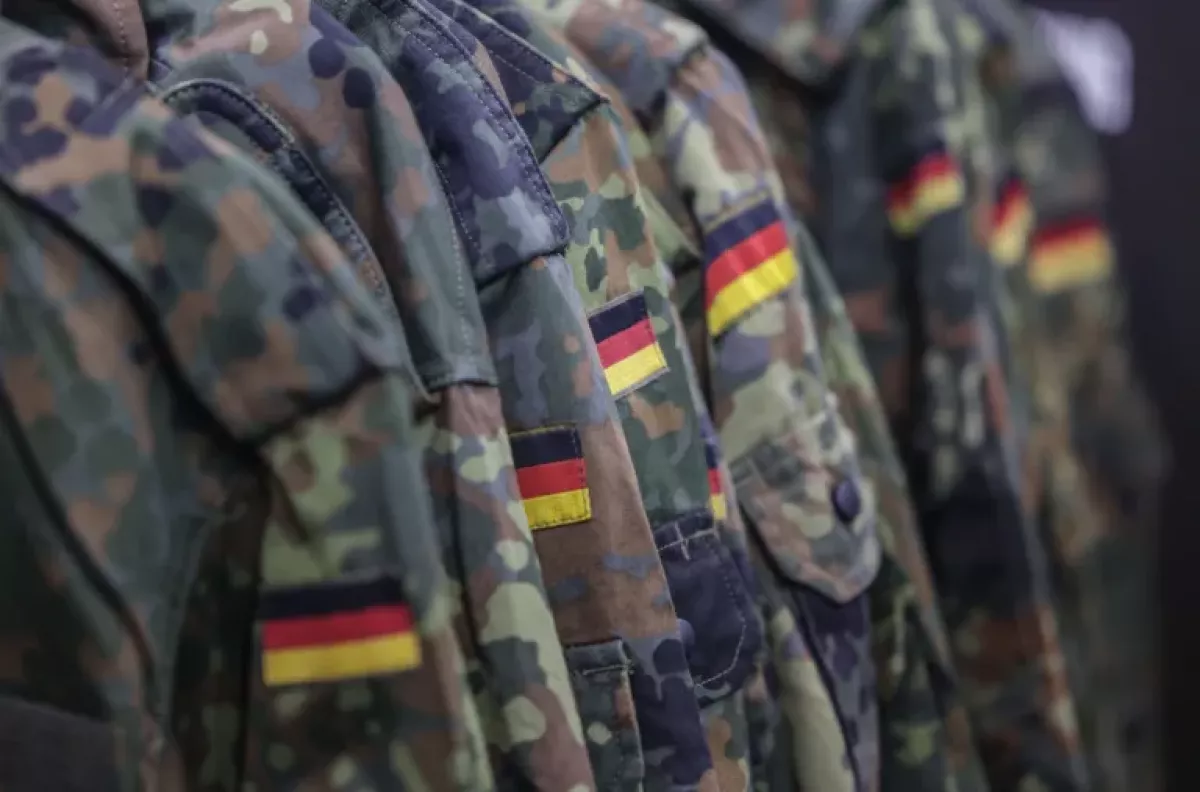
A special youth service has been created within the Bundeswehr, whose officers conduct recruitment campaigns in schools, universities, sports clubs, and other institutions.
At the same time, the updated doctrine also redefines the role of reservists. The military reserve is assigned strategic importance in ensuring national security. By 2033, its size is planned to increase from the current 70,000 to 200,000 active reservists — nearly a threefold rise. Germany’s overall mobilization reserve currently amounts to 860,000 people, with another 60,000 expected to be assigned to self-defense units.
It is also stated that, if necessary, reservists will not only reinforce the regular army but also carry out “independent missions.” During the First World War, Germany already formed a reserve corps and the Landwehr — a form of national militia.
Today, reservists are also planned to be used for protecting critical infrastructure and logistics facilities in the event of an armed conflict. Training of the active reserve will be strengthened, including through remote learning, and the speed of mobilization will be increased through digital tools and reduced bureaucracy. Companies and employers will now share responsibility with the Bundeswehr for the deployment of reservists.
In addition, the new law provides for the registration of all eligible citizens aged 17 to 45 who travel outside Germany. In the event of “national defense,” the mobilization age may be raised to 60. On April 21, the head of the German Reservists’ Association and CDU MP Bastian Ernst proposed raising the upper age limit for reserve service from 65 to 70, as well as abolishing employers’ ability to refuse employees’ participation in military exercises.
Modernisation of warfare
Germany is preparing for war primarily based on the current experience of the conflict in Ukraine. However, within the Bundeswehr, planning is also shaped by forecasts of the future development of weapons systems, which today are evolving at an extremely high pace.
According to the Inspector General of the Bundeswehr, Carsten Breuer, his greatest concern is the use of UAVs. Accordingly, special attention will be given to the development of air defence systems, as well as long-range precision strike capabilities.
Among the priorities of the German military are also the improvement of command and control systems, the processing of large data sets characteristic of modern warfare, and the combat use of artificial intelligence.
Today, the Bundeswehr operates U.S. Patriot systems and German IRIS-T SLM systems for medium-range threats up to 100 km, as well as IRIS-T SLS for short-range defence. In addition, Germany is introducing the Israeli-American Arrow 3 system for long-range interception of targets, including objects outside the atmosphere.
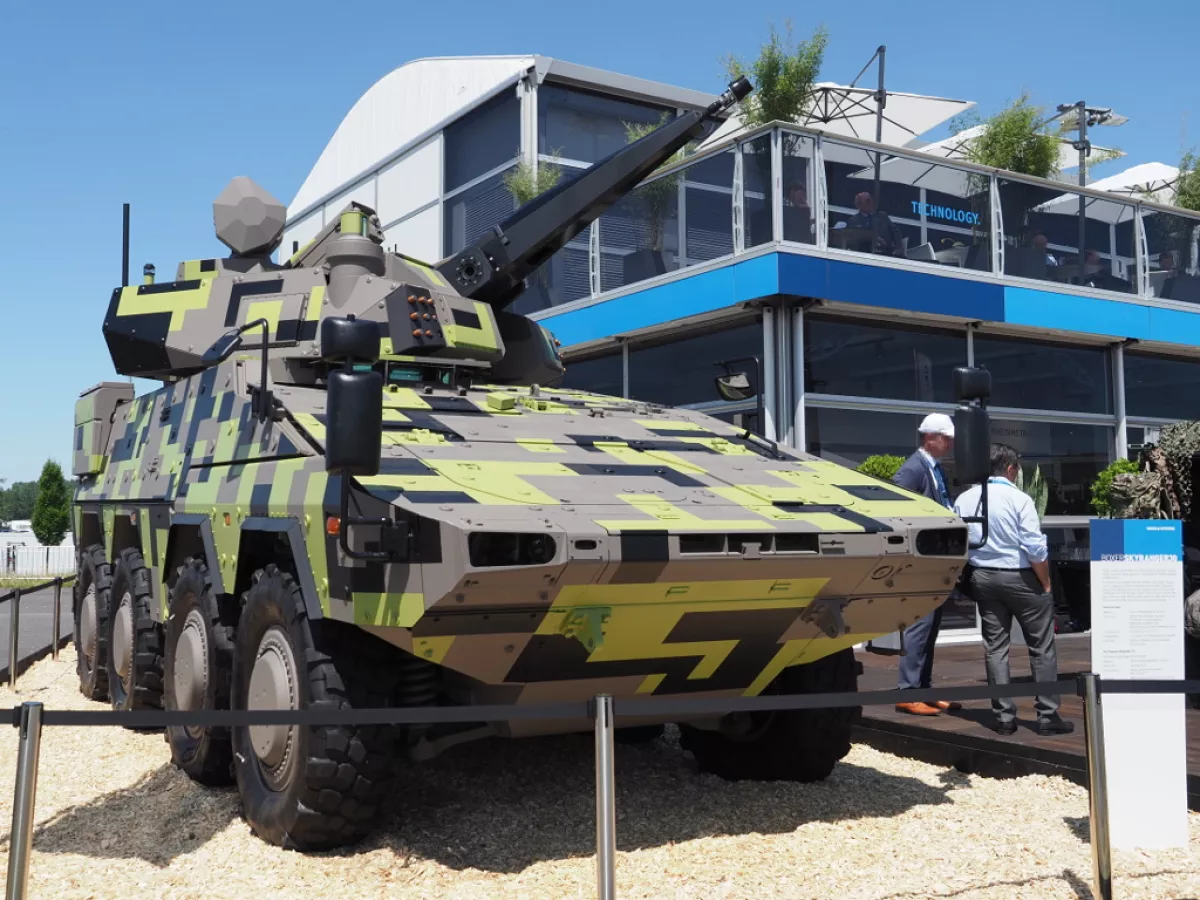
Germany is also arming itself with the new mobile air-defense system Skyranger 30, produced by Rheinmetall. Its combat module is equipped with a 30 mm high-rate-of-fire revolver cannon and ammunition with electronic programmable fuzes, while aerial targets can be detected at distances of up to 20 km using a compact radar system. In a modern battlefield saturated with UAVs, such weaponry is becoming particularly relevant.
In the near future, deliveries are planned of 155 mm self-propelled howitzers RCH-155 and PzH-2000, PULS multiple launch rocket systems with calibers of up to 300 mm, and the “Global Mobile Artillery Rocket System,” as well as JFS-M cruise missiles with a range of up to 500 km, and ground-based Tomahawk and Typhon systems. Also included are the latest Leopard 2A8 tanks — up to 1,000 units — Puma infantry fighting vehicles, Boxer and Patria armored personnel carriers, 20 Eurofighter multirole fighters of the latest configuration, HK416A8 assault rifles, and numerous other weapons and equipment systems.
In addition, development is underway on new stealth-capable UAVs and cruise missiles with stealth technology, capable of striking targets at ranges of up to 2,000 km. Theoretically, Germany also possesses the capabilities to develop its own nuclear weapons.
At the same time, there is significant competition between American and German arms corporations, while the Bundeswehr is seeking to reduce even its dependence on U.S. components.
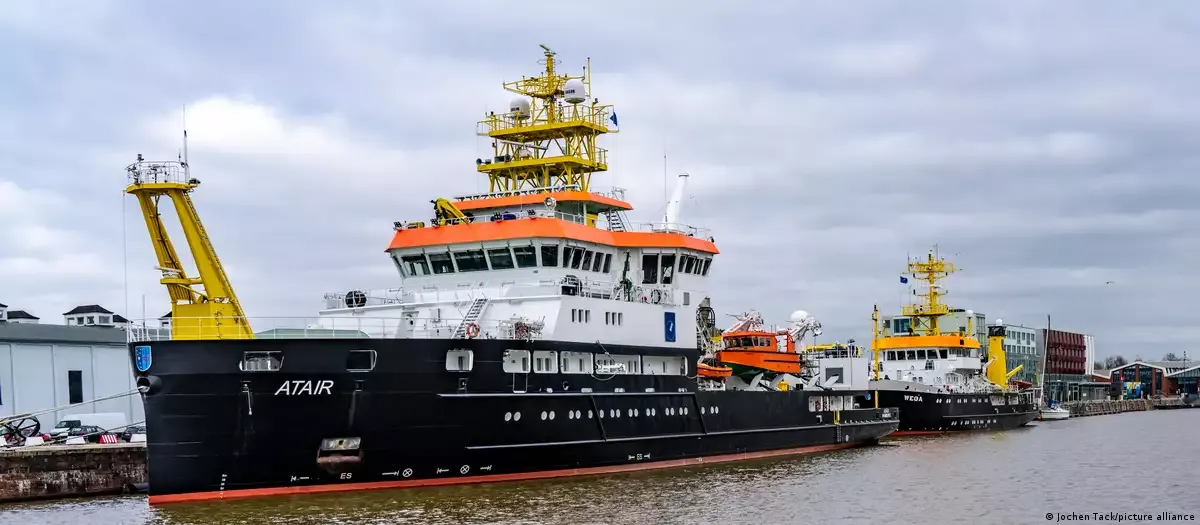
Infrastructure is also being prepared for potential conflict. For example, the modernization of the port of Bremerhaven, worth €1.35 billion, is being carried out with the aim of enabling the transport of heavy military equipment to a frontline.
Germany’s military spending is growing at a rapid pace. In 2026, it is expected to reach €108 billion — a record level since the end of the Cold War. Compared to 2014, military expenditures in Germany have increased by almost 3.5 times. By 2029, Germany plans to spend €178 billion on armaments.
Beyond Russia, Germany’s current accelerated militarisation is also directed at China. While China does not pose a military threat to Germany, it is seen as the European Union’s main economic competitor.
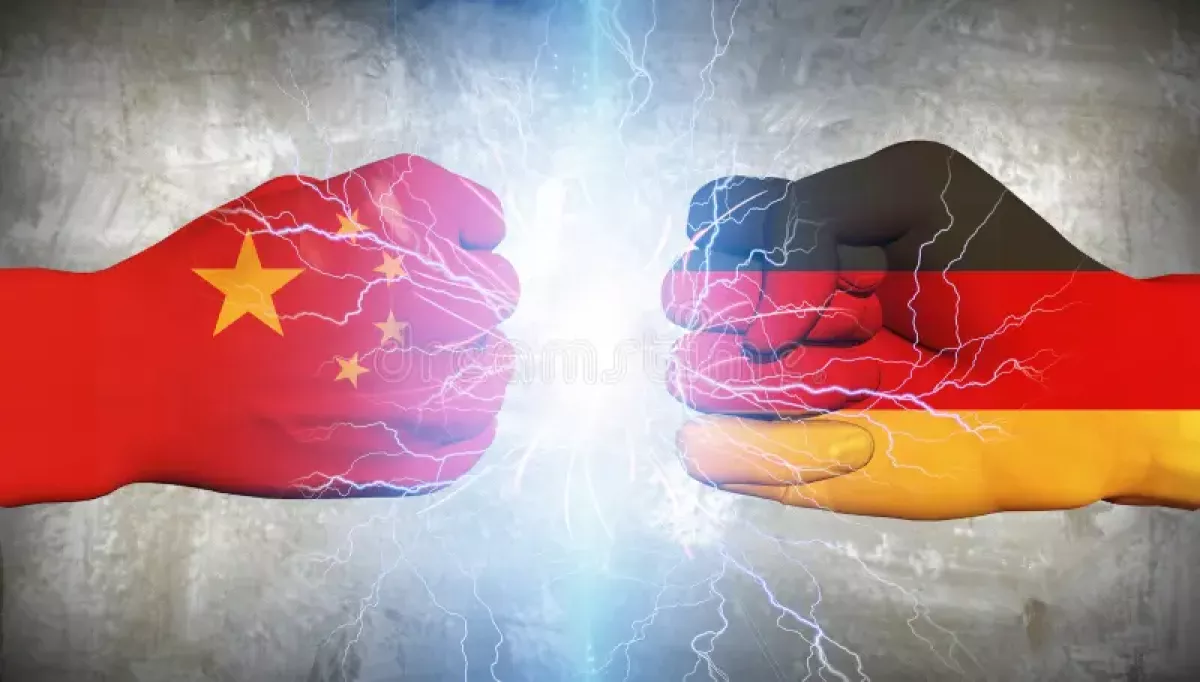
Defence Minister Pistorius has stated: “In the foreseeable future, Beijing could match the United States in military power, reshaping the international order on its own terms.”
Meanwhile, Germany and the EU—within which Germany is increasingly emerging as both an economic and now a military leader—are seeking greater independence from the United States, which nevertheless remains a significant economic competitor. However, the memory of the tragedies that befell the German people in two world wars has not yet been fully erased.
According to a poll conducted by the broadcaster RND, 59% of Germans are not willing to take up arms even under the pretext of “defending the country”, 22% say they would “possibly do so”, and only 16% are firmly ready to go to war.







 editor@caliber.az
 +994 55 444-88-98
 Азербайджан, Баку, ул. Низами, 203, Af Business House, 5-й этаж