










The limits of multi-vectorism: Armenia between two unions Analysis by Matanat Nasibova
Following the summits of the European Political Community and the EU–Armenia meeting held in Yerevan, which served as a clear indicator of the authorities’ commitment to their declared course toward European integration, Armenian-Russian relations—already far from warm—appear to have entered a critical phase.
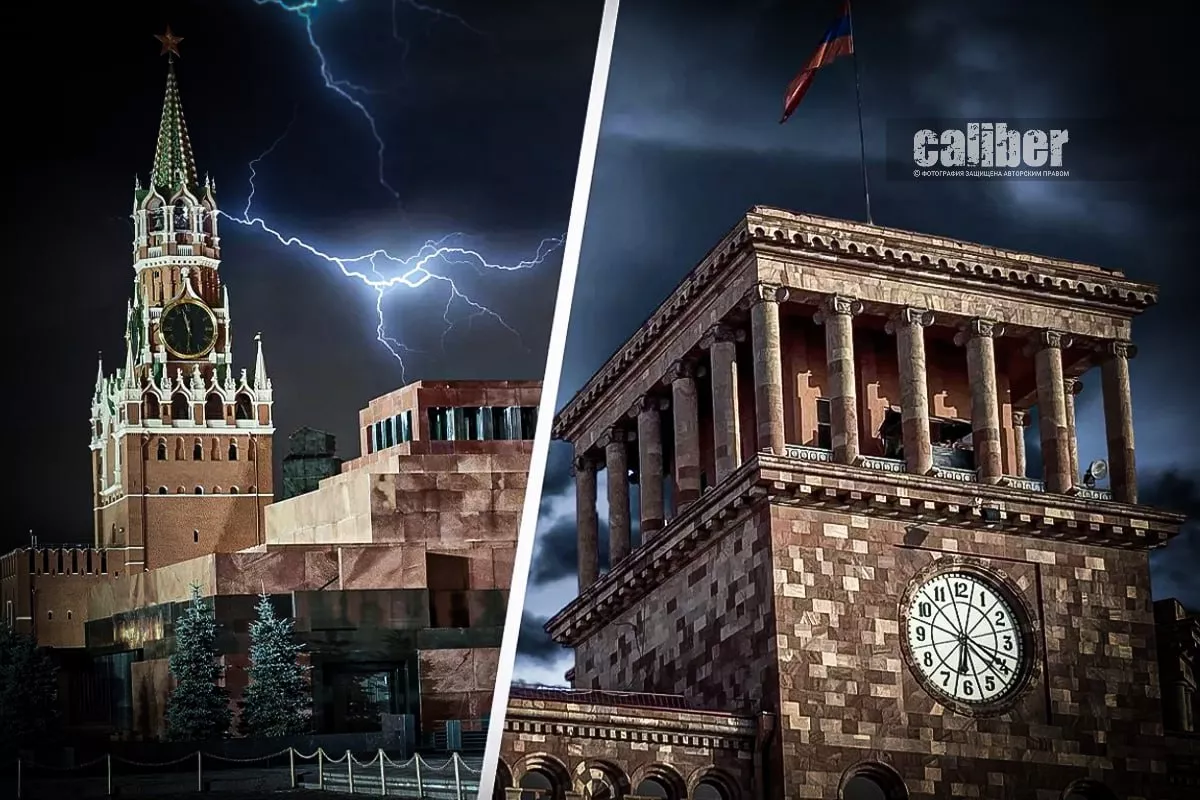
The basis for such an assessment is the fact that the Kremlin has once again raised the issue that Yerevan should decide between the EU and the EAEU, making it clear that it is impossible to simultaneously be a member of these two polar opposite organisations. At the same time, the trigger for the new sharp statements from the Russian side was Armenian Prime Minister Nikol Pashinyan’s refusal to participate in the meeting of the leaders of the Eurasian Economic Union, which will take place on May 28–29 in Astana. According to Russian Foreign Ministry spokesperson Maria Zakharova, this has already become “a pattern established by Pashinyan in relation to the work of this structure.”
“There is, of course, no tragedy for the union itself; the question is only about Armenia itself. We prefer to judge by the concrete practical steps of the Armenian government within the framework of implementing a certain pro-European policy, and their impact on Eurasian integration processes. We have repeatedly said, at all levels and in a comprehensive manner, that it is impossible to combine membership in the EAEU with the introduction of supranational regulatory mechanisms of another integration bloc,” she said, stressing that against the backdrop of Yerevan’s European integration course, the situation could in the future evolve into a “direct contradiction.”
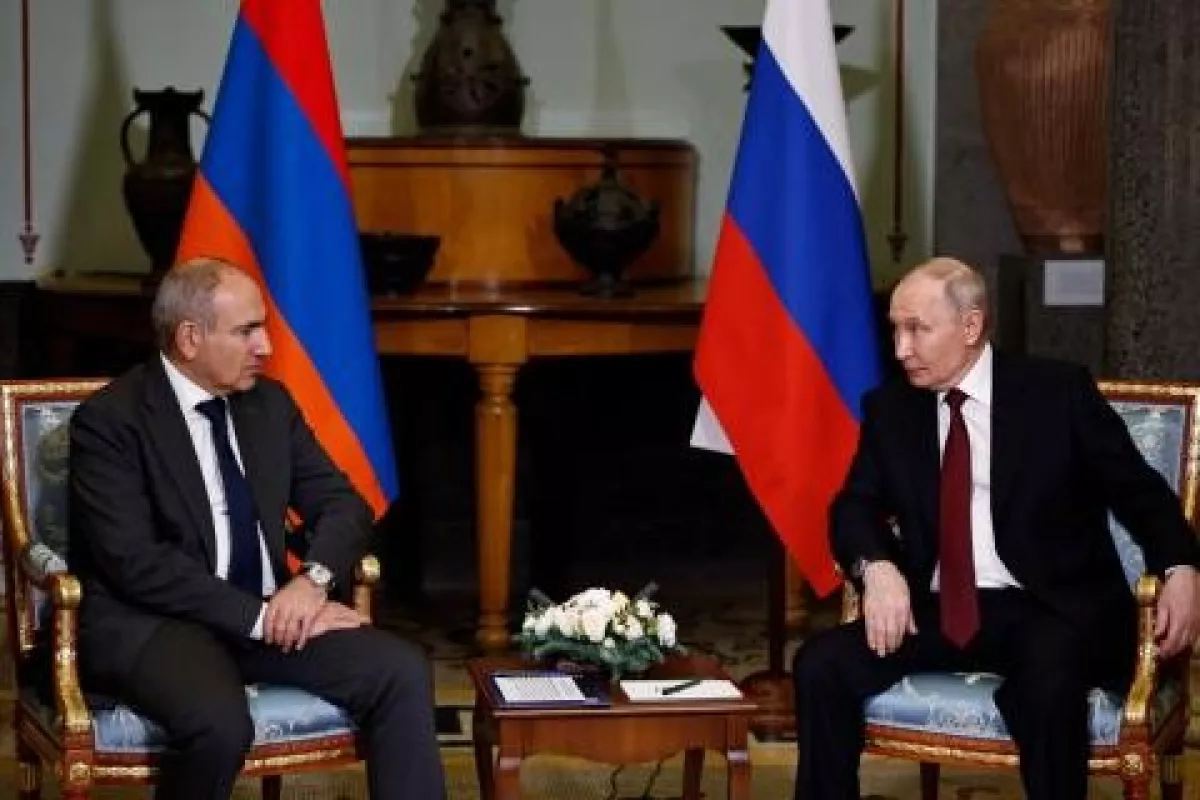
In this context, it should also be noted that in April, during a meeting with Pashinyan, President Vladimir Putin stated that Armenia cannot simultaneously be in a “customs union with the European Union and with the EAEU”: “This is simply impossible by definition. And the issue is not even about politics; it is purely economic in nature.”
Other representatives of the Russian establishment have also repeatedly warned Yerevan about the inevitable economic consequences of its European integration course. In particular, at the end of last month, Aleksei Shevtsov, Deputy Secretary of the Russian Security Council, stated that Armenia’s accession to the European Union could lead to a reduction in its GDP by around 23% and an increase in energy prices. This concerns the economic dimension.
If the Russian demand addressed to Yerevan is considered in a geopolitical context, the key point here is a statement made by the President of the Russian Federation to journalists on May 9: “In my view, it would be correct — both for the citizens of Armenia and for us, as its main economic partner — to make a decision as soon as possible. For example, to hold a referendum. This is not our business, but in principle it would be quite logical to hold a referendum and ask the citizens of Armenia: what will their choice be? In accordance with that, we would draw the relevant conclusions and move towards a soft, polite, and mutually beneficial divorce.”
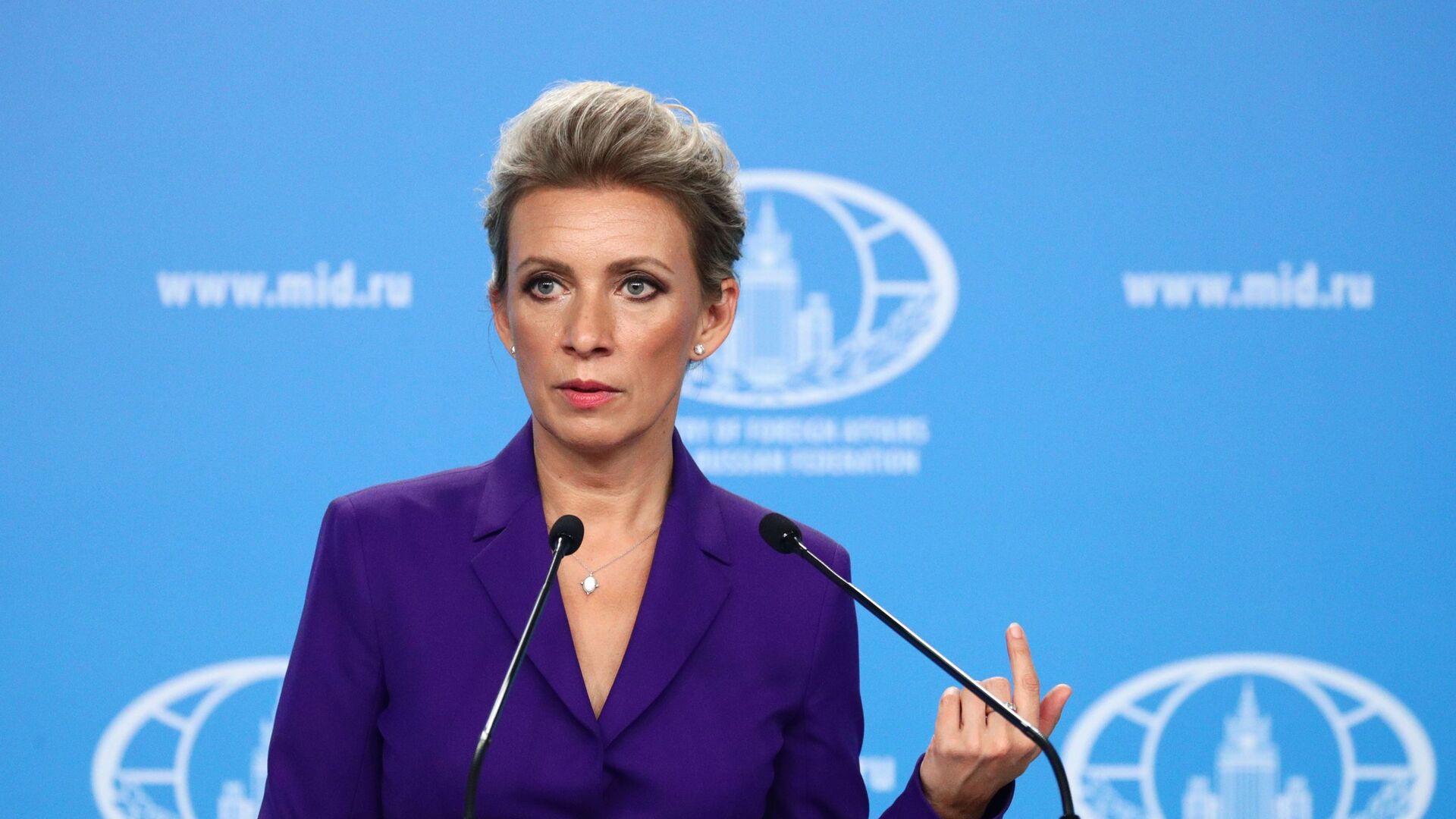
In turn, on May 7, Maria Zakharova accused the Armenian side of breaking its promises not to take actions against Moscow. This pattern is also reflected in the view of Russian Security Council Secretary Sergei Shoigu, who stated at a meeting of a special working group of the Council that the Armenian authorities’ style of conduct does not correspond to the spirit of allied relations with Russia.
However, despite such economic and political rhetorical pressure from Moscow, the current Armenian authorities do not intend to deviate from their line, which, according to their statements, is aimed at maintaining the country’s membership in the EAEU without abandoning plans for European integration. In particular, Armenian Foreign Minister Ararat Mirzoyan said in a recent conversation with Armenian media representatives that the country has no intention of leaving the Eurasian Economic Union.
“The issue of withdrawing from the EAEU cannot be discussed unless Armenia submits a corresponding application and expresses such a desire, and we have not expressed such a desire,” he said, rejecting the idea of freezing the republic’s membership in the structure until a final decision is made.
In principle, the official Yerevan’s desire to retain its membership in the EAEU for the time being is quite understandable from a pragmatic standpoint. First, despite a gradual rapprochement with the European Union, Armenia has not submitted an official application for membership in this organisation, and consequently no negotiations in this direction have been opened. In simple terms, its accession to the European Union is not a matter for the near future, and the current Armenian authorities seek to maintain a kind of “safety cushion” in case this process ultimately proves to be little more than wishful thinking.
Second, the republic continues to derive substantial economic benefits from its participation in the EAEU while simultaneously gaining financial advantages from deepening ties with European structures. In other words, Armenia is trying to sit on two chairs, intending to continue manoeuvring between the European and Eurasian unions, limiting itself to declarative slogans addressed to Moscow, which in substance remain similar to Prime Minister Nikol Pashinyan’s words: “Russia is our friendly country.”
However, the Armenian authorities should take into account that, in the current context — following the European summits and ahead of Armenia’s parliamentary elections — Moscow is likely to tighten its pressure. At the same time, Yerevan should not disregard the fact that Brussels’ patience is also not unlimited, with signals already emerging from the European side that the republic’s government should clarify its preferences.
Thus, it can be assumed that the time has come for Armenia to make a choice; otherwise, the Armenian leadership’s attempt to hold two watermelons in one hand may well result in the country becoming an arena of confrontation between two centres of power.







 editor@caliber.az
 +994 55 444-88-98
 Азербайджан, Баку, ул. Низами, 203, Af Business House, 5-й этаж