










The Ukrainian watershed War and the right to fear
War has always created new myths and erased old ones. In this sense, a report by the German newspaper Bild on Ukrainians illegally crossing the Carpathian Mountains into Romania serves as a painful reminder of a dimension of the Russian–Ukrainian conflict that is rarely discussed, and usually only in hushed tones.
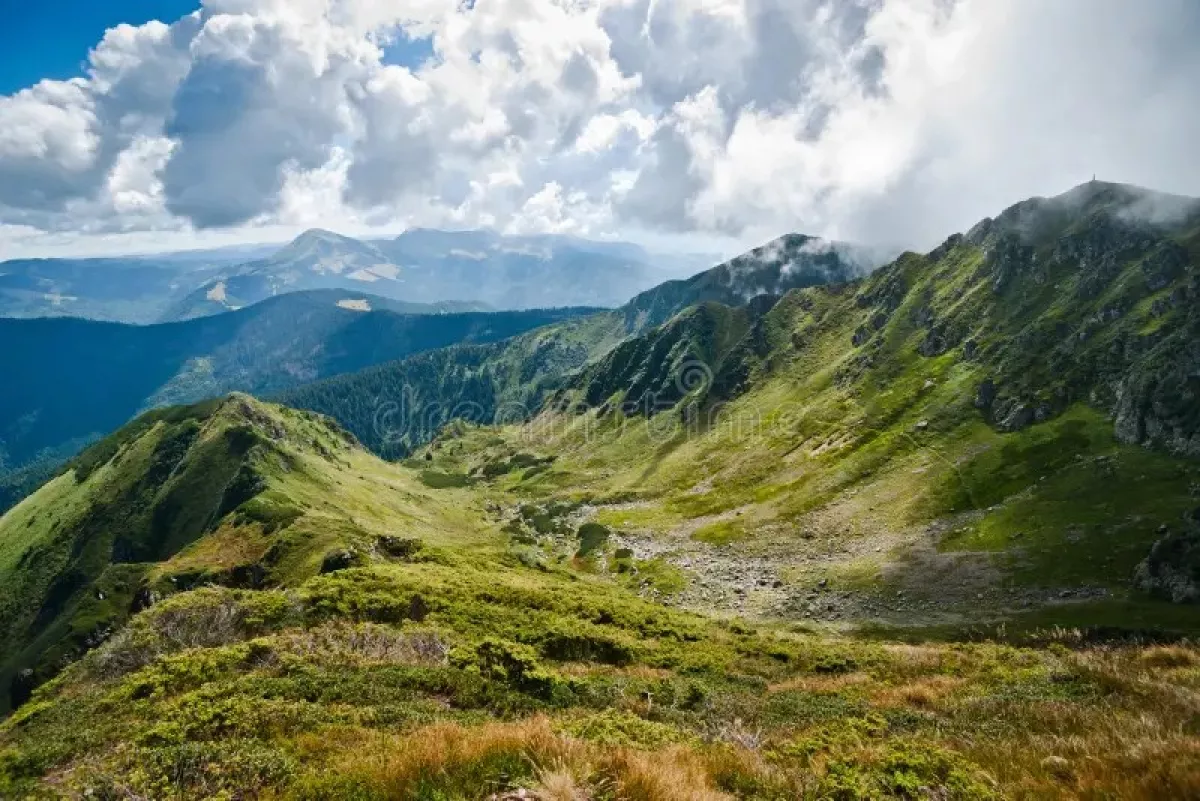
The story of 26-year-old Vasyl from Ivano-Frankivsk, which is the central thread of the article, is highly illustrative. After receiving a draft notice, he decided to escape through the mountains. The outcome was tragic: hypothermia, coma, cardiac arrest, kidney failure, and a lifelong dependence on dialysis. This personal tragedy encapsulates several important aspects of today’s Ukrainian reality — from the state of the mobilisation system to social inequality within the country.
According to data presented in the Bild report, since the beginning of the Russian–Ukrainian war, around 32,000 Ukrainians have illegally crossed the border through the Romanian Carpathians, and this is only the tip of the iceberg. These mountains have become an alternative and extremely dangerous “corridor” for those who do not want or are unable to go to the front. People attempt to cross mountain ranges without proper equipment, experience, and often without guides. As a result, dozens have died (at least 39 according to journalists), and hundreds of rescue operations have been carried out. This is not migration — it is an escape at the risk of one’s life.
What is particularly noteworthy in Vasyl’s story is his place of residence — Ivano-Frankivsk, which, like other western regions of Ukraine, is relatively safer compared to the east and south of the country, where cities such as Odesa, Kharkiv, Dnipro, Kyiv, and others are regularly subjected to missile and drone strikes.
This circumstance has shaped a specific social dynamic: the war has not been experienced uniformly across regions. For some, it means a daily threat to life, destroyed homes, and proximity to active combat zones; for others, it is a tense but still relatively safe rear area. It is precisely this asymmetry that helps explain why a significant number of residents of western regions have taken the opportunity to leave the country.
In the first months of the full-scale war, western Ukraine effectively became a transit hub, receiving internally displaced persons from the eastern and southern regions. However, another process unfolded in parallel: the mass departure of residents from western regions to Europe.
According to the Centre for Economic Strategy, 4 million Ukrainians crossed the western borders and remain abroad to this day. Of these, estimates from various research institutions (CES, KIIS, Razumkov Centre) suggest that around 13–17 per cent are natives of western regions. In absolute terms, this amounts to roughly 720,000–950,000 people, many of whom had a significant advantage: even before 2022, a substantial portion of western Ukrainians worked in the EU, primarily in Poland, which meant they already had social ties, housing, and employment channels. In other words, unlike residents of the East, they did not start from scratch.
Particular attention is drawn to a topic frequently discussed in Ukrainian and European media — the economic strategy of some who left. This refers to cases in which Ukrainian citizens receive social assistance in EU countries such as Germany while simultaneously renting out their property in Ukraine to internally displaced persons.
Such a model, in essence, allows income to be generated from two sources at once, and its existence undermines the image of universal sacrifice. As can be seen, war, like any crisis, intensifies not only solidarity but also pragmatism.
Notably, Ukrainian public discourse long held the view that the western regions constituted the core of patriotism and willingness to sacrifice one’s life for the homeland. However, the reality of war has proven far more complex.
First, migration data shows that hundreds of thousands of residents of western Ukraine chose emigration.
Second, the front lines have revealed a different geography of resistance. Among those who are currently fighting and dying, a significant share are residents of eastern regions, natives of central Ukraine, and Russian-speaking citizens from major industrial cities. Thus, the war has effectively dismantled the binary model of a “patriotic West” versus a “passive East.”
At the same time, it is important to understand the following: fleeing through the Carpathians is not only a social or economic choice; it is, first and foremost, a response to fear, since mobilisation under conditions of prolonged warfare triggers a natural desire among some people to avoid the front line. This phenomenon is not unique to Ukraine and has been recorded in all wars throughout human history.
However, in the Ukrainian case, it intersects with regional differences. Where the war is experienced on a daily basis, the motivation to resist is higher. Where it remains more “distant,” the desire to preserve a familiar way of life is stronger. Vasyl’s story is an example of the second scenario: he was not fleeing missile and drone strikes — he was fleeing the prospect of being sent to the front line.







 editor@caliber.az
 +994 55 444-88-98
 Азербайджан, Баку, ул. Низами, 203, Af Business House, 5-й этаж