










Guarantor of war Kocharyan and his illusion of peace
Robert Kocharyan, the second president of Armenia and the current prime ministerial candidate from the Armenia bloc, has delivered a series of programmatic interviews ahead of the June elections. In one of them, he made a statement that has effectively become the central slogan of his campaign: “If we had been elected in 2021, Nagorno-Karabakh would certainly not have been emptied, because we would not have signed that foolish declaration in Prague that changed the entire configuration. I have no doubt about this”
At campaign meetings with voters in Masis and Vanadzor, Kocharyan advanced the same argument from another angle: under his leadership, people, he claimed, did not question their security—because security was assured. Thus, one of the key instigators of the Armenian separatist movement in Karabakh, an architect of the war with Azerbaijan and the nearly three-decade occupation of Azerbaijani territories, portrays himself as a guarantor of peace—one allegedly undermined by his successors.
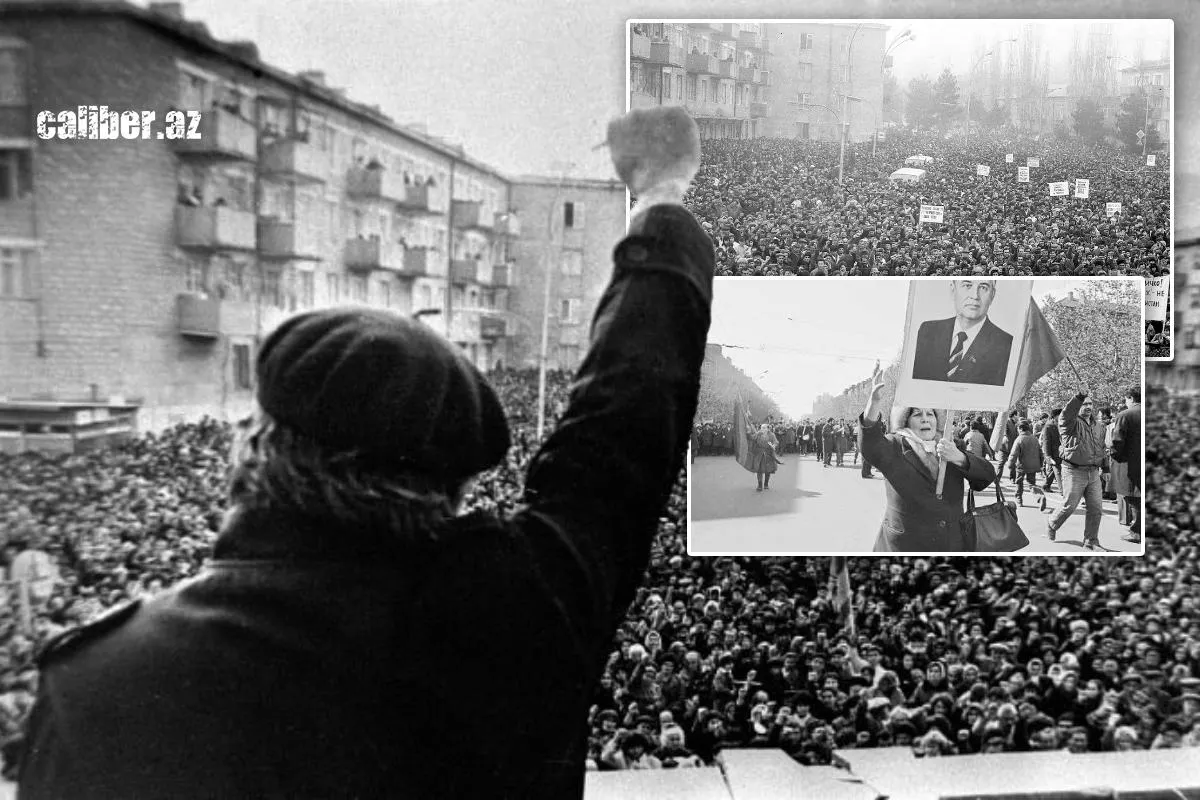
This is precisely the claim that warrants closer scrutiny. What he describes as “peace” was, in reality, nothing of the sort. It was the occupation of twenty per cent of a neighbouring state’s territory. It was a situation built on the displacement of over a million Azerbaijanis from their homes, on the Khojaly Genocide, on ruined cities, and on tens of thousands of graves on both sides.
Peace, by definition, requires the consent of two parties. Occupation is something else entirely: one side holds what belongs to another, while the other waits for the moment to reclaim it. What Kocharyan now publicly presents as an achievement was not a triumph of diplomacy, but a prolonged pause—during which Baku was preparing its response.
Terminology can be manipulated, but facts remain unchanged. From 1994 to 2020, Armenian armed formations controlled territory that legally belonged to Azerbaijan, and every day of that control was, in essence, a continuation of war.
To appreciate the scale of this distortion, one must clearly understand who Kocharyan is. He was one of the principal architects of a state model that placed an ideology of territorial expansion at the core of Armenian politics. Together with Serzh Sargsyan, he traversed this entire path: from armed formations in the then–Nagorno-Karabakh Autonomous Oblast (NKAO) to the presidential office in Yerevan, from the first war to attempts to institutionalise its outcomes.
Their regime was sustained by the forceful retention of occupied territories and by obstructing any possibility of their return through negotiations. Domestically, it relied on oligarchic control and the violent suppression of opposition—going so far as the shooting of political opponents (Parliament Speaker Karen Demirchyan and Prime Minister Vazgen Sargsyan) inside the parliament on October 27, 1999. Ideologically, it was sustained by the cult of a mythical “final victory,” which required the constant reproduction of an enemy image and left no room for routine state-building.
Armenia in those years was a country where political legitimacy was measured not by the ability to build roads, schools, and hospitals, but by the willingness to maintain control over foreign territories.
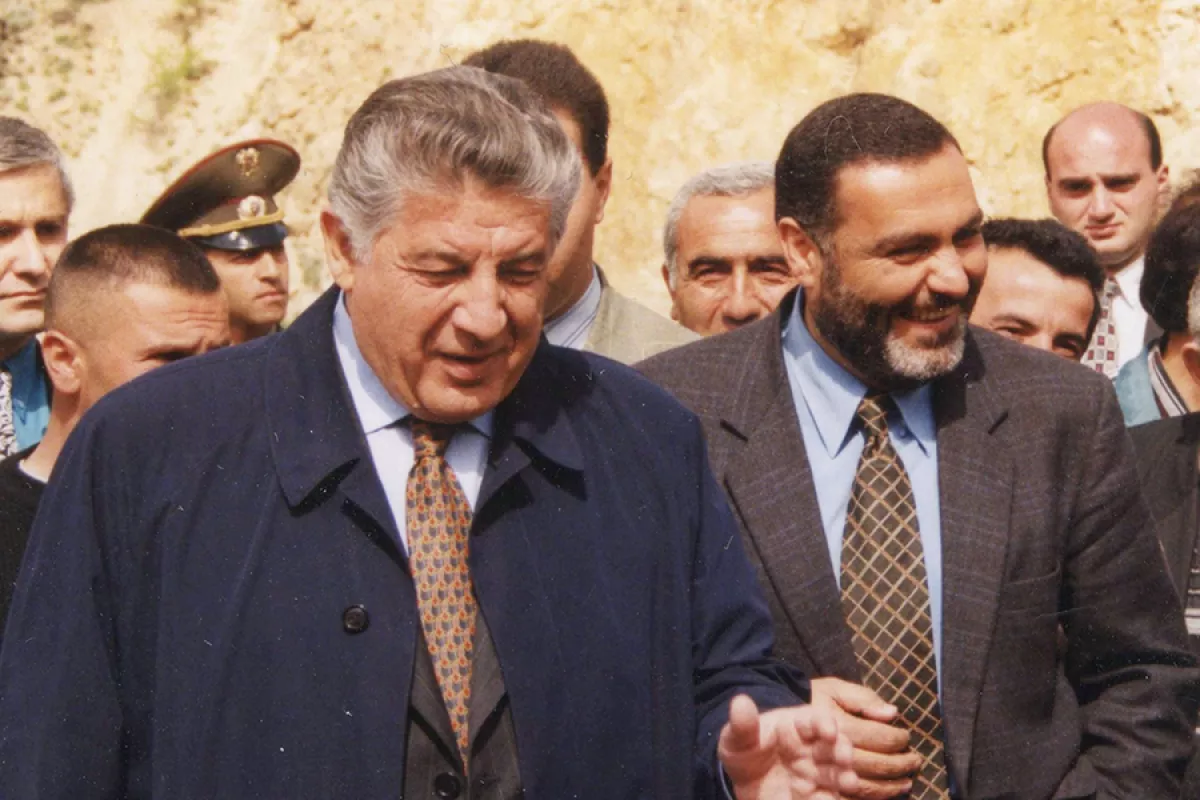
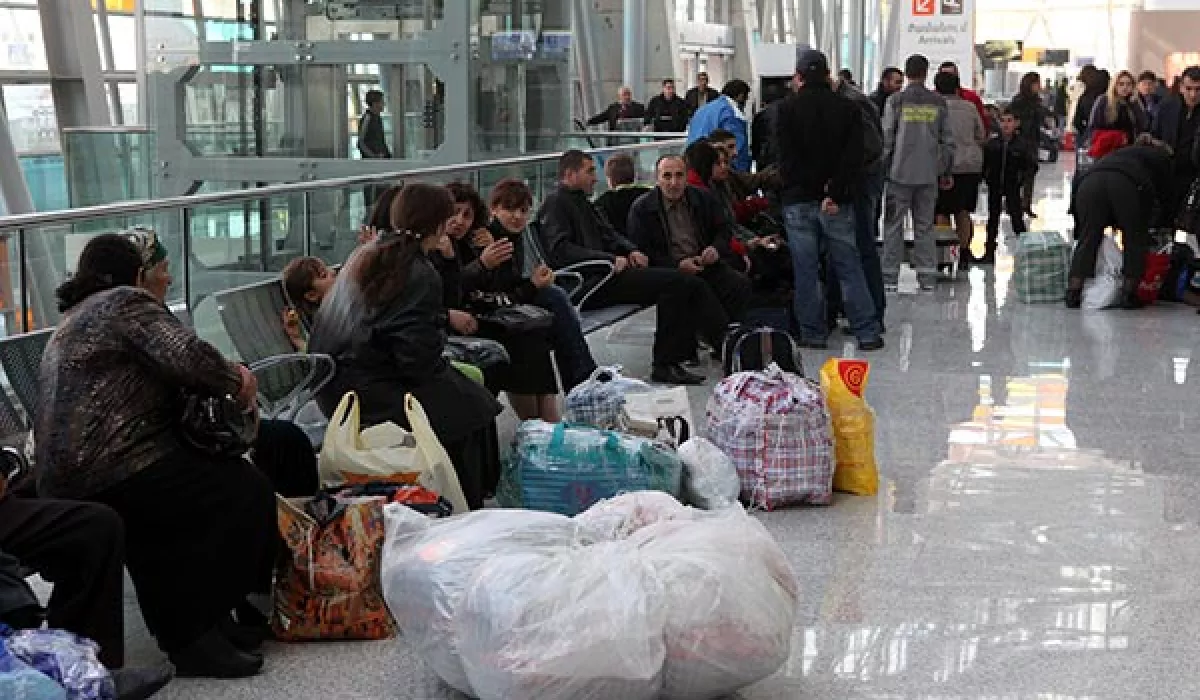
The price for this system was paid by the entire Armenian society—and, to some extent, is still being paid today. Emigration, demographic decline, and abandoned villages became its lasting consequences. Yerevan, where Kocharyan now promises stability, was under his rule transformed into a capital of continuous exodus. Young people were leaving because they saw no future in a country consumed by its own mythology. None of the beneficiaries of that system has paid this bill to this day.
The 44 days of autumn 2020 became a corrective blow to the very ideology that Kocharyan and Sargsyan had spent three decades constructing. Azerbaijani President Ilham Aliyev articulated this point clearly in his speeches: during the 44-day war, Azerbaijan defeated not the army of Pashinyan, but that of his predecessors—Robert Kocharyan and Serzh Sargsyan. In other words, it was not merely the Armenian army that was defeated, but the entire system upon which it had rested.
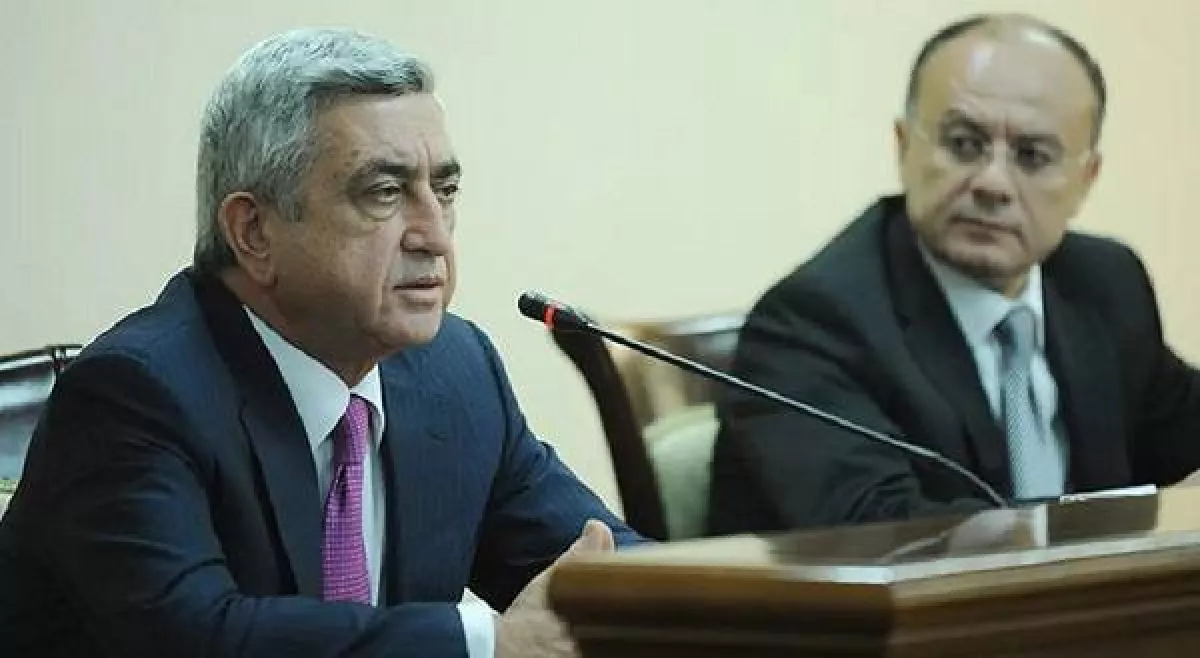
This perspective is crucial because the argument Kocharyan advances today rests on a fundamentally flawed premise: that what occurred under Pashinyan would not have happened under his own leadership. Such reasoning distorts the underlying chain of cause and effect. The very architecture of the system he helped construct made a peaceful settlement structurally unattainable from the outset. The power of the Karabakh clan was grounded in the denial of Azerbaijan’s sovereignty over the occupied territories—without that denial, the system itself would have ceased to function in its existing form.
They were, by definition, incapable of signing any agreement that recognised this sovereignty. And therefore, it is ultimately irrelevant who formally occupied the office in Yerevan in September 2020: as long as the system of the Karabakh clan remained in place, war was embedded within it as the only viable outcome. Had Kocharyan or Sargsyan been in power, the war would have come sooner or later—but with the same result.
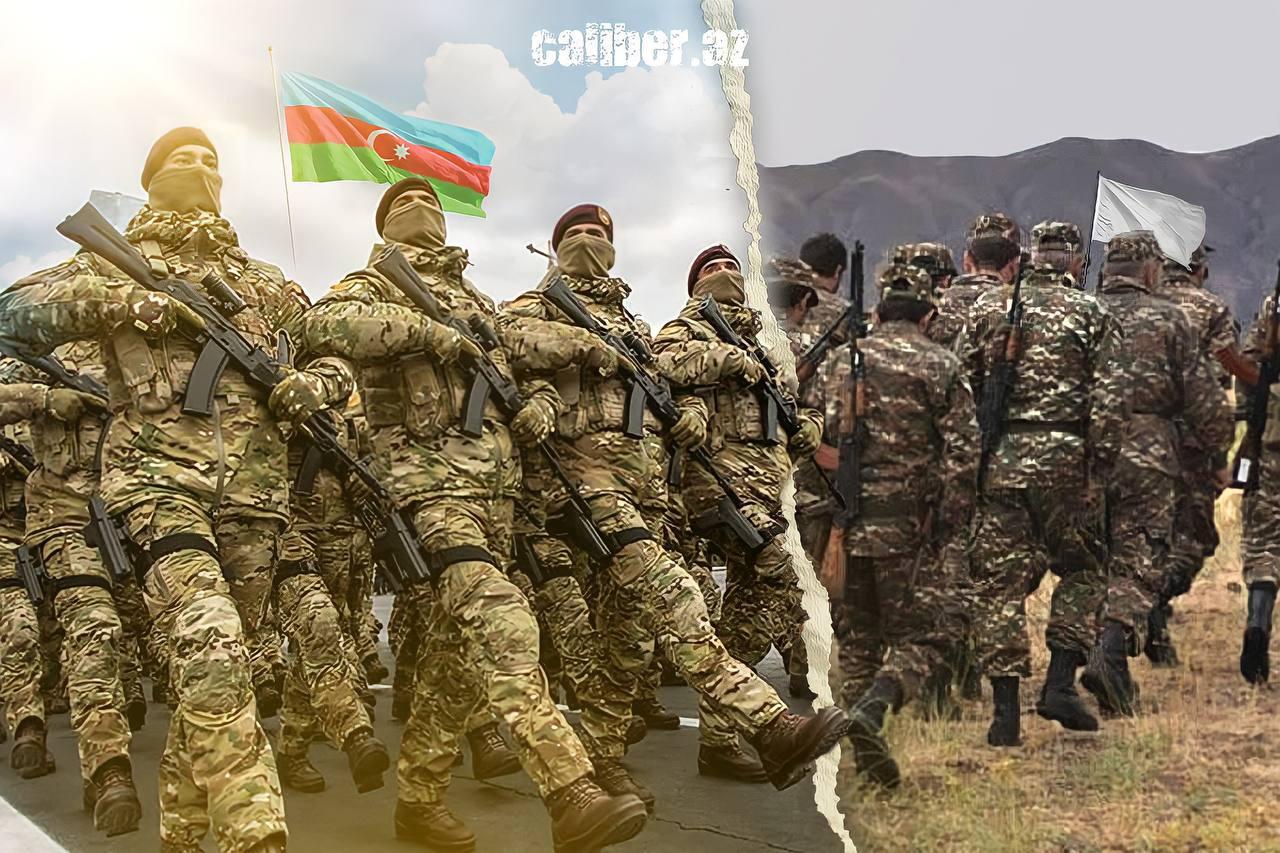
On the table of the Kocharyan–Sargsyan political camp were not peace plans. Rather, there were intentions to expand the zone of occupation, to legitimise the separatist entity, to build up diaspora-based mechanisms of political pressure, and to pursue the aspiration of international recognition of the so-called “miatsum” project. This is not a conjecture. It is reflected in documents, public statements, budgetary priorities, military procurement patterns, and, more often than not, in informal practices such as patronage and external support networks—something that was at one point publicly referenced by General Lev Rokhlin. To describe such a reality as “peace” requires either a very selective memory or a deliberate reliance on the audience having one.
It is precisely on this substitution that Kocharyan’s entire electoral campaign is built: redefining occupation as peace, ideology as stability, and the collapse of his own system as a “national catastrophe.” The message is directed at a society exhausted by uncertainty: that there once was stability, and that it can be restored by returning those who allegedly provided it. But returning them means restoring Kocharyan, his circle, and his model of governance. That is the true substance behind the slogan “there would have been no war under us.”
Yet this is not an analytical claim—it is an electoral promise. A promise that if they are returned to power, they will restore a sense of security that, in reality, never truly existed. What existed was an illusion that ultimately collapsed. To promise its reconstruction is, in effect, to promise its collapse once again—only this time on far more severe historical and political ruins.
There is also another factor that Kocharyan deliberately overlooks. The emerging order in the South Caucasus is not a gift to the government in Yerevan, nor a personal achievement of the Armenian prime minister. It is a regional framework shaped by the investments, engagement, and strategic calculations of Baku, Washington, and other partners. This order has an underlying architecture, binding understandings, and a network of interdependent interests.
A return to senior positions in Yerevan of figures whose political identity is built on rejecting this framework would represent a direct challenge to the regional security architecture. And such a challenge, as is often argued, would not go unanswered by those who have contributed to building and sustaining this system.
In Baku, this point has been stated at the highest political level on multiple occasions. The argument is that if a genuine threat emerges in Armenia of restoring a political model aimed at revising the outcomes of 2020 and undermining the peace agenda, Azerbaijan possesses both the legal and political grounds to take preventive measures. This is not framed as a threat, but as a political assessment. The message is that sufficient capability and resolve exist, while the logic of regional development is oriented toward peace—and therefore not aligned with forces seeking to reverse it.
For the Armenian voter whom Kocharyan is addressing today with promises of a return to the past, it is important to clearly understand what is being offered. The “past” being invoked is not stability, but isolation and war—conflict that, under a system built on the denial of peace and territorial integrity, becomes structurally unavoidable.
By contrast, the future underpinning the current—imperfect and difficult, yet gradually advancing—peace agenda is one of open borders, infrastructure development, real economic integration, and the prospect of a normal life in a stable state.
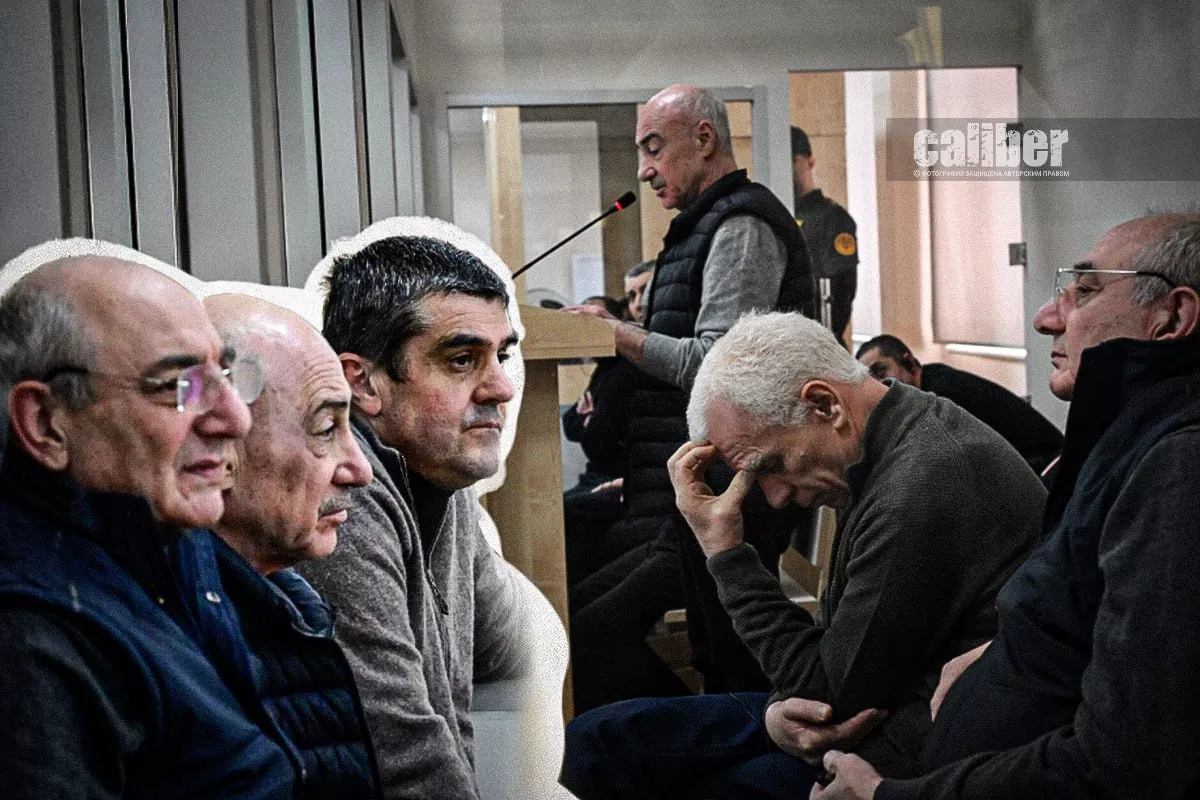
And one more point — about Kocharyan himself. In Baku, court proceedings have already been held against the direct perpetrators of the crimes committed during the occupation period. Some of the architects of the regime under which these crimes became possible are still at large — but only for now. War crimes, crimes against humanity, and ethnic cleansing have no statute of limitations. And Kocharyan should not forget this.
Today, the Armenian voter faces a simple choice: the past, to which Kocharyan, Karapetyan, and other figures of the revanchist camp are persistently pulling them back, has already cost the Armenian people far too much — in losses, isolation, and years of lost prospects. Or a future that, for the first time in three decades, has become tangible — peace, normal relations with neighbours, and stability in one’s own home.
It is a choice between war disguised in slogans of peace, and peace that requires maturity, responsibility, and the ability to preserve it. If the Armenian voter is capable of hearing the lessons of their own history, they will choose peace. Armenia may not have another chance for a dignified future.







 editor@caliber.az
 +994 55 444-88-98
 Азербайджан, Баку, ул. Низами, 203, Af Business House, 5-й этаж