










Baltic test case Why Baku advances as Kyiv faces friction
As the saying goes, everything is understood through comparison—including how different states build mutually beneficial and respectful relations with the outside world.
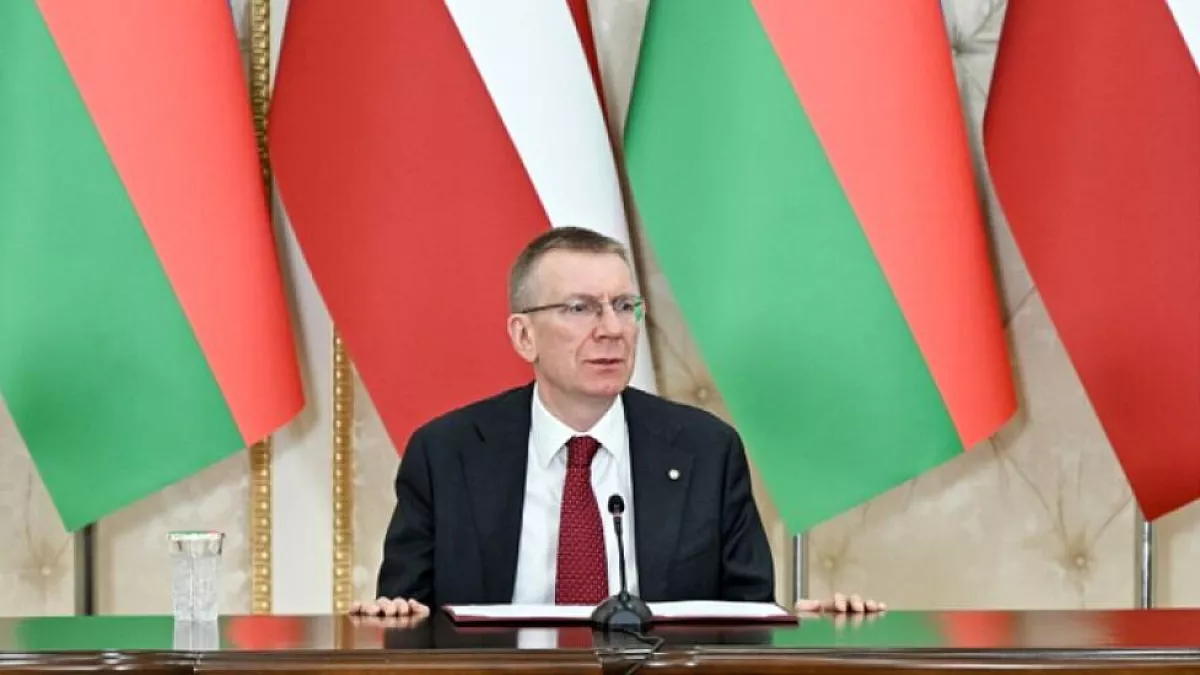
In this context, the official visit of Latvian President Edgars Rinkēvičs to Azerbaijan has become a clear indication of the rapidly evolving attitude toward our country on the international stage. The statements made by the Latvian head of state in Baku demonstrated not only the high level of bilateral relations but also the broader geopolitical context in which our country’s role has significantly grown.
In particular, speaking at the Azerbaijani-Latvian business forum held in the capital, the Latvian president noted that “during this time of turbulence, seeing what is happening in Europe and also in the Middle East, all the geopolitical challenges, we are trying to find new ways of cooperation with our very good and trusted partners.”
He also noted that, as a member of the European Union, the Organisation for Economic Co-operation and Development, and NATO, Latvia is fully prepared to work on and support cooperation between Azerbaijan and these organisations, as well as bilateral frameworks, and to utilise all the experience at its disposal to advance economic relations.
“And we also highly value the fact that Azerbaijan is a strategic partner not only for Latvia but for many European countries, be it political, be it economic field, but most importantly, as we speak, in the energy field,” Edgars Rinkēvičs emphasised.
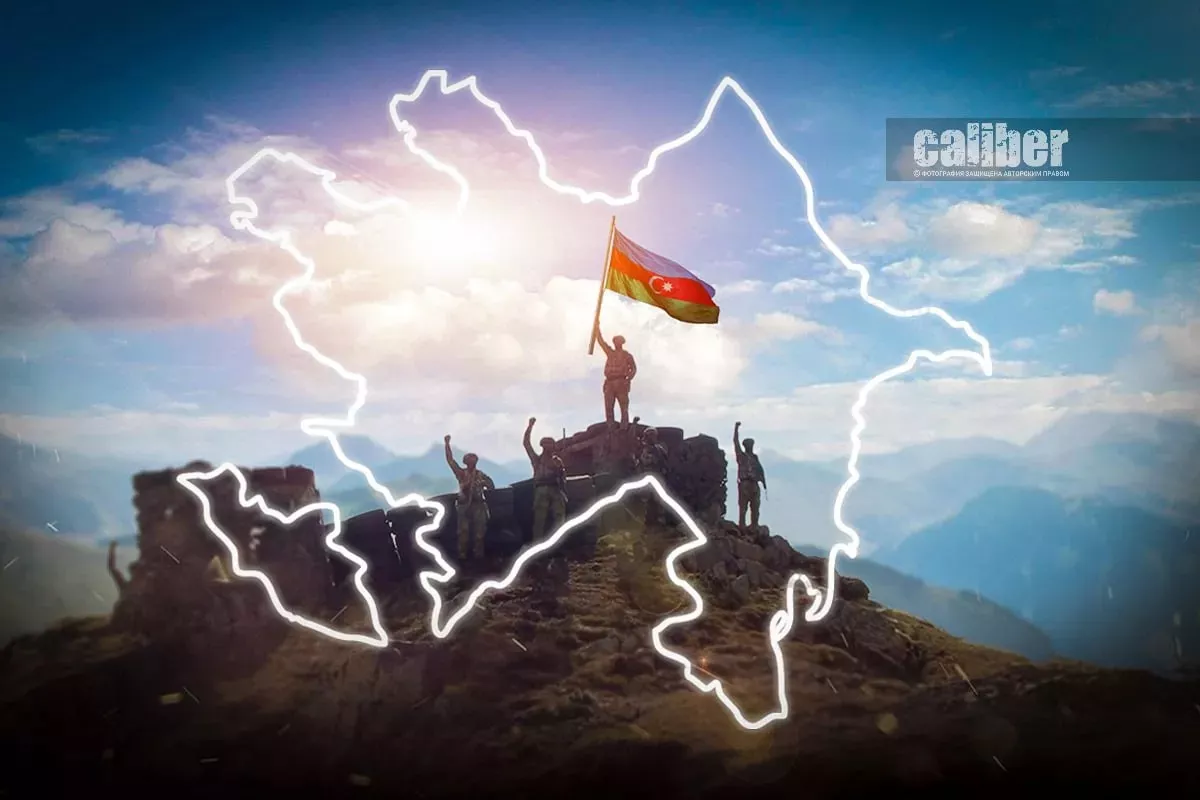
Undoubtedly, the historic victory in the Second Karabakh War, along with the restoration of sovereignty and territorial integrity by military-political means, has fundamentally transformed global perceptions of the Azerbaijani state. Today, it is seen as a country that has effectively advanced its national interests and ensured stability within its borders.
In world politics, such achievements inevitably translate into increased authority, trust, and interest from other states. The visit of the Latvian president is a vivid confirmation of this, as is the recent trip to Baku by Lithuanian Prime Minister Inga Ruginienė, which can likewise be described as successful and productive.
Taken together, these developments point to the emergence of a steady trend: Azerbaijan is actively strengthening its position in the Baltic direction. The significance of this trend is further underscored by the fact that both Latvia and Lithuania are members of the European Union and the North Atlantic Alliance, while Azerbaijan, as is well known, does not seek membership in these structures.
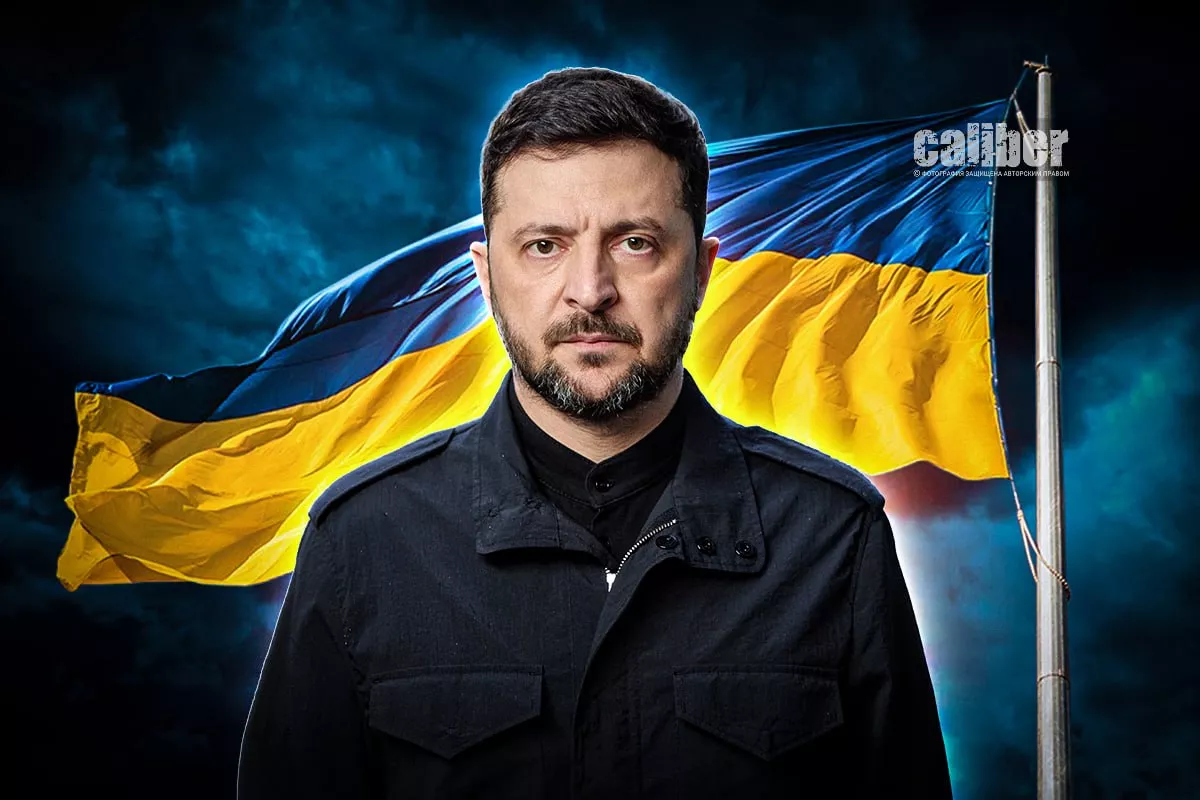
This factor clearly distinguishes Azerbaijan from other countries, such as Ukraine, which is eager to join both organisations—despite repeated statements from Brussels, Paris, Berlin, Rome and other European capitals indicating that the scenario Kyiv desires is neither on the agenda nor foreseeable. At best, Ukraine is being encouraged to accelerate the implementation of reforms necessary to improve its chances of accession to the EU and NATO.
At the same time, it has been precisely the Baltic states that have been among the most active supporters of Ukraine. Yet, somewhat paradoxically, signs of a cooling in relations have recently emerged between Ukraine and at least two Baltic countries.
This shift began on 19 April, when, in an interview for the “United News” telethon, President Volodymyr Zelenskyy stated that “Russia needs a large-scale mobilisation in order to attempt another offensive against Ukraine, or to carry out a parallel offensive with fewer combat forces.”
“Why conduct such a large mobilisation? In order to repeat a major offensive against Ukraine. Option B is to reduce costs and effort—by launching a parallel, smaller offensive in areas where fewer combat forces would suffice. Why? Because a given state, for example in the Baltics, may not be ready for a serious confrontation simply because they are small, not because they lack courage,” he said.

The reaction from two Baltic states was swift. In Lithuania, the Ukrainian president was accused of engaging in “fearmongering rhetoric,” while Prime Minister Inga Ruginienė stated that there are currently no grounds for such messaging: “There are no preconditions for this kind of rhetoric. If we saw that such preconditions existed, then obviously our rhetoric would also change.”
In Tallinn, for its part, Zelenskyy’s remarks were seen as “undermining confidence in NATO’s Article 5,” with Estonian officials asserting that Russia does not intend to attack the Baltic states. Estonian Foreign Minister Margus Tsahkna noted that Ukraine has repeatedly highlighted the threat of a Russian attack on other countries, but, according to him, such statements do not align with Estonia’s intelligence assessments and “do not contribute to cooperation.”
“First, such statements do not correspond to our intelligence information or our assessment of the threat picture. We do not see Russia concentrating its forces or preparing in any way militarily to attack NATO or the Baltic states; rather, it is the opposite. Russia is not in a very strong position on the Ukrainian front, and economically as well,” he said.
The remarks by Zelenskyy were also addressed by the Chairman of the Foreign Affairs Committee of the Estonian Parliament, Marko Mihkelson, who accused the Ukrainian president of echoing Russian talking points and noted that such statements from Kyiv are not new:
“It's as if a finger is being wagged at Europe: look, if we end up in a weaker position or lose, you'll be next — especially the Baltic states. That's clearly unsettling and reinforces Russia's narrative that it is winning, advancing, while you are retreating and losing.”
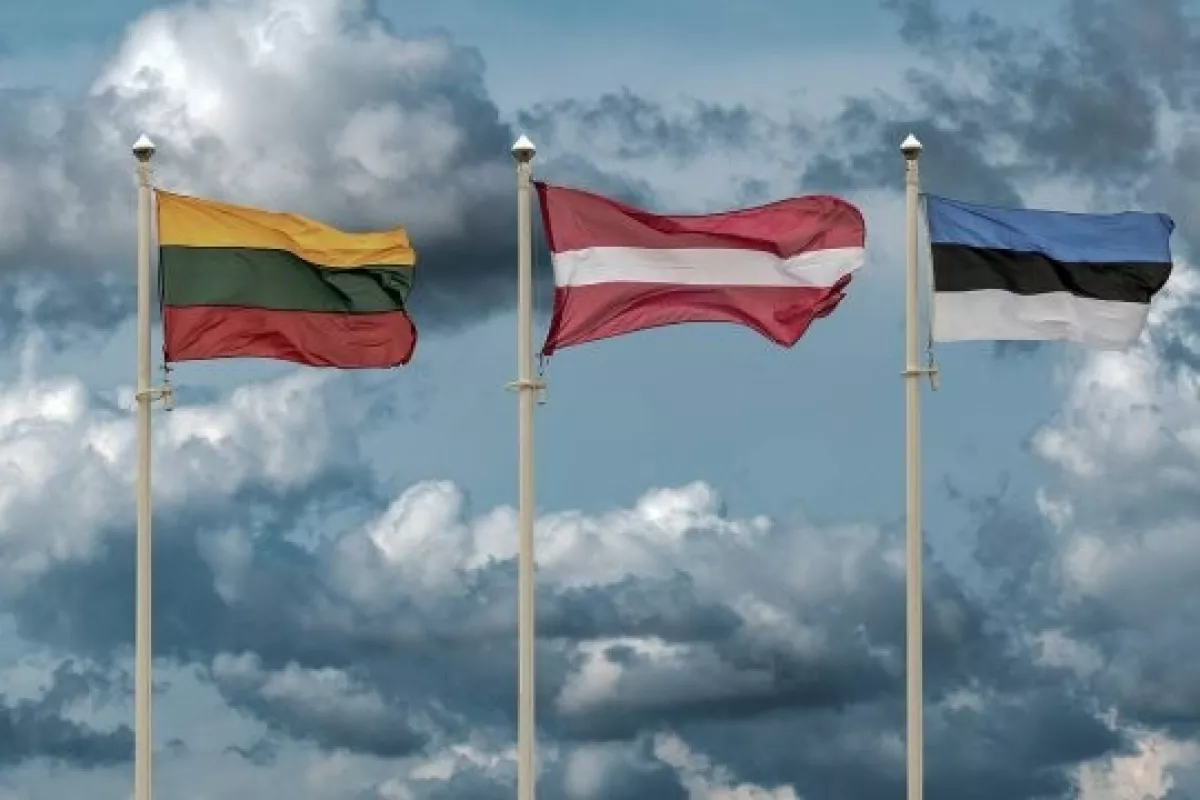
Thus, two distinct approaches to building relations with the Baltic states are evident. On the one hand, there is Azerbaijan, which has never asked anything of the Baltic countries—they have not provided our nation with political, military, or financial assistance—and which managed to restore its territorial integrity and sovereignty independently. Today, Latvia and Lithuania are demonstrating a genuine interest in developing comprehensive, equal, and mutually beneficial relations with the Republic of Azerbaijan.
On the other hand, there is the example of Ukraine, whose leadership—having failed to adequately prepare for the full-scale Russian-Ukrainian war and having ignored numerous warnings from its allies about the inevitability of such a scenario—has nonetheless received and continues to receive political, military, and financial support from the Baltic states. Despite this, official Kyiv has managed to strain its relations with both Vilnius and Tallinn.
This set of facts once again underscores that much—if not everything—about a country’s present and future depends on how well its leadership understands the rules of the game in global politics and in its relations with partners.







 editor@caliber.az
 +994 55 444-88-98
 Азербайджан, Баку, ул. Низами, 203, Af Business House, 5-й этаж