










Zelenskyy in Azerbaijan and Iran’s IRGC at a crossroads Caliber.Az weekly review
The editorial team of Caliber.Az presents the latest episode of the programme “Events” with Murad Abiyev.
Azerbaijan
Baku hosted an official visit by the President of Latvia, Edgars Rinkēvičs. The programme of the visit included a meeting with the President of Azerbaijan Ilham Aliyev, talks between the delegations, the signing of documents, an Azerbaijan–Latvia business forum, as well as a joint press statement by the two heads of state.
Ilham Aliyev, among other remarks, emphasised the importance of expanding trade, mutual investments, creating joint production facilities, and exchanging information on new projects and business opportunities.

In turn, Edgars Rinkēvičs identified the defence industry, transport, pharmaceuticals, and experience-sharing in the field of forestry as promising areas of cooperation. He also expressed his support for the liberalisation of the visa regime between the EU and Azerbaijan.
All of this points to a mutual interest between the Baltic states and Azerbaijan, which has grown against the backdrop of global instability, requiring a stronger search for reliable partners. One of the practical areas of cooperation, according to experts, is the potential integration of the Middle Corridor with Baltic infrastructure, which would significantly strengthen the role of both sides in diversifying global supply chains.
Iran
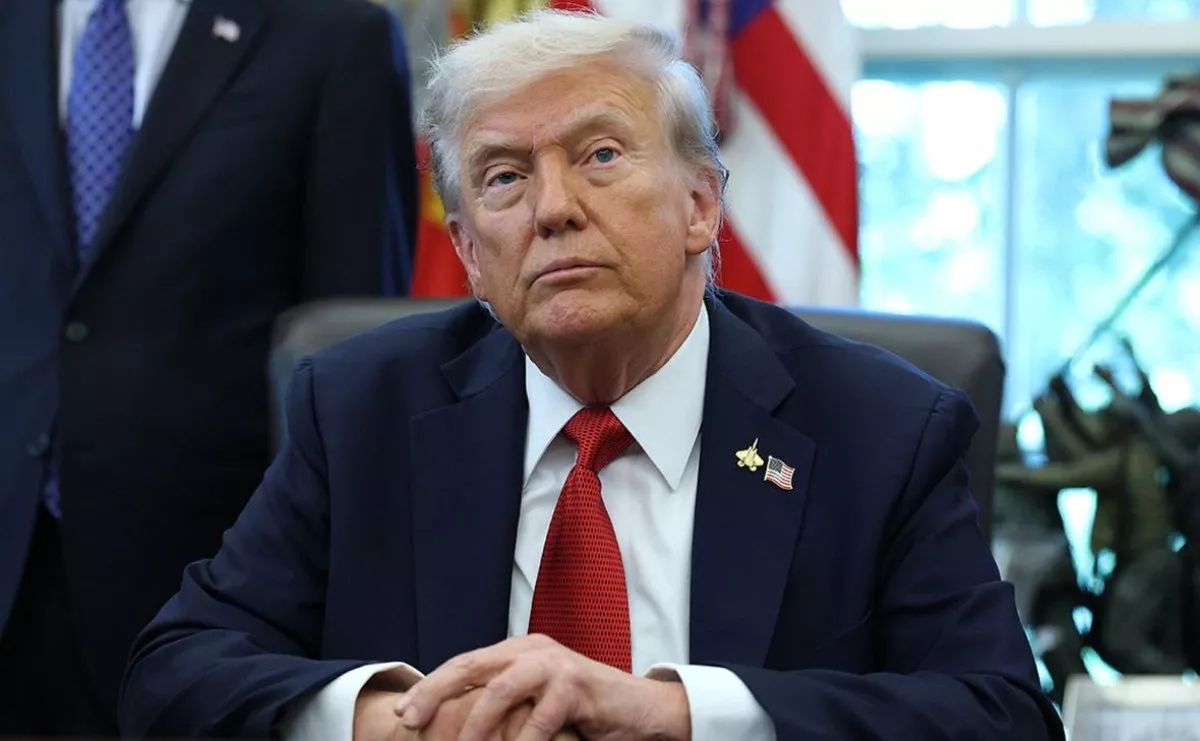
The situation surrounding the US–Israel conflict with Iran continues to remain contradictory. Over the past week, the two-week ceasefire expired, which in any case was rather conditional and unfolded against the backdrop of what has now become an American blockade of the Strait of Hormuz. To demonstrate the firmness of its intentions, the United States attacked an Iranian vessel attempting to pass through the strait.
Despite Trump’s announcement of a second round of talks in Islamabad scheduled for 21 April, the Iranian side did not confirm its participation and once again declared the closure of the Strait of Hormuz to vessels belonging to US allies. In response, Trump threatened strikes on Iranian power plants, but at the same time extended the ceasefire for a period of 3 to 5 days, as he put it, at Pakistan’s request.
All of this is taking place against the backdrop of an undisguised split within Iran’s ruling elite. IRGC leadership has condemned the civilian authorities, stating that they acted beyond their mandate in the negotiation process. Another notable development is that the IRGC has publicly distanced itself from oil export operations. This suggests that the American blockade of the strait, which has cut off Iran’s main route for hydrocarbon exports, would severely damage the Iranian economy, and the IRGC does not want Iranian society to associate it with the inevitable worsening of economic conditions.
Despite Iran’s substantial resilience buffer, there is a growing impression that the IRGC is cornered. It can exit this deadlock either through a significant compromise with the United States—such as on the nuclear programme—or by delivering some form of asymmetric strike against the US–Israel alliance. The Corps cannot afford to wait until the country’s economic situation reaches a critical level.
Ukraine
According to reports from military analysts, Russia is preparing to intensify its offensive in eastern Ukraine with the aim of fully capturing Donbas, redeploying reserves and waiting for more favourable weather conditions for attacks. The main focus is said to be on the Sloviansk and Kramatorsk directions. However, most commentators doubt Russia’s ability to achieve such large-scale objectives in the coming months due to a shortage of resources, the need to maintain forces on other fronts, and the resilience of Ukrainian defences.
Overall, the Ukrainian leadership appears to have brought the country to a certain plateau, in which the Armed Forces of Ukraine feel more confident. Ukraine has developed its own missile production capabilities. Painful Ukrainian drone strikes on Russian oil refineries continue unabated. Washington, distracted by the Middle East, has noticeably loosened its grip on Kyiv, while the European Union has instead managed to secure substantial support. This refers to the controversial €90 billion loan, which was finally approved by the EU during the past week. This became possible due to Hungary’s changed position—Budapest lifted its veto on the loan in exchange for the resumption of oil supplies via the “Druzhba” pipeline. As a result, Kyiv now has funds to continue the war for approximately two years.
Meanwhile, President Volodymyr Zelenskyy continues his active international diplomacy. Over the past week, he visited Saudi Arabia for the second time this month, where he discussed military cooperation, energy security, and investments in Ukraine’s reconstruction with Crown Prince Mohammed bin Salman.

Today, the Ukrainian president arrived in Azerbaijan, where in Gabala he met with President Ilham Aliyev. The leaders of the two countries discussed the development of cooperation in the defence industry, particularly in the field of counter-drone systems, as well as the exchange of experience in this area.
It should be noted that there is significant potential for expanding cooperation between Azerbaijan and Ukraine in the economic sphere, primarily in energy, where SOCAR infrastructure is already in place.
Azerbaijan is also actively providing humanitarian assistance to Ukraine, supporting the affected population by supplying electric generators, implementing rehabilitation programmes for Ukrainian children and students, and considering possible assistance in demining and reconstruction projects, drawing on its own experience in overcoming the consequences of conflict.
Azerbaijan declares its commitment to the principles of sovereignty and territorial integrity of states, maintains distance from the military dimension of the Russia–Ukraine conflict, and advocates for its resolution through dialogue. This position also potentially allows Azerbaijan to serve as a venue for peace negotiations.







 editor@caliber.az
 +994 55 444-88-98
 Азербайджан, Баку, ул. Низами, 203, Af Business House, 5-й этаж