










Brussels pressure and Tbilisi’s response A phase of high tension
Relations between the European Union and Georgia, which have recently been marked by extreme strain, have approached a dangerous critical threshold, as indicated by statements from a number of EU officials.
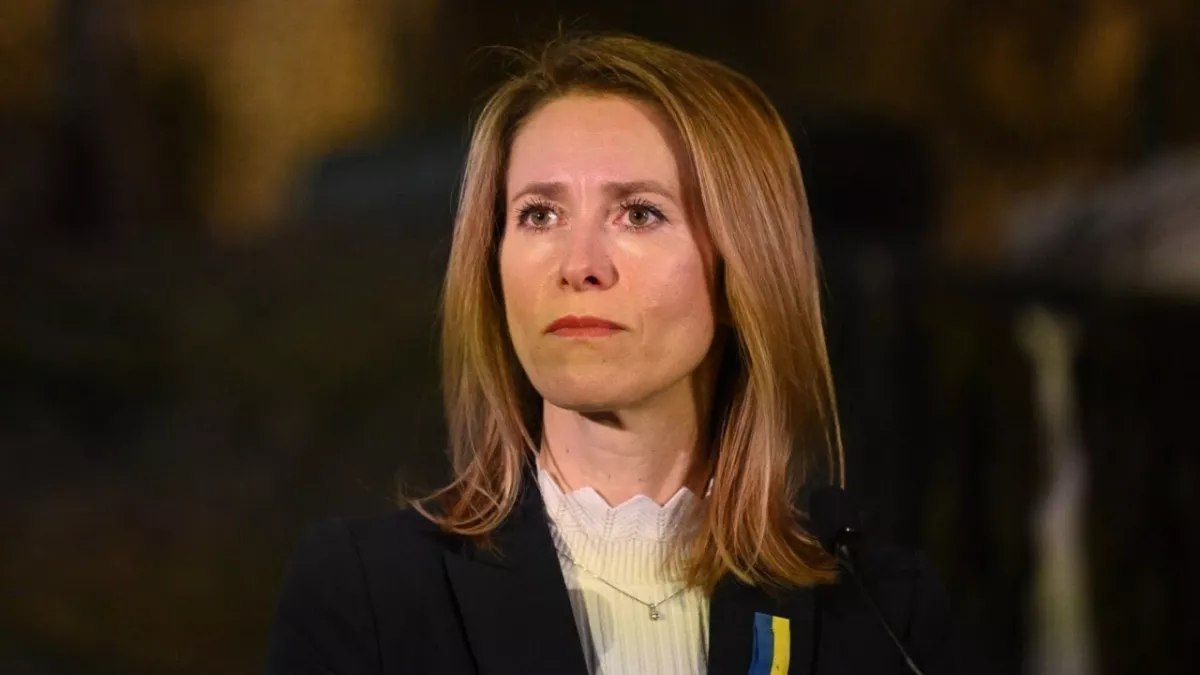
In particular, the EU’s High Representative for Foreign Affairs, Kaja Kallas, stated following a meeting of the EU Foreign Affairs Council that “Ministers had an explicit message that Georgia needs to change the course.” She added: “The ultimate understanding is that we should definitely engage more with the Georgian people, also outside Tbilisi, to show the people that the European Union is there and really that we are coming with good thoughts and will. But at the same time, also to give very clear messages to the government of Georgia that the direction that they are taking is not in accordance with the values that Europe represents.”
She also noted that only one European Union member state is preventing the introduction of sanctions against Tbilisi, while the remaining 26 countries support restrictive measures, though she did not specify which one. However, even without naming the country, it is evident that she was referring to Hungary, which, under Viktor Orbán, has repeatedly used its veto power to block restrictive measures against the Georgian authorities.
Now, following the parliamentary election victory of the centre-right Tisza party led by Péter Magyar, who declares a pro-European course and seeks to return the country to the forefront of European politics, Georgia is set to lose significant support on the European political flank in the form of Budapest. At the same time, the EU openly acknowledges that it will return to the issue of sanctions against the Georgian authorities after a change of government in Hungary. Thus, there is little doubt that once the new Hungarian prime minister officially takes office on May 9, the list of countries supporting the EU’s sanctions policy toward Tbilisi will become complete.
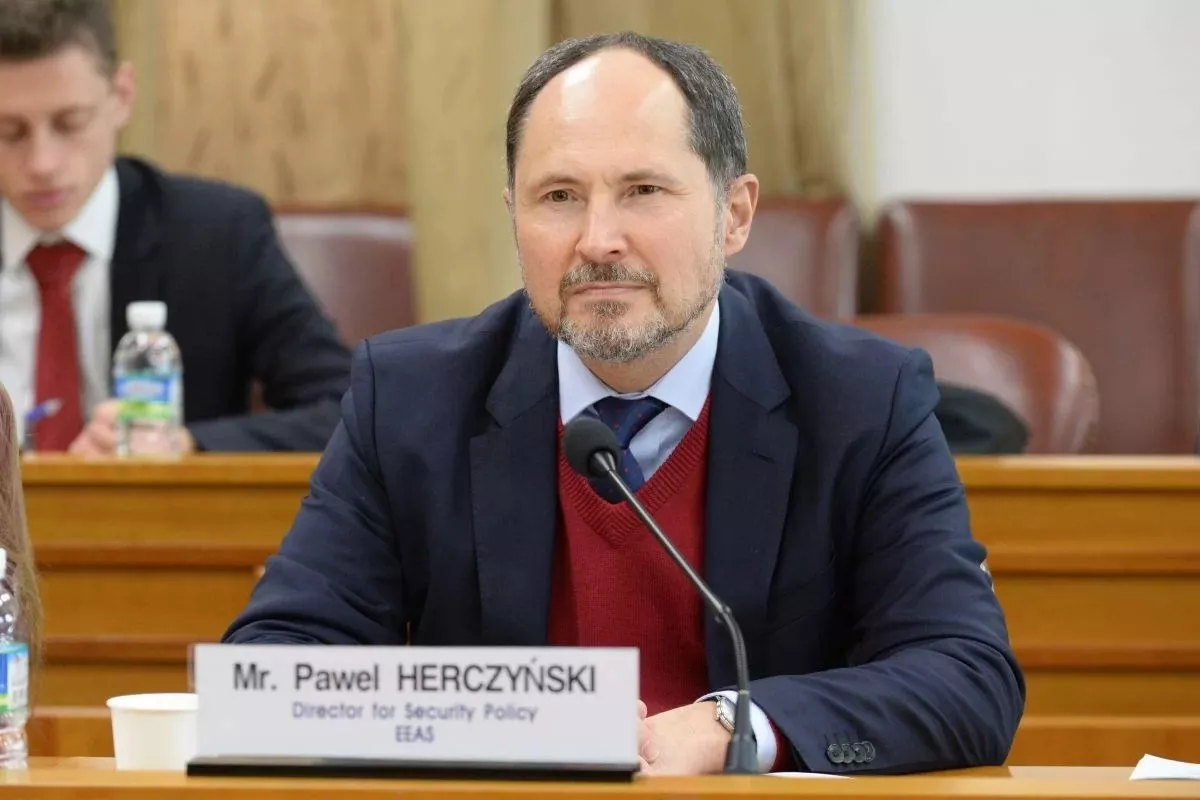
Even sharper in tone was a recent statement by the EU Ambassador to Tbilisi, Paweł Herczyński, who said that “Georgia is at a crossroads, Georgia’s future has not yet been written, but what will be decided in the near future will determine whether Georgia belongs to the family of European countries, based on democracy, the rule of law, and human rights, or, unfortunately, returns to its dark past.”
Thus, before addressing the question of what exactly the European Union seeks from Georgia, it is worth outlining the chronology of events that led to the emergence of tensions along the Brussels–Tbilisi track.
As is well known, the country was granted official EU candidate status on December 14, 2023; however, already in 2024, relations between the Georgian authorities and the EU began to deteriorate. One of the key factors was the law “On Transparency of Foreign Influence,” which the EU described as “undemocratic” and inconsistent with European values. As a result, Brussels froze assistance to Tbilisi, including funding for municipalities and a €120 million tranche intended for budgetary support.
Notably, on March 6, 2026, the European Commission officially suspended the visa-free regime for holders of Georgian diplomatic and service passports.
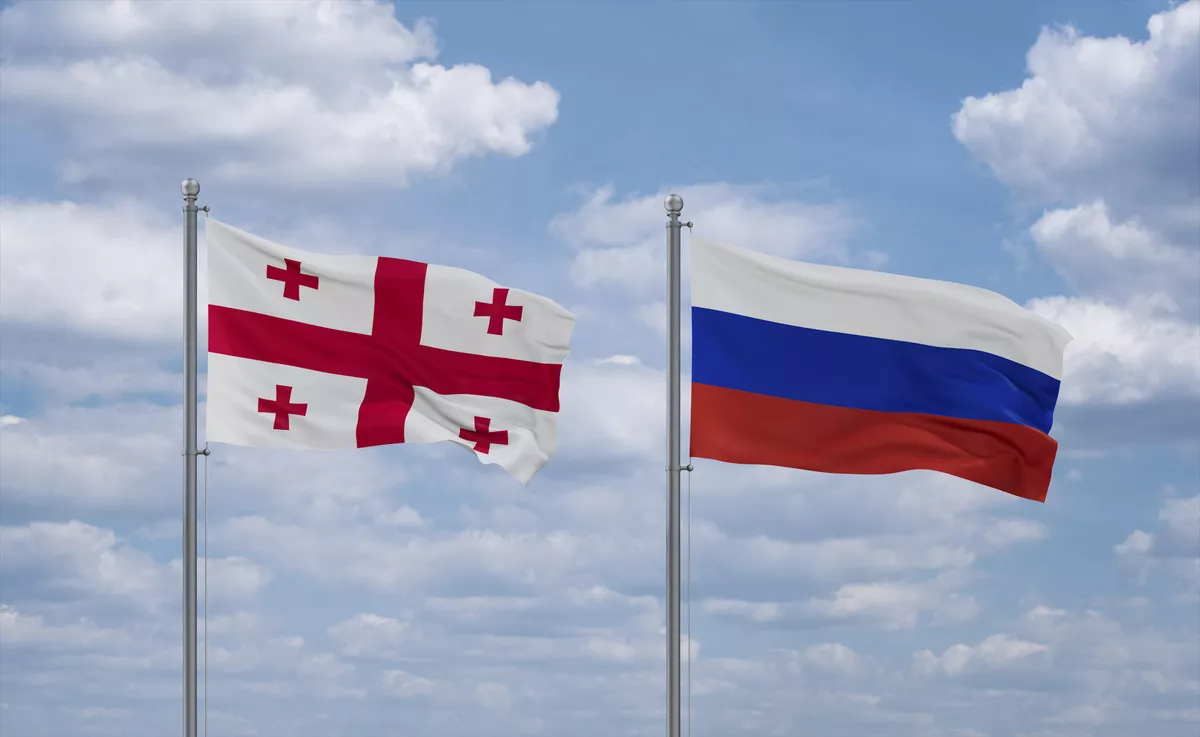
On the other hand, another serious source of EU dissatisfaction appears to have been the slight warming in Russia–Georgia relations, reflected in growing economic interaction. Thus, by the end of 2025, trade turnover between the two countries increased by 6.3 per cent, reaching $2.68–2.69 billion. At the same time, Russia solidified its position as Tbilisi’s third most important trading partner: according to open sources, Georgian exports to Russia in 2025 amounted to $749.3 million, while imports reached $1.93 billion, including gas, crude oil, and petroleum products.
It is hardly necessary to note that these developments did not escape the attention of the European Union, which did not take into account the fact that, according to 2024 surveys, the majority of Georgia’s population views Russia with caution, and only a small portion supports economic cooperation with Moscow.
As a result, the European Union has been using tough rhetoric toward the Georgian authorities as a tool of pressure, as well as a reminder of the criteria and obligations required for accession to the European bloc. In other words, Georgia is being presented with a stark choice: either a return to a fully European course or a freeze of its European prospect.
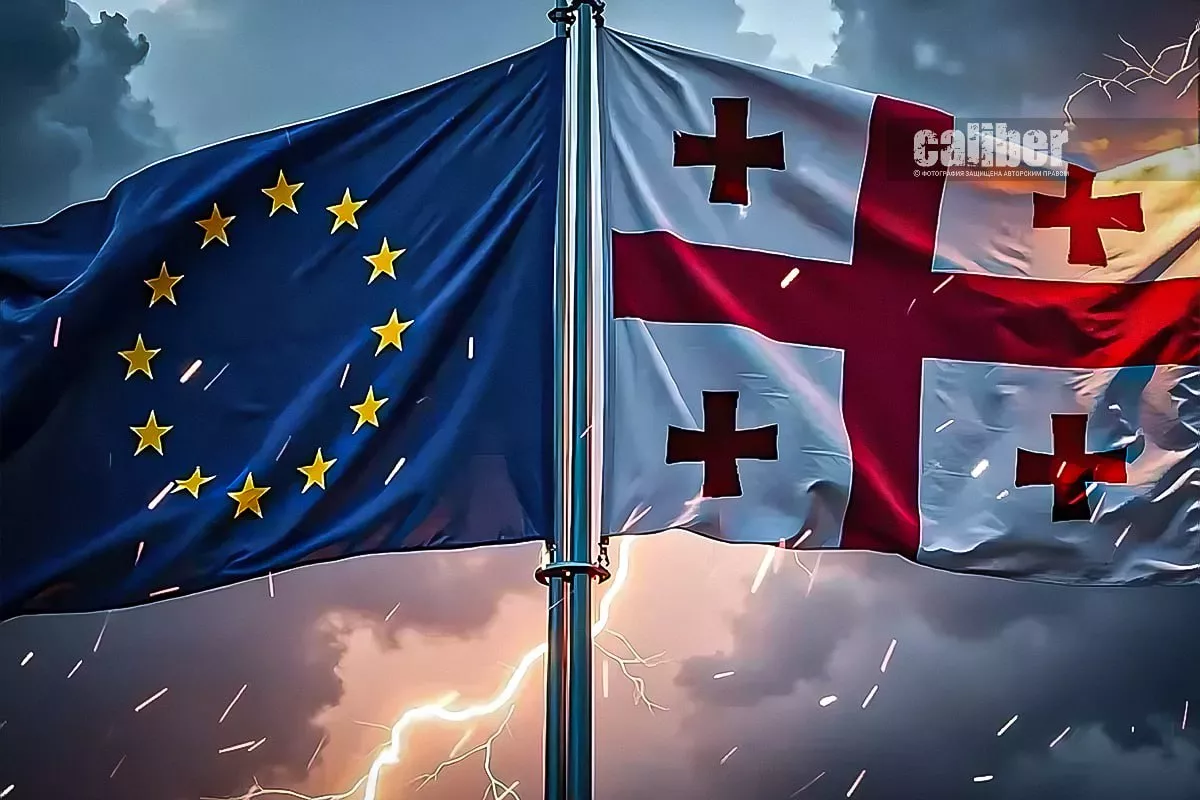
However, official Tbilisi does not intend to abandon European integration, especially given that an overwhelming majority of the population (up to 80 per cent) supports the country’s accession to the EU. At the same time, the Georgian authorities insist that Brussels stop applying a policy of “double standards” toward Georgia and show respect for its national interests. This has been repeatedly stated by both President Mikheil Kavelashvili and Prime Minister Irakli Kobakhidze, who have emphasised that, despite the suspension of negotiations until the end of 2028, EU membership remains the country’s main strategic goal, and have called on the European Union to demonstrate greater flexibility and understanding of Georgia’s interests—although the latter appears rather doubtful.
In other words, based on the principle of assertiveness, official Tbilisi is making it clear to the European Union that the country’s foreign policy is, above all, grounded in Georgia’s own national interests. Such a position is likely to push back the country’s EU membership prospects by decades—if not eliminate them altogether. This is evident from the example of Hungary under Viktor Orbán, which clearly illustrates Brussels’s attitude toward countries that pursue an independent line.







 editor@caliber.az
 +994 55 444-88-98
 Азербайджан, Баку, ул. Низами, 203, Af Business House, 5-й этаж