










The Baku formula of Armenian stability New realities of the South Caucasus
During a panel discussion at the Delphi Economic Forum in Greece, Armenian Security Council Secretary Armen Grigoryan, speaking about developments in the Middle East and their impact on the Armenian state, made remarks that would have been unthinkable five years ago. According to Grigoryan, fuel prices in Armenia have stabilised at a level comparable to last October, meaning that the impact of the crisis triggered by the blockade of the Strait of Hormuz has been significantly reduced, as petroleum products are being supplied from Azerbaijan.
And it is precisely in the matter-of-fact tone of the Armenian official that the key point lies: a country that until recently built part of its identity on confrontation with Azerbaijan is now publicly acknowledging that its fuel market is sustained, among other factors, by Azerbaijani exports.
Grigoryan made these remarks in response to a question about how Yerevan is coping with the consequences of two external conflicts. He explained that the confrontation between the United States, Israel, and Iran was predictable, and that signs of escalation had been visible long before it unfolded. The closure of the Strait of Hormuz affected the entire global economy, including Armenia’s agricultural sector, to the extent that the government had to subsidise farmers’ expenses.
Fuel prices in the country did increase, but the surge was later contained, and today the cost of a litre is roughly the same as it was in October last year. This level of stability was maintained because Azerbaijani petroleum products became organically integrated into the supply system. Grigoryan himself notes that the Washington agreements of summer 2025 expanded Yerevan’s capacity to mitigate external shocks.

The logic of this shift can only be understood by recalling the details of supply arrangements over the past three decades. The two main channels — Russia and Iran — are now both operating under emergency conditions. The Russia–Ukraine war, strikes by the Ukrainian Armed Forces on Russian energy infrastructure, and growing domestic demand in Russia, as well as Iran’s situation under sanctions and blockade, have all meant that both of Yerevan’s traditional energy pillars have developed cracks, creating a real threat of an energy crisis for Armenia.
Into the vacuum created by the collapse of this old model stepped Azerbaijan. However, for Azerbaijani fuel to physically and legally reach Armenia, a political foundation was required. That foundation came in the form of the Joint Declaration and the initialled text of a peace agreement, signed with the participation of U.S. President Donald Trump in August 2025. Prior to this, any idea of trade with Baku collided with Armenia’s internal political environment and diaspora pressure: even technical discussions about supplies were politically toxic for any Yerevan official, automatically triggering accusations of betrayal, capitulation, and “betrayal of the memory of the victims.” Washington effectively neutralised this toxicity.
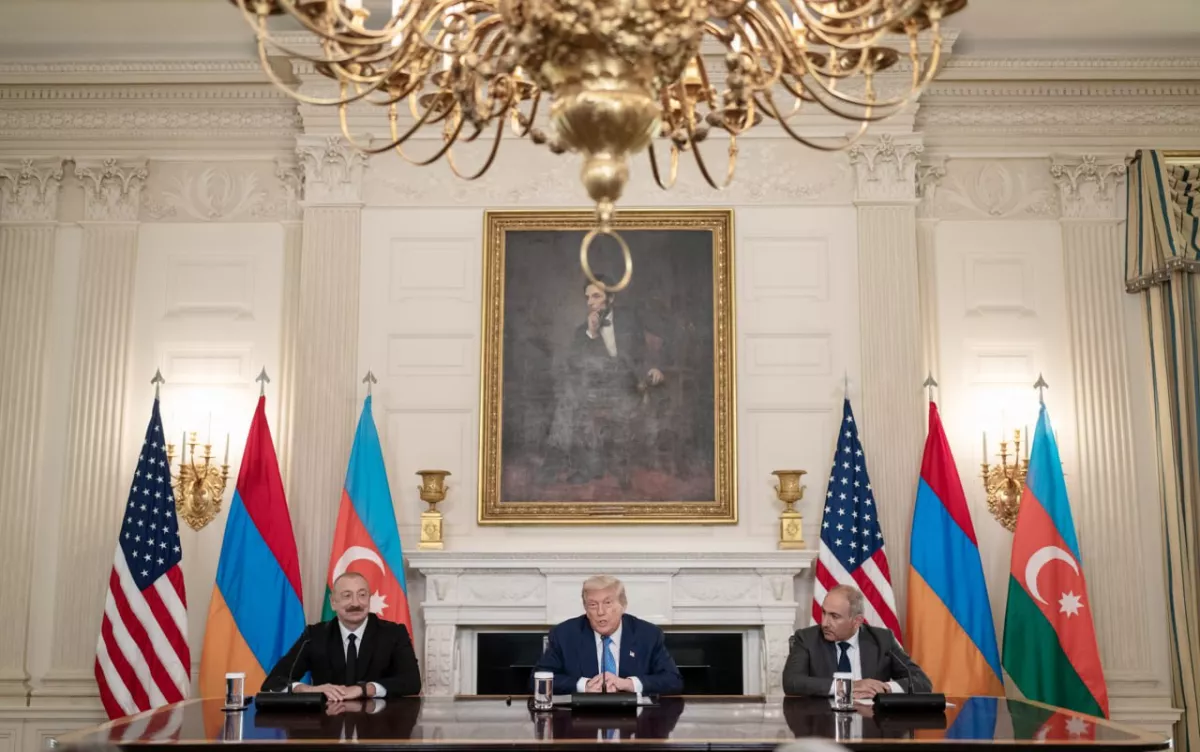
Here a very subtle line emerges, one that is often overlooked. Azerbaijani fuel has entered Armenia on commercial terms, without any political framing. Baku is not turning these supplies into a tool of pressure. Azerbaijani exports to Armenia behave exactly as they should: as a trade transaction. The paradox is clear. A recent adversary has become a more neutral and reliable supplier.
In Armenian public discourse, the Washington peace is often described as a concession, a difficult compromise, and the price of abandoning previous positions. The real effect of peace looks different. It acts as insurance against external shocks, which Yerevan obtained precisely at the moment when its former patrons ceased to be reliable anchors. This turns the 2025 peace from a declaration into infrastructure — or, more precisely, into a tool of national survivability.
This is also why attempts to undermine the Washington framework from outside — by the diaspora, through lobbying platforms, or via anti-Azerbaijani rhetoric at European forums — run into an obstacle that is not political in nature: the price of fuel at Armenian filling stations, which no statement from Paris or Brussels is capable of reversing.
The parallel with Georgia is almost identical. Tbilisi has long received a significant share of its petroleum products from Azerbaijan; SOCAR is present in the Georgian fuel retail network and in gas distribution, and it owns the Kulevi oil terminal. Pipelines such as Baku–Tbilisi–Ceyhan and Baku–Tbilisi–Erzurum run through Georgian territory — arteries without which the Georgian economy would face serious difficulties, and Tbilisi is fully aware of this.
The only difference is that Georgia never needed to conclude a peace agreement with Azerbaijan in order to use this channel — it has always been open. For Yerevan, however, opening this channel was itself the substance of peace.
The conclusion is straightforward: the stability of the regional fuel market now rests on Azerbaijani infrastructure, production capacity, and export potential.
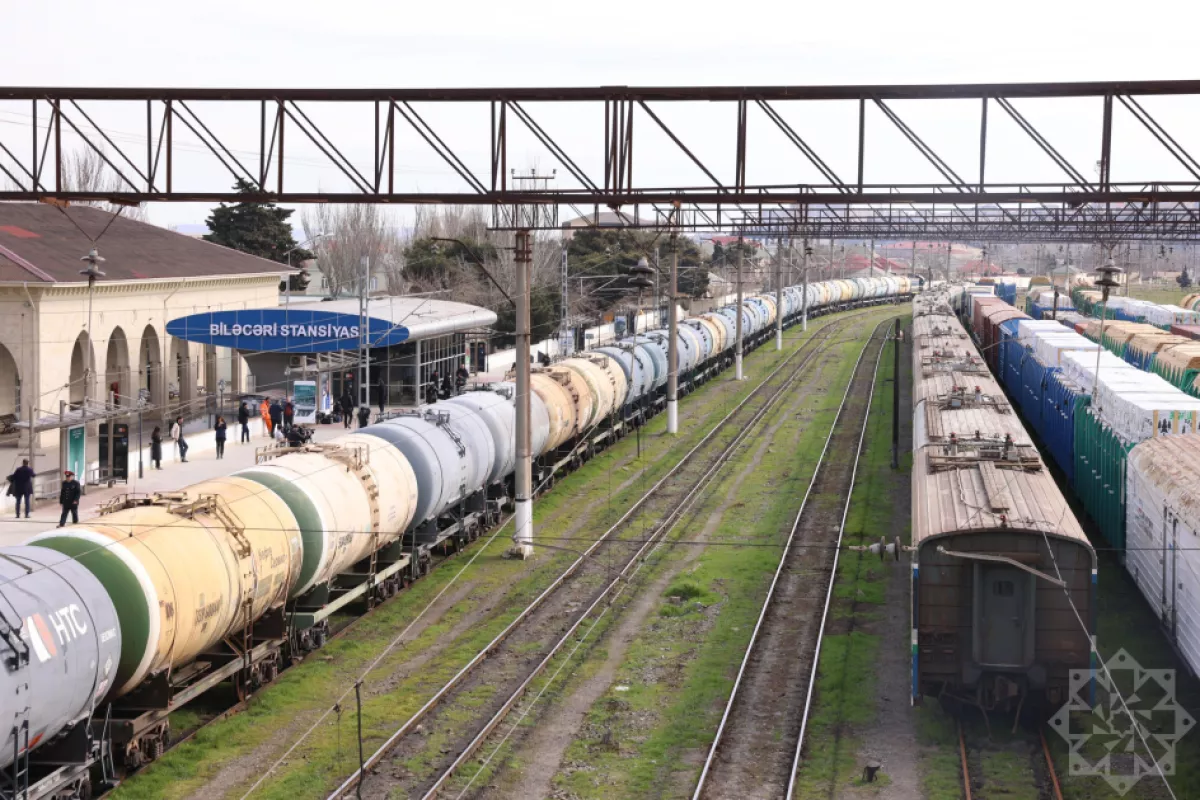
From this emerges a broader observation suggested by Grigoryan’s remarks. The South Caucasus is being restructured around Baku as an energy hub. This is the result of a long process initiated under Heydar Aliyev and expanded to its current scale under Ilham Aliyev.
Pipeline corridors to Türkiye and further into Europe via TANAP and TAP, the memorandum with the European Union on increasing gas supplies, agreements with Turkmenistan, Trans-Caspian prospects, and Baku’s growing role as a transit hub for Central Asian energy resources — all of this positions Azerbaijan as the central pillar of the regional energy architecture.
Europe, for its part, is integrating Azerbaijani gas into its diversification strategy as a long-term component.
To this architecture, another layer is attached, one that is likely to come to the forefront in the coming years — the Zangezur Сorridor, a route legitimised by the Washington Declaration. Transit through Armenian territory would physically connect mainland Azerbaijan with Nakhchivan and further with Türkiye, while also fitting into the broader Middle Corridor project — a trade route from China to Europe.
While Western analysts debate its timelines and capacity, investment is already underway: Azerbaijani port terminals are expanding their throughput. Each signed contract, each newly commissioned berth, each fibre-optic line laid along the emerging route adds another step in what the post-2025 order is steadily building into reality.
By signing the Washington documents, Yerevan has been integrated into this structure as one of its components. Its former role as an obstacle has faded, and over time there is progressively less room left for a return to a model of strategic hostility.
What is built on concrete, steel, logistics, and fuel is harder to reverse than what is written on paper. In this sense, what was said at the Delphi Economic Forum in Greece outlines a new reality that has emerged in the South Caucasus after Washington.







 editor@caliber.az
 +994 55 444-88-98
 Азербайджан, Баку, ул. Низами, 203, Af Business House, 5-й этаж