










Setting the focus Simonyan and Armenian–Turkish normalisation
Armenian National Assembly Speaker Alen Simonyan, during a meeting with Armenian journalists in Istanbul, expressed confusion over why the land border with Türkiye remains closed. Commenting on what he described as Ankara’s “inconsistent” position, Simonyan pointed to what he called the “constant change” of Turkish preconditions. “Initially, it was said that the border would not open until the Nagorno-Karabakh issue was resolved. Then it was declared that the issue had been resolved. After that, the Armenia–Azerbaijan peace treaty was put forward. We negotiated the agreement—it was a complex and lengthy process—but we reached agreement on 17 points. We even met to initial the document and shook hands, yet nothing ultimately came of it,” Simonyan said.
Here, Simonyan is somewhat disingenuous and contradicts himself. It is true that the Karabakh issue has been resolved, however it cannot be separated from the broader context of the Armenian–Azerbaijani conflict settlement, the final stage of which is expected to be the signing of a peace agreement. Therefore, Türkiye’s position is not contradictory.
Furthermore, agreement on the seventeen points has indeed been reached; however, the parties met (in Washington last August) not to sign the agreement, but to initial the text of the peace treaty, which they did. At the same time, for the agreement to be signed, Yerevan must fulfil a known and legitimate precondition set by Baku — to remove from the preamble of the Armenian Constitution the reference to the Declaration of Independence, which in its pure form constitutes a territorial claim by Armenia against Azerbaijan. Only then will the signing of the peace agreement become possible, after which it will be appropriate to speak of the full and final settlement of the Armenian–Azerbaijani conflict. It is precisely this outcome that Ankara is awaiting in order to take further substantive steps towards normalising relations with Yerevan, one of which should be the opening of the land border between Türkiye and Armenia. This position of Ankara has long been known, has been repeatedly stated by Türkiye’s highest leadership, and has not changed in essence even by a fraction since the beginning of the conflict.
However, in Simonyan’s interpretation, things look somewhat different — he explains Türkiye’s position through the factor of Azerbaijani “interference”: “Azerbaijan, through its lobbying and influence, is currently, I can say, hindering the process, since, on the one hand, it is negotiating with us, and on the other — it does not allow Türkiye to negotiate with us. This is a strange situation. It seems that Türkiye has become a hostage of these relations.”
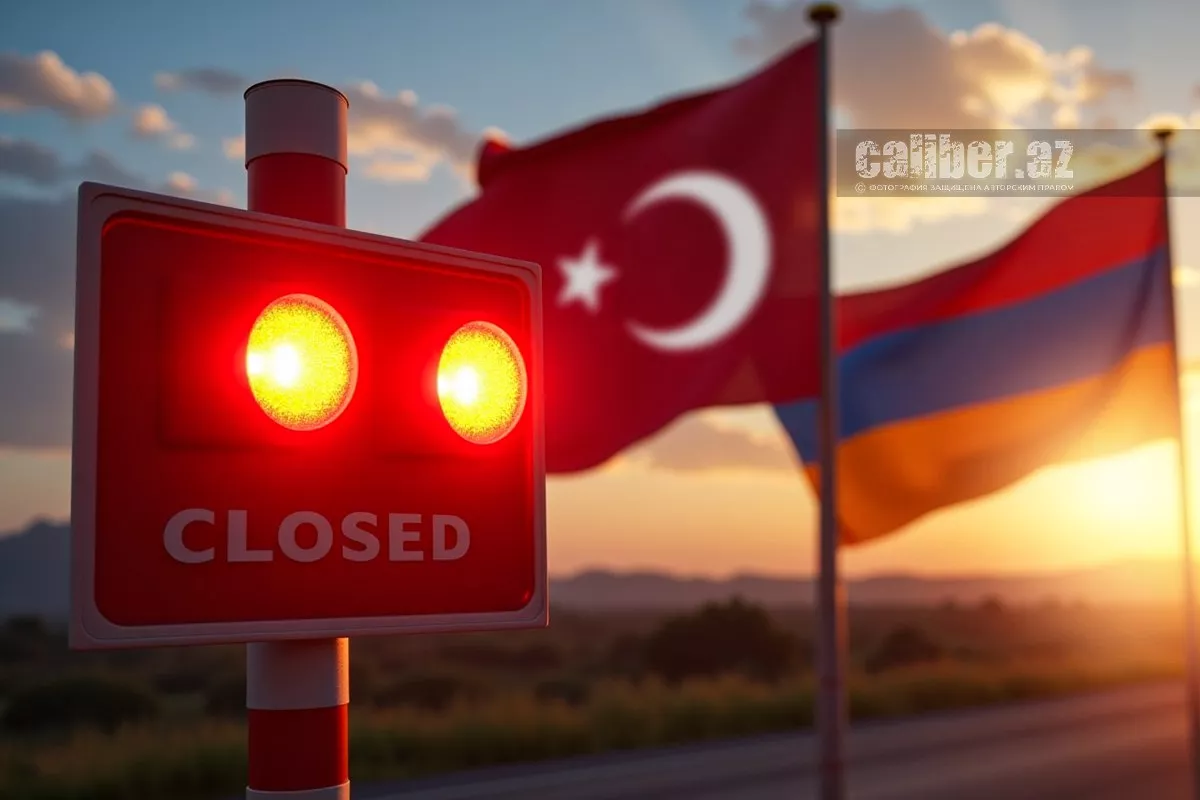
This, therefore, requires clarification. Türkiye conditions the opening of its border with Armenia on peace with Azerbaijan, not as a result of Baku’s alleged lobbying efforts, but because it shares, in accordance with the principles of brotherhood and alliance, Azerbaijan’s approach to the normalisation of relations with Armenia. In a strict sense, this means readiness for such a step only after the formalisation of the settlement process between Baku and Yerevan, as noted above. All of this is evident on the surface, and Ankara states it with complete transparency.
Just days ago, speaking at the opening of the Antalya Diplomacy Forum, Turkish President Recep Tayyip Erdoğan said: “Our relations with neighbouring states must be good. We are advancing the normalisation process with Armenia step by step, and we are doing so in coordination with Azerbaijan.”
At the core of this policy lies deep respect for Azerbaijan, which was the victim of aggression for more than two decades, and whose position is, quite rightly and transparently, taken into account by Türkiye as a determining factor.
In other words, as can be seen, Azerbaijan is not obstructing the process in this regard, but merely sharing with its brotherly Türkiye its view on the real progress of the peace process and on Armenia’s actual readiness for peace.







 editor@caliber.az
 +994 55 444-88-98
 Азербайджан, Баку, ул. Низами, 203, Af Business House, 5-й этаж