










EU, Arab monarchies and “not-their” wars Preigerman’s analysis
The monarchies of the Persian Gulf and the countries of the European Union have become the main hostages of a “not-their” war in the Middle East. However, they are responding to this situation in different ways. It is high time for the EU to pay attention to the foreign policy philosophy of the Arab monarchies and look for something useful in it for itself.

Recent comments by EU foreign policy chief Kaja Kallas on engagement with the Persian Gulf monarchies in the context of the wars in Ukraine and Iran point to an interesting topic. How do states behave in international relations when they find themselves, not of their own will, between two (or more) conflicting fires? In other words, what foreign policy strategies do countries adopt—and for what reasons—in order to minimise current damage and avoid even greater problems in the future caused by “not-their” wars and conflicts?
When a “not-their” war becomes their own
These are not as simple or banal questions as they may seem at first glance. And the answers are far from obvious. Throughout history, there have been numerous examples of foreign policy behaviour in such conflict contexts. All of them have their own nuances and specifics. However, if one carries out a comparative analysis and classification, it is possible to identify just a few basic strategies that third countries affected by any given conflict tend to adopt. Moreover, historians and international relations theorists have long not only studied these strategies themselves, but also assessed their effectiveness under different conditions.
There is, of course, no miraculous formula for states suffering from “not-their” wars. Their success depends on many factors: ranging from knowledge of history and the experience of predecessors to the resources at their disposal, as well as political instinct and, quite simply, luck. This makes it all the more interesting to observe such cases in real time.
As we have already noted, it is the countries of the Persian Gulf (due to geography and allied relations with the United States) and the European Union (due to geoeconomics and also allied relations with the United States) that have become the main collateral victims of the Middle Eastern war. They were the first to face the most painful challenges of this conflict and a troubling uncertainty regarding its further course. Therefore, their indirect exchange of remarks about each other’s policies in the context of the war—and, in particular, the possible closure of the Strait of Hormuz—appears especially noteworthy.
In an interview for CNN, the EU High Representative for Foreign Affairs and Security Policy responded to calls from the United States and the Gulf monarchies themselves for greater European engagement in the Middle East. Kaja Kallas disagreed with the view that the European Union had been disengaging from resolving war-related problems. However, she immediately drew a parallel with the war in Ukraine and, as the saying goes, shifted the ball to the partners’ court.
She stressed that for the EU, the Russia–Ukraine conflict is a priority and that “We haven’t seen really the Gulf countries helping us there.” On that basis, she concluded that engagement with the Gulf monarchies “can’t be only one-way street.”

The recipients of Kallas’ message, unsurprisingly, did not show much understanding. The Secretary-General of the Gulf Cooperation Council, Jasem Mohamed Al Budaiwi, stated that relations with the EU are “a two-way street in every aspect.” He also emphasised that the member monarchies of the organisation seek to cooperate with all key global capitals, including Washington, Brussels, Beijing, and Moscow. And it is precisely this approach—rather than alignment with any single bloc—that best serves the interests of these states.
Such a brief indirect exchange very succinctly reflects the differences in worldview and foreign policy approaches between the European Union and the Arab monarchies. These actors find themselves, to a large extent (though certainly not entirely), in similar geopolitical conditions, yet they respond to them in completely different ways.
The EU in search of itself
From Kallas’s remarks, one might get the impression that the EU is not in fact significantly affected by the Middle Eastern crisis. By insisting on the Gulf monarchies aligning with Brussels’ position on Ukraine, the EU’s chief diplomat speaks as if the blockade of the Strait of Hormuz and other manifestations of the Iranian war have little to do with the EU at all. As if they create problems only for the Middle Eastern countries themselves, while Europeans have the luxury of calmly observing events from the sidelines—and will only consider taking action if properly asked and offered something in return.
Such positioning, to put it mildly, does not correspond to reality. Due to the Iranian war alone, the EU’s energy-related costs as of April 22 reached around €24 billion. In other words, amid crisis-driven energy price increases, EU countries are losing roughly €500 million per day. And many European officials are calling for preparation for even more painful consequences. Against this backdrop, such a detached position by the EU’s chief diplomat appears rather strange.
However, Kaja Kallas’s statements are hardly sufficient to draw any definitive conclusions about EU policy in the context of the Middle Eastern war, and even less so about the Union’s long-term foreign policy strategy in a world of multiplying conflicts.
First, it is evident that such a strategy does not currently exist within the European Union. The numerous doctrinal documents already adopted, as well as those still in development, are not a substitute. Their declarative nature—rooted in value-based perceptions of both the EU itself and the surrounding world—does not significantly help the Union cope with real-world challenges today. This is especially evident in the context of the problems triggered by the US–Iran war.
Second, differences and contradictions in answering the question of “what is to be done?” are equally visible among member states and even within the Brussels institutions themselves. The High Representative of the EU, while formally designated under the Lisbon Treaty as the Union’s principal voice in foreign affairs, is increasingly less perceived as such. This is true even within Brussels, where she and the European External Action Service (EEAS) face serious competition for international representation from the President of the European Commission.
Moreover, Kaja Kallas’s apparent fixation on Russia alone (which once again became evident in her comments on engagement with the Arab monarchies) clearly does not help consolidate a coherent foreign policy approach across the EU as a whole. Even within the European External Action Service (EEAS), such a one-dimensional focus by the head of the service is increasingly causing irritation. As one of her staff reportedly put it in a private conversation, “it would be better if she devoted the same energy to providing real assistance to Ukraine as she does to pushing the anti-Russian agenda everywhere and on every occasion.”
Thus, the EU still has to engage in the difficult task of searching for and formulating a comprehensive strategy in the context of “not-their” wars. Given Europe’s inherent heterogeneity, this process will be challenging and likely relatively lengthy. But sooner or later, it will produce results—possibly even ones that would allow Europe to begin restoring its historically familiar status as a geopolitical heavyweight, although achieving this will not be easy.
Gulf monarchies: from hedging to… hedging
We will not further delve into the prospects of European foreign policy strategy, as this topic has been extensively discussed in recent times. Instead, it is more useful to take a closer look at another group of states that have found themselves directly drawn into the Iranian war against their will and forced to adapt their policies under such highly complex conditions.

The monarchies of the Persian Gulf refer to six states: Bahrain, Kuwait, Oman, Qatar, Saudi Arabia, and the United Arab Emirates. All of them are members of the Gulf Cooperation Council (GCC).
Despite this shared institutional framework and the many common features that unite these countries, they can hardly be described as a monolithic bloc. This is clearly reflected in their behaviour following the outbreak of the US–Israeli–Iranian war. Oman, for instance, seeks to maintain as open and constructive relations with Tehran as possible. The UAE, by contrast, takes a markedly tougher stance towards Iran. Bahrain and Kuwait tend to align more closely with the UAE in this regard. Saudi Arabia and Qatar, meanwhile, continue to pursue their traditionally non-linear and seemingly contradictory foreign policy approaches.
At the same time, the entire group of Arab monarchies faces challenges that are essentially similar in nature and scale. Beyond the immediate and obvious economic and security costs, the war is generating equally significant strategic dilemmas for them. Some analysts even argue that, as a result of this conflict, the security paradigm that has dominated the region for decades and underpinned the remarkable growth of Gulf economies is coming to an end.
Despite the already significant damage incurred, Iran is demonstrating a degree of administrative resilience and the capacity to continue its existing military-political course. This includes, above all, its de facto leverage over the Strait of Hormuz, its ability to strike military and civilian infrastructure targets (including energy and technological assets) in Gulf countries, and its capacity to sustain, in some form, a network of proxy forces across the Middle East. Against this backdrop, the war has brought into particularly sharp focus for the Arab monarchies the question of the reliability (and sufficiency) of US security guarantees, which had been treated as a long-standing regional certainty since the second half of the last century.
Taken together, these challenges do indeed render certain foundations of state development and strategic positioning in the Persian Gulf monarchies vulnerable. In particular, they affect their reliance on global attractiveness as financial, technological, and tourism hubs.
At first glance, the situation seems to demand that the countries of the region fundamentally reassess their national security and foreign policy strategies—at least with regard to US security guarantees. Such a reassessment could, in principle, move in either direction: either towards reducing military cooperation with Washington due to doubts about the reliability of its commitments, or towards deepening and intensifying such cooperation in an effort to increase US involvement in their security concerns.
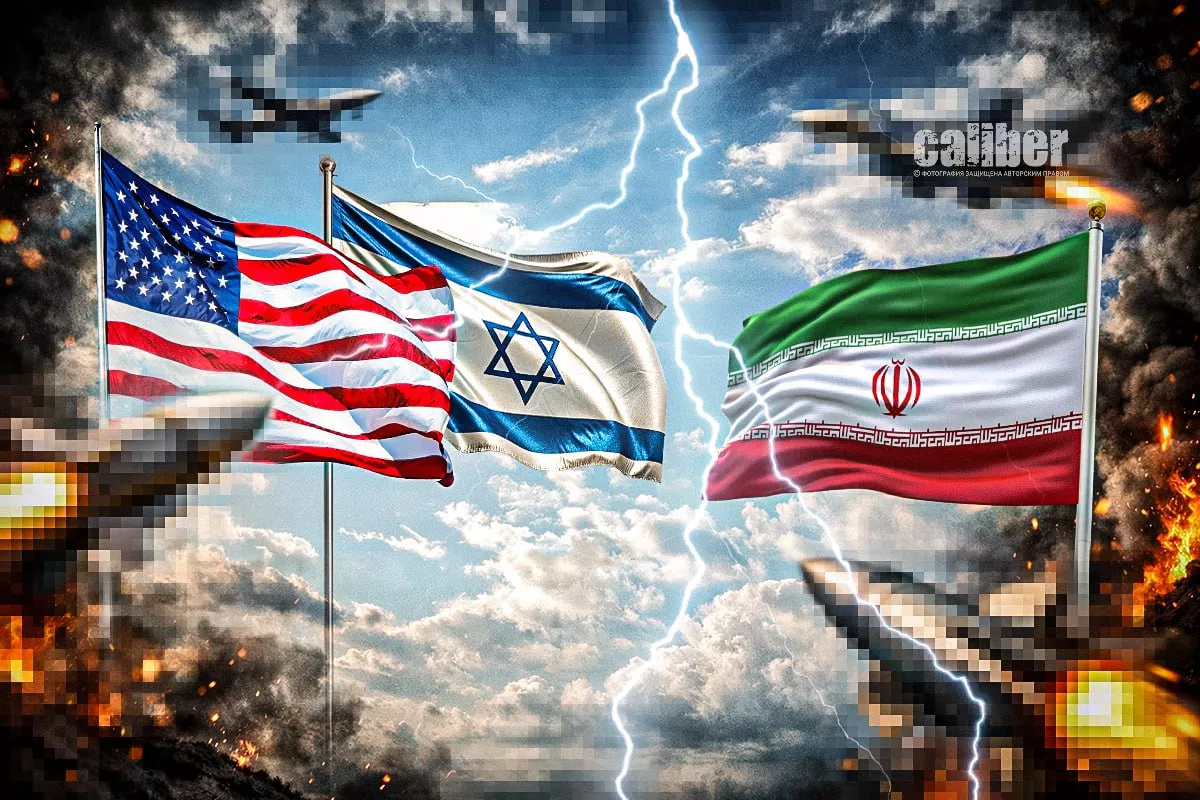
However, it is unlikely that the monarchies of the region will consider such a reassessment truly rational. A bet on even greater dependence on US security guarantees appears too risky in conditions of heightened regional uncertainty and the unpredictability of the United States itself. At the same time, a complete abandonment of these guarantees would be short-sighted, as there are currently no clearly reliable alternatives. In this sense, the US–Israeli–Iranian war does little to fundamentally alter the strategic calculus of the Arab monarchies. Geography and the imperative to avoid being drawn into “not-their” wars continue to set the parameters.
Given these circumstances, it is not surprising that even the escalation of the Middle Eastern crisis has not led to a departure from their already familiar and natural strategy of foreign policy hedging. Each of the six Gulf states implements this approach in its own way, but its core features are common to all. These include reducing exposure to uncertainty through non-linearity and the maintenance of foreign policy ambiguity; diversifying partners both within the region and beyond it; simultaneously engaging with all relevant actors; and continuously strengthening their own defence and economic capabilities.
In practice, this translates into sustained interest in US security guarantees and, consequently, the continued presence of American forces; intensive cooperation with China, Russia, the EU, as well as regional actors such as Türkiye, Egypt, and Pakistan; investment in the development of domestic defence industries; and, finally, efforts to reduce tensions with Iran.
Hence the above-mentioned reaction of the Secretary-General of the Gulf Cooperation Council to Kaja Kallas’s remarks: it is in the interests of the Gulf monarchies to simultaneously cooperate with all global and regional actors, rather than align themselves with any single bloc.
What is particularly interesting is that the European Union itself might benefit from paying closer attention to this philosophy of foreign policy hedging and looking for elements within it that could be useful for its own approach. This is because the strategic constants the EU has long been accustomed to are no longer in place. Some of Europe’s structural conditions are now increasingly beginning to resemble those of the Arab monarchies.







 editor@caliber.az
 +994 55 444-88-98
 Азербайджан, Баку, ул. Низами, 203, Af Business House, 5-й этаж