










Gdańsk rendezvous France and Poland deepen military cooperation
French President Emmanuel Macron visited Poland, where he met with Prime Minister Donald Tusk in the port city of Gdańsk to discuss strengthening military cooperation between the two countries. The most notable outcome of the visit was Poland’s decision to join France’s initiative to develop a European nuclear deterrence system, a move that has attracted considerable attention.
“We've decided to join a group of countries invited by France to cooperate. [...] We live in a world in which we need nuclear dissuasion capacities,” Tusk said.
The project, first announced by Emmanuel Macron in 2025, envisages expanding the role of France’s nuclear arsenal in the defence of its allies. Earlier this year, Macron declared a “new phase of French deterrence,” under which other European countries would play a more prominent role, starting with participation in nuclear exercises.
On March 2, Macron stated that eight countries had agreed to take part in France’s proposed expanded deterrence: Belgium, Denmark, Greece, the Netherlands, Germany, Poland, Sweden, and the United Kingdom.
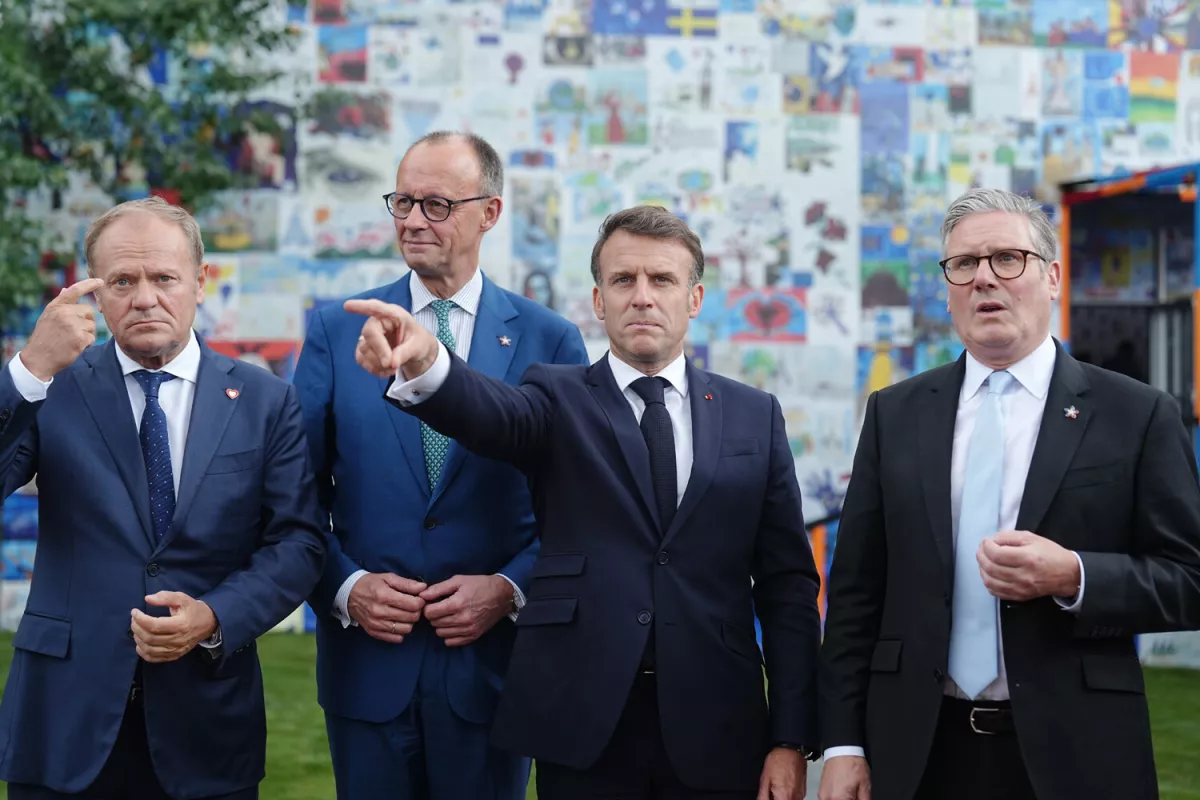
According to the plan, some states would be allowed to host French aircraft capable of carrying nuclear weapons on their territory. However, the weapons themselves would remain under French control and would not formally violate international non-proliferation agreements.
At the same time, the statements made by the leaders in Gdańsk contained relatively few concrete details. “Among the things we will consider there will be exchanges of information, joint exercises,” Macron said at a press conference in Gdańsk.
As for the idea of French aircraft carrying nuclear warheads, Donald Tusk quickly expressed discomfort with such a scenario. “In all frankness, having Rafales with atomic bombs above Poland is not my dream, but I hope you do not have such plans,” he told Macron.
As can be seen, the allies do not yet share a unified vision of nuclear cooperation, but there is a clear desire to rapidly outline new initiatives in this area. These developments have been driven by Russia’s invasion of Ukraine, the Kremlin’s repeated nuclear rhetoric, the deployment of Russian tactical nuclear weapons in Belarus, and the development of missile systems capable of striking targets across Europe.
A second key factor has been the policy of the Trump administration, which has called into question the United States’ commitments to defending Europe, criticised NATO allies, and suggested a possible reduction of the American military presence on the continent.
At the same time, the French project faces significant limitations. Paris currently does not have sufficient resources to provide a full-scale “nuclear umbrella” comparable to that of the United States. The number of delivery systems remains limited, and allies would likely remain dependent on French decision-making without full participation in nuclear missions. As a result, the idea of a European nuclear deterrent appears politically important, but from a technical and strategic standpoint, it is still far from being fully realised.
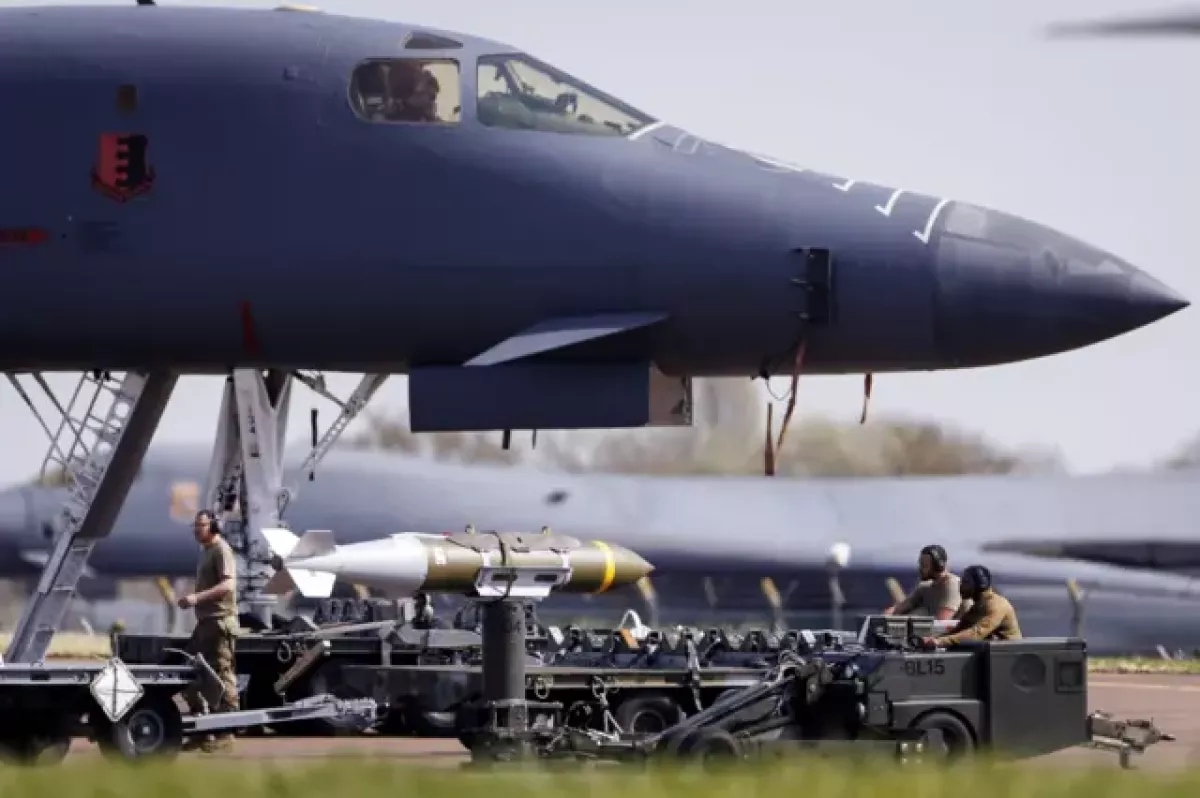
At the same time, the non-nuclear component of the agreements between Paris and Warsaw is of no less interest. Macron stated that the two countries had signed important defence agreements. According to him, they concern security arrangements for both Poland and France, in particular air-to-surface missiles as well as long-range missile systems.
During the meeting in Gdańsk, Macron and Tusk also discussed energy issues and the EU initiative Security Action for Europe (SAFE), a fund designed to finance investments in European defence. Tusk praised France’s commitment to defending Poland’s eastern borders, including those with Belarus and Russia’s Kaliningrad exclave.
He also mentioned the possibility of French involvement in securing Rzeszów–Jasionka Airport, which plays a crucial role in delivering weapons and humanitarian aid to Ukraine. In addition, France and Poland plan to jointly build a satellite that will provide a secure military communications channel for the Polish armed forces.
The defence ministries of both countries will also develop a bilateral defence cooperation plan for 2026–2028, aimed at expanding joint military activities and improving coordination, according to the French presidential office.
All these steps, along with measures taken by other EU countries—particularly Germany—suggest that Europe is slowly but steadily undergoing a process of “military rehabilitation,” in which the nuclear component remains more declaratory than operational for now.
At the same time, developments surrounding Iran highlight the growing relevance of nuclear security for any state. In this context, the evolution of a sovereign European nuclear doctrine—especially if tensions between Europe and the United States persist—appears increasingly inevitable.







 editor@caliber.az
 +994 55 444-88-98
 Азербайджан, Баку, ул. Низами, 203, Af Business House, 5-й этаж