










Blind spot Karabakh’s erased heritage under Armenian occupation
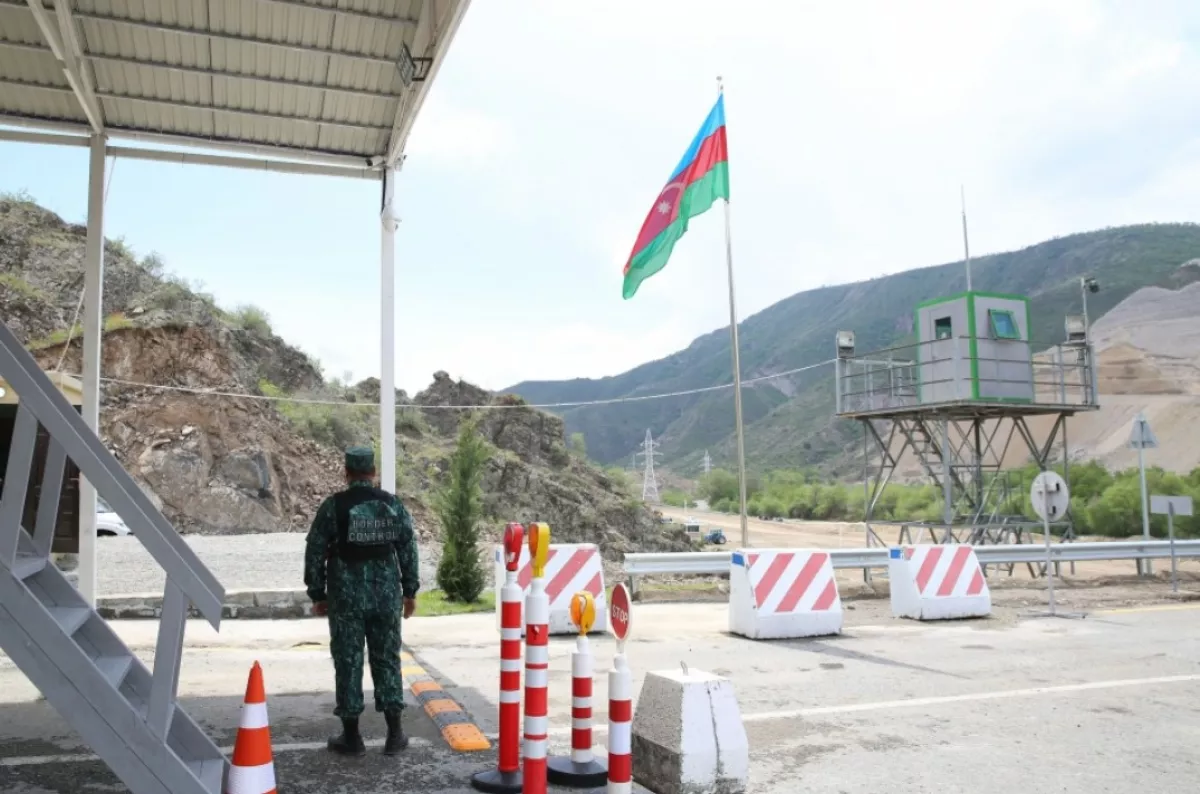
Three years ago, on April 23, 2023, at exactly noon, the State Flag of Azerbaijan was raised at the start of the Lachin–Khankendi road on the border with Armenia. The border checkpoint established that day on sovereign Azerbaijani territory sealed a stretch of the frontier that had long remained beyond Baku’s control, restoring jurisdiction over a route through which, for 31 years, weapons, funds, and occupation forces flowed into Karabakh. Just five months later, following the one-day anti-terrorist operation in September 2023, the separatist entity ceased to exist.
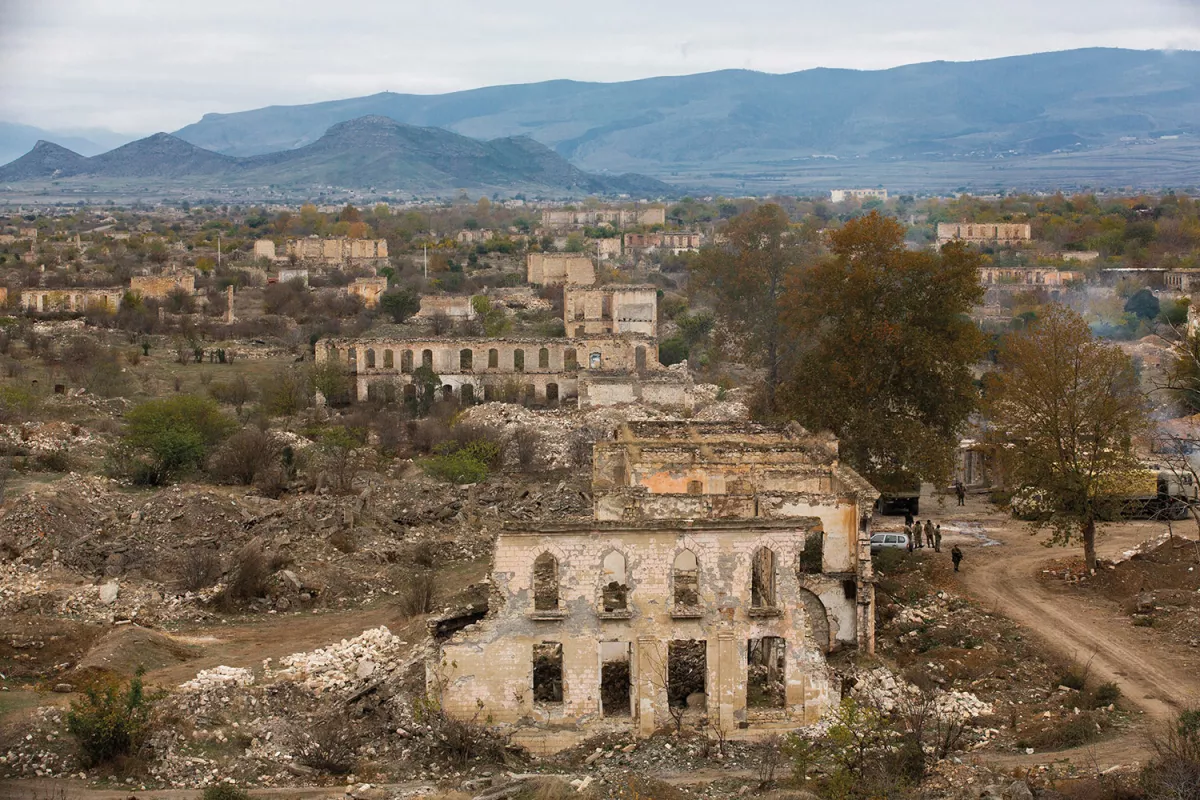
By then, international media had already documented the scale of destruction in Aghdam, Fuzuli, Jabrayil, Zangilan, Gubadli, and Shusha—and were now able to continue their reporting in Khojavend, Khojaly, Aghdara, and Khankendi.
Before that, the international discourse on “Karabakh heritage” was shaped with deference to the other side — the one physically present on the ground and addressing Western audiences as a supposedly “independent actor.” Neither UNESCO, nor the Council of Europe, nor parliamentary committees now holding hearings under the title “Erasing the Past” ever, over those thirty years, demanded that Yerevan grant access either to the then-occupied territories of Azerbaijan or to Armenia itself, where traces of Azerbaijani culture were being systematically erased. The Armenian side simply did not grant permission. And the West, which today insists on access to “protect Armenian heritage,” did not press the issue back then.
That said, it would be wrong to claim that the Azerbaijani side had no information about what was happening in the occupied territories. Evidence did surface — rarely, but with documentary weight. In 2001, the American co-chair of the OSCE Minsk Group, Carey Cavanaugh, visited occupied Aghdam and described what he saw in stark terms: the city had not been destroyed during the fighting, but dismantled afterwards — brick by brick, methodically taken apart by the occupiers and transported to Armenia for sale as building materials. Upon leaving, Cavanaugh took a stone from the Aghdam Juma Mosque with him and later presented it to national leader Heydar Aliyev.
This assessment — made by a sitting American co-chair of the negotiation format at the time — remained without any international consequences for two decades.
Following a visit in 2023, British Express correspondent John Varga described Aghdam as the “Hiroshima of the Caucasus.” Taras Kuzio, a professor at the Kyiv-Mohyla Academy who visited the area in 2021, used the same expression. Neither coined the term — it had long been in use among Azerbaijanis themselves. The stone taken by Carey Cavanaugh in the early 2000s was returned to its place in the restored mosque in April 2024 — twenty-three years after it had been removed.
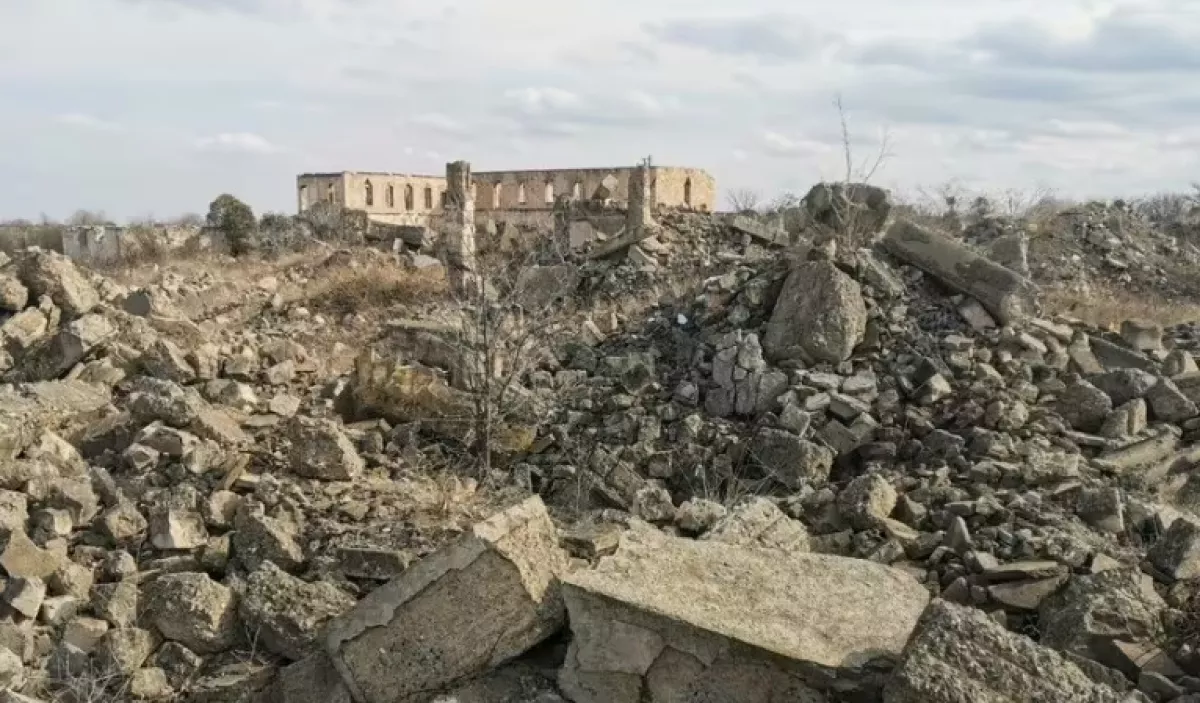
Before 1993, the Aghdam district was home to 143,000 people — in the city itself and across 124 villages. The Azerbaijani defence of the city, which cost the lives of around 5,000 soldiers, fell on July 23, 1993. During 27 years of Armenian occupation, 145 historical and cultural monuments in the district were destroyed. The Bread Museum, established in 1983 and housing some 2,800 exhibits, survived only as a façade wall. The State Drama Theatre, founded in 1955, was demolished. The 19th-century Juma Mosque, built by the prominent Azerbaijani architect Karbalayi Safikhan Qarabaghi, remained standing only physically: the occupiers kept pigs inside. In 2021, President Ilham Aliyev stated that of the 67 mosques located in the occupied territories, 65 had been completely destroyed, while the remaining two were used as cattle sheds.
Shusha — the cultural capital of Azerbaijan, the city where Uzeyir Hajibeyli, Bulbul, Khurshidbanu Natavan, and Molla Panah Vagif were born — lost 16 of its 17 mosques. The Vagif Mausoleum, built in 1982 to a design by Academician Abdulvahab Salamzadeh and inaugurated by Heydar Aliyev, was first stripped of its exhibits after May 8, 1992 — eighty museum pieces were taken to Armenia — and later lost its roof and interior decoration.
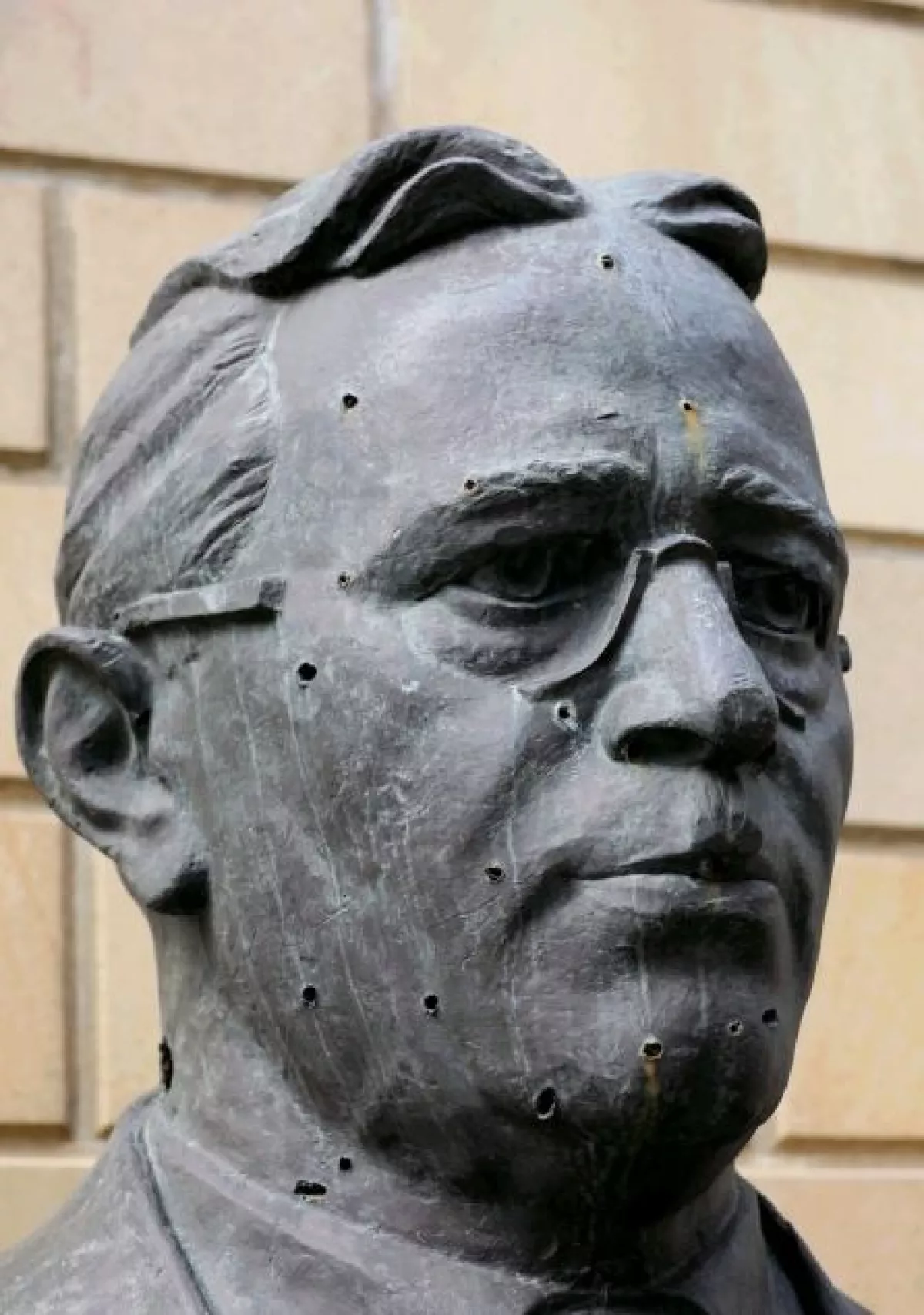
The House-Museum of Uzeyir Hajibeyli, opened in 1959, contained 1,700 exhibits by 1992. Only 136 were evacuated to Baku; the rest were destroyed or went missing. The busts of Uzeyir Hajibeyli, Bulbul, and Khurshidbanu Natavan, which stood in the city centre, were riddled with bullets from automatic weapons, dismantled, and prepared for transport to Armenia to be melted down as scrap metal. They were returned to their homeland thanks to the intervention of Heydar Aliyev; for thirty years, bearing visible bullet marks, they were kept in Baku, in the courtyard of the Art Museum, and it was in this very condition that they were returned to Shusha in 2021.
The Yukhari Govhar Agha Mosque, built by architect Karbalayi Safikhan Qarabaghi in 1883–1884 as the dominant feature of Shusha’s central square, fell into a semi-ruined state during the occupation. In 2019, with financial support from the well-known Ruben Vardanyan and Kazakh businessman Kairat Boranbayev, the mosque was reopened, but as a so-called “Persian monument,” with no reference to its Azerbaijani origin. The Armenian Minister of Culture Lernik Hovhannisyan, who attended the ceremony, described the mosque as a “symbol of Armenian-Iranian friendship.”
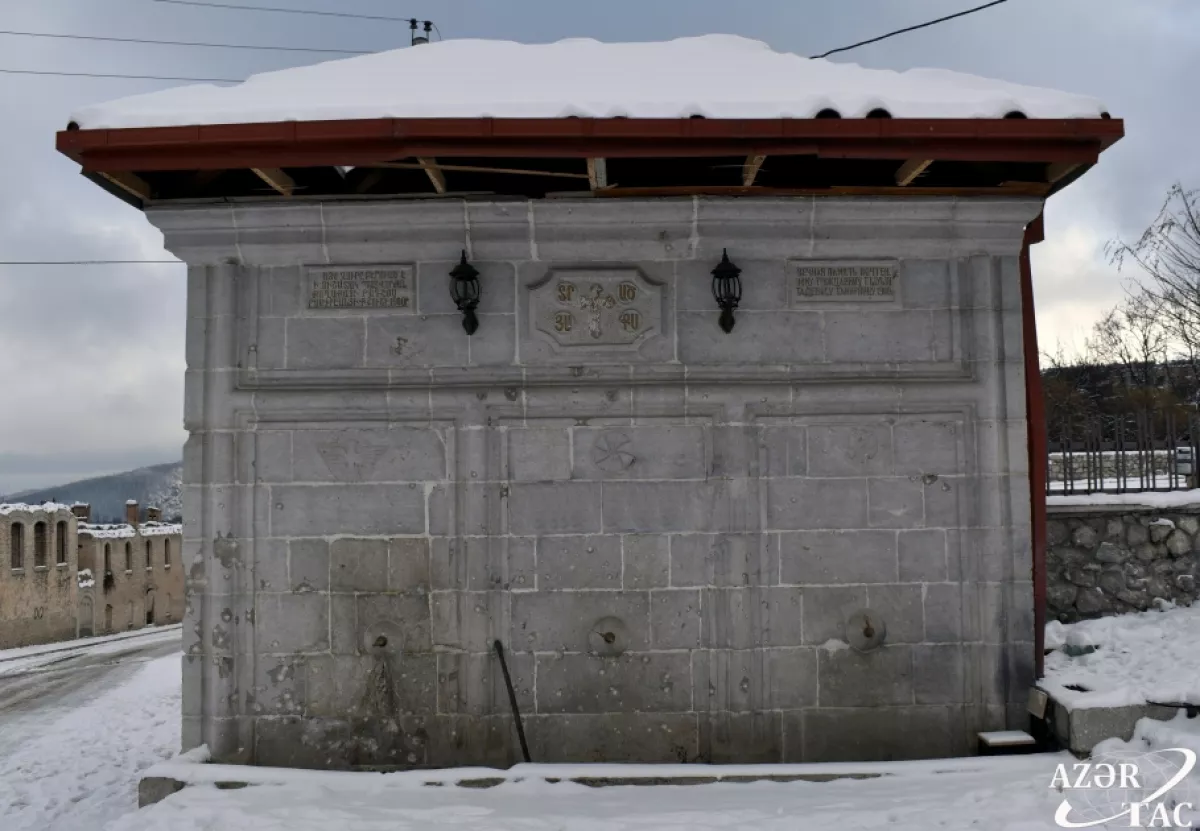
The Mamai neighbourhood in the central part of Shusha did not escape a similar fate. The spring in the neighbourhood was subjected to acts of vandalism. At one point, the upper part of the spring bore an inscription stating that it had been built by Samad agha Javanshir in 1318 according to the Hijri calendar, i.e. in 1900 by the Gregorian calendar. In an attempt to erase traces of Azerbaijani cultural heritage, the Armenian side removed the inscription and replaced it with a carved cross and inscriptions in Armenian and Russian — a clear violation of the Hague Convention for the Protection of Cultural Property in the Event of Armed Conflict.
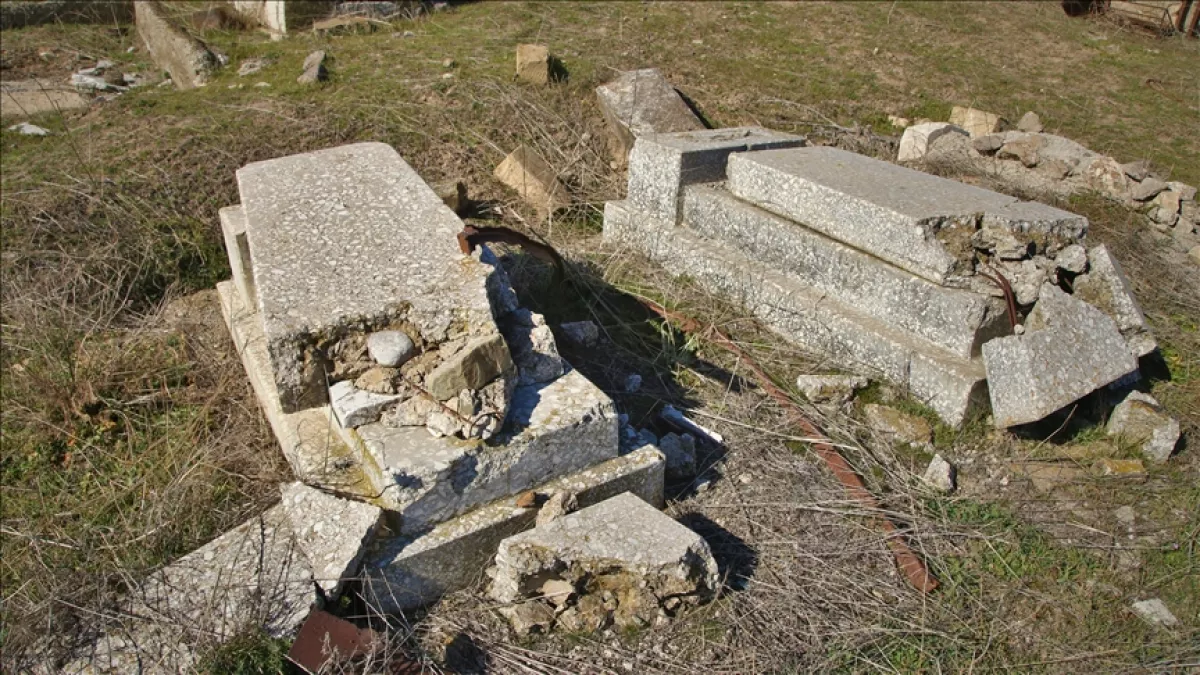
Nine hundred cemeteries with more than a million graves were desecrated during the years of Armenian occupation. Tombstones were smashed to pieces, and burial sites were opened at the historic Imarat — the 18th-century mausoleum of the Karabakh khans. Western diplomats who visited the site reported that only a single broken gravestone remained; the rest of the burial ground had been reduced to empty pits. Graves were allegedly disturbed and looted.
The old Garaghaji cemetery, stretching three kilometres in length and up to two kilometres in width — one of the region’s oldest Muslim necropolises — was almost entirely erased: gravestones were either destroyed or reused as building steps in Armenian houses. Documentary evidence of its condition existed long before 2020. In 2008, a Russian blogger filmed Garaghaji and uploaded the footage online. A comparison between those images and photographs taken in 2020–2021 suggests that in the final years of the occupation, destruction did not stop — it intensified.
The scale is also confirmed by neutral sources. Caucasus Heritage Watch — a research project of Cornell and Purdue Universities, which is today cited by the Armenian side in its calls to protect so-called “Artsakh heritage” — published a dedicated 2023 report, Between the Wars, on the fate of Azerbaijani cultural heritage in Karabakh between 1994 and 2020.
Out of 109 sites analysed using satellite imagery, 16 were completely destroyed, 39 were severely damaged, and 9 experienced lesser damage. The authors — three out of five of Armenian origin — noted that they did not observe evidence of a systematic policy of eradication, but even in their more cautious wording, 58% of the studied sites were damaged, looted, or destroyed.
Azerbaijani assessments are more stringent: the Ministry of Culture records more than 400 completely destroyed cultural and religious monuments; the Ministry of Foreign Affairs cites over 700 historical and cultural sites, 927 looted libraries, 22 museums that lost around 100,000 exhibits, 58 destroyed archaeological sites, and 26 demolished fortresses and defensive structures.
None of this was the subject of parliamentary hearings in Paris, Bern, Amsterdam, or Brussels between 1994 and 2020. For 26 years, UNESCO did not dispatch a single expert mission to Karabakh. A request for monitoring was formulated only on November 20, 2020 — after the Second Karabakh War, when Baku had already regained most of the territories — and was addressed to Azerbaijan. At the same time, Armenia rejected a similar UNESCO request to access and assess Azerbaijani heritage on its own territory, and the Western community, traditionally meticulous in procedural matters, accepted this asymmetry without challenge.
The ruling of the International Court of Justice in The Hague on December 7, 2021, on provisional measures was addressed to both sides: to Baku — to protect Armenian heritage, and to Yerevan — to cease incitement of racial hatred. The second part exists, but is cited mainly in Baku. The first makes front-page headlines in The Guardian and Le Monde.
This is where the asymmetry lies. Before Azerbaijan’s liberation of its territories, any discussion of Karabakh heritage was conducted in the conditional mood: the world was debating what it had no access to, relying on a single source of information — the occupation administration, which predictably spoke of its “own achievements” while remaining silent about what had been erased.
After the autumn of 2020, and later September and April 2023, everything changed. Satellite imagery, field inspections, and reports by foreign journalists did not appear by magic; they became possible because Azerbaijan physically regained the ability to verify what had actually remained on the ground. And it was precisely when such verification became possible that Western parliamentary committees “discovered” the issue of the “Armenian cultural heritage of Karabakh” as a subject for hearings.
The paradox is clear. For thirty years, while evidence of destruction accumulated without access for independent verification, the topic attracted little sustained international attention. Yet at the very moment when access was restored — along with tangible evidence of what had been done, to what extent, and by whom — the issue was reframed as a tool of political pressure against a country that had reasserted its sovereignty. Previously, there had been no significant international interest in the matter at all.







 editor@caliber.az
 +994 55 444-88-98
 Азербайджан, Баку, ул. Низами, 203, Af Business House, 5-й этаж