










Diaspora and Yerevan at odds over the peace process Expert opinions on Caliber.Az
The initialled peace agreement between Armenia and Azerbaijan, mediated by the United States, which “leaves Armenian hostages in Azerbaijani detention, denies Artsakh’s 150,000 refugees their right of return, and rewards Azerbaijan’s genocidal ethnic cleansing with a 99-year transport corridor through sovereign Armenian territory is not a path to peace — but rather a blueprint for the destruction of the Armenian state,” was stated during the briefing “Peace Without Justice in the South Caucasus,” recently organised on Capitol Hill by the Armenian National Committee of America (ANCA).
“This is not a peace being negotiated between two parties. This is a diktat by Azerbaijan, with the backing of Turkey and the acquiescence of the West, for Armenia to capitulate fully and completely. Any peace that is forced on Armenia without the slightest concern for its sovereignty or viability is bound to fail,” the participants noted.
According to them, TRIPP is a poorly designed project with little or even zero chance of success. And even if it is implemented, Armenia and the Armenian people will gain no benefit from it — only weakened borders, diminished sovereignty, and an inability to defend themselves against Turkish and Azerbaijani “aggression.”
What, then, is the Armenian diaspora trying to achieve with such actions? The absence of peace in the South Caucasus? And what are its interests? Is it acting on someone’s instructions?
Well-known observers shared their assessments with Caliber.Az on this matter.
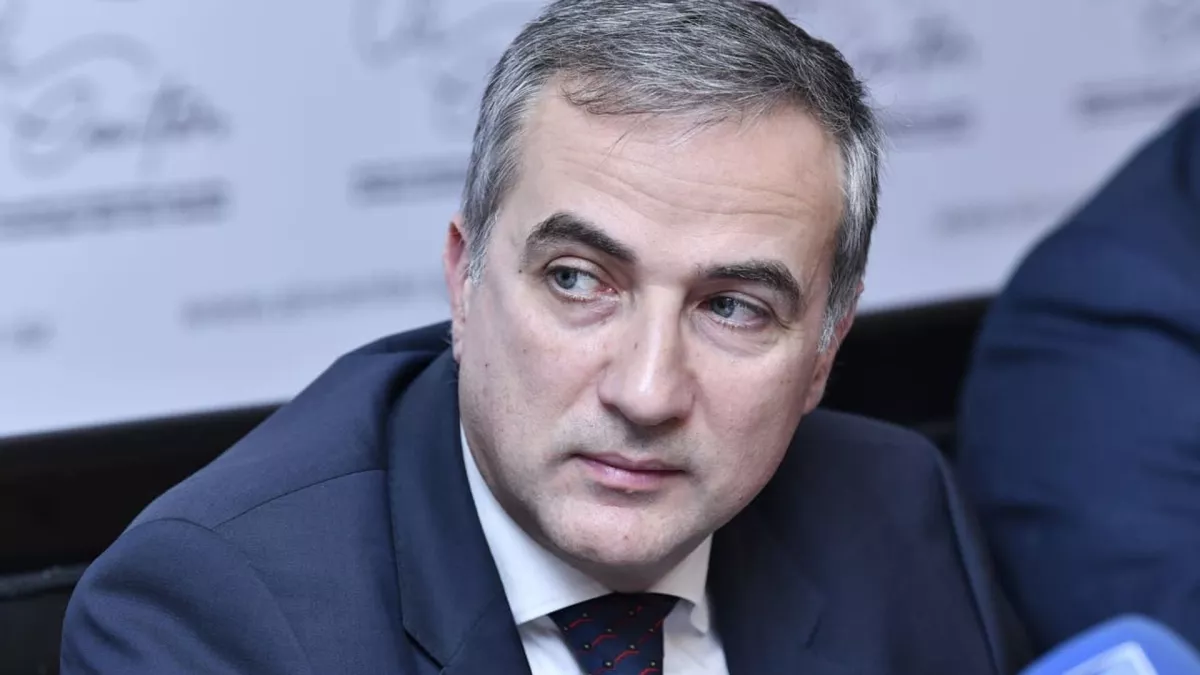
The Director of the Baku-based Center of Analysis of International Relations (AIR Center), diplomat Farid Shafiyev, notes that radical elements of the diaspora are promoting an anti-peace agenda.
“This goes against the interests of Armenia — and this is the view of Armenia’s own leadership, not only Azerbaijan’s. Organisations such as ANCA do not enjoy the support of the US government or even France.
Do they serve Russia’s interests? Perhaps this question should be addressed to the Russian leadership itself: how does it see the South Caucasus — in a state of perpetual conflict, or in peace?” Shafiyev noted.
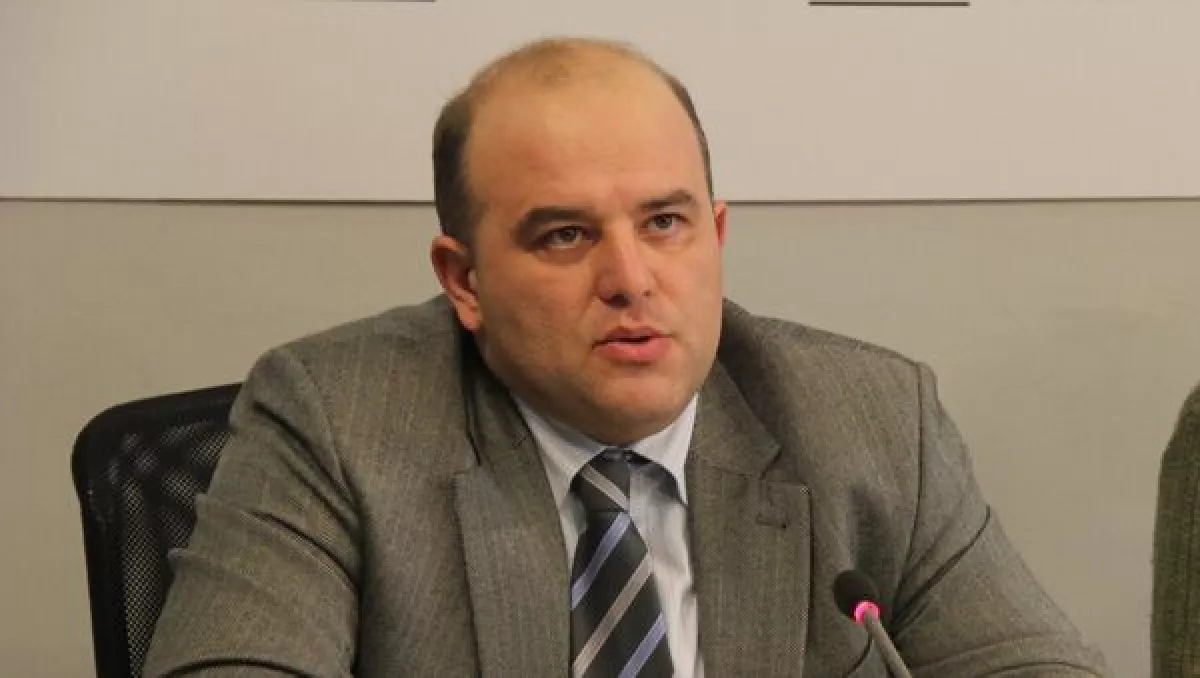
Doctor of Military and Political Sciences, Professor Vakhtang Maisaia (Georgia) stated that, unfortunately, there is still a minority that dreams of times when the Caucasus was a hotspot of instability, hunger, and hardship.
“When death in the form of aggressive separatism and irredentism was raging in the region, and major powers (especially northern ones) entered here as if it were their private domain, dictating conditions. That period is now over — the era of the turbulent 1990s and even the 2000s is in the past.
The Caucasus has become an example of stability, peace, solidarity, and a new concept — the ‘Caucasian geostrategy.’ I believe such peace does not suit this aggressive minority. In the United States, as a democratic country, such views are allowed to be expressed within the framework of lobbying laws. However, I believe that even people with access to such tools are not capable of turning history back — no one listens to them anymore. The current Trump administration is pursuing a completely correct policy towards the Caucasus.
The actors of the South Caucasus — Georgia, Armenia, and Azerbaijan — have found many common points and have already returned to the starting positions of peace and stability. There are no obstacles to such development, and this is precisely what irritates the minority that has always cherished the dream of a Caucasus in flames. This is how one can characterise these delusional ideas and statements, which are no longer taken seriously either in the United States or in our region,” Maisaia believes.

The Caucasus specialist and head of the Eastern Partnership Institute (Jerusalem), Abraham Shmulevich, first noted that a significant part of the statements made at the ANCA briefing indeed diverge from reality.
“The initialled text of the peace agreement at the White House is a framework document on peace and the establishment of interstate relations. Karabakh no longer appears as a disputed territory. TRIPP runs through the territory of Armenia and is managed through a joint US–Armenian company, with the United States holding a controlling stake for 49 years, plus an additional 50 years of minority participation (99 years in total). Armenia receives revenues from transit, taxes, and duties. This is a commercial project under an American umbrella.
As for Armenians who left Karabakh, the right of collective return is not enshrined in the document. External calls (including from some members of the European Parliament) exist, but this is not stipulated in the agreement itself. Return is a long-term and highly unlikely prospect.
The protection of monuments is also not highlighted as a separate section of the agreement. At the same time, according to statements by Armenia’s Ministry of Defence (March 2026), there are no new Azerbaijani military positions on the sovereign territory of the Republic of Armenia,” the expert clarified.
So, he notes, the ANCA briefing represents a classic maximalist narrative: “capitulation,” “rewarding genocide,” and “99-year occupation.”
“The reality, however, is harsher and more pragmatic: Armenia (the Pashinyan government) has accepted compromise, because after 2020 and especially 2023, it has practically lost leverage over the situation. The United States has assumed the role of ‘guarantor,’ seeking to push Russia and Iran out of the region.
What, then, does the diaspora (ANCA and others) seek to achieve? They are not pursuing the absence of peace as an end in itself. Their goal is a ‘just peace’ in their understanding — a peace in which Armenia loses nothing, and Azerbaijan is held accountable for the events of 2023: the return of those who left, the release of all so-called prisoners, an international investigation into ‘ethnic cleansing,’ sanctions against Baku, and increased military assistance to Armenia.
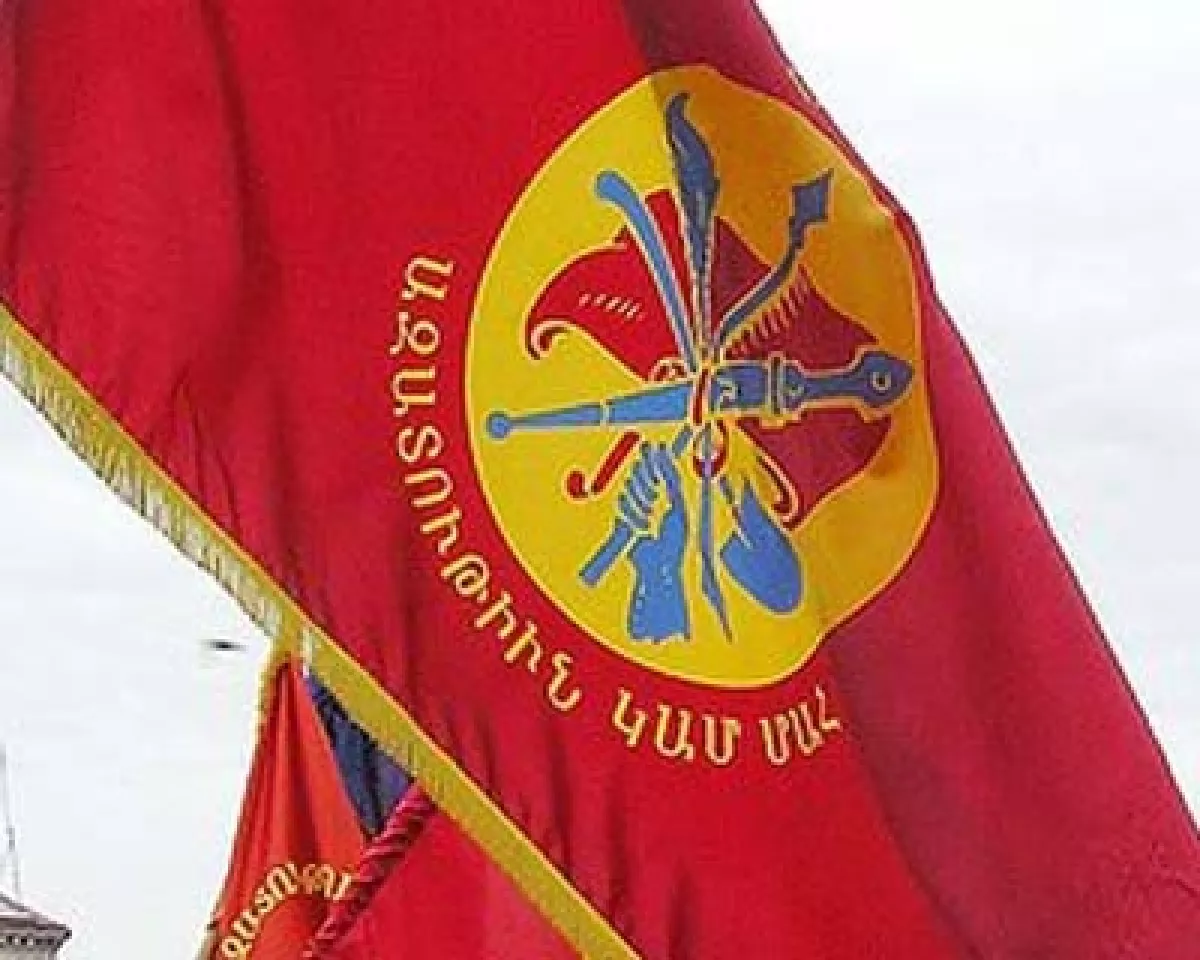
Why is this the case? Because ANCA is closely linked to the Dashnaktsutyun (ARF) party, for which the ‘Armenian Cause’ (Hay Dat) is not merely a political agenda but effectively an ideological imperative.
The diaspora (especially in the US and France) is largely shaped by the trauma of 1915 and interprets the events of 2023 as its continuation. The Yerevan government under Pashinyan is seen by them as a ‘traitor’ who ‘handed over Artsakh.’
There is also another factor: ANCA is a powerful structure with influence in the US Congress. Its activities largely revolve around annual ‘genocide’ resolutions, aid to Armenia, and pressure on Azerbaijan and Türkiye. In the event of a peace settlement on the terms of 2025–2026, much of its agenda would lose relevance. The formula of a ‘peace without justice’ thus becomes a convenient tool for continuing campaigns (H.R. 6840, H.R. 5369, etc.).
At the same time, the diaspora lives in safety — in Los Angeles, Glendale, and Marseille. It does not bear the direct costs of war, does not lose people at the border, and is not dependent on transit routes or economic realities. Prime Minister Pashinyan himself has noted that the diaspora sometimes ‘gets in the way’ by demanding maximalist positions, whereas Armenia is focused on survival.
Analysts, including Armenian ones, have long pointed out that the diaspora is often more radical than Armenia itself. The key driver of its actions is internal: maintaining influence, financial flows, diaspora mobilisation, and pressure on Pashinyan domestically, where the opposition actively uses such rhetoric. This is a classic example of a situation where a diaspora, as in several other ethno-political conflicts (Kurds, Irish, etc.), ends up being more hardline than the homeland.
Today, Armenia objectively lacks the resources to wage — let alone win — a war. Its economy requires open borders, investment, and the development of transport corridors. Pashinyan understands this and is moving in that direction, despite criticism.
The diaspora, meanwhile, continues to act in anticipation of a change in circumstances — a change of power in Yerevan, increased pressure on Baku through the United States, and other factors.
In short: they act within the framework of their own ideology and interests — not on anyone’s instructions, but based on the belief that a utopian notion of ‘justice’ is more important than pragmatic peace. However, whether this truly serves Armenia’s interests remains an open question,” Shmulevich concludes.







 editor@caliber.az
 +994 55 444-88-98
 Азербайджан, Баку, ул. Низами, 203, Af Business House, 5-й этаж