










Türkiye as NATO’s key stabiliser Expert opinions on Caliber.Az
The future of the alliance will be shaped at the NATO summit in Ankara. Speaking ahead of the upcoming NATO summit scheduled for 7–8 July, Turkish President Recep Tayyip Erdoğan said Türkiye expects key decisions to be taken on the future of the North Atlantic Alliance and the evolving architecture of global security.
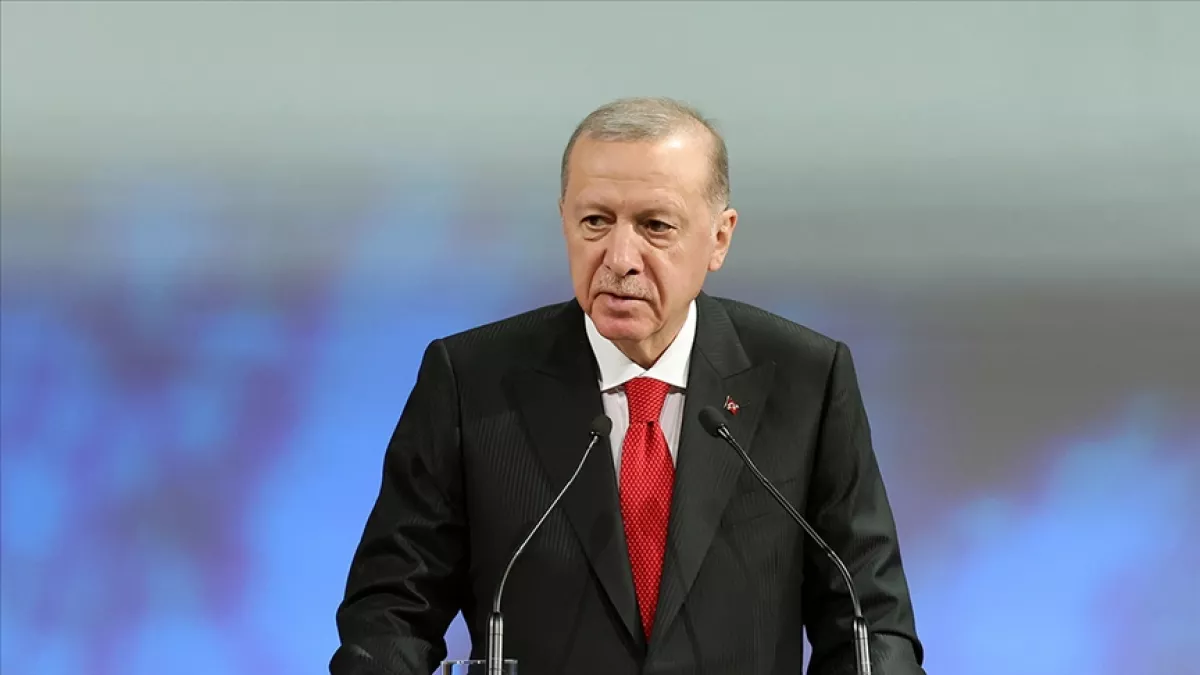
“The NATO summit that we will hold in Ankara on July 7–8 is of critical importance for the Alliance. Recent events in the region and around the world have only increased its significance. We expect important decisions to be made in Ankara regarding the future of the Alliance and the development of the global security architecture,” Erdoğan told journalists from his press pool upon returning from Kazakhstan.
The role of NATO today has “changed significantly,” the Turkish leader continued.
“Threats have become more complex, risks more diverse, and the global system more vulnerable. The world has changed significantly, and fair burden-sharing, sincere cooperation, and a common understanding of security within NATO are of immense importance for the future of the Alliance. As Türkiye, we are ready to do everything in our power to make NATO more decisive and better prepared for the threats facing the organization,” Erdoğan said.
What measures could Türkiye take to strengthen NATO and restore its former significance on the global stage? What did Erdoğan mean when speaking about the future of the Alliance, and what can be done to prevent threats to its continued existence?
Experts shared their opinions on this matter with Caliber.Az.
American political scientist, senior international relations strategist at the analytical company KI Asset Management Co., Kyle Inan, believes that Erdoğan’s statements reflect a broader strategic reality: today, NATO operates in a completely different security environment than the one in which the Alliance was originally created.
“During the Cold War, NATO’s mission was relatively clear and focused. Today, the Alliance faces multidimensional challenges, including cyber warfare, artificial intelligence, energy security, terrorism, hybrid warfare, migration pressure, and regional instability.
Türkiye occupies a uniquely important position within NATO, located at the crossroads of Europe, the Middle East, the Black Sea region, and the Caucasus. This gives Ankara both strategic opportunities and additional responsibilities. Türkiye can play an important role in diplomacy, regional communication, crisis management, and defense cooperation.
However, I would approach this issue with caution. Türkiye’s adoption of broader commitments within NATO could entail additional tasks and responsibilities that may not fully align with its current priorities. And today’s global environment requires more careful calculation.
Türkiye is already located in one of the most sensitive regions in the world.
Ongoing tensions between Iran and Israel, instability in neighboring regions, energy security challenges, migration pressure, and the broader dynamics of the Middle East create a complex security environment for Ankara. Expanding strategic responsibilities while simultaneously addressing multiple challenges could increase pressure on Turkish authorities.
Economic realities are also highly significant. Large-scale military commitments and broader strategic responsibilities require substantial resources and long-term sustainability.
Current economic conditions must also be taken into account. For Ankara, it may be more realistic to maintain a balanced and pragmatic position rather than take on significantly expanded obligations,” the strategist said.
In his view, President Erdoğan, in speaking about the future of the alliance, was referring not only to its military structures.
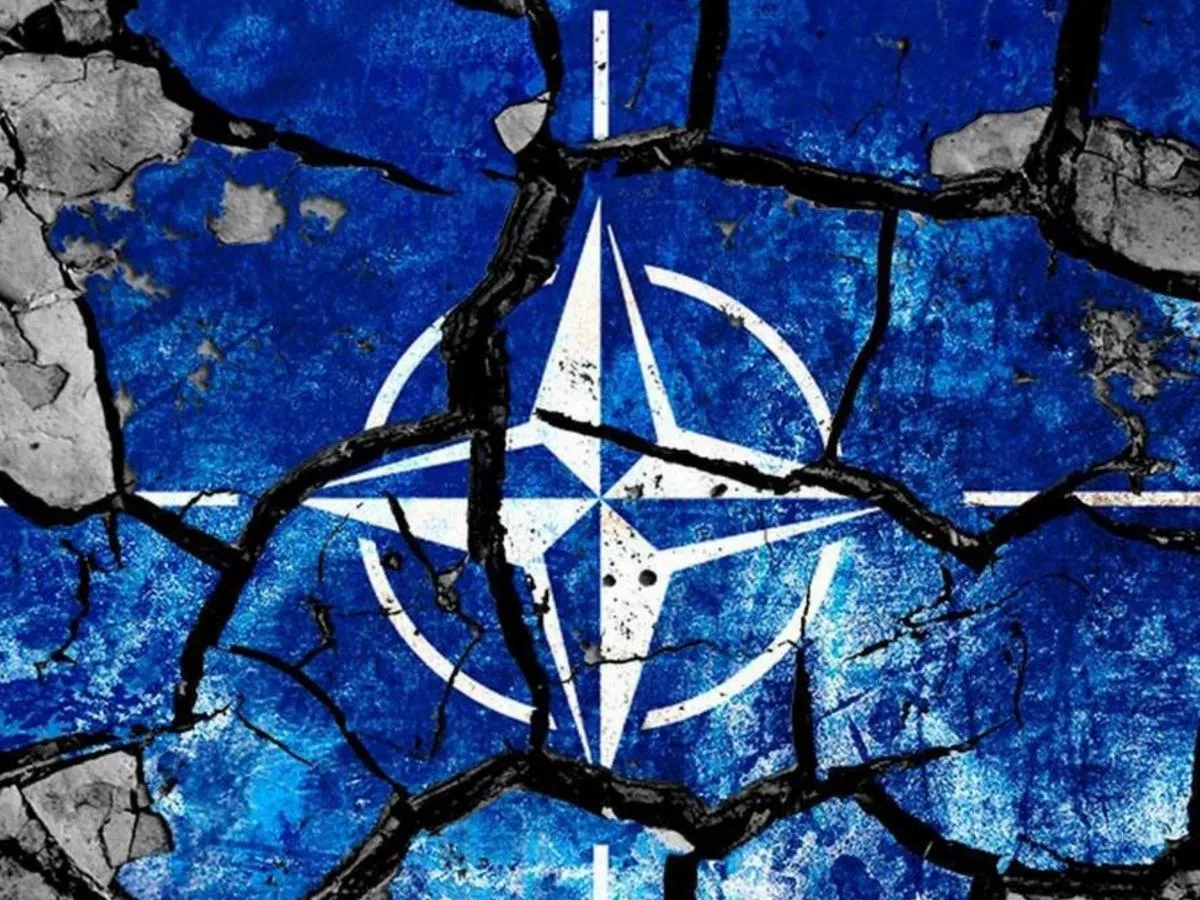
“He was referring to NATO’s very identity. The Alliance must adapt by transforming from a traditional military structure into a more flexible and multidimensional security system capable of responding to modern threats.
The greatest challenges to NATO’s future may come not only from external actors. Internal disagreements among allies, uneven burden-sharing, diverging political priorities, and uncertainty regarding long-term strategic commitments could gradually weaken the cohesion of the Alliance.
Expectations related to the Ankara summit, in my view, should also remain realistic. It is becoming increasingly difficult for the West to maintain a unified strategic vision on many global issues. Even meetings of the world’s largest economic powers, such as the G7, often struggle to achieve transformative outcomes and formulate long-term unified policies. Economic architecture and security architecture are closely interconnected; one cannot be separated from the other.
Without significant economic coordination and tangible economic leverage, it is difficult to expect large-scale strategic restructuring at the NATO level. Security decisions ultimately depend on economic capacity, industrial base, political consensus, and long-term financial sustainability. If major economic forums themselves struggle to produce a coherent collective agenda, expecting NATO alone to fundamentally reshape global dynamics would be overly ambitious.
Therefore, important statements may be made in Ankara, but turning political declarations into lasting geopolitical change is a much more complex process.
Today, the main question for NATO is not so much whether the organization will survive, but what kind of alliance it will become in the coming decades. The Ankara summit may become part of this broader discussion, but in my view, it is unlikely to change the international order on its own,” Inan stated.
The editor-in-chief of “MK Türkiye,” Yaşar Niyazbayev, believes that Ankara’s position today is extremely pragmatic.
“Erdoğan, speaking about the future of the Alliance, is likely implying that NATO is stuck in the Cold War era, even though the world has long changed. Old frameworks no longer work.
The most important point is that Europeans should stop relying solely on America or even Türkiye (which, by the way, has the second-largest army in the Alliance) and finally begin to invest properly in their own defense.
For Ankara, it is also important that NATO’s Western partners abandon double standards. This is a painful issue for Türkiye: you cannot smile and shake hands at summits and then support Kurdish formations in Syria, which Turkish authorities consider a direct threat to their security. Moreover, the threats themselves have changed. The situation must be viewed in a 360-degree perspective: taking into account southern borders, cyberattacks, and the spread of drones. The choice is simple: either NATO transforms now, or it will become a purely formal structure,” the editor said.
As for Türkiye’s own contribution, he continued, it is not about simply providing more soldiers or blindly increasing spending.
“Ankara is offering real advantages. First of all — military technologies. Türkiye’s defense industry is on the rise: the country is now about 80 per cent self-sufficient in armaments and is ready to share its experience, including the creation of a NATO center for counter-drone warfare. Plus, of course, its unique geopolitical position: control over the Bosphorus, the Montreux Convention, mediation in the Black Sea region. This is a ready-made shield for the entire southern flank of the Alliance. In return, however, Ankara expects greater influence. For example, it is seeking the post of Deputy Secretary General in order not just to implement others’ decisions, but to directly participate in shaping strategy.
The main danger for NATO today comes from within — from a loss of trust. In order to prevent the Alliance from falling apart, it is necessary to restore full confidence in Article 5 on collective defense.
Every member of the Alliance must be certain that if it is attacked — whether in a conventional war or through a terrorist threat from the south — everyone will come to its defense without exception. Without this trust, the Alliance is dead. That is how Turkish political analysts frame the issue.
In addition, everyone understands that the United States may shift its strategic focus to Asia, in which case Europe will have to manage on its own. In such a scenario, Türkiye offers itself as a strong stabilizer capable of filling existing gaps. The key is to sit down at the negotiating table and agree on a unified list of threats so that all allies have the same understanding of security issues, rather than pulling in different directions.
The July summit in Türkiye is expected to serve as a platform for such a reset — on equal terms. Because in Ankara, there is a belief that without Türkiye, NATO cannot restore its former strength,” Niyazbayev concluded.







 editor@caliber.az
 +994 55 444-88-98
 Азербайджан, Баку, ул. Низами, 203, Af Business House, 5-й этаж