










Drone over Romania: where do the EU and NATO “red lines” lie? Foreign analysts on Caliber.Az
Information about UAV incursions into the airspace of EU and NATO member states has recently become almost routine in global news coverage. At the same time, the parties involved in these incidents generally hold different views on what actually happened.
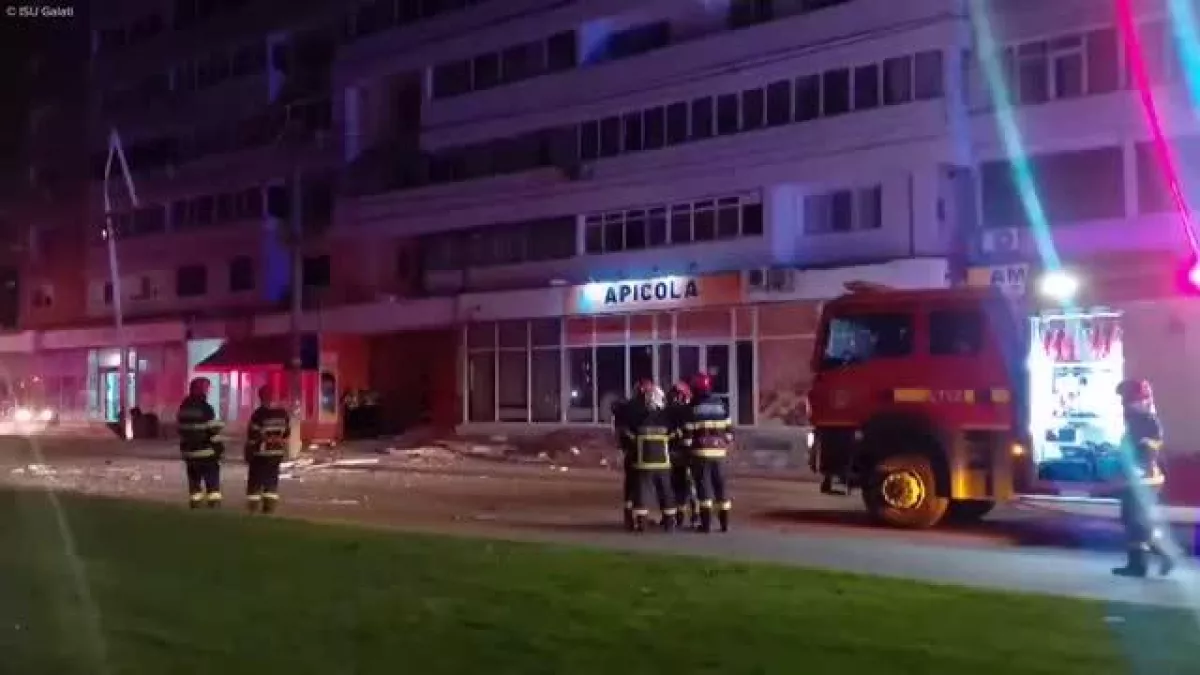
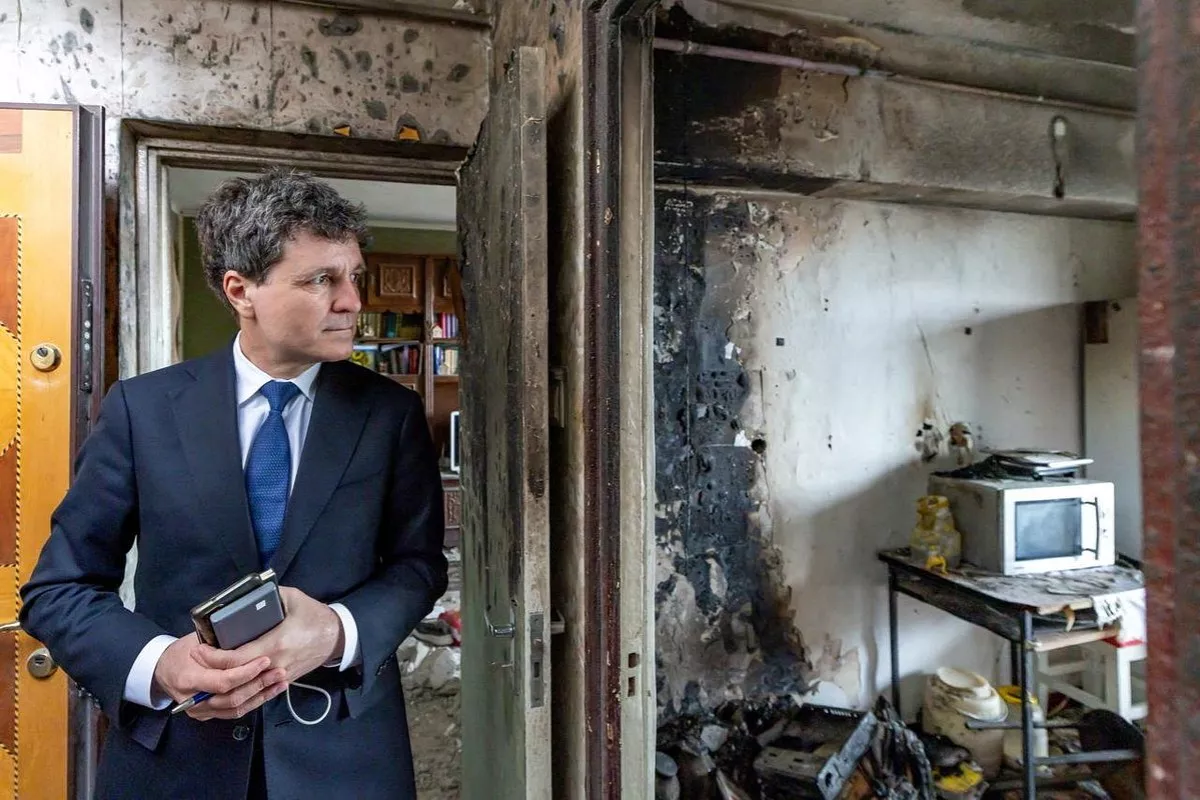
The latest incident involving a drone that entered Romanian airspace ended in tragedy. Romania’s Inspectorate for Emergency Situations reported that on the night of May 29, a drone struck a residential apartment building in the city of Galați in eastern Romania. Upon impact, an explosion occurred, followed by a fire in one of the apartments — the entire explosive payload carried by the drone detonated. Two people were injured, a 53-year-old woman and a 14-year-old teenager, and were hospitalised with burns. Two other citizens received medical assistance on site. Around 70 residents were evacuated from the building, with some leaving the premises on their own.
On Sunday, May 31, Romanian President Nicușor Dan stated on the social media platform X that a Russian-made “Geran-2” UAV had fallen on the apartment building in Galați: “This is the unequivocal conclusion of the technical report finalised by Romanian state specialists. The investigation established this based on a substantial body of technical evidence.”
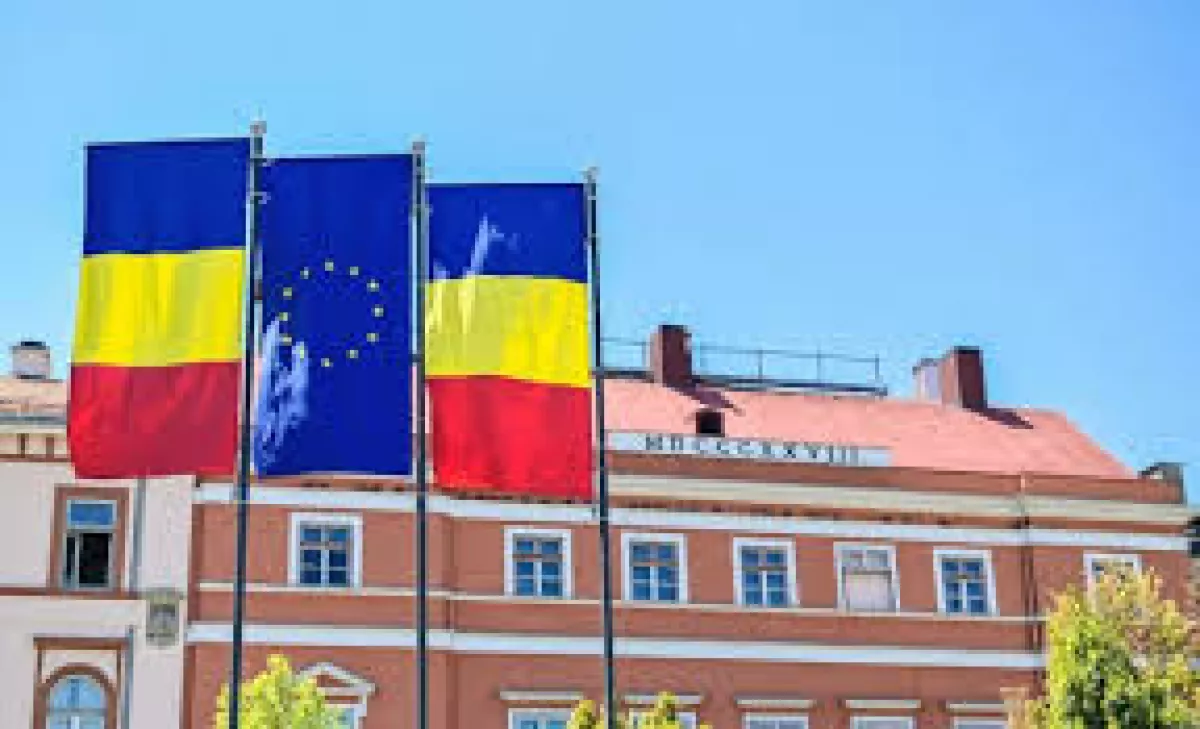
The Romanian leader also emphasised that his country will not ignore or downplay any incident that threatens the lives of its citizens, national security, or sovereignty, adding that Bucharest “will continue to act together with its partners to strengthen security on NATO’s eastern border.” In turn, European politicians issued a strong condemnation of the incident.
Earlier, Russian President Vladimir Putin expressed doubts about the drone’s Russian origin, while the Russian embassy in Bucharest stated that “the incident is a provocation by Ukraine.”
So, has the incident in Romania crossed the “red lines” of the European Union and NATO, and what possible response measures could follow? Will it lead to European countries taking an initiative for greater military assistance to Kyiv, or to an escalation of the situation on the EU–Russia border? These questions are addressed to European, Ukrainian, and Russian political analysts by Caliber.Az.
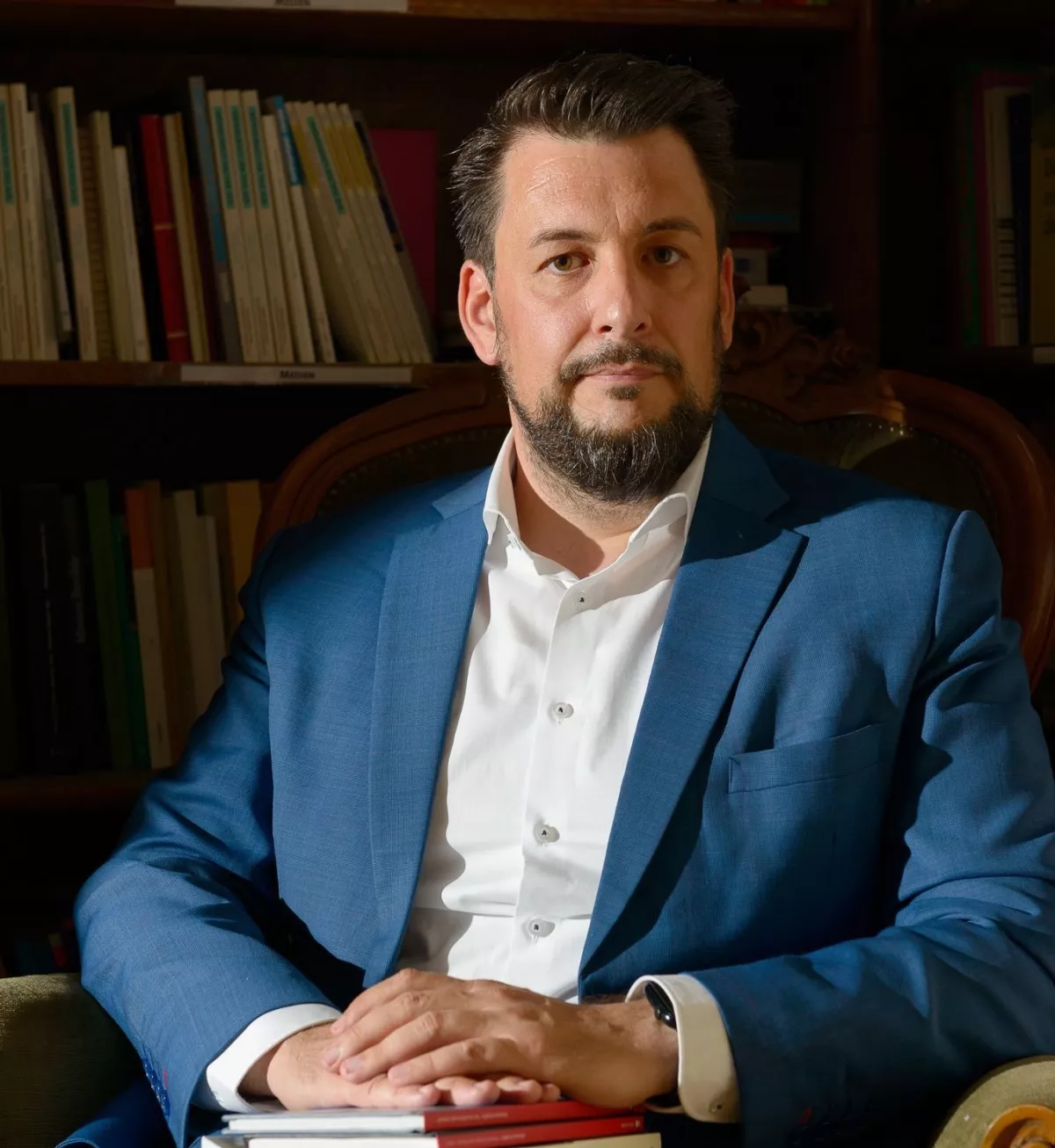
Sebastian Schäffer, Director of the Institute for the Danube Region and Central Europe (IDM), a German political scientist, believes that the strike by a “Geran-2” drone on Galați is the most serious incident of airspace violation of a NATO member state since the beginning of the Russia–Ukraine war.
“For the first time, civilians on the territory of a NATO member state have been affected by Russian weapons, and this significantly changes political calculations and forecasts. However, before assessing Europe’s response, one should focus on the question: ‘Why does such a level of outrage only arise after a strike on the territory of a NATO country?’ Ukrainians have been subjected to attacks by similar drones for more than four years already, and European support for Ukraine’s air defence capabilities is not only a strategic necessity, but also an ethical obligation,” he said.
As for the “red lines,” according to the political scientist, in technical terms, one of them has clearly been crossed.
“The President of Romania rightly called this the most serious incident that has directly affected Romanian territory since 2022. However, the political reaction indicates that NATO and the EU are carefully weighing their steps. NATO Secretary General Mark Rutte confirmed that the bloc will defend ‘every inch of allied territory’; the European Commission announced a 21st package of sanctions against Russia and called for strengthening air defence on the eastern flank. These are concrete statements, but they are far from triggering Article 5 of the North Atlantic Treaty. In this case, ‘red lines’ are being reassessed rather than enforced,” the expert stated.
According to Schäffer, there are three likely consequences of the incident in Galați: “EU member states — especially Romania, Poland, and the Baltic countries — will increase pressure to accelerate the deployment of air defence systems along the eastern border. In addition, the incident will speed up direct support for Ukraine: the political justification for the need for greater assistance to Kyiv in the field of air defence has only strengthened, since weakening Russia’s UAV capabilities is the most effective way to reduce the risk of the conflict spreading to NATO states.
However, the risk of direct military escalation between the Alliance and Russia remains low in my view. At present, it is more important that Bucharest’s request for additional means to counter drones is met as quickly as possible, and that the EU’s rhetoric on eastern flank security is backed by concrete actions — both on allied territory and in Ukraine.”

A Ukrainian military expert and lieutenant colonel, Taras Berezovets, believes that the drone strike on the Romanian city should most accurately be described as a “provocation,” with no element of coincidence or accident involved.
“We remember Russia sending 25 drones into Poland, and last year, dozens of drones entered the territories of Latvia, Lithuania, and Estonia. Therefore, in this case, it is more about probing NATO’s ‘red lines’, to which the Alliance should respond — and respond as firmly as possible. However, so far the response has mostly been declarative rather than action-based.
As for strengthening the presence on the border with Russia, NATO currently, apparently, lacks both the political will and the resources for this. On the other hand, Europe has already clearly stated that it will build its own autonomous security system, separate from the United States, as Washington has shifted its focus to other theatres — the Middle East, Latin America — and is therefore unlikely to redeploy military units to Romania, especially since US forces are already stationed there,” he noted.
The political analyst believes that Europe needs to strengthen cooperation with Ukraine, which today is one of the few countries in the world possessing anti-drone technologies and systems for countering aerial attacks: “This path has already been chosen by our partners in Poland, the Baltic states, and Scandinavia, who understand that only the Ukrainian state is capable of effectively countering attacks by Russian drones and UAVs.”
The expert also stressed that escalation between Russia and the EU–NATO is inevitable, because verbal threats against the Baltic states have already been voiced: “Escalation of the conflict to one degree or another will occur, especially given the ongoing detentions of tankers from Russia’s shadow fleet. The Russian side responds asymmetrically, in accordance with the doctrine of hybrid warfare formulated in 2013 by the Chief of the General Staff of the Russian Armed Forces, General Valery Gerasimov.”

In turn, Ihor Semyvolos, Executive Director of the Center for Middle East Studies (Kyiv), expressed the opinion that the reaction of the Romanian president so far is not very encouraging and does not seem constructive.
“Ukraine is trying to shoot down all drones or missiles, including those that may cross into the territory of neighbouring states. However, since the societies of these countries are rather oriented toward non-involvement in the conflict, their reaction is predictable. As for the issue of greater military assistance, it is generally being provided, but it cannot solve the shortage of missiles for Patriot air defence systems. Kyiv needs resources to scale up the production of various types of air defence systems, and here we can also rely on Europe. Greater dynamism is required in this regard,” Semyvolos said.
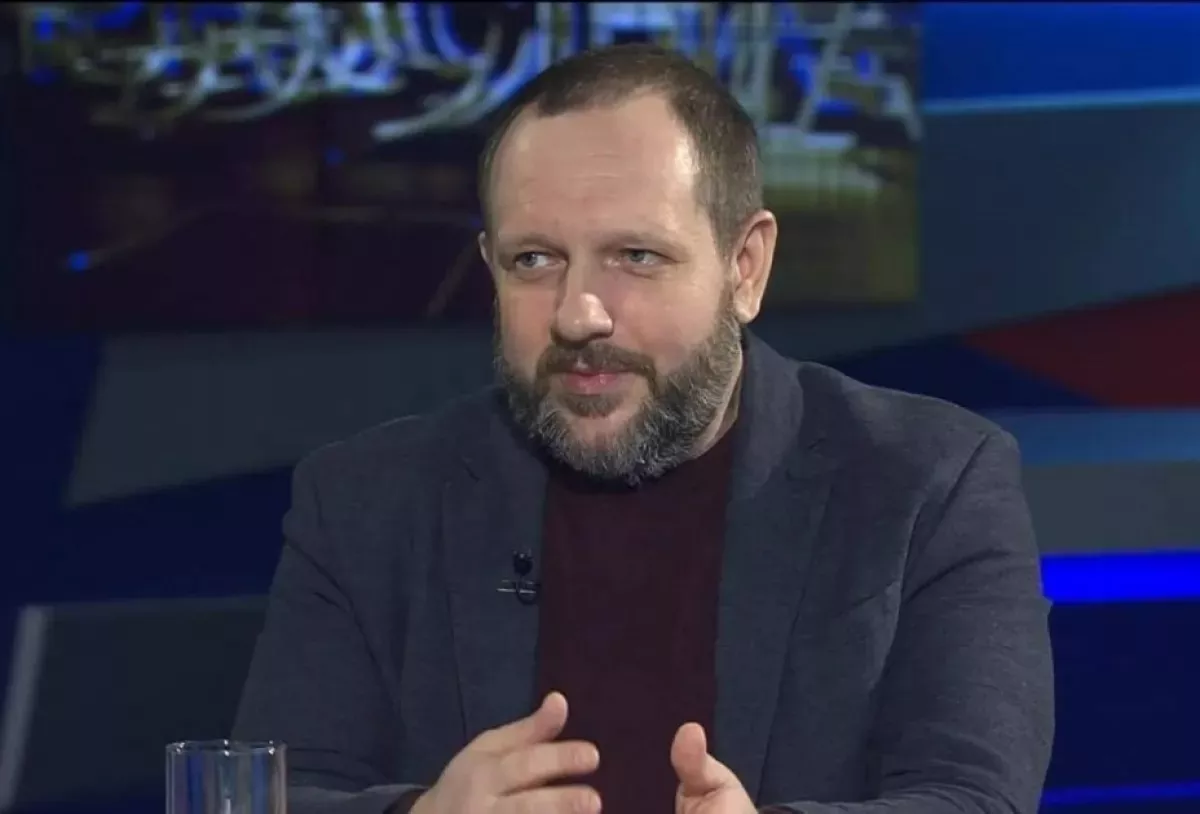
At the same time, Vitaly Arkov, founder of the PolitRUS expert-analytical network and a Russian political scientist, stressed that in this context one is involuntarily reminded of the expression “such is war,” meaning that what happened was a tragic accident.
“There was absolutely no intention to strike Romanian territory with a kamikaze drone, especially a residential high-rise building. If the UAV turns out to be Russian, then its navigation equipment was clearly disoriented by electronic warfare (EW) infrastructure on Ukrainian territory, while Ukraine’s air defence systems were unable to shoot it down,” he said.
I am consciously not referring to the Armed Forces of Ukraine, since it is widely known that military personnel from NATO countries are present on Ukrainian territory. They not only train their Ukrainian counterparts but also directly operate combat systems supplied to Kyiv by alliance countries, systems that are in one way or another linked to data from satellite constellations. And this is, presumably, a logical action by the military authorities of these states, since there are known cases in which Ukrainian servicemen deliberately left intact samples of advanced weapons from bloc countries in combat zones and transferred access codes for various systems to the Russian side. This was, of course, done for a rather generous reward in the currencies of the alliance member states.
By the way, earlier numerous Ukrainian UAVs and air-defense missiles, which were officially documented, ended up on the territories of Poland, Finland, Latvia, Lithuania, and Estonia, including due to the fact that the authorities of three Baltic states gave consent for the flight of Ukrainian combat drones carrying out strikes on northwestern regions of Russia, including the seaport of Ust-Luga, in the construction of which Germany was interested as one of the key beneficiaries of the North–South International Transport Corridor.
I would like to hope that this tragic incident will prompt the Romanian authorities to change their attitude toward the conflict in Ukraine and, instead of participating in supplying weapons to Kyiv, the country will join neighbours in the EU such as Hungary and Slovakia, which consistently advocate for an end to the military conflict. Bucharest has sufficient diplomatic and other means to persuade the Ukrainian side to return to peace negotiations with Moscow. After all, the cessation of hostilities is also important for ensuring the safety of Romanian citizens,” Arkov concluded.







 editor@caliber.az
 +994 55 444-88-98
 Азербайджан, Баку, ул. Низами, 203, Af Business House, 5-й этаж