










EU, Türkiye and the Cyprus question: who is trying to drive a wedge? Expert opinions on Caliber.Az
Turkish Minister of National Defence Yaşar Güler has stated that Ankara has no intention of relinquishing its rights and responsibilities as a guarantor state on Cyprus and considers a settlement of the Cyprus issue possible only on the basis of the existence of two equal sovereign states, according to the Turkish Ministry of National Defence.
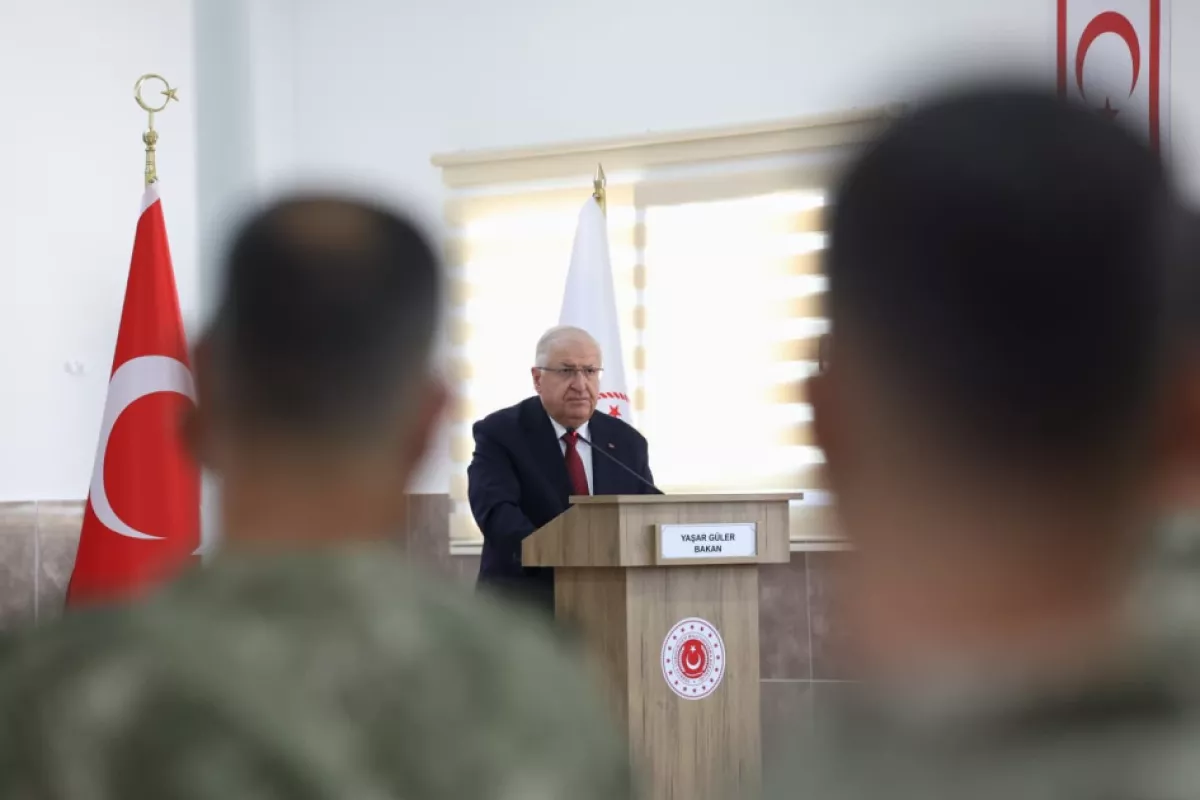
Güler addressed personnel of the 39th Mechanised Infantry Division stationed in Northern Cyprus.
He noted that, amid growing regional and global threats, Türkiye continues to take measures to ensure its national security, combat terrorism, and protect its national interests.
Speaking about Northern Cyprus, the defence minister stated that Türkiye continues to maintain peace on the island in accordance with the Treaty of Guarantee and the Treaty of Alliance. He stressed that the 1974 Cyprus Peace Operation put an end to the confrontation on the island and that the 39th Infantry Division played one of the key roles in the operation, losing 142 servicemen.
Güler also criticised the European Parliament’s decision on Northern Cyprus, stating that it has neither legal nor historical grounds.
“History is written not by political arguments, but by documents and facts,” the minister emphasised.
According to the defence minister, Türkiye has no intention of relinquishing either its rights under international law or its obligations as a guarantor state. He reiterated that a lasting settlement of the Cyprus issue is possible only on the basis of the coexistence of two equal sovereign states.
The minister also addressed the situation in the Eastern Mediterranean. He noted that the continuing tensions pose a threat to regional security and stated that Türkiye will continue to defend its rights and interests, as well as those of the Turkish Cypriots.
Why, 52 years later, is Europe once again raising the Cyprus issue? Who is trying to use it to exacerbate relations between the EU and Türkiye, and for what purpose? And who benefits from the continuing tensions between Ankara and Brussels?
Prominent analysts shared their assessments of the situation with Caliber.Az.

Political commentator for the Turkish television channel NTV and PhD in Political Science Ümit Nazmi Hazır stated that he would first like to emphasise the following.
“Following the bloody coup d’état carried out on July 15, 1974, by Greek forces and their Greek Cypriot supporters to eliminate the Turkish Cypriots, Türkiye launched a lawful intervention on July 20, 1974, landing on the island in accordance with its rights and obligations under the 1960 Treaty of Guarantee. Had the Turkish Armed Forces not conducted this operation, the Turkish Cypriot population would have been annihilated. Therefore, Türkiye’s intervention in Cyprus is entirely legitimate. The decision adopted by the European Parliament contains false allegations and slander. In my view, the institutions of the European Union are increasingly moving away from historical objectivity and an impartial approach to the Cyprus issue.
The war in Ukraine has significantly increased Europe’s need for security cooperation with Türkiye. As a result, relations between Ankara and Brussels have gained new momentum in recent years. However, there are forces within the European Union—primarily Greece and the Greek Cypriot administration of Southern Cyprus—that are dissatisfied with this rapprochement. They seek to use the Cyprus issue as a tool of pressure on Türkiye, attempting to turn bilateral Greek-Turkish disagreements into a problem in relations between Ankara and the European Union.
In doing so, Athens is, to a certain extent, limiting the European Union’s own freedom to pursue its foreign policy,” the political analyst said.
According to him, the Cyprus issue remains one of the most complex problems in relations between Türkiye and the EU.
“At the same time, it remains one of the main obstacles to Türkiye’s accession to the European Union. The European Parliament’s decision is damaging relations between Türkiye and the EU.
The 2004 Annan Plan for Cyprus was a United Nations initiative aimed at reunifying the divided island into a single independent federal state. In the referendum, the Turkish Cypriots supported the plan, while the Greek Cypriots rejected it. This caused deep disappointment on the Turkish side.
As a result, in recent years Türkiye has become even more consistent in supporting a settlement model based on the coexistence of two states on Cyprus,” Hazır explained.
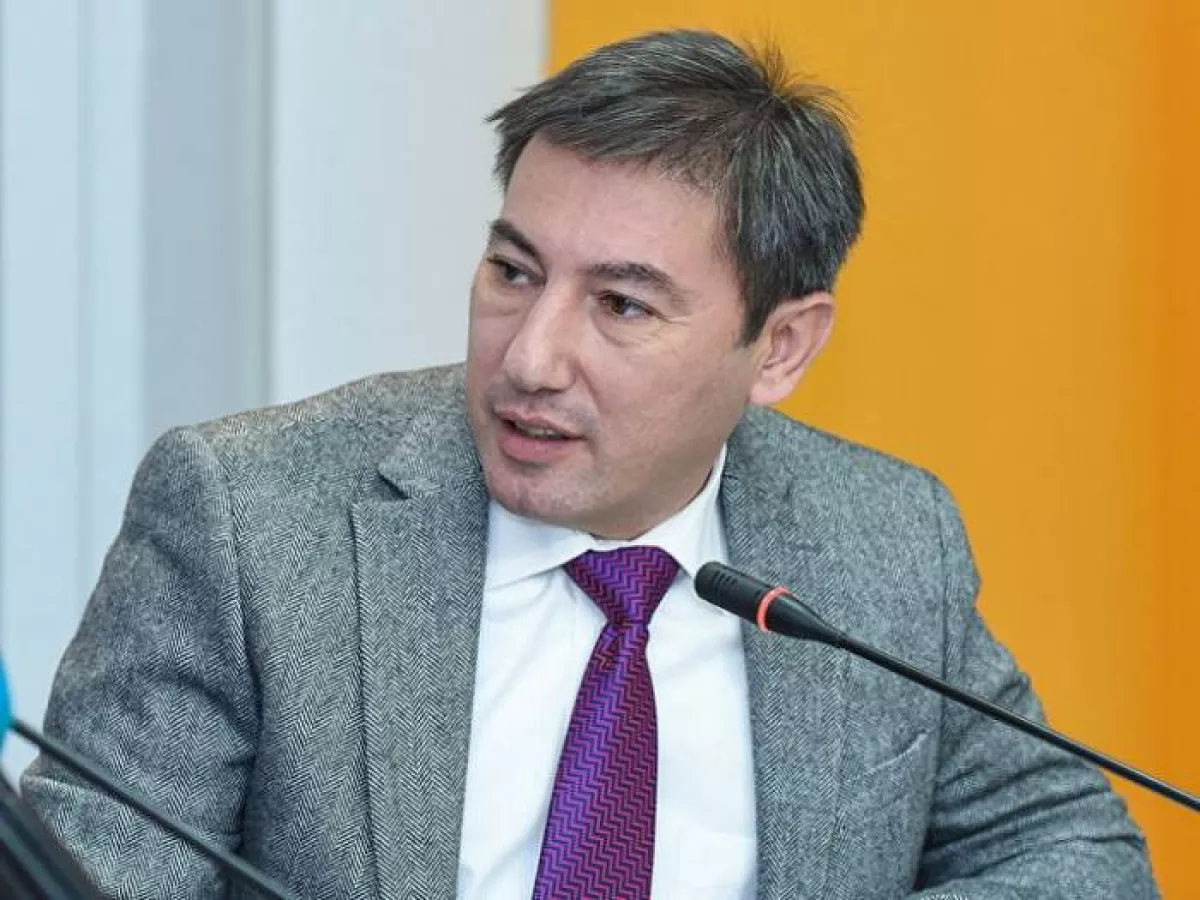
International affairs expert and head of the South Caucasus Political Scientists Club, Ilgar Velizade, stated that when discussing such a complex issue and identifying those who may have an interest in escalating the Cyprus question, France should also be singled out.
“This is a claim supported by concrete facts: France and the Republic of Cyprus recently agreed to permanently station a limited contingent of French troops on the island. Officially, this is explained by the need to ensure the security of Cyprus and the Eastern Mediterranean within the framework of the European Union’s strategy and to expand military-political cooperation among EU member states. In reality, however, the objectives being pursued are quite transparent and obvious.
These objectives are to maintain control over the region, limit Türkiye’s influence, and help establish a lasting architecture of French military and political presence in the Eastern Mediterranean. Countries that have their own interests in the region and stand in the way of these goals—Türkiye in particular—are viewed within this approach as unfriendly or potential adversaries. Through the statements of its defence minister, the Turkish side is making it clear that it will take appropriate measures in response to any country seeking to strengthen its military presence on the island.
At the same time, France is not mentioned directly, as it is Türkiye’s NATO ally.
France is a country that plays a decisive role in determining which states are granted access to the European Union’s multi-billion-euro defence programmes. Türkiye is interested in participating in these programmes and therefore does not wish to deliberately escalate relations with Paris. Nevertheless, Ankara continues to demonstrate its readiness to defend its own interests, which it considers more important than participation in individual programmes,” Velizade concluded.







 editor@caliber.az
 +994 55 444-88-98
 Азербайджан, Баку, ул. Низами, 203, Af Business House, 5-й этаж