










EU sanctions on Central Asian firms: a game to undermine ties? Experts from Kazakhstan and Kyrgyzstan on Caliber.Az
The list of organisations, companies, and individuals included in the European Union's 21st package of sanctions against Russia is quite extensive. However, the inclusion of companies and banks from Kazakhstan and Kyrgyzstan in the package has attracted the greatest attention.
Brussels justified its actions by stating that the new anti-Russian sanctions were primarily focused on companies which, in the EU's assessment, help circumvent export restrictions on the supply of dual-use technologies to Russia, including microelectronics, computer numerical control (CNC) machine tools, and semiconductor manufacturing equipment.
But what does the expert and analytical community in Central Asian countries think about what can, to put it mildly, be described as the European Union's less-than-partner-like attitude toward the states of the region? Analysts from Kazakhstan and Kyrgyzstan shared their views on this issue with Caliber.Az.

According to Nurbolat Nyshanbayev, a professor at Turan University, PhD in International Relations, an orientalist, and a Kazakh political analyst, these measures are not sanctions against Kazakhstan and Kyrgyzstan as states, but rather the targeted inclusion of specific companies, banks, and individuals in the EU sanctions lists.
“The new package—the largest in the past four years—includes 218 entities: 48 individuals and 170 organisations, of which 51 are entities from third countries, including Kazakhstan, Kyrgyzstan, China, India, Türkiye, and the UAE. This is more of an instrument of secondary pressure on transit jurisdictions than an independent policy toward Central Asia.
More specifically, the 21st package, which entered into force on July 23, includes the Kazakh companies TawKZ LLP (Astana) and KBR-Technologies LLP (Petropavlovsk) over export schemes. The EU claims that the sanctioned entities are involved in circumventing restrictions on the supply of microelectronics, CNC machine tools, and semiconductor manufacturing equipment.
It is also worth recalling that, in the April package, Kyrgyzstan was officially designated for the first time as a jurisdiction with an ‘increased risk of sanctions circumvention,’ while two banks—Keremet Bank and Capital Bank of Central Asia—were subjected to restrictions because of their links to the A7A5 stablecoin,” he noted.
In the expert's view, the negative impact of such EU decisions remains moderate for now, but it clearly has the potential to expand. For example, the Zolotaya Korona money transfer system has already suspended transfers from Russia to Kazakhstan following the adoption of the 21st sanctions package, while Freedom Bank has confirmed that it has halted transactions with the sanctioned Tsifra Bank.
“Kazakh officials are trying to ease concerns. For example, Deputy Chairman of the National Bank Yerulan Zhamaubayev stated that he does not expect any serious risks for the economy. However, objectively speaking, each new sanctions package further narrows the ability of Kazakh banks and companies to operate in euros and U.S. dollars, while reputational costs are accumulating faster than direct financial losses.
Formally, the EU is acting selectively and in a targeted manner, focusing on specific legal entities rather than countries as such, which appears methodologically sound. Yet the very logic of designating certain countries as 'high-risk jurisdictions' for sanctions circumvention inevitably undermines the reputation of the entire jurisdiction, regardless of the state's actual level of involvement. As a result, Central Asia risks becoming a ‘scapegoat’ used to demonstrate the EU's tough stance toward Russia without engaging in direct confrontation with it.
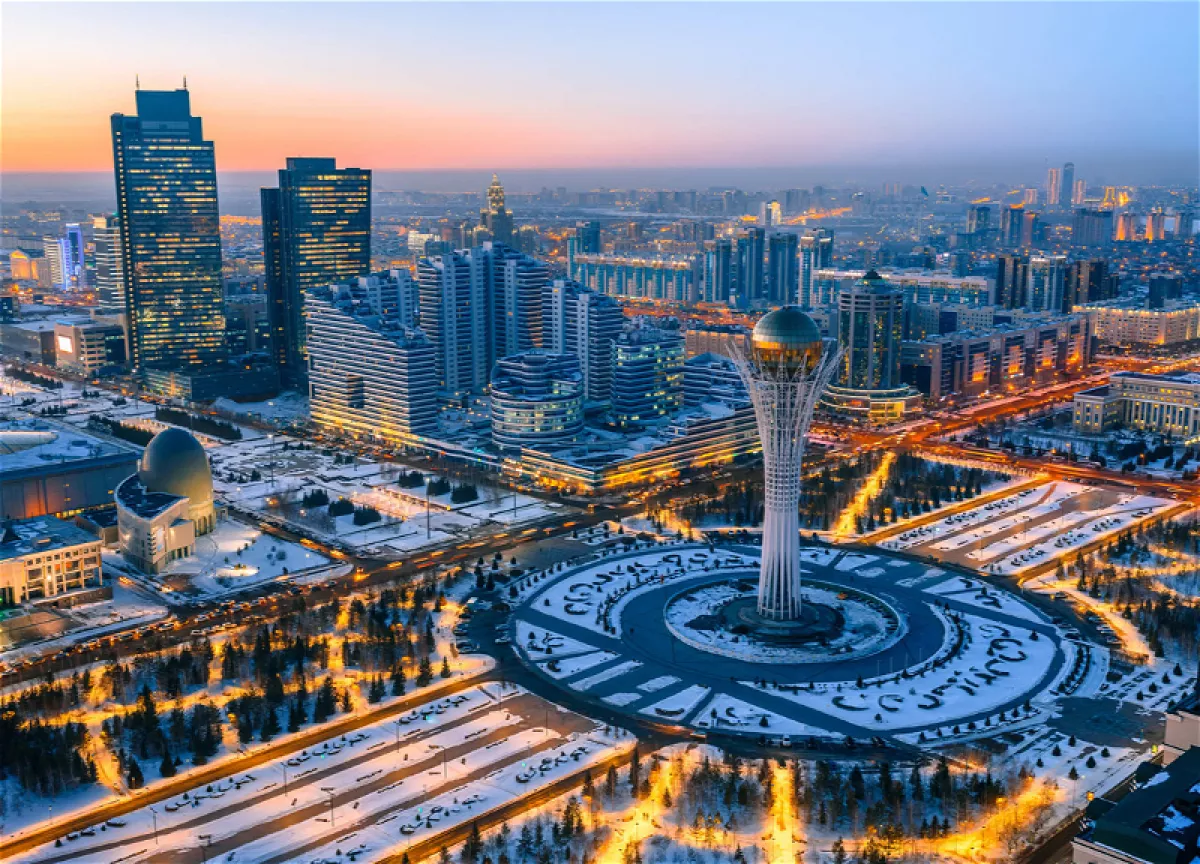
In Kazakhstan, the contradictions in relations with the EU are felt particularly acutely and are being actively discussed in the local media, where the impact of the 21st sanctions package is openly questioned not only in terms of its effect on Russia, but also on the Kazakh economy, particularly in the context of President Tokayev’s statements and the attacks on the Caspian Pipeline Consortium.
Taken together, this creates the impression that the European Union is playing a double game: on the one hand, offering funding and diplomacy under the banner of the Middle Corridor, while on the other exerting sanctions pressure over even the slightest deviation. This undermines confidence in the partnership itself.
At the same time, Astana’s official response has been fairly restrained. Unlike Bishkek, whose Foreign Ministry expressed ‘serious bewilderment,’ the Kazakh authorities have so far refrained from lodging public protests. However, the reaction on the ground is already visible: Kazakhstan has tightened controls at its border with Kyrgyzstan, which may be interpreted as a preventive measure aimed at avoiding inclusion in the next sanctions package.
Looking ahead, Astana is likely to continue adapting its compliance framework by strengthening banking and export controls rather than entering into a public confrontation. In this way, it will seek to preserve its multi-vector foreign policy and avoid a direct dispute with Brussels, while in practice shifting the costs onto its own financial system,” Nyshanbayev stated.
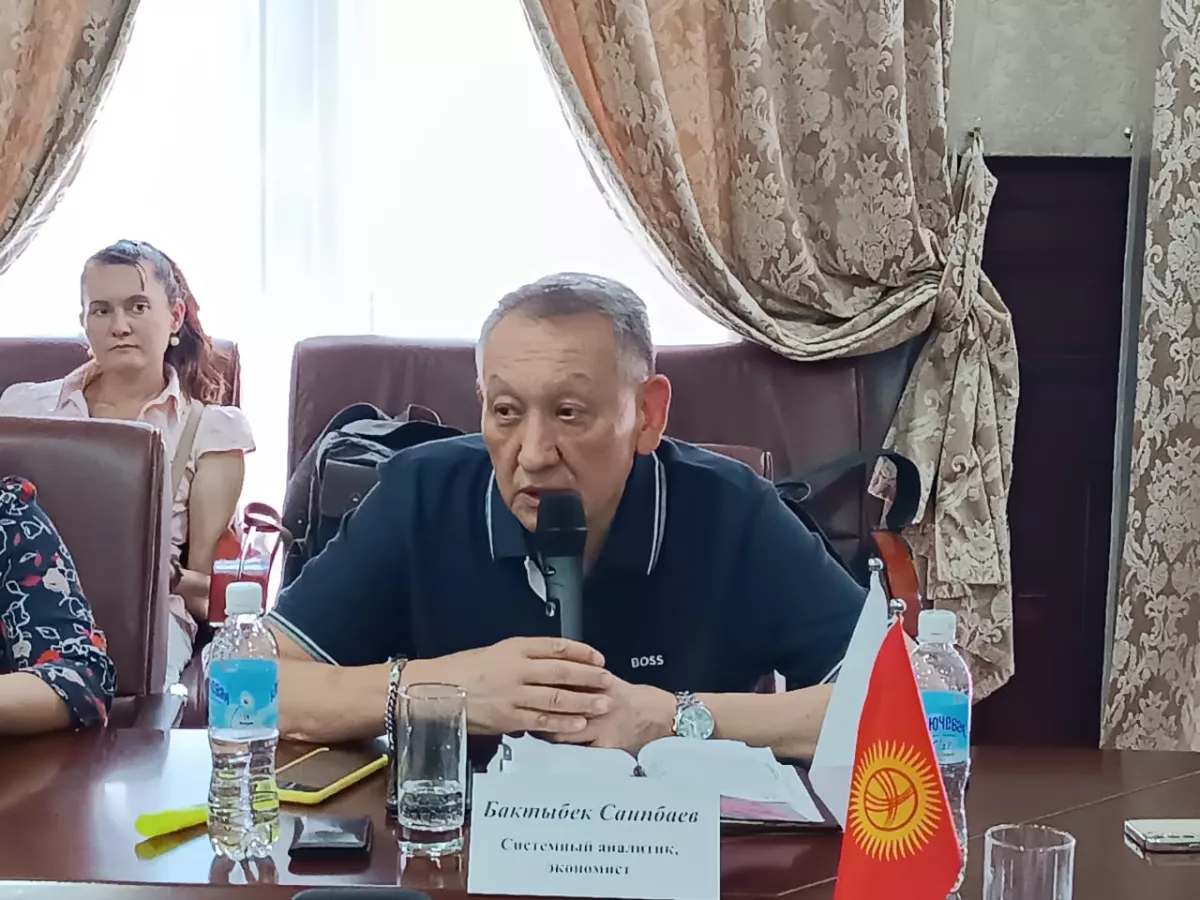
For his part, Baktybek Saipbayev, a Kyrgyz geopolitical and geoeconomic systems analyst, noted that the EU's approach toward the region and its rhetoric about integrating economic interests amount to more words than deeds, while the imposition of sanctions on Central Asian countries is, in general, outside the bounds of international law.
“The unilateral imposition of sanctions is, in effect, a form of coercive pressure, since there is an established international procedure for such measures. First, the issue should be discussed in the UN Security Council; then, once a consensus has been reached, a joint decision regarding a particular country should be adopted, and only after that should the sanctions mechanism be activated.
At the same time, the situation within the EU itself is quite serious, as it faces a significant shortage of resources. One example is President Macron’s visit to Kazakhstan, where he came to seek uranium supplies after France had effectively been forced out of the Sahel countries.
In light of this, the European Union needs to act in a more thoughtful, consistent, systematic, and long-term manner. Especially given that, in Central Asia, the EU is competing for influence not only with Russia and China, but also with the United States and the United Kingdom, while within the bloc itself Germany and France are competing with one another for influence in the region. However, Brussels has yet to demonstrate such an understanding of the situation.
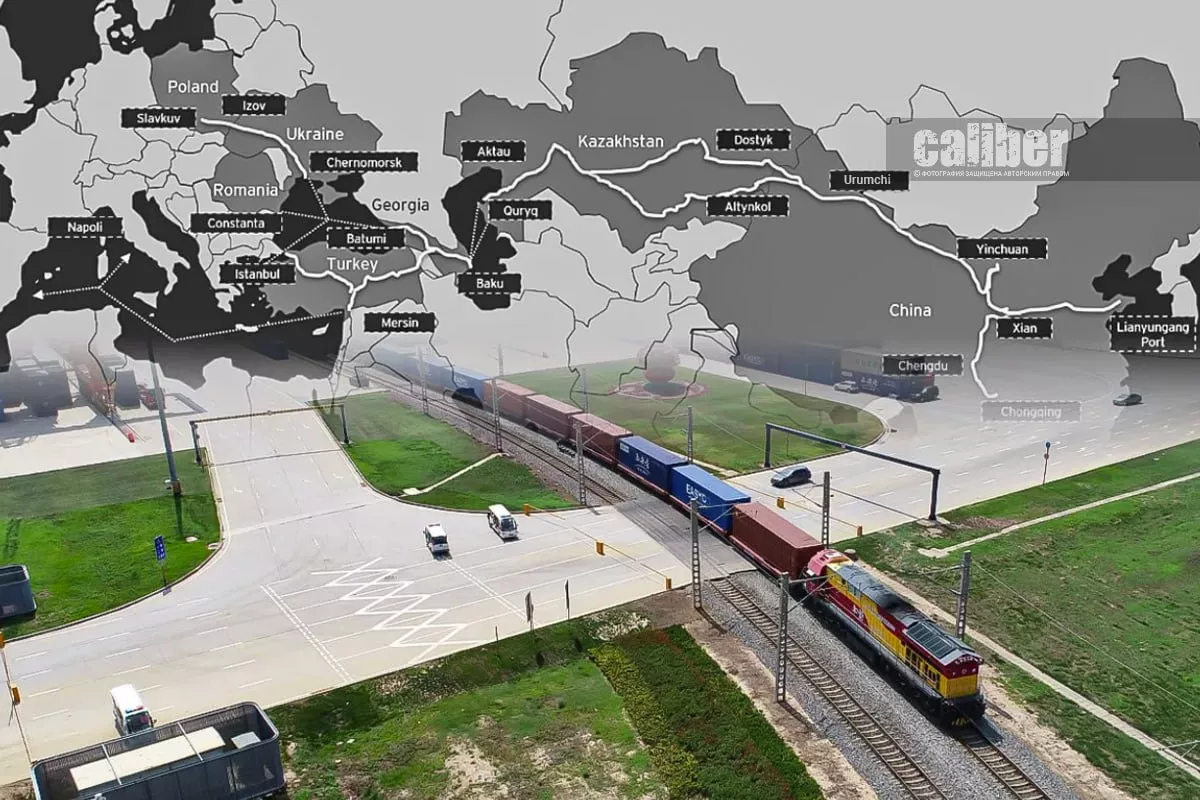
As for the Middle Corridor, the European Union has so far been more focused on declaring its intentions than on taking concrete action in Central Asia. As a result, EU statements are viewed very critically in Kyrgyzstan.
Regarding the sanctions, it can be said that they will have only a minimal impact on the country's economy, as they are primarily directed at the banking sector. More broadly, however, Kyrgyzstan is compelled to manoeuvre among players of varying scale that are, by definition, economically stronger: its northern neighbour, Russia; its southern neighbour, China; as well as its two major regional neighbours, Kazakhstan and Uzbekistan, which also pursue their own interests without always taking Kyrgyzstan's interests into account,” Saipbayev concluded.







 editor@caliber.az
 +994 55 444-88-98
 Азербайджан, Баку, ул. Низами, 203, Af Business House, 5-й этаж