










Gaza’s new administration: will Hamas leave? Expert opinions on Caliber.Az
The Palestinian militant group Hamas announced the dissolution of a 15-member body that had governed the Gaza Strip for roughly two decades.
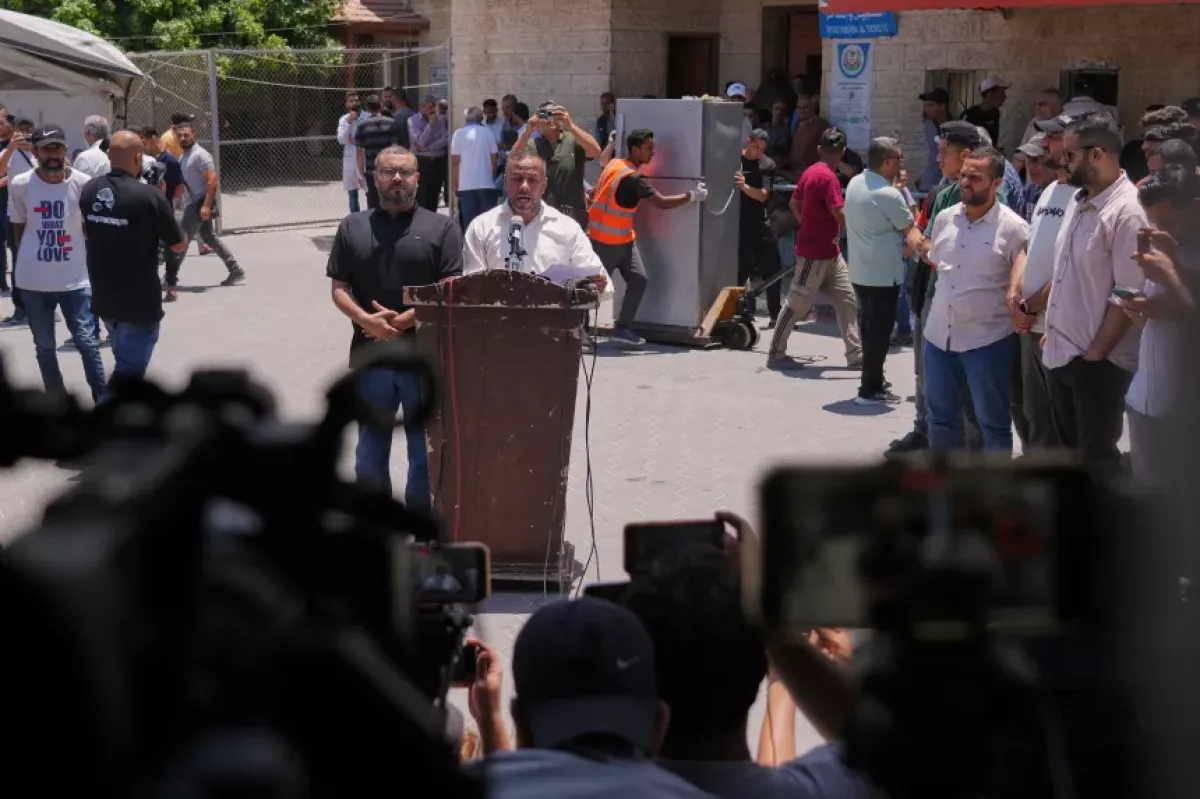
"The head of the government's emergency committee Mohammed al-Farra has officially submitted his resignation," said Ismail Al-Thawabta, a spokesperson for the Hamas-controlled administration.
"He has also decided to dissolve the committee to facilitate the administrative and governmental transition to the National Committee for the Administration of Gaza (NCAG)," Al-Thawabta added.
Meanwhile, the Palestinian technocratic committee established by the Board of Peace of the U.S. President Donald Trump has declared its readiness to assume responsibility for governing the Gaza Strip.
"We affirm that the [NCAG] is fully prepared to assume its national responsibilities as soon as the necessary resources and capabilities are available," committee chairman Ali Shaath wrote on X.
It should be recalled that since its establishment, the NCAG has been based in Cairo.
Will the new administration be able to take real control of the Gaza Strip, or is this merely a symbolic step that will leave Hamas's role essentially unchanged?
Prominent regional experts shared their views on these questions with Caliber.Az.

Israeli military expert David Gendelman believes that Hamas' announcement of the dissolution of its governing committee in Gaza is nothing more than a propaganda performance aimed at creating the impression that the movement is prepared to relinquish power while diverting attention from the issue of its disarmament.
"According to Mao Zedong's principle that 'political power grows out of the barrel of a gun,' Hamas will continue to exercise real control regardless of the façade of a new 'technocratic government,' while still refusing to disarm," Gendelman said.

International politics and Middle East expert at the “Ukrainian Institute for the Future” think tank, Iliya Kusa, noted that it remains unclear how all of this will work in practice. According to him, on paper, members of the committee are expected to relocate from Cairo to Gaza and assume direct administrative responsibilities by establishing the necessary governing institutions, convening a founding assembly, and then operating as a technical government.
"This government is expected to handle municipal administration, logistics, oversight of the administrative boundary (which currently runs along the border of the so-called buffer zone), and the distribution of humanitarian aid to Gaza's residents. What this will look like in reality, however, nobody knows. Most likely, judging by the latest developments, Hamas will allow them to enter Gaza in order to formally fulfil this provision of the agreement. They will thus formally become the new governing authority, while Hamas will step back into the background and assume a less visible role.
Hamas will continue to remain an influential military and political force in Gaza at the local level. It will effectively function as a parallel shadow government, making all the key decisions on the ground. The movement's influence will remain substantial even after the establishment of a formal technocratic administration in Gaza.
Hamas has repeatedly stated that it opposes disarmament, so this is unlikely to happen anytime soon. As an alternative, it may stage a symbolic ceremony purporting to renounce its weapons, but it will not actually disarm, since military control over the enclave is one of its few remaining sources of leverage. If it loses its military capabilities, it will also lose the power that rests upon them," the analyst said.
At the very least, Hamas will certainly not lay down its arms until new general elections are held in the Palestinian territories, including Gaza.
"If Hamas wins those elections and is allowed to participate in political life as a political party, it could shift to purely political activity while formally or nominally renouncing armed struggle. This is one possible scenario, particularly if it is agreed upon at the international level—for example, within the framework of the Board of Peace with U.S. participation. The question, however, is whether Israel would be willing to recognise Hamas as a political party or as a legitimate governing authority under such circumstances. That is a matter for the future, and it remains unclear whether negotiations along those lines will even take place.
At this stage, what we are witnessing is Hamas gradually moving into the background while retaining control over local security structures," Kusa concluded.
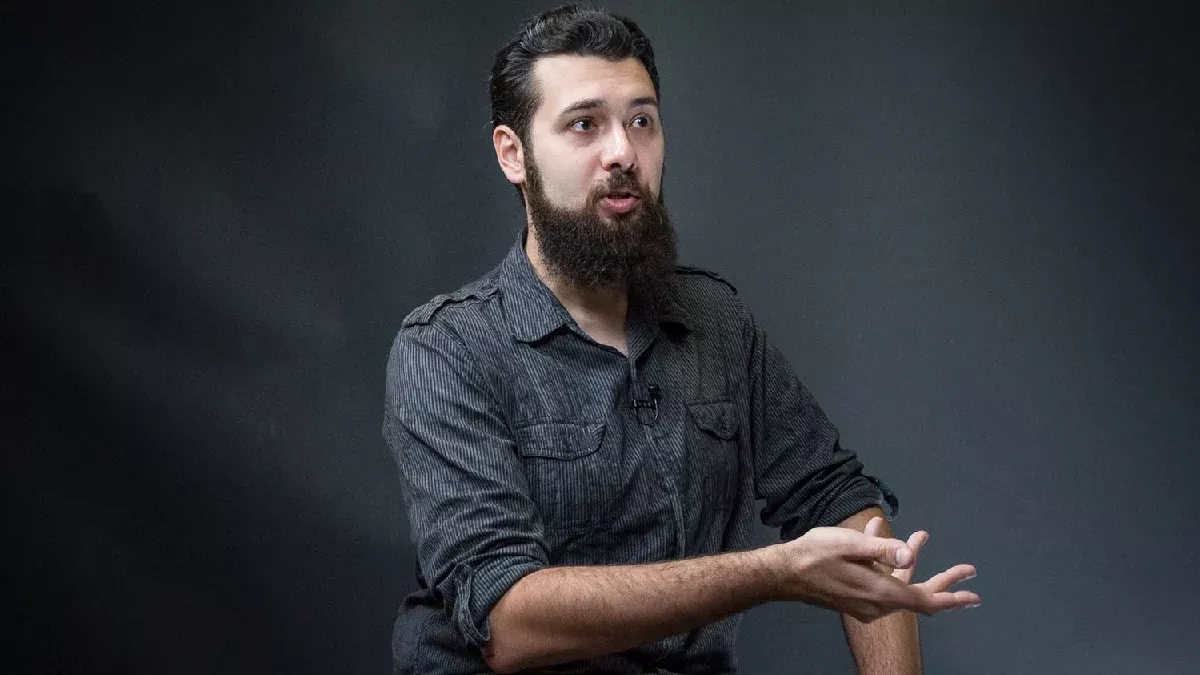
Yigal Levin, a reserve officer in the Israel Defense Forces and military analyst, believes that regardless of what Hamas declares, its statements are merely a smokescreen and that the movement will continue to act solely in its own interests.
"It makes no difference which administration is appointed—whether it is the Palestinian Authority (that is, the Abbas administration) or any other governing structure.
Hamas will seek to move into the background while embedding its people throughout every institution, disguised as ordinary Palestinians, within any parallel administrations, governments, or governing bodies.
Formally, these individuals will not be affiliated with Hamas, but in reality they will remain members of the movement. This is a classic tactic of clandestine operations and infiltration.
This is yet another performance and a symbolic gesture. Under no circumstances will Hamas give up the opportunity to maintain its presence within governing structures," Levin asserted.







 editor@caliber.az
 +994 55 444-88-98
 Азербайджан, Баку, ул. Низами, 203, Af Business House, 5-й этаж