










Geography of power: why the Strait of Hormuz remains Iran’s key leverage Foreign experts on Caliber.Az
The situation surrounding the Middle East’s most vital maritime artery — the Strait of Hormuz — remains one of the top issues on both the global agenda and the pages of leading international publications.
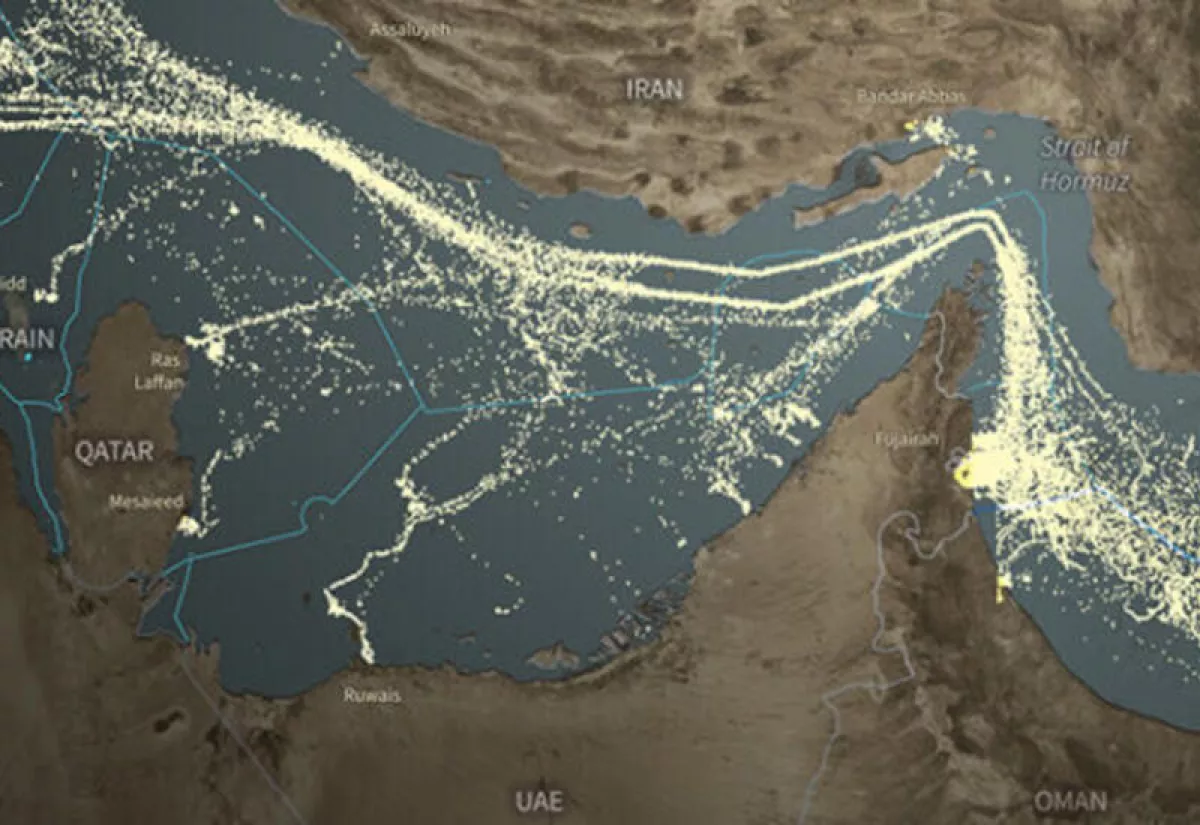
In particular, The Economist recently noted in an article that “For years the world has feared that Iran has been pursuing nuclear arms. Five months of war have taught the country’s rulers they were already in possession of a formidable weapon. Geography and firepower give them de facto command of the Strait of Hormuz, through which a fifth of the world’s oil and liquid natural gas (LNG) normally flows. Choking that artery has given Iran’s leaders immense leverage over their adversaries.”
The publication also stresses that despite the construction of new pipelines in Saudi Arabia, the United Arab Emirates, and Iraq, the Strait of Hormuz cannot be fully replaced. By 2030, some oil flows may be redirected, but exports of petroleum products, liquefied natural gas, and a significant share of global trade will continue to depend on this maritime chokepoint. Moreover, the new infrastructure itself could become a target for potential Iranian attacks.
Moreover, the Gulf countries are dependent not only on oil. Through the Strait of Hormuz, they receive food supplies, medicines, and container cargo. Developing alternative routes would take decades and require massive financial investments — tens of billions of dollars.
Iran’s influence over global prices may diminish over time, but the strategic importance of the Strait of Hormuz will remain for a long time to come. Control over this route remains one of Tehran’s key instruments of leverage, the publication concludes.
So, is the situation really as serious as The Economist suggests, or do the United States, Israel, and the European Union still possess the capacity to reverse the current dynamic and restore at least the previous status quo, when the passage of all foreign vessels through the Strait of Hormuz was completely free and unrestricted?
Regional experts answer these questions for Caliber.Az.

Israeli political scientist and professor at Bar-Ilan University Zeev Khanin believes that the Strait of Hormuz continues to play a significant role in supplying oil to consumers.
“In this case, we are primarily talking about those affected by instability in the region — countries in East and Southeast Asia, such as China, despite its supplies from Russia, which do not resolve all of its problems, as they are largely focused on gas, as well as Japan, South Korea, and other countries.
Alternative routes are currently being developed, and over time they will create viable options for many. However, at present, the authors of The Economist are right: if the problem exists ‘here and now,’ it must be addressed through other means.
There are very few professional diplomats among Iran’s current leadership, as power is held by military-religious politicians who rely exclusively on military force and are delaying negotiations with the Americans by any means possible.
At the same time, Trump is not interested in moving from mutual strikes to a full-scale ‘third Iran war.’ He believes that Iran’s energy infrastructure could become a subject of future US economic interests. This is why the American president continues to hesitate over launching a massive strike,” he said.
According to the expert, a possible solution to the problem could be a large-scale US strike, potentially involving Israel, targeting Iran’s energy infrastructure.
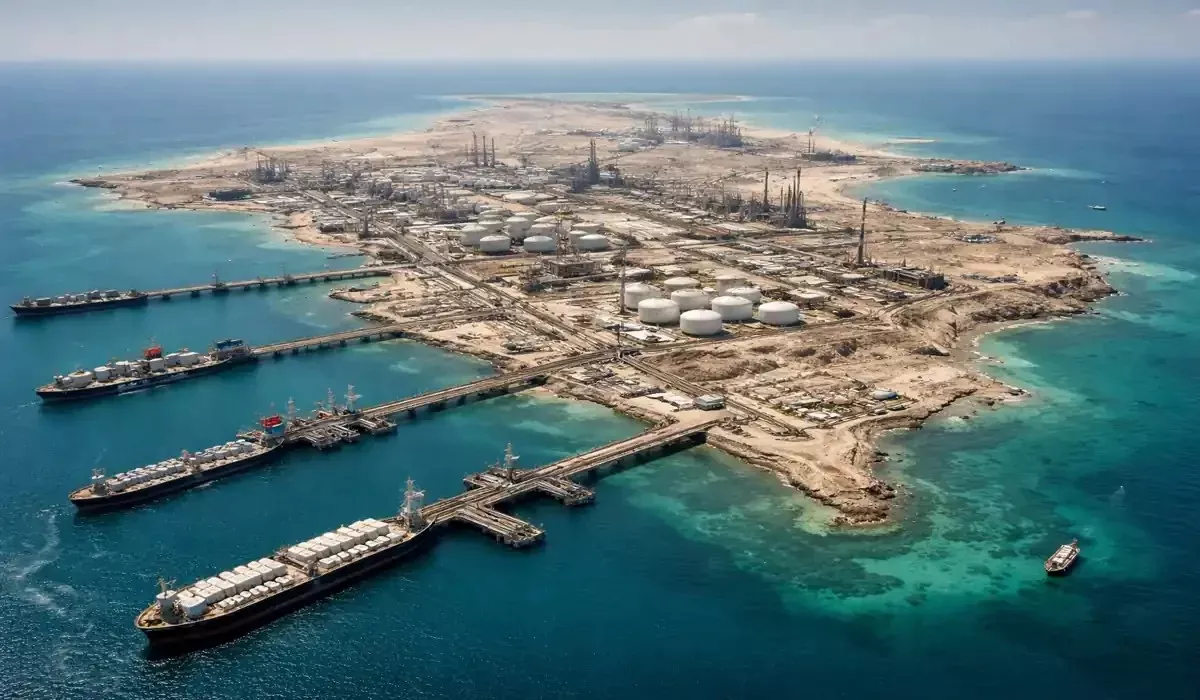
“There are three key targets in this area. The first is the Kharg Island oil terminal in the Persian Gulf, through which around 90% of Iran’s oil exports pass. Losing it would automatically mean the loss of more than $30 billion in revenue for the Iranian budget, which could potentially push Tehran toward greater willingness to negotiate.
The second is South Pars, the Iranian section of the world’s largest natural gas field, which accounts for the overwhelming majority of domestic gas supplies.
The third is the Bandar Abbas container terminal — Iran’s deep-water port and a major hub through which 85% of container traffic passes. Its destruction would lead to a sharp decline in budget revenues and cause severe shortages of equipment, food, and industrial goods.
Until recently, the Americans and Israelis have largely limited themselves to military targets and have refrained from striking energy infrastructure. However, if an agreement cannot be reached, such attacks could result in Iran ceasing to be a modern country.
I would also like to emphasise separately that the people of Iran are not responsible for this situation. The responsibility lies entirely with those in power, who show little concern for the fate of their own population,” Khanin stated.

In turn, Iliya Kusa, an expert on international politics and the Middle East at the analytical centre Ukrainian Institute for the Future, noted that the problem is indeed extremely serious because it is significantly altering the regional balance of power. He pointed out that there are currently no alternatives in the Middle East to the Strait of Hormuz and the Bab el-Mandeb Strait, through which a substantial share of global trade — and virtually all regional trade — passes.
“In my view, the situation could fundamentally change if the United States and its allies manage to change the government in Iran — that is the first scenario. However, we see no indications that such a development is likely to happen in the near future.
The second scenario is for Washington to reach a deal with Tehran under which the Strait of Hormuz would be reopened. But due to the lack of trust between the sides, the Iranians do not want to give up control over the strait, understanding that they may never regain it. Therefore, they intend to establish a new status quo for the long term — for example, by imposing fees that would go into a special fund through which they could compensate for losses incurred during the war with the United States and Israel.
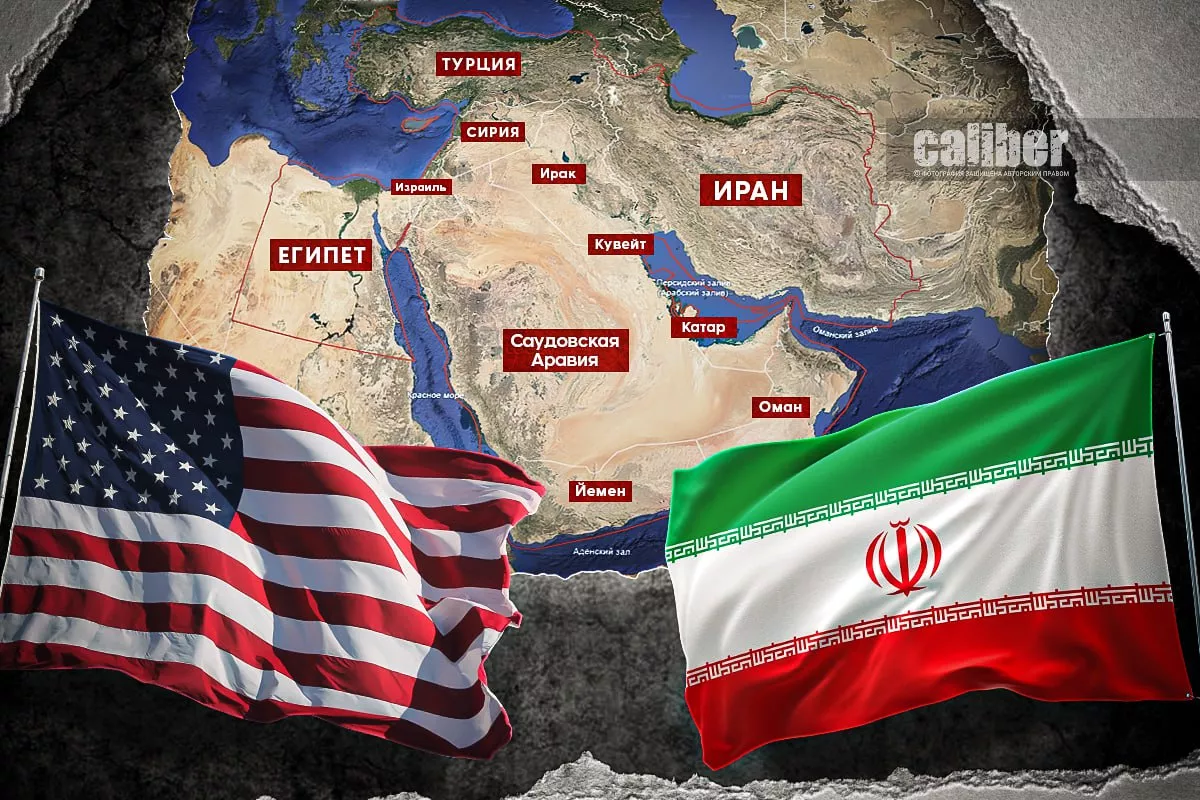
There is also a third option: regional states could reach an agreement with Iran under which the Strait of Hormuz would acquire a new status and operating mechanism. However, this would require consensus among all regional actors, and many of them are currently unwilling to see the role of the Strait of Hormuz changed.
Moreover, everyone understands that this would set a precedent that could trigger a chain reaction. For example, the Houthis could demand a similar arrangement for the Bab el-Mandeb Strait,” the analyst said.
He also noted that there is another option, although it is more of a medium- or even long-term prospect — the emergence of an alternative to the Strait of Hormuz in the region.
“In particular, alternative overland routes for exporting oil and petroleum products are currently being discussed, as well as projects to build oil and gas pipelines through Syria and Jordan to Israel, along with expanding the capacity of existing infrastructure.
However, these projects would require major investments, and some of them are technically difficult to implement, partly because certain areas through which the proposed land routes would pass face security challenges.
Nevertheless, such an alternative could change the situation, reduce the importance of the Strait of Hormuz, and neutralise the card that Iran is currently playing. But, I repeat, this is a matter for the medium and long term, as building such infrastructure from scratch is extremely difficult,” he said.







 editor@caliber.az
 +994 55 444-88-98
 Азербайджан, Баку, ул. Низами, 203, Af Business House, 5-й этаж