










Section 907: Why Washington should eliminate legal anomaly Expert opinions on Caliber.Az
Azerbaijani President Ilham Aliyev described Section 907 of the U.S. Freedom Support Act, adopted in 1992, as an unjust decision by Congress. Speaking at the 4th Shusha Global Media Forum, the leader emphasized that the provision, which deprived Baku of access to U.S. financial assistance under the pretext of Armenia’s "blockade," had been biased from the very beginning.
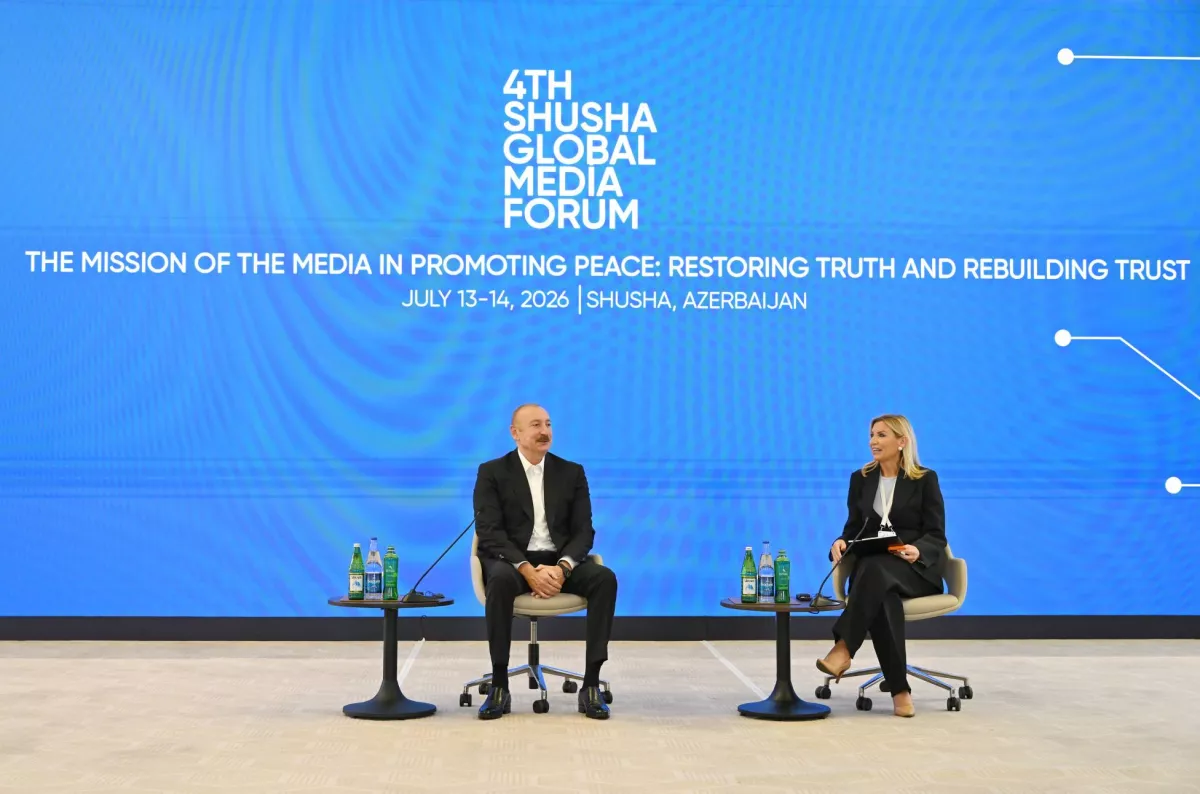
According to the president, the provision was lobbied by pro-Armenian senators, including Joe Biden, who was serving as a U.S. senator at the time. At the same time, Ilham Aliyev emphasized that today its existence has completely lost any logic: Azerbaijan, which was subjected to sanctions under the provision in 1992, is now itself supplying Armenia with gasoline and diesel fuel.
Against the backdrop of progress in the peace process, Baku is once again calling for the complete repeal of Section 907, arguing that its continued existence hinders the development of full-fledged bilateral relations with Washington.
Until 2001, Section 907 remained fully in force. Following the September 11 terrorist attacks, Congress granted the U.S. president the authority to waive its application on an annual basis, primarily in the interest of security cooperation. However, the restriction itself remains part of U.S. law.
What would the permanent repeal of Section 907 mean for U.S.-Azerbaijan relations? And what is preventing Congress from abolishing a provision that has long outlived its relevance?
Prominent experts shared their views with Caliber.Az.

Geopolitical and security expert and Editor-in-Chief of The Washington Outsider, Irina Tsukerman.
“The permanent repeal of Section 907 would have significance far beyond U.S. financial assistance. It would eliminate a legal anomaly that has, for more than 30 years, maintained a discriminatory approach toward Azerbaijan despite the two countries' active cooperation in the fields of energy, security, transportation, and counterterrorism.
Although U.S. presidents have annually waived the application of the provision, cooperation has remained dependent on the political climate. Its complete repeal would establish a stable legal foundation for long-term projects in trade, investment, energy, digital technologies, and defense, while also helping to restore political trust.
From 2002 to 2020, the United States allocated approximately $808 million to programs related to Azerbaijan, including $164 million for security projects. The repeal of the amendment would allow such cooperation to be planned on a long-term basis while preserving all oversight mechanisms provided for under U.S. law. This does not imply automatic arms supplies, but rather the provision of the same legal conditions to Azerbaijan as those available to other U.S. partners.
Equally significant prospects are emerging in the fields of energy and transportation. For many years, Azerbaijan has played a key role in diversifying energy supplies to Europe. The Southern Gas Corridor, the Baku–Tbilisi–Ceyhan oil pipeline, the development of green energy, and the Black Sea electricity transmission project are strengthening its role as an important link in the regional energy architecture.
The repeal of Section 907 would create more favorable conditions for the participation of American companies in the modernization of energy infrastructure and the implementation of new investment projects. Although the amendment itself does not prohibit commercial activity, its continued existence increases political risks and reduces the country’s investment attractiveness.
Equally important is Azerbaijan’s transportation potential. Against the backdrop of instability in the Red Sea and the Strait of Hormuz, the importance of the Middle Corridor is growing. Azerbaijan is expanding the Port of Alat, increasing its capacity from 15 to 25 million tons, while also developing railway and port infrastructure. For the United States, participation in these projects would mean strengthening its position in the region amid growing competition with Russia, China, and Iran.
The repeal of the amendment would also be of great importance for the Armenian-Azerbaijani settlement process. The law was adopted under the conditions of the early 1990s, but the situation has changed dramatically today. Azerbaijan has lifted transit restrictions on cargo destined for Armenia and has begun supplying petroleum products. According to Ilham Aliyev, more than 40,000 tons of cargo have already been transported through the country, while the volume of petroleum product supplies has exceeded 10,000 tons.
Under these circumstances, the repeal of Section 907 would represent recognition of the new regional reality and support for the peace process, creating additional opportunities for the development of trade, investment, and economic integration in the South Caucasus. It would also facilitate the work of American financial institutions and make Azerbaijan more attractive for long-term investments.
The most promising areas could include digital infrastructure, data centers, artificial intelligence, telecommunications, logistics, water resource management, agriculture, the development of critical minerals, and the reconstruction of the liberated territories.
An equally important area would be the development of humanitarian ties. Expanding academic exchanges, joint research projects, professional education, and cooperation between universities would help create a strong societal foundation for bilateral relations, which today largely rely on the interaction between political leadership and energy companies. Any strategic partnership becomes much more resilient when it is supported by businesses, the academic community, regional authorities, and the younger generation of professionals,” the expert believes.
According to Irina Tsukerman, the main obstacle to the repeal of Section 907 is that the U.S. Congress views foreign policy issues through the lens of domestic politics.
“The positions of members of Congress are influenced not only by the country’s strategic interests, but also by electoral districts, donors, party considerations, and the activities of the Armenian lobby, which has built strong ties on Capitol Hill over decades.
For many lawmakers, the political cost of supporting the repeal of the amendment is higher than maintaining the status quo. This is also reinforced by institutional inertia: the executive branch has long addressed the issue through the annual waiver of the amendment, which is why its complete repeal is no longer a priority for Washington.
In addition, some members of Congress view Section 907 as a tool for exerting pressure on Baku regarding the Armenian-Azerbaijani settlement and other regional issues. Following the events of 2020 and 2023, these positions have only strengthened, and attempts have even been made in the House of Representatives to restrict the president’s authority to annually waive the application of the amendment.
Another obstacle remains the lack of broad bipartisan support. The bill H.R. 6534, introduced on December 9, 2025, by Congresswoman Anna Paulina Luna, has so far been supported primarily by Republicans. Despite the favorable position of the Trump administration, the final repeal of the amendment requires bipartisan consensus and approval by Congress.
Congress already has a broad range of instruments to oversee military assistance, arms exports, compliance with human rights standards, and the use of American equipment. Therefore, maintaining Section 907 is not a necessary condition for such oversight. It can be replaced with more modern mechanisms applicable to the entire South Caucasus that would provide for monitoring the implementation of peace agreements, the opening of communications, humanitarian demining, the protection of civilians, and compliance with ceasefire arrangements.
To achieve this goal, Baku needs to continue working not only with the White House and the State Department, but also with both chambers of Congress, paying particular attention to lawmakers overseeing issues related to energy, transportation, cybersecurity, and Central Asia. The clearer the link becomes between the repeal of Section 907 and U.S. economic interests, Europe’s energy security, and the development of the Middle Corridor, the broader the circle of its supporters may become.
An important role in this process could be played by American businesses, energy companies, universities, and the technology sector, emphasizing that the issue concerns not only relations between Azerbaijan and Armenia, but also the strategic interests of the United States itself.
One possible compromise solution could be the repeal of Section 907 while maintaining congressional oversight through regular reporting by the U.S. administration on issues related to the peace process and regional cooperation.
Today, the most favorable conditions have emerged for such a step. The strategic partnership between Baku and Washington is expanding, while Armenian-Azerbaijani relations are gradually moving toward a peace-oriented agenda. Under these circumstances, maintaining a law based on the realities of 1992 is becoming increasingly difficult to justify.
Given the continuation of the current positive momentum, the repeal of Section 907 could open a new stage in U.S.-Azerbaijan relations, based on mutual respect and shared strategic interests,” Tsukerman concluded.
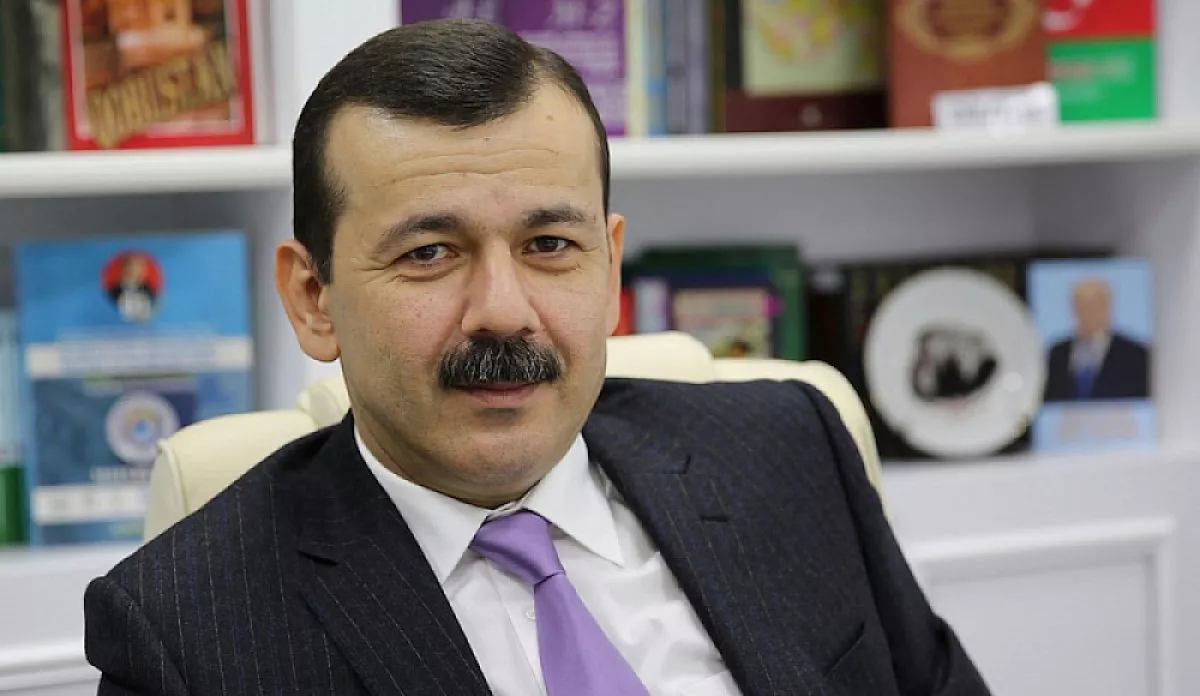
Political commentator Murad Sadaddinov, in turn, described Section 907 as one of the most absurd legislative initiatives in the history of the U.S. Congress.
“Adopted more than 30 years ago, it emerged at a time when 20 per cent of Azerbaijan’s territory was under Armenian occupation, while more than one million Azerbaijanis had become refugees and internally displaced persons. Despite this, it was Azerbaijan that was accused of blockading Armenia, which for decades became a factor hindering the development of bilateral relations.
Although the amendment formally remains in effect, U.S. presidents have repeatedly waived its application when this was required by the national interests of the United States. Thus, after the events of September 11, Azerbaijan played an important role in supporting U.S. operations in Afghanistan. Today, the application of the amendment has also been suspended by a decision of President Donald Trump.
The complete repeal of this relic of the past would remove a psychological barrier in relations and serve as a signal of Washington’s readiness to build cooperation taking into account the current realities of the South Caucasus. Azerbaijan’s growing role as a key link in the Middle Corridor and a guarantor of the security of energy routes makes the country an important partner for the United States.
This would create additional opportunities for cooperation in the security sphere — from border protection and counterterrorism to cybersecurity — as well as contribute to the expansion of economic and investment projects in the digital economy, artificial intelligence, renewable energy, agriculture, and logistics. Projects of the Southern Gas Corridor, including TANAP and TAP, which are of strategic importance for Europe’s energy security, would also receive additional momentum,” the expert noted.
According to Sadaddinov, the main obstacle to the final repeal of the amendment remains the influence of the Armenian lobby in the United States.
“Over the course of decades, Armenian organizations have created a sustainable system of influence in Congress, where support for their position has become part of domestic politics for many lawmakers.
Additional challenges are created by the confrontation between Republicans and Democrats, as well as the desire of some members of Congress to preserve the amendment as a tool of pressure.
At the same time, today the most favorable conditions have emerged for its final repeal. The realities of the South Caucasus have changed: the peace agenda between Azerbaijan and Armenia is coming to the forefront, while key agreements have been reached with the support of the White House. Under these circumstances, maintaining Section 907 causes reputational damage primarily to the United States itself,” Sadaddinov concluded.







 editor@caliber.az
 +994 55 444-88-98
 Азербайджан, Баку, ул. Низами, 203, Af Business House, 5-й этаж