










Ankara 2026: Can NATO change the course of the Ukraine conflict? Expert opinions on Caliber.Az
Recently, a telephone conversation took place between Ukrainian President Volodymyr Zelenskyy and Donald Trump. During the call, the Ukrainian leader thanked the United States for its support in safeguarding the country's sovereignty and congratulated his counterpart on the United States' Independence Day. The two leaders discussed the situation on the battlefield and possible diplomatic steps toward bringing the military conflict to an end.
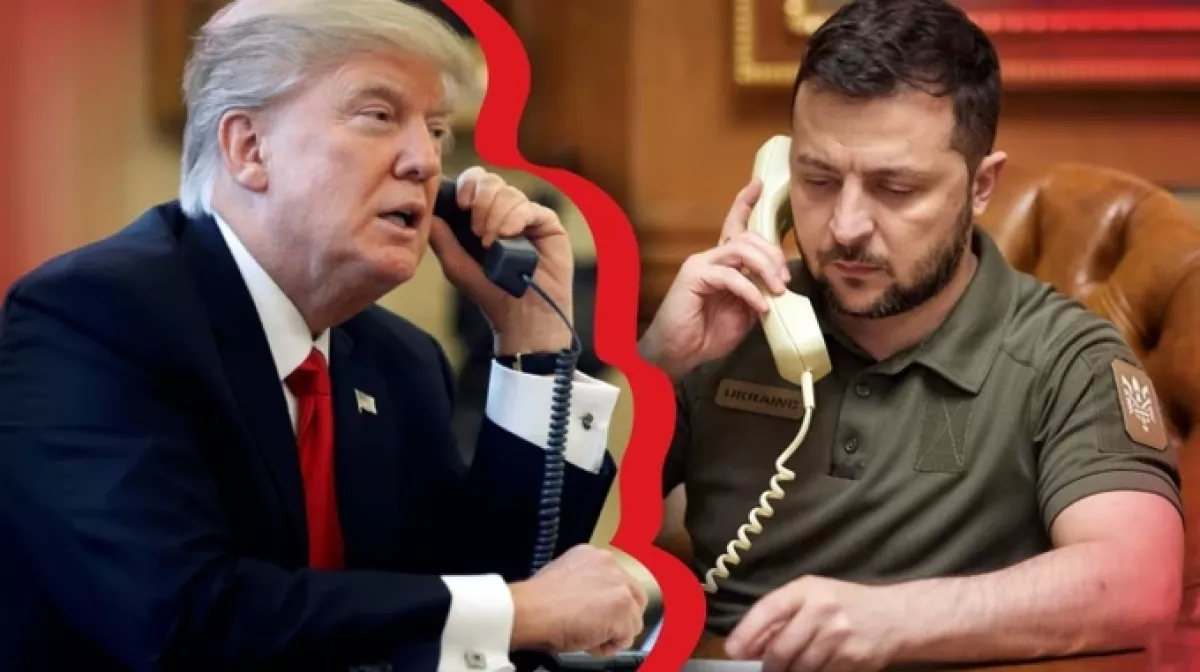
President Zelenskyy expressed optimism about the prospect of achieving peace in the near future, emphasising that the key factor in this process would be the firmness of the United States’ position.
Further discussions on these issues are scheduled to take place at the NATO Summit in Ankara on July 7–8. The Turkish side has confirmed that Ukraine will be one of the central topics on the agenda of the meeting of representatives from the Alliance’s 32 member states. In addition, NATO leaders intend to discuss defence spending, deterrence strategy, and emerging security challenges across the Euro-Atlantic region.
Which aspects of the Ukraine agenda are likely to be addressed in Ankara? Are there objective grounds to believe that the fighting could come to an end in the near future? Why are Washington’s political will and determination regarded as the decisive factor in resolving the current crisis?
Well-known Ukrainian political commentators shared their views on these questions with Caliber.Az.
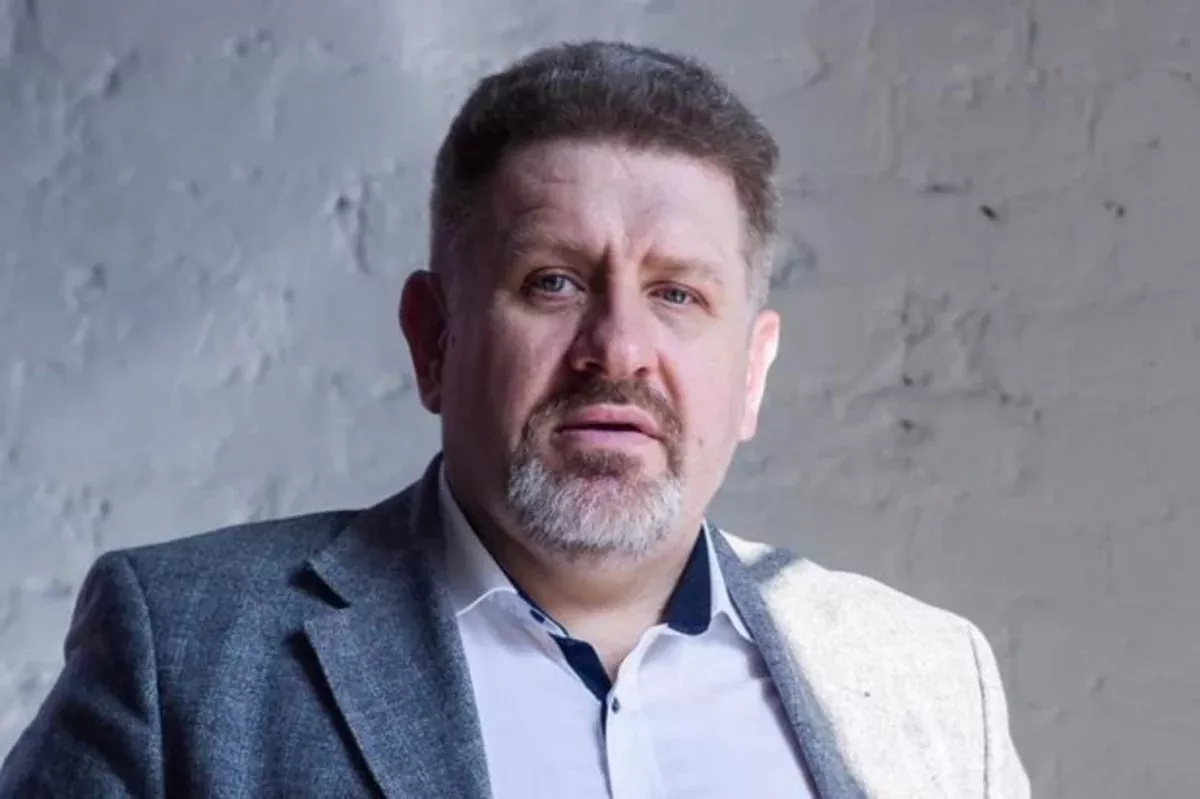
Konstantin Bondarenko, head of the “Ukrainian Politics” Foundation, political analyst, and historian, believes that talks in Ankara may include the possible supply of missiles for Ukraine's air defence systems, as well as the allocation of funds for their procurement.
“Volodymyr Zelenskyy is very much hoping to persuade Donald Trump to adopt a position aligned with that of the Europeans—that is, to restore U.S. pressure on Russia. He wants to demonstrate that Ukraine continues to hold the advantage on the battlefield and that the main priority today is protecting Ukrainian cities and defence industry facilities from Russian strikes. For Kyiv, it is crucial that Trump support the Ukrainian side and approve funding for military expenditures. That is precisely why Zelenskyy is travelling to Ankara.
To sustain a certain perception, Ukraine is doing everything possible to deny the loss of Kostiantynivka in the Donbas, to downplay the scale of the problems facing the Ukrainian Armed Forces, and to create the impression of success on the battlefield.
It is clear that Trump has his own intelligence services, which provide him with more accurate information. However, if there is sufficient political will in Washington, Trump—as he has done on more than one occasion—may choose to support and publicly endorse Zelenskyy’s version of events,” the analyst believes.
According to him, that alone would constitute significant assistance for Kyiv.
“There is no basis for talking about a cessation of hostilities at this point. The Ukrainian side refuses to withdraw from the Donetsk region, even though the situation there is objectively extremely difficult: Ukraine now controls just over 10 per cent of the region’s territory. The capture of Kostiantynivka could lead to the fall of neighbouring Druzhkivka, the principal logistics hub, the loss of which would significantly complicate the situation for Kramatorsk and Sloviansk.
President Vladimir Putin has hinted that ending the war along the administrative borders of the Donetsk and Luhansk regions was an option last summer, but that the threshold of Russia’s demands may now be higher. Dmitry Peskov’s statement that this is no longer a ‘special military operation’ but ‘a real war’ was interpreted by many as a signal that Russia may be prepared to carry out a full-scale mobilisation and pursue broader objectives.
Both Ukraine and Europe understand that there are currently only two powers capable of influencing Russia—the United States and China. That is why Zelenskyy and European leaders are seeking to bring Trump over to their side and secure his support for Ukraine. However, it appears that Trump will remain true to himself: he will say just enough to avoid saying anything definitive, once again leaving everyone to search for meaning in words that contained none to begin with,” Bondarenko said.

Political analyst, Doctor of Political Science, and professor at Taras Shevchenko National University of Kyiv, Petro Oleshchuk, stated that the key issues on the agenda of the Ankara summit would be strategic support for Ukraine, primarily the approval of a large-scale military assistance package covering the next one to two years.
“Certain disagreements among the partners on this issue remain, but a vote is expected on a substantial package of commitments for military support to Ukraine in the near term. This is expected to become one of the main outcomes of the NATO summit from Ukraine’s perspective.
In this context, talks are planned between President Zelenskyy and Trump, during which the role of the United States as a mediator in negotiations between Ukraine and Russia will be discussed.
At present, Putin is counting on maintaining pressure on Ukraine, so there are currently no grounds for believing that the war could end in the near future.
Washington's political will is of critical importance because, alongside China, the United States is the only global power whose opinion truly matters to Putin—a point he himself has repeatedly emphasised. He pointedly dismisses Europe and denies it strategic agency, whereas he cannot afford to take the same approach toward the United States.
We are now seeing attempts to return to the ‘spirit of Anchorage’ and to the understandings that Putin believes were reached previously. In this way, he seeks to underscore the importance of the American factor and draw Trump over to Russia’s side, encouraging him to share Moscow’s interpretation of events. At the same time, Trump has the means to exert influence over Putin, but so far he has not made full use of them,” the professor recalled.
According to the professor, Trump had previously sought to engage with Putin primarily on the basis of business interests and mutually beneficial agreements.
“However, it is clear that he could employ far more powerful instruments of pressure, which have so far remained unused. A great deal depends on the position adopted by the U.S. president in the current situation.
In conclusion, it can be said that Ukraine has significantly strengthened its position by carrying out medium-range strikes—attacks at distances of approximately 30 to 200 kilometres—and by triggering a fuel shortage within Russia. In response, Russia has intensified its attacks on Ukraine’s civilian population and civilian infrastructure.
The situation continues to escalate, and at this critical juncture Ukraine is counting on the support of its Western partners in strengthening its air defence capabilities and supplying missiles for the Patriot air defence systems.
If the Kremlin could be deprived of what has become its principal instrument of pressure—the indiscriminate shelling of civilian populations—it could significantly accelerate the end of the war. That is the strategy on which the greatest hopes are now being placed. However, it remains unclear whether any tangible progress in this direction will be achieved at the NATO summit,” Oleshchuk concluded.







 editor@caliber.az
 +994 55 444-88-98
 Азербайджан, Баку, ул. Низами, 203, Af Business House, 5-й этаж