










The “King of the North” and a socialist: can Burnham restore Britain’s former glory? Expert opinions on Caliber.Az
Labour Party politician Andy Burnham's arrival at 10 Downing Street came as the result of sweeping changes within the party. Against the backdrop of Keir Starmer's declining approval ratings, Burnham staged a remarkable political comeback, winning the Labour leadership contest and forming a new government of the United Kingdom.
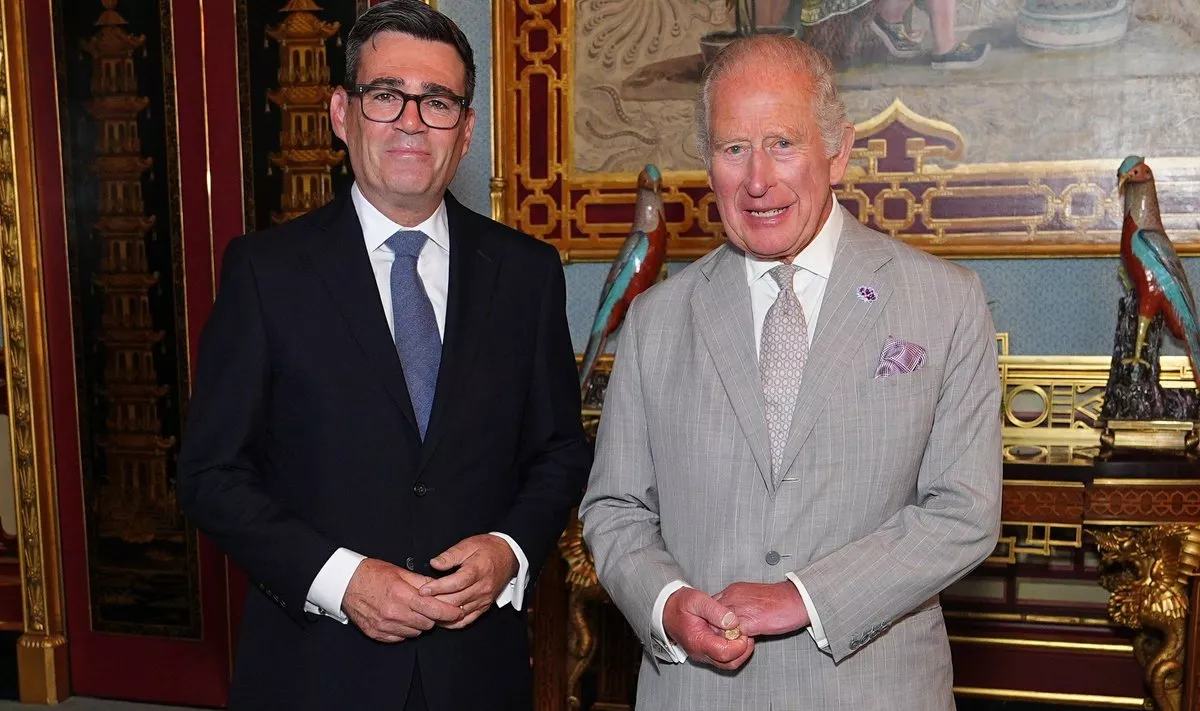
Before reaching this landmark moment in his political career, Burnham served as Mayor of Greater Manchester for nine years. His uncompromising defence of the interests of England's regions against the London-based central government during the COVID-19 pandemic, coupled with his sharp criticism of the Conservative governments led by Boris Johnson and Rishi Sunak, earned him the nickname “King of the North” in both the media and among the public. Bringing extensive experience from the national stage—having served first as Secretary of State for Culture, Media and Sport and then as Health Secretary in Gordon Brown's government in the late 2000s—Burnham, a representative of Labour's so-called “soft left” wing, has pledged to pursue a programme of radical devolution.
The new prime minister's agenda includes granting broader powers to the regions, launching a large-scale programme of municipal housing construction, and placing key water and energy companies under tighter state control. In foreign policy, Burnham has largely signalled continuity with Starmer's approach. During his first telephone conversations with Donald Trump and Volodymyr Zelenskyy, he reaffirmed Britain's unwavering commitment to the transatlantic alliance and its continued comprehensive support for Ukraine.
But how is the new British prime minister's agenda viewed by the expert and analytical community? Will he succeed in leading the country out of its political and economic crisis and live up to the trust placed in him by the British public? Foreign political analysts share their views with Caliber.Az.

British political analyst Neil Watson believes that, at present, the British public is seeking stability and a higher standard of living, and that Burnham has found himself, as the saying goes, in the right place at the right time.
“The new prime minister plans to present his ten-year development plan for the United Kingdom somewhat later, fully aware that the first priority is to address the cost-of-living crisis affecting the population. This should reassure middle- and working-class voters who recently demonstrated support for Nigel Farage’s far-right Reform UK party. I do not believe that a rapid return of the United Kingdom to the EU is possible; however, Burnham will continue Starmer’s course of developing more constructive relations with Brussels, which should help resolve taxation issues.
Overall, in my view, the new prime minister will attempt to change the direction of Britain’s development, resolve most of the economic problems, and reduce political instability. As for foreign policy, it is unlikely to differ significantly from Starmer’s approach, with its distancing from the United States and pragmatic attitude towards partners such as Azerbaijan,” Neil Watson said.

Irish political analyst and historian Patrick Walsh, for his part, believes that Andy Burnham’s appointment as Prime Minister of the United Kingdom is essentially an attempt by the political establishment to restore stability in the country.
“The current British political elite is highly competent and, having been in power since 1688, has transformed the United Kingdom into the most successful political system in the history of the Kingdom. Burnham is the British establishment’s response to the threat of a Reform UK government, which the British elite views as potentially incompetent and, overall, a disaster for the state. Burnham’s tasks also include preventing the formation of a coalition government or the introduction of a proportional electoral system — two factors that could weaken the cohesion and strength of the British state,” he said.
According to the political analyst, the only things that truly matter are the integrity of the United Kingdom and the party system that ensures the stability of this mechanism, as British parliamentary politics is merely a game unfolding against the backdrop of this fundamental structure.
“It was obvious that Starmer would lose the general election. He served a purpose by removing the left-wing Jeremy Corbyn from the leadership of the Labour Party, but he proved ineffective in governing the country.
At the same time, the United Kingdom has a highly effective stabilising mechanism — backbench MPs who fear losing their seats in elections; there are more than 300 of them in the Labour Party. Starmer’s huge parliamentary majority actually worked against him and did not help him in terms of assessing his performance as prime minister, which ultimately delivered a fatal blow to his leadership. The British system is highly effective at removing incompetent leadership. The Labour government is now undergoing renewal, and the British establishment, including the intelligence services and the media, fully supports this process,” he said.

The expert also believes that there will be some minor changes in British foreign policy, with a socialist inclination becoming more noticeable, as the foreign secretary is now Ed Miliband, the son of renowned Marxist scholar Ralph Miliband.
“Regarding priorities, it can be said that the new government will most likely pursue a course of distancing itself from Israel, which is driven by the country’s unpopularity among Labour Party supporters. Support for Ukraine is likely to remain unchanged, although developments in Kyiv could alter the situation. As for Brexit, this issue is currently too sensitive, and resolving it will be extremely difficult.
Domestically, this will be a more socialist government, as Starmer represented the right wing and was essentially a liberal, while Burnham is more of a municipal socialist.
Ordinary Britons are placing their hopes in Burnham, which is highly significant. Over the past 10 years, seven prime ministers have come and gone — an unprecedented record of failures and something entirely un-British. Burnham will attempt to shift Britain to the left and win back working-class voters who have moved to Reform UK, the Green Party, or Scottish nationalists. He will seek to secure a Labour majority in the next election, and a significant portion of the British public hopes he will succeed,” Walsh concluded.







 editor@caliber.az
 +994 55 444-88-98
 Азербайджан, Баку, ул. Низами, 203, Af Business House, 5-й этаж