










European deadlock: Where will the new anti-Georgian OSCE resolution lead? Georgian experts to Caliber.Az
Recently, relations between the European institutions and Georgia have been characterised by an extremely negative atmosphere, as evidenced by the anti-Georgian resolutions adopted by European bodies with striking regularity.
Another example of this state of affairs was the Hague Declaration adopted by the OSCE Parliamentary Assembly at its session on July 8. The document includes a resolution prepared by U.S. Congressman Joe Wilson, which, among other things, expressed concern over the conduct of the parliamentary elections in Georgia on 26 October 2024, noting that “the OSCE Office for Democratic Institutions and Human Rights [ODIHR] observation mission highlighted significant irregularities,” as well as noted “obstruction of opposition observers at polling stations during the October 2025 local elections.”
In addition, the document once again criticises Georgia for its alleged democratic shortcomings and restrictions on freedom of assembly. In protest, the Georgian delegation walked out of the OSCE PA session in The Hague. According to the head of the Georgian delegation, Georgian MP Nikoloz Samkharadze, the declaration contains provisions that distort the country's political reality.
Commenting on the developments, Georgian MP Guram Macharashvili stated that “unfortunately, in today’s world, the authority and significance of most international organisations have virtually disappeared... A significant number of these organisations play an extremely negative role for independent states, including Georgia.”
How do independent experts and political analysts assess this latest anti-Georgian document? Georgian analysts shared their views on the issue with Caliber.Az.
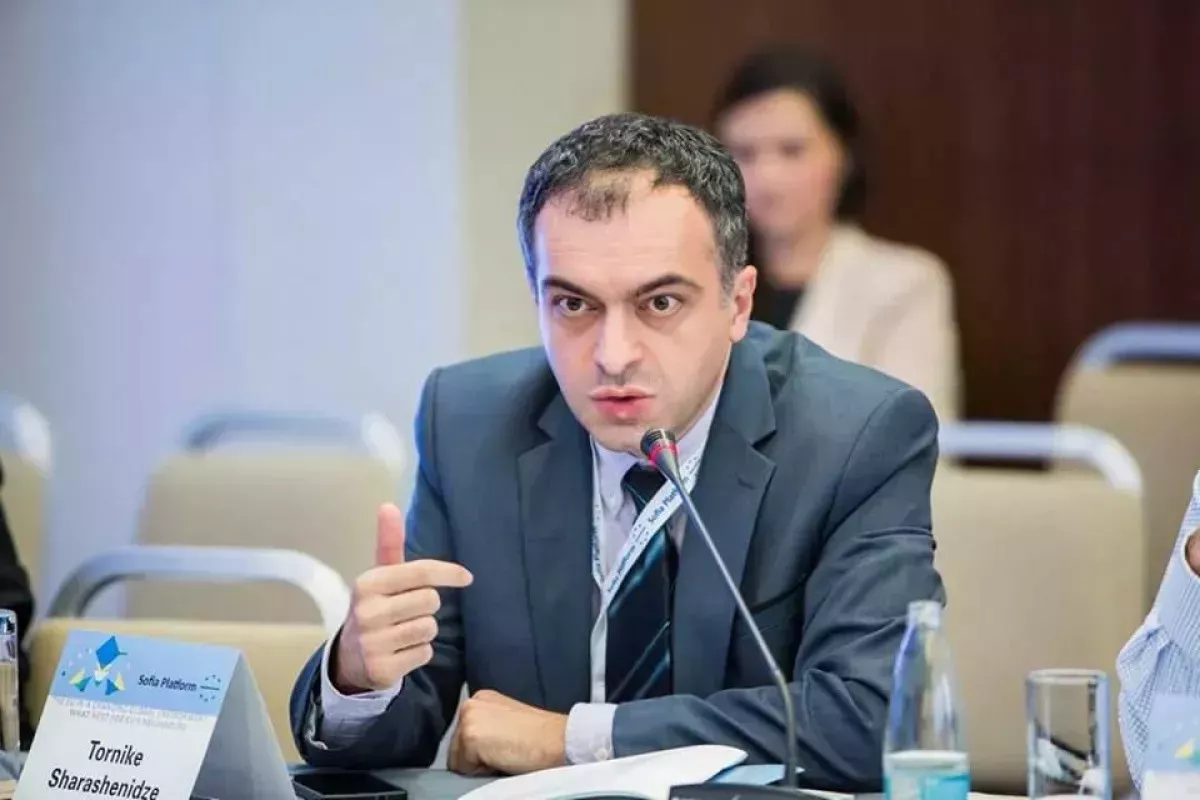
Head of the School of International Relations at the Georgian Institute of Public Affairs, Professor Tornike Sharashenidze, noted that the process of pressure on Georgia in Europe is continuing by inertia, and that the Georgian delegation to the OSCE Parliamentary Assembly had no particular illusions about it.
“Joe Wilson, the author of this latest anti-Georgian document, has been a highly consistent critic of Tbilisi, and he has no intention of softening his approach—apparently, he has influential connections and backers.
At the same time, in Europe today, the tendency to adopt political decisions directed against Georgia and the ruling Georgian Dream party has already become what I would call a fashionable political trend. It has little logic or substance, yet it persists, and there is no end to it in sight. This new anti-Georgian resolution will change nothing in Georgia’s political life and will only lead to a further deterioration of relations with Europe.
Tbilisi may even suspend its cooperation with the OSCE, although, in my view, that would amount to self-isolation, and such an approach is highly undesirable. One can only hope that, at some point, the Old World will come to its senses, stop churning out odious verdicts, and return to the negotiating table and dialogue—there is simply no other way,” Sharashenidze said.

For his part, international affairs expert Giorgi Gogua emphasised that the document adopted by the OSCE Parliamentary Assembly contains a broad range of critical assessments of Georgia.
These include criticism of the 2024 parliamentary elections, a negative assessment of the Law on Transparency of Foreign Influence, and a number of other legal provisions which, in the Europeans’ view, restrict citizens’ rights to freedom of assembly, freedom of expression, and media freedom.
“The resolution adopted by the OSCE was, naturally, met with a sharply negative reaction in Georgia. However, Tbilisi had, in principle, been prepared for such a development, and representatives of the Georgian Dream party had been boycotting sessions of the OSCE Parliamentary Assembly for more than a year in protest.
Thus, as we can see, expectations that the OSCE was preparing to adopt another anti-Georgian document had existed for quite some time. Among other things, this resolution further complicates the fragile negotiation process between Georgia and the European Union.
At the same time, however, there are still positive expectations amid the European Union’s interest in the Middle Corridor and transit routes to China. In particular, the Georgian authorities believe that, given its geostrategic location, the country is an important partner for the European Union in this context.
Thus, Georgia’s transit potential is becoming something of a carte blanche for Tbilisi in its efforts to revive relations with the European Union. Overall, however, the prospect of resetting ties with the European Union is not yet visible at this stage, although such a possibility still remains,” Gogua concluded.







 editor@caliber.az
 +994 55 444-88-98
 Азербайджан, Баку, ул. Низами, 203, Af Business House, 5-й этаж