










US boots on the ground in Iran: how realistic is this? Expert opinions on Caliber.Az
A U.S. ground operation in Iran is expected to begin in December. This was stated in an interview on the Piers Morgan Uncensored podcast by Chinese-Canadian professor Jiang Xueqin.
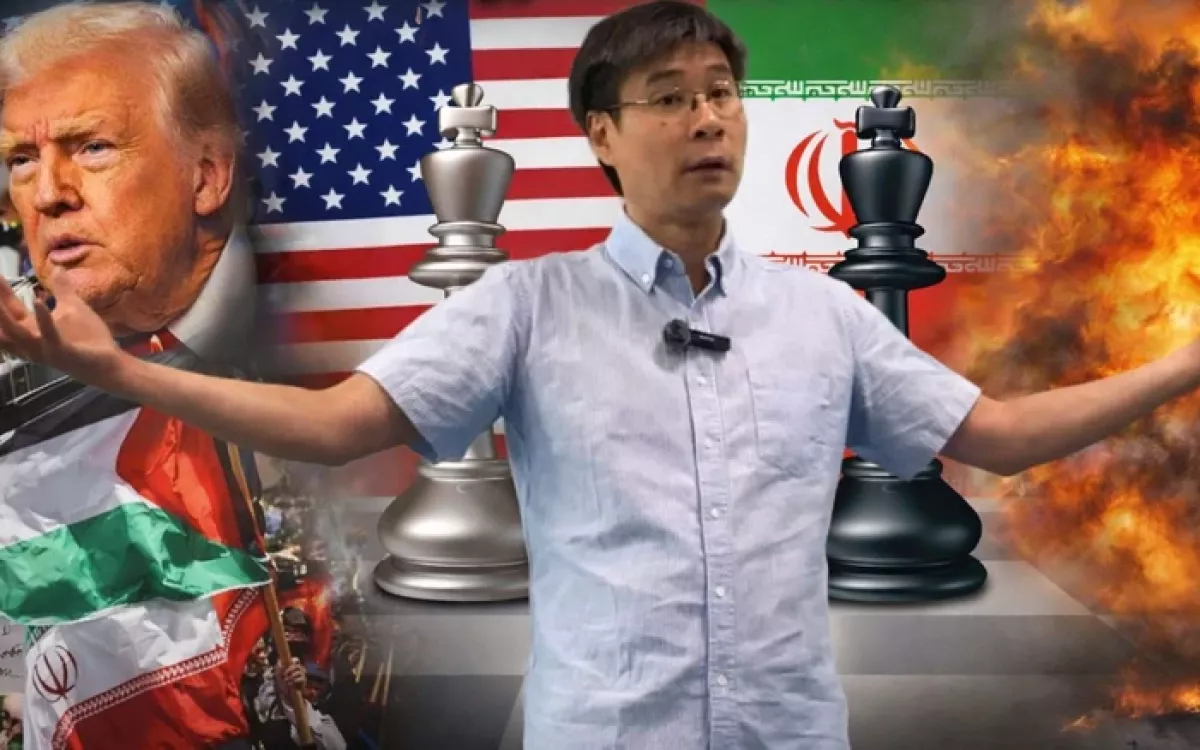
“Boots on the ground would be a disaster, but I still believe that eventually the United States will be forced to use boots on the ground. In fact, you can argue that there's been a lot of preparation. You still have 660,000 American troops ready to go. They are staged and ready to go. And even though there's an MoU, they're still there,” the professor said.
According to him, it can be assumed that the United States is trying to buy time, as it is currently too hot in Iran.
“Right now it's really hot in Iran. And so you have to wait for cooler weather before you can launch a ground invasion. And so I think we are on a waiting game right now, but eventually you will see boots on the ground,” he said.
He added that the deadline for a possible U.S. invasion of Iran is March next year.
“It could be as early as December,” the professor concluded.
Is it possible that the confrontation between the United States and Iran will last that long? And more importantly, would the Americans really decide to deploy a large military contingent into Iran during winter? What could such a large-scale ground operation lead to?
Experts shared their assessments of the situation with Caliber.Az.

Professor of Political Science and International Relations at the University of Tennessee (USA), Andrei Korobkov, believes that the main reason for the termination of the operation by Donald Trump’s administration was domestic economic factors.
“The fact is that gasoline prices increased by more than one and a half times. They were at 2 dollars 94 cents per gallon at the end of December and surged to 4 dollars 58 cents at the peak of the operation. This dealt a severe blow to the Republicans’ electoral prospects.
The rise in gasoline prices by one and a half times during the operation significantly worsened the position of Republican candidates. This became a problem not only for them but also for the administration, since losing a majority in even one chamber of Congress would have obstructed Trump’s legislative agenda and could have led to a third impeachment attempt. It was internal economic consequences, rather than foreign policy considerations, that forced the administration to make humiliating concessions and agree to the compromise reached. This was possible because Trump is an unconventional politician capable of presenting a situation as a victory even where, in reality, there was a significant blow to the prestige of the White House.
Nothing significant will happen before the November elections, as any attempt at a forceful solution would trigger another spike in oil prices. The administration’s further actions after the elections remain unclear: Trump has already recognised the domestic political risks of military solutions and understands that initial plans have not worked out. The administration will be guided by the balance of power in Congress. Both a return to a military scenario and a shift toward compromise—along with a refocusing on other regions—are possible, as none of the administration’s three objectives has been achieved,” the professor noted.
The objectives, according to him, were: the elimination of Iran’s nuclear programme, regime change in Tehran, and the displacement of China from the Persian Gulf.
“In the end, Iran retained its missile programme, the regime proved its resilience, and China’s position only strengthened amid the humiliation of the United States. Weakening China remains Washington’s key strategic objective and a new reality that will persist beyond Trump. The perception of Iran as a hostile power will also remain, but any new military operation would require far more serious preparation and significantly greater resources than at the beginning of 2026.
It cannot be stated with certainty that the administration will return to full-scale combat operations or the use of ground forces. Most likely, missile strikes will continue, accompanied by statements of ‘great victories’. However, the danger of being drawn into a prolonged ground war along the lines of Vietnam, Afghanistan, or Iraq makes the prospects of such a scenario highly uncertain,” Korobkov believes.

Geopolitics expert Sahil Isgandarov noted that the logic of commentators predicting the start of a U.S. ground military operation against Iran is quite understandable.
“The current stalemate in relations between Washington and Tehran cannot continue indefinitely, as it seriously undermines the international image of the United States. To date, the U.S. has not achieved any of its stated objectives in the ongoing confrontation, including the outcome of last year’s twelve-day war.
The issue of Iran’s nuclear programme remains a stumbling block, but it is only one aspect of the problem. The main drivers are the geopolitical goals of the United States and its strategic ally — Israel — in the Middle East. Many experts link a possible escalation to December, referring to the results of the U.S. congressional midterm elections and gubernatorial elections in November.
The election results will show whether Donald Trump will be able to launch a new armed conflict. At the same time, the goal of regime change in Iran will remain relevant for any U.S. administration — whether Republican or Democratic,” the political analyst said.
However, he believes a direct U.S. ground invasion of Iran is unlikely due to enormous material and human costs.
“Iran is a ‘deep state’ and an empire with a 4,000-year history, which cannot be compared to Venezuela, Iraq, or Libya. A ground operation of such scale would be extremely dangerous for the United States and would not guarantee success.
There is a risk of losing significantly more U.S. personnel in Iran than during the Vietnam War.
Instead of a direct invasion, the United States is more likely to try to use the proxy card — Kurdish insurgents in Syria and various groups inside Iran itself. Donald Trump has previously acknowledged arming Syrian Kurds, although he noted that it did not produce the expected results. It is important to consider that Iranian society is united around the ideological foundations of the theocratic regime. Despite internal grievances toward the authorities, the population of Iran quickly consolidates in the face of an external threat. Ultimatums and attempts to impose a leader favourable to the West from outside only strengthen the ‘external enemy’ effect, which works against Tehran’s opponents.
The prospects for reaching a compromise on the nuclear programme or the situation in Lebanon within the next two months are viewed with scepticism. Israel ignores the provisions of memorandums of understanding, continuing to carry out strikes on Syrian territory and maintaining its plans regarding Hezbollah.
The conflict in the triangle of the United States, Iran, and Israel will be long-lasting, as its causes are linked not only to the nuclear programme but also to deep geopolitical contradictions. Moreover, the Iranian issue directly affects the interests of China and Russia, which will not allow for a quick resolution. Unfortunately, the international community is likely to witness even more dangerous stages of this confrontation,” Isgandarov believes.







 editor@caliber.az
 +994 55 444-88-98
 Азербайджан, Баку, ул. Низами, 203, Af Business House, 5-й этаж