










Israel, Lebanon… and Hezbollah as a stumbling block Expert Opinions on Caliber.Az
The normalisation of relations between Israel and Lebanon is possible on the condition that Hezbollah is pushed out of the country's south, the New York Post reports, citing an interview with Israel's Permanent Representative to the United Nations, Danny Danon.
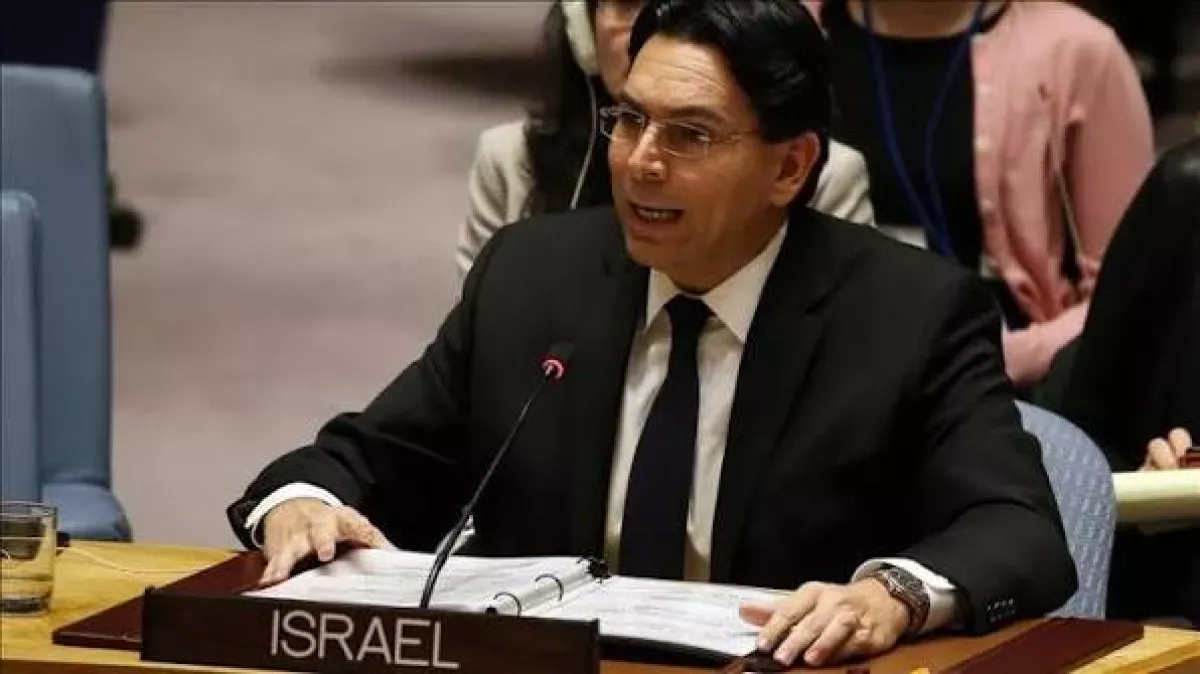
"If Lebanon succeeds in pushing Hezbollah from the country’s south and reestablishing government control over its territory, normalization with Israel is no longer out of the question,” the publication quoted the diplomat as saying.
According to Danon, Israel has already begun a phased withdrawal of its troops from certain areas of southern Lebanon, expecting them to be replaced by the Lebanese Armed Forces with U.S. support. He emphasised that Israel has no interest in maintaining a permanent military presence in the neighbouring country.
“We will be very happy to see normalization — even seeing them joining the Abraham Accords,” the Israeli envoy added.
On June 26, Israel and Lebanon, with U.S. mediation, signed a framework agreement in Washington providing for Israel to retain a security zone in southern Lebanon and for the complete disarmament of Hezbollah.
Hezbollah Secretary-General Naim Qassem stated that any agreements with Israel could not be implemented because, in his view, the negotiation process itself “has no legal or constitutional basis.”
How realistic are the plans of Israel and the official authorities in Beirut under these circumstances? Will Hezbollah submit to the Lebanese Army? Will it withdraw from at least the southern part of the country?
Renowned regional experts shared their views on these questions with Caliber.Az.
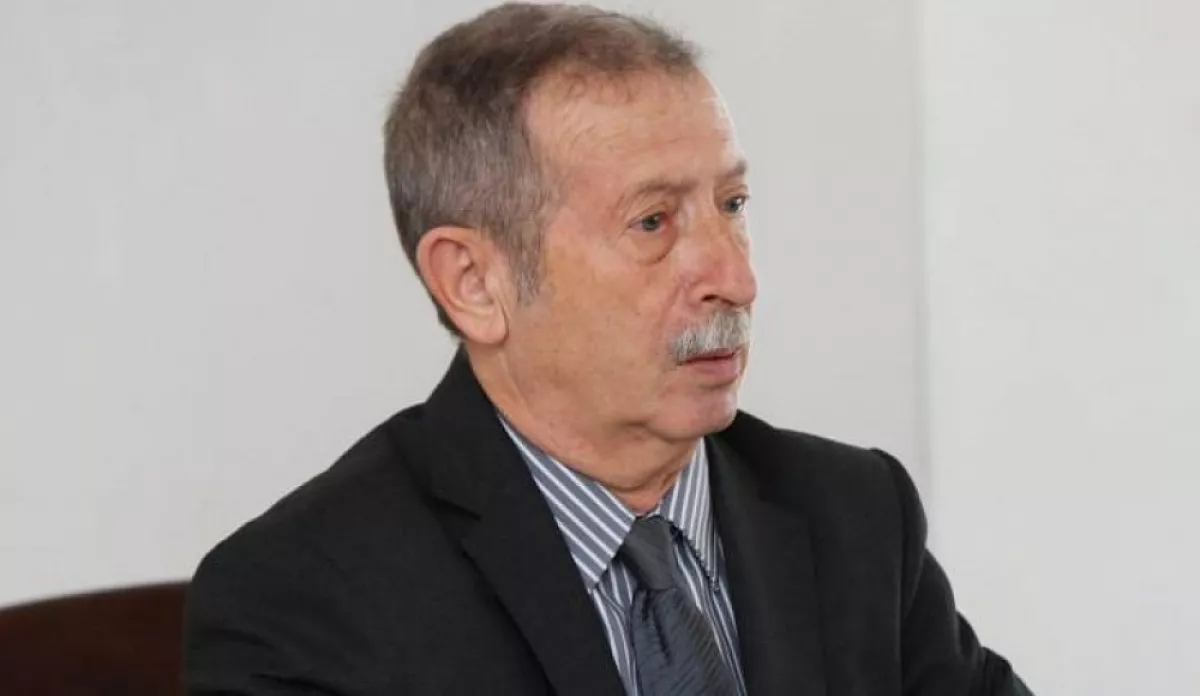
Dr. Vladimir Mesamed of the Institute of Asian and African Studies at the Hebrew University in Jerusalem noted that, for Israel, the issue of stabilising the situation along its northern border with southern Lebanon is of fundamental importance.
“This is important for us for another reason as well: northern Israel is one of the country's key agricultural and industrial regions. It is home to numerous kibbutzim and moshavim that produce a significant share of Israel's agricultural output and supply food to the northern industrial areas, including the vicinity of Haifa.
Therefore, ensuring security and restoring normal life in the north of the country is of paramount importance for Israel. This is especially true given that, in recent years, the cities and kibbutzim in the region have been subjected to regular shelling. This includes Kiryat Shmona, Nahariya, Shlomi, and other communities.
Moreover, the situation in the north remains the subject of intense political debate within Israel. Many residents believe that the government has not done enough to eliminate the threat emanating from southern Lebanon.
This problem has existed for decades. Both the First and Second Lebanon Wars were also aimed at ensuring the security of Israel's northern regions. However, the issue of Hezbollah has consistently remained—the group's role as Iran's principal proxy force, established after the Islamic Revolution.
Hezbollah continues to be the main obstacle to peace along Israel's northern border and to the normalisation of relations with neighbouring countries.
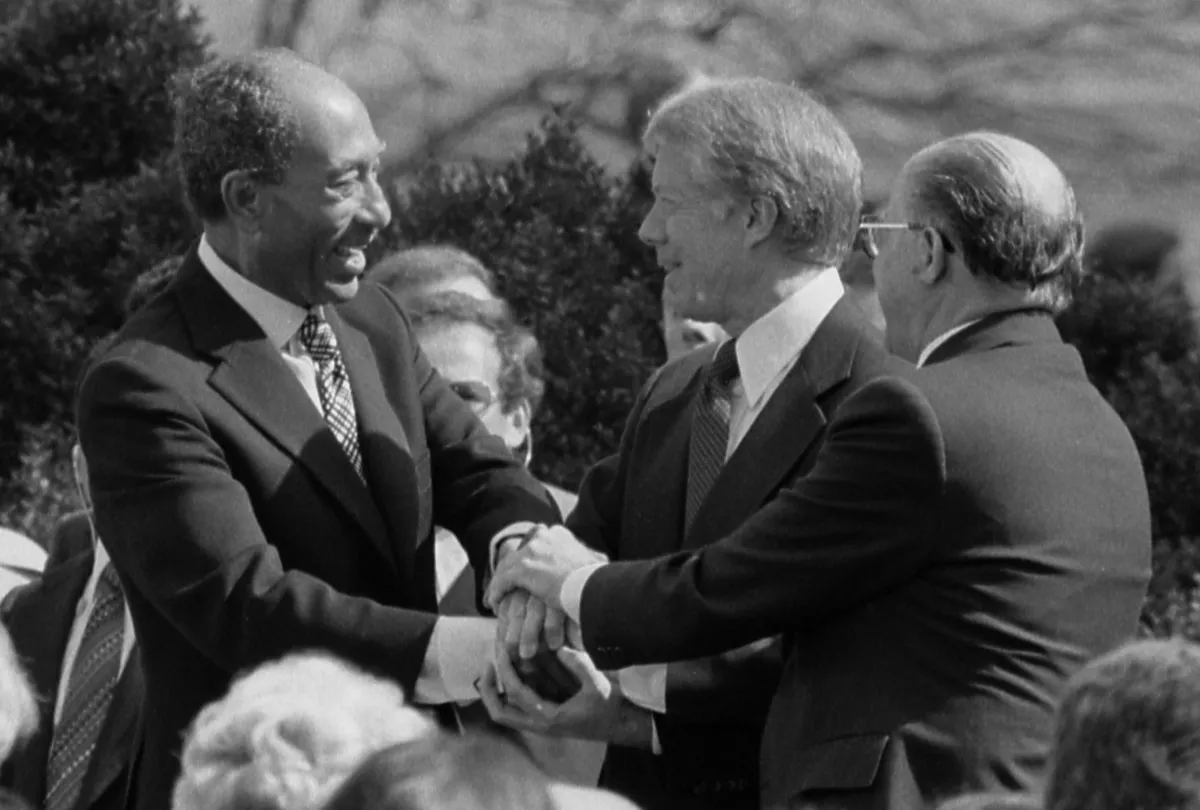
Since its founding, Israel has sought to establish relations with its neighbours. While a peace treaty with Egypt was signed as early as the late 1970s, the northern front has remained the most challenging, as Israel faces forces committed to its destruction.
Following the 1979 Islamic Revolution, Iran made the struggle against Israel one of its foreign policy priorities, using Lebanon as a platform for exporting the Islamic Revolution.
Ayatollah Ruhollah Khomeini regarded interference in the internal affairs of other states as permissible when it served the fight against an enemy. It was under these circumstances that Hezbollah emerged as a military and political organisation representing Lebanon's Shiite community.
Lebanon has a highly diverse confessional makeup, with Maronite Christians, Sunni Muslims, Druze, and Shiites living side by side. It was the Shiite community—considered the closest to Iran in religious terms—that Tehran chose to support in the late 1970s and early 1980s, viewing it as its principal instrument of pressure against Israel.
At that time, the Shiites were Lebanon's poorest and most socially marginalised community. Tehran sought to transform the country into a stronghold for exporting the Islamic Revolution and to establish, in Shiite-populated areas, a state entity modelled on the Iranian system.
Lebanon's political system, established under the 1943 National Pact, allocated the country's highest state offices along confessional lines: the president had to be a Maronite Christian, the prime minister a Sunni Muslim, and the speaker of parliament a Shiite Muslim. Despite their growing population, the Shiites remained the least influential community, giving rise to a movement calling for a redistribution of political power.
The movement was led by Mūsá Ṣadr, who was related to Ayatollah Khomeini through his maternal lineage. In 1975, he founded Harakat al-Mahrumin (The Movement of the Deprived), with its armed wing, Amal. Following the 1979 Islamic Revolution, the ties between Lebanon's Shiite community and Tehran grew even stronger, and Iran established direct patronage over them. Musa al-Sadr himself disappeared under mysterious circumstances in Libya in 1978.
For Iran, Lebanon became a platform for exporting the Islamic Revolution, whose primary objective was the struggle against Israel and the ‘liberation of Palestine.’ Owing to their proximity to the Israeli border, the Shiite areas of southern Lebanon became the front line of this strategy.
Tehran began investing heavily in the region. Agriculture, education, and social infrastructure were actively developed. The first schools established with Iranian support followed Iranian curricula, strengthening Tehran’s influence among the local Shiite population.
By 2003, during Iranian President Mohammad Khatami’s visit to Lebanon, the country’s Shiite areas had become among the most developed regions in Lebanon. The Lebanese central government even approached Iran to seek assistance in implementing similar development projects for other communities.
As a result, Hezbollah evolved into Lebanon’s principal military and political force,” the expert continued.
“The security of Israel’s northern border remains the central issue in any effort to resolve the conflict. Until 2000, a security zone existed in southern Lebanon, where Israeli forces and the Israel-aligned South Lebanon Army were stationed. However, it was dismantled under pressure from Lebanese society.
Today, Israel links its security to the disarmament of Hezbollah. However, the Lebanese Armed Forces are significantly inferior to Hezbollah in terms of training and weaponry and are therefore not in a position to confront the group.
At the same time, many people within Lebanon recognise the need to disarm Hezbollah. The main challenge is that a substantial portion of the Lebanese Army consists of Shiites, for whom an armed confrontation with their co-religionists would pose a profound dilemma.
For this reason, efforts to strengthen the Lebanese Armed Forces continue with U.S. support. The process is progressing slowly, but in the long term the army is expected to become a force capable of safeguarding the country's sovereignty.
Some of the agreements are already being implemented. As the Lebanese government's security forces grow stronger, opportunities will emerge to carry out the agreements reached between Israel and Lebanon.
The ultimate objective remains the mutual recognition of the two states, which could provide fresh momentum for normalisation in the Middle East and the expansion of the Abraham Accords.
Mutual recognition has the potential to transform the Middle East from a region of confrontation into one of cooperation. Such a scenario appears logical, although its realisation will depend on a wide range of political and military factors,” Vladimir Mesamed concluded.

Deputy Director of the Kyiv-based Association of Middle East Studies, Serhii Danylov, said that, technically, the process is already underway and has even entered a new phase.
“A U.S. official has stated that Lebanon and Israel have entered the implementation phase of the agreement brokered by the United States, which provides for the disarmament of Hezbollah.
The first pilot zone is expected to become operational within the next few days, while the next round of U.S.-mediated negotiations will take place in Rome.
However, the key challenge remains unchanged: Lebanon must either seize this window of opportunity to disarm Hezbollah and restore state sovereignty, or accept that a significant part of the country's south will remain beyond the government's effective control.
Will Hezbollah submit to the authority of the Lebanese Armed Forces? South of the Litani River, the Lebanese Army has indeed completed the first phase of its operation. It now controls the territory south of the river, with the exception of areas that remain under Israeli control.
According to Al Jazeera, Hezbollah did not obstruct the army's actions during this phase. North of the Litani, however, the situation is different: the movement has refused to cooperate with plans for implementing the second phase of the operation.
According to analysts close to Hezbollah, if the Lebanese authorities and the military command attempt to disarm the movement north of the Litani, they will face resistance not only from Hezbollah itself but also from a significant portion of the Shiite community.
They argue that many Lebanese Shiites currently fear both Israel and Syria and view Hezbollah as the force capable of protecting them. In other words, either an attempt to disarm the movement could trigger sectarian conflict, or Hezbollah is deliberately exploiting these fears to preserve its influence.
Prime Minister Netanyahu has described the progress achieved as ‘far from sufficient.’ For its part, Israel’s Ministry of Foreign Affairs maintains that an extensive Hezbollah military infrastructure still exists south of the Litani River and that the group is rearming faster than it is being disarmed, thanks to continued Iranian support. At the same time, the United Nations Interim Force in Lebanon [UNIFIL] has stated that it has found no evidence that this infrastructure is being re-established.
Thus, Hezbollah has already been partially pushed out of southern Lebanon. However, its complete disarmament and the establishment of full government control over the entire territory—conditions that Israel regards as essential for the normalisation of relations—remain the subject of deep and unresolved disagreements,” Danylov concluded.







 editor@caliber.az
 +994 55 444-88-98
 Азербайджан, Баку, ул. Низами, 203, Af Business House, 5-й этаж