










Political rift or overblown concern: what's happening in Israel? Expert opinions on Caliber.Az
Most Israelis believe that the risk of a civil war is a very real threat. This is reflected in the findings of a survey conducted by the Jewish People Policy Institute.
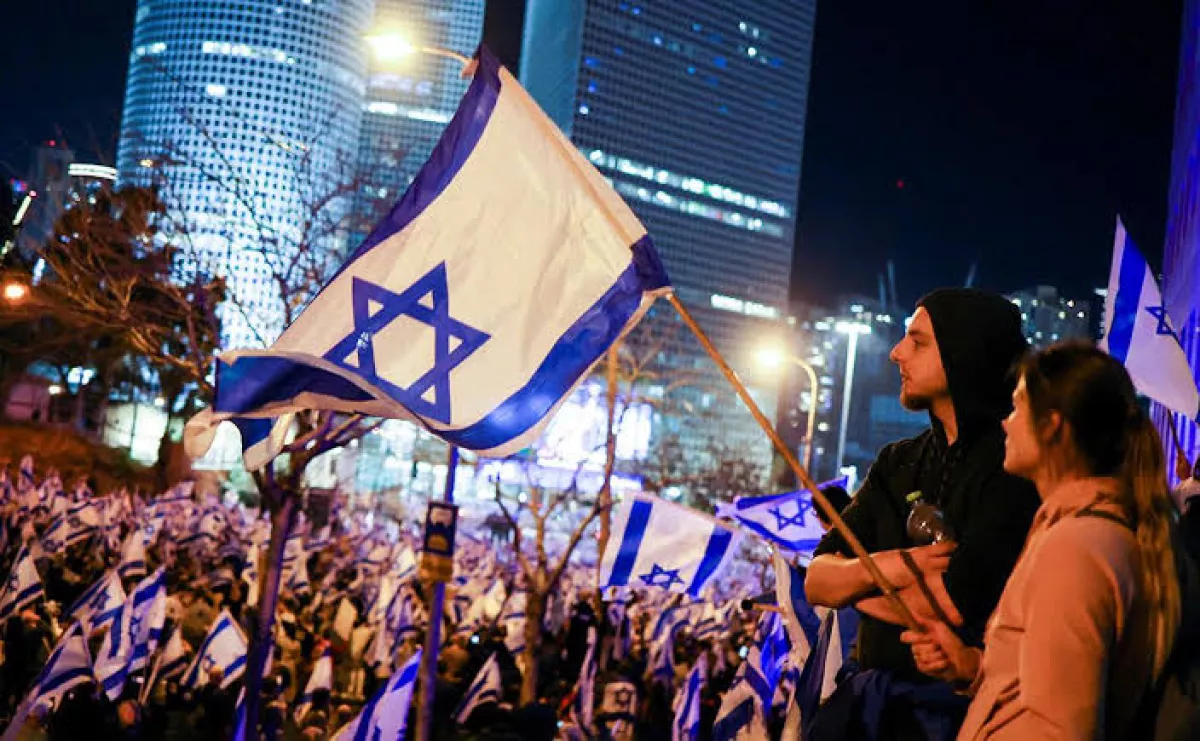
Sixty per cent of respondents said they consider the threat of a civil war to be real and tangible. In addition, 79 per cent of those surveyed described the past year as unfavourable in terms of the country's social climate.
Forty-nine per cent of respondents expressed a pessimistic view of Israel's future. At the same time, 52 per cent believe there is a high likelihood of the political assassination of the prime minister or another senior government official.
The institute's president, Yedidia Stern, noted that despite the resilience of Israeli society, it remains deeply divided. According to him, Israelis increasingly perceive internal polarisation as the country's greatest threat.
Is Israel truly in a high-risk zone today? What factors could trigger a deepening rift capable of escalating into a civil war? How reversible are these problems, and can they still be addressed?
Prominent Israeli observers shared their assessments of these issues with Caliber.Az.
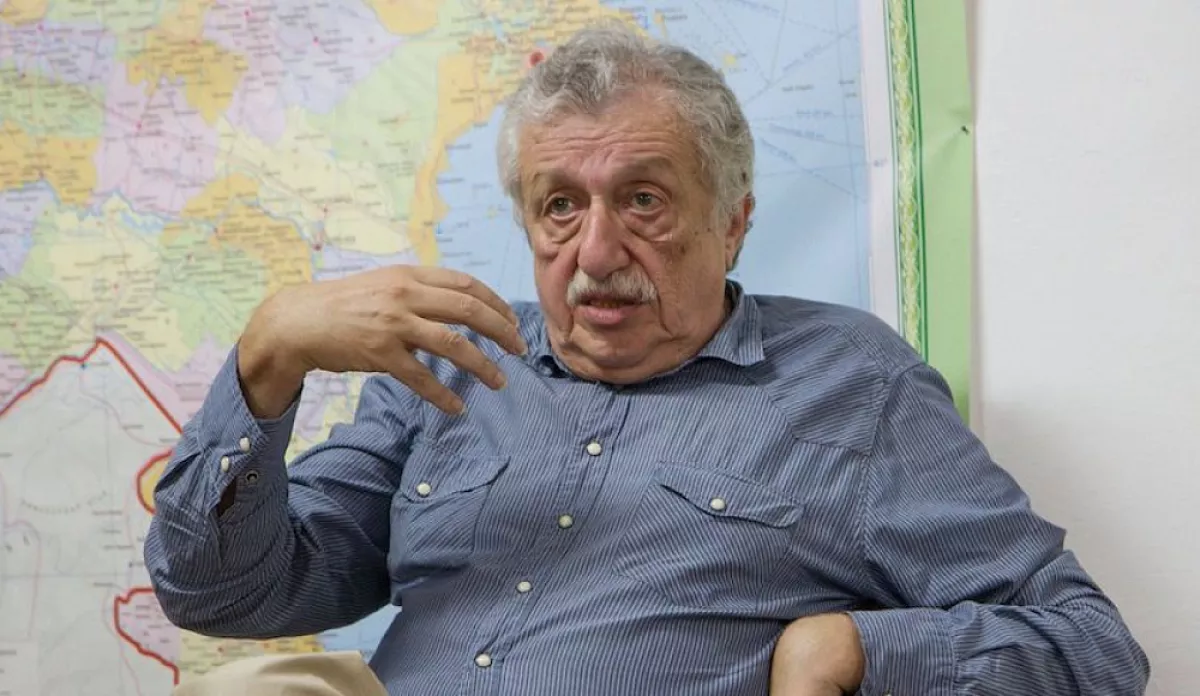
Political analyst and Editor-in-Chief of AVIV TV, Mark Gorin, commenting on the survey results, acknowledged that the figures presented may, to some extent, reflect reality. However, in his view, the terminology and conclusions drawn from them are largely unfounded.
"By the same logic, one could speak of a 'split' in the United States, where one half of the population votes for the Democratic Party and the other for the Republican Party. In a democratic society, people support different political parties—that is perfectly natural. If one wishes, that political energy can be described as a division, although it is certainly not one.
There are two important points to bear in mind.
First, Israel is approaching elections. We are a democratic parliamentary republic: elections are held for the Knesset, which then forms the government headed by the prime minister. As elections draw near, politically active citizens—and Israelis are exceptionally politically engaged; for us, politics is almost a national sport—become even more emotional, leading to more heated debates and mutual recriminations.
Second, the country has been in a state of war for nearly three years. In general, Israel has been at war since its founding, but today we are confronting exceptionally brutal terrorist organisations.
On October 7, 2023, we were attacked by Hamas. That war is not over: Hamas has not been destroyed, and people continue to die. In addition, the terrorist organisation Hezbollah remains actively engaged against us.
Our emotions are running high, and people are exhausted by the war. Both Israeli society and the military are united in the belief that no one who crossed the border and committed those atrocities should escape justice. That is only fair. As the poet Mikhail Svetlov once wrote: 'I'll shoot — it is not a matter of justice. Ultimately just a matter of bullets.'
At the same time, it must be acknowledged that this situation is taking a toll on the humanitarian and moral fabric of Israeli society itself—something that future generations will have to rebuild," the expert said.
According to him, Israel's internal challenges are now affecting the way people relate to one another, and those emotions sometimes spill over into political debates.
"As for the question of the risk of a civil war, those of us who came from the former Soviet Union are probably the last people who should use that term lightly—we know exactly what those words mean. Native-born Israelis may use the expression figuratively, without intending its literal meaning, especially since people here know what a real war looks like. There is no genuine social rupture.
What we are witnessing is simply an intensification of public debate, much like in the United States. To speak of a civil war in Israel is highly misleading. Society is politically divided, but not to that extent.
Let me give you a historical example. Seventy-eight years ago, when the State of Israel was established, David Ben-Gurion, at the request of religious leaders, exempted several dozen yeshiva students from military service so they could help restore Jewish religious scholarship after the Holocaust. Since then, for demographic reasons, the number of such exemptions has grown significantly. Today, not everyone accepts this arrangement, because in Israel almost everyone—including women—serves in the military and is prepared to sacrifice their lives for the country. During wartime, this issue becomes particularly sensitive, and our audience in Azerbaijan, having recently experienced a difficult war of its own, can certainly understand that.
There are no factors that could realistically serve as a trigger for a civil war. The existing disagreements will be resolved through the elections, which are scheduled to take place in October. The government elected by the people will reflect the public's will on all the contentious issues—from military service for ultra-Orthodox citizens to the high cost of living resulting from wartime spending.
As for concerns about a possible assassination attempt against one of the country's leaders, I don't consider it likely. Although there have been such cases in Jewish history, when individuals regarded as 'traitors' were targeted in an attempt to stop them by force. Some people interpret ancient concepts far too literally. While such a possibility cannot be completely ruled out, neither can it be considered the norm. Israel has some of the best intelligence and security services in the world, and they are unlikely to allow anything like this to happen," Gorin believes.

Caucasus expert and head of the Institute for Eastern Partnership (Jerusalem), Avraham Shmulevich, first emphasised that the possibility of a civil war in Israel is completely unrealistic—there is simply nothing that could serve as a trigger for one.
"The alarming results of opinion polls can be explained by what sociologists call the 'question effect,' where the wording of a question itself encourages a particular type of response. If people are asked alarming questions, they are likely to give alarming answers, even if the scenario being discussed appears unrealistic.
Israel is probably the most ethnically and culturally diverse society in the world. Jews have immigrated there from countries across the globe, bringing with them a wide range of cultures and life experiences. Public notices on the streets are often displayed in several languages, including Amharic, Arabic, Russian, French, and English. In addition, members of national minorities enjoy full citizenship, including Muslim Arabs, Bedouins from various tribes, Arab Christians of different denominations, Circassians, and Druze. Israeli society is highly mosaic in nature, encompassing both religious and secular communities across all of these groups.
The internal tensions that arise in such an environment are, in fact, a positive factor, as they encourage development and change. Israeli society is exceptionally dynamic: the country has completely transformed its economic model several times. Having begun as a socialist state, where people from kibbutzim made up around 40 per cent of the first Knesset, Israel has evolved into a high-tech-driven economy.
Today, the kibbutzim have largely faded from the political scene because the country's economic realities have changed.
Israelis travel extensively and often spend time living abroad, returning home with new skills and influences from other cultures. Both society and the economy are constantly evolving, creating the need for new forms of organisation.
Political competition in Israel has always been intense. When the first Prime Minister, David Ben-Gurion, was asked by an American president about the difficulties of governing, he replied that it was hard to be prime minister of a country with millions of 'prime ministers,' each with their own opinion. Since the founding of the state, Israel's population has grown from 600,000 to 10 million. Despite fierce rivalry between political parties, there are no conditions that would lead to a civil war, as there are no armed militias operating in the country," the expert said.
He went on to note that Israel's democratic institutions have repeatedly demonstrated their effectiveness and resilience, having withstood numerous domestic and military crises.
"The institution that enjoys the highest level of public trust is the Israel Defense Forces (IDF), with the confidence of approximately 75–80 per cent of the population, including a significant proportion of Muslim Arabs. At present, Israel's state institutions, including the judiciary, are undergoing a process of reform, which is natural for a young and rapidly evolving country. Political structures that were adequate a decade ago now require modernisation.
The country is also witnessing a shift in its economic and political elites. The influence of Mizrahi Jews—those whose families originate from Arab countries, Türkiye, as well as the Mountain Jewish community—has been steadily increasing. Whereas Ashkenazi Jews once overwhelmingly occupied the leading positions, Mizrahi Jews are rapidly closing the gap in education and income, leading to a natural transformation of the country's governing elites.
As for concerns about political assassinations, although Israel's history includes the tragic assassination of Yitzhak Rabin, both the security services and society have drawn important lessons from that event. The level of political tension at the time of Rabin's assassination was, in fact, even greater than it is today. Despite ongoing political disputes, Israel remains one of the world's happiest countries according to the World Happiness Report. The current crisis should therefore be seen not as a precursor to catastrophe, but as a sign of a healthy and evolving society," Shmulevich concluded.







 editor@caliber.az
 +994 55 444-88-98
 Азербайджан, Баку, ул. Низами, 203, Af Business House, 5-й этаж