










Ukraine faces a choice: More Patriots or a “black winter” Expert opinions on Caliber.Az
Ukraine could face a serious shortage of air-defense missiles this coming winter. Western countries lack the necessary production capacity to replenish Patriot and SAMP/T stocks within a short period.
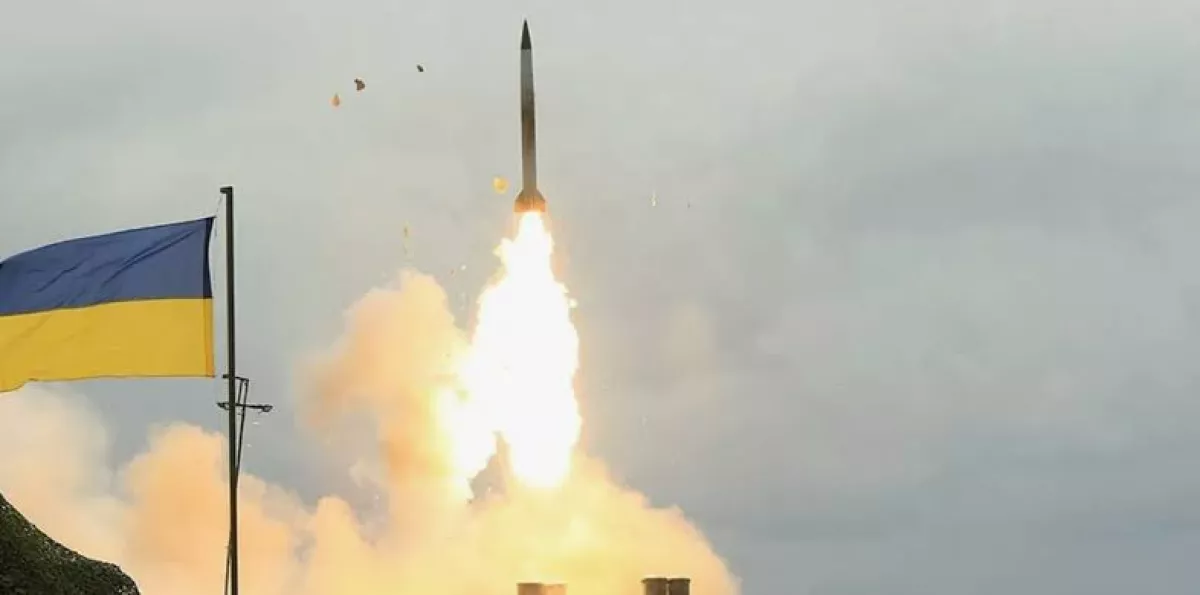
As the British newspaper The Guardian reports, “Ukraine is not going to receive enough Patriots between now and the winter to save its critical national infrastructure, irrespective of whether some countries make the political gesture of releasing a few more from their stockpiles.”
Against this backdrop, Kyiv is looking for alternative ways to counter Russian missile strikes. In particular, Ukraine is trying to persuade the United States to activate Starlink satellite-navigation coverage over Russian territory, enabling its drones to detect and strike Russian missile launchers. However, as the article’s author, Jack Watling, an expert at the Royal United Services Institute (RUSI), points out, carrying out such operations across a large area is extremely challenging. He notes that the United States itself recently demonstrated this during its operation against Iran.
Another option for Kyiv could be to strike Russian defense-industry facilities producing ballistic missiles. However, such sites are heavily protected. Therefore, according to Watling, for this approach to produce results, Ukraine’s Western partners would either have to substantially increase funding and industrial capacity for the country’s emerging cruise-missile industry or revisit the issue of supplying Kyiv with longer-range weapons systems such as German Taurus missiles, although Berlin has so far refused to provide them, fearing further escalation.
How well-founded are The Guardian author’s conclusions, and could a shortage of air-defense missiles really have a significant impact on the situation in Ukraine this coming winter? Ukrainian experts shared their views on the issue with Caliber.Az.

Military expert and historian Mykhailo Zhyrokhov said that Ukraine is currently in a very difficult situation, particularly when it comes to air-defense systems, which are clearly in short supply.
“But there are already certain agreements in place: the United States will provide at least some minimum level of supplies in the near future. There are also agreements with Poland, despite certain ideological differences. At the same time, it is clear that a decision has been made to destroy missile production facilities and launchers directly as the missiles are being launched. As for missile production, this plan is already being implemented: just days ago, a strike was carried out on one of the key Russian defense-industry enterprises involved in missile production. Meanwhile, the volume and quality of FP-5 Flamingo missile production are steadily increasing, and a large number of strikes are expected over the next month. As for destroying launchers, I am skeptical. As the United States’ experience during Operation Desert Storm in 1991 showed, this is an extremely difficult task,” he said.
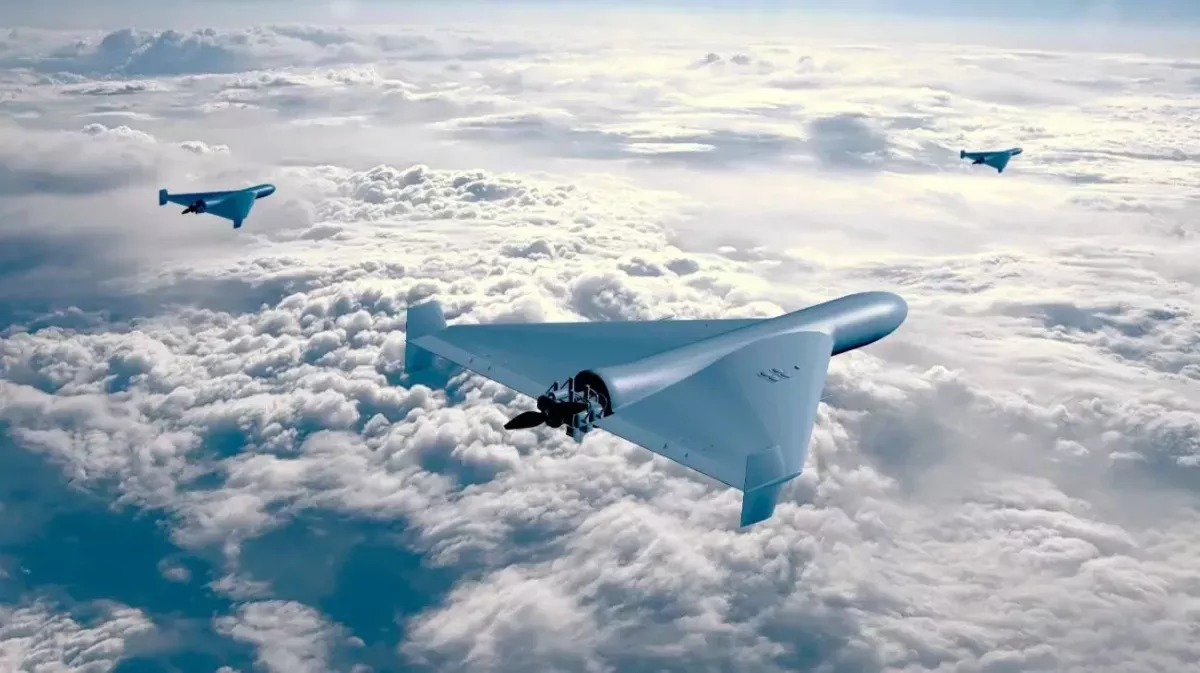
According to the expert, the deployment, launch and subsequent redeployment of Russian missile systems inside Russia take place very quickly.
“To effectively strike them, Ukraine would need either ground raids by special forces or continuous monitoring, which is a difficult task and remains beyond Ukraine’s capabilities for now. Therefore, the balance will be maintained through long-range strikes. Strikes against ‘drone ports’ may also be possible — facilities from which jet-powered Geran and Banderol drones are launched and which are increasingly being used as strike weapons.
Overall, a serious escalation is expected by winter. Russia will seek to disable key infrastructure, including bridges across the Dnipro and the remaining power plants, as it no longer faces the constraints it did previously.
A very difficult period lies ahead, but Western allies do not plan to abandon Ukraine. From their perspective, too much has already been invested in the country’s defense to stop now,” Zhyrokhov said.
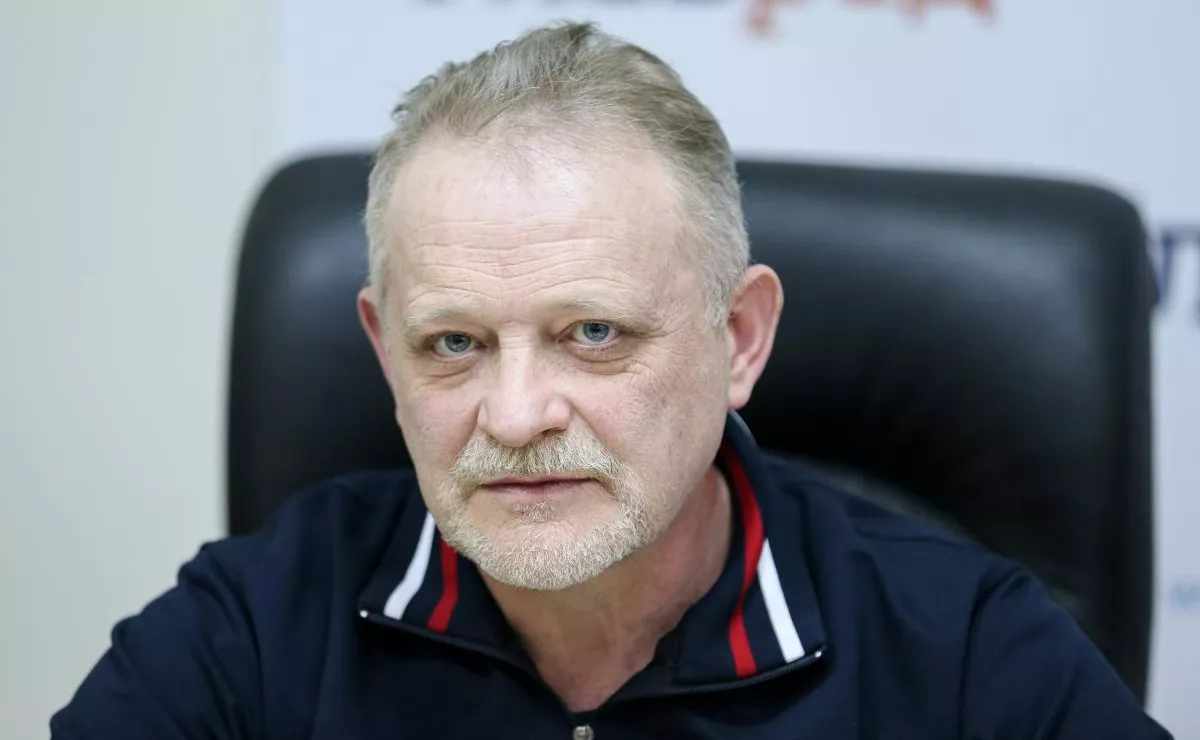
In turn, political strategist and head of the Third Sector analytical center Andriy Zolotaryov believes that the situation with air defense in Ukraine is either catastrophic or, at the very least, extremely difficult.
“The problem is not Trump’s unwillingness to issue licenses. All the talk about a possible transfer to Ukraine of a license to produce Patriot missiles is more of a PR move than something based on solid ground. France has also stated its readiness to provide a license for the production of SAMP/T missiles, but it takes years to go from receiving the documentation to launching production. Even Germany, despite its technological capabilities, needed almost three years to set up production of PAC-3 interceptor missiles. In Ukraine, where production facilities are constantly coming under attack, resolving this problem quickly is virtually impossible.
The same applies to the idea of supplying Kyiv with 300 interceptor missiles. Given current PAC-3 production volumes, this would not solve the problem systematically. Lockheed Martin currently produces around 600 of these missiles a year, while an increase to 2,000 units annually is planned only by 2030. In July alone, around 150 ballistic and hypersonic missiles were launched at Kyiv. If two interceptors are required to shoot down one Iskander, then 300 interceptors would be enough to sustain the air defense of a single capital for roughly one month.
The situation is similar with Aster-15 and Aster-30 missiles for SAMP/T: even after the production cycle is shortened, output remains insufficient to meet Ukraine’s needs.

An additional factor is the conflict between the United States and Iran, which has created a need to replenish the missile arsenals of the United States itself, as well as those of Israel, the UAE and Saudi Arabia. Ukraine will clearly not be first in line. Therefore, any talk of large-scale deliveries of interceptor missiles is, unfortunately, little more than wishful thinking.
This coming winter, Ukrainian cities could find themselves virtually defenseless against ballistic strikes. In such a situation, one option would be to strike Russian sites where missiles are unloaded and stored. However, Kyiv faces the problem of using Starlink here as well. The chances of persuading Elon Musk to allow the system to operate over Russian territory are extremely slim.
The situation for Kyiv remains extremely difficult. Betting on partners to meet all of Ukraine’s needs is a sign of political naivety. A country must always rely first and foremost on its own resources.
Ukraine had made significant progress in developing its own weapons systems, from the Kilchen air-defense system to the Hrim-2 (Sapsan) short-range ballistic missile system. However, a substantial part of the country’s domestic defense-industrial potential has been lost.
In this regard, Türkiye offers a telling example. When Erdoğan came to power, the country’s defense industry met around 20% of the needs of its army and navy. Today, that figure has risen to 80%. Moreover, amid uncertainty over F-35 deliveries, Ankara embarked on the development of its own fifth-generation fighter, the KAAN.
An independent defense industry is not just a matter of weapons production; it is also a guarantee of political agency. Unfortunately, Ukraine relied too heavily on its partners’ promises. We remember Joe Biden saying that the United States would support Ukraine for as long as it takes. But in our case, those assurances ultimately turned into a ‘pumpkin,’” Zolotaryov concluded.







 editor@caliber.az
 +994 55 444-88-98
 Азербайджан, Баку, ул. Низами, 203, Af Business House, 5-й этаж