










Why Spain’s migrant amnesty is testing European unity? FOREIGN PUNDITS SHARE THEIR OPINIONS WITH CALIBER.AZ
Swedish Prime Minister Ulf Kristersson has launched a blunt critique of Spain’s planned migrant amnesty, labelling Madrid’s proposal to legalise over one million undocumented migrants a "very bad idea" that poses a direct threat to the integrity of the Schengen free-movement zone.
Kristersson cautioned that the sweeping initiative risks plunging Europe back into a migration crisis reminiscent of 2015 while throwing the continent’s free-movement guarantees into doubt. According to the Swedish leader, Spain’s unilateral move sparked a "fairly large protest" at a recent summit of European heads of state, arguing it runs directly counter to the border enforcement measures pursued by the rest of the bloc.

Addressing the growing friction between European capitals, Kristersson urged member states to maintain strict vigilance:
“It symbolises that we still have to be very, very careful not to act in a way that could even come close to what happened in 2015. I think Spain got the message . . . but it shows the vulnerability."
The Swedish Prime Minister confirmed he directly voiced his dissatisfaction over the amnesty during a meeting with his Spanish counterpart, Pedro Sánchez.
Kristersson stressed that the long-term viability of the Schengen Area relies entirely on coordinated action among member states "to protect external borders and have the most consistent policy possible." He added that there is no doubt that an influx of migration flows triggered by one nation's decisions will inevitably strain the broader "solidarity" of the Schengen system.
Under Madrid’s proposed amnesty, undocumented arrivals who have resided in Spain for at least five months and maintain a clean criminal record are granted a renewable one-year residence permit. Crucially, this status allows migrants to travel freely across Europe's borderless Schengen Area.
The initiative has drawn fierce backlash across northern and central Europe. Leaders from Italy, Germany, and Denmark issued sharp rebukes after tens of thousands of migrants entered the Spanish enclave of Ceuta last month — even though the vast majority were later returned to Morocco.
This current friction echoes the defining moments of the 2015 European migration crisis. During that turning point, former German Chancellor Angela Merkel’s migration policy fundamentally reshaped the demographic and political landscape of Germany and the broader European Union. The hallmark of her "open door" policy saw more than one million refugees—predominantly from Syria, Afghanistan, and Iraq — arrive in the country, cementing her famous slogan, "Wir schaffen das" ("We can manage this").
As subsequent years demonstrated, European integration hit severe roadblocks. Prolonged welfare dependency, bureaucratic deadlocks, and the formation of isolated enclaves governed by localised customs gave rise to ethnic criminal networks. At the same time, rising antisemitism and the erosion of women's rights within isolated migrant communities ran fundamentally counter to the European Union's foundational liberal values.
The crisis reached a tipping point on July 30, 2026, in the Spanish North African enclave of Ceuta. According to estimates by the head of the local government, Juan Jesús Vivas, approximately 80,000 undocumented migrants breached the border in a single 24-hour window — an influx equivalent to nearly 70% of Ceuta’s total population. Thousands scaled border fences overland or swam around the breakwater separating the enclave from Morocco.
The border breach immediately triggered a severe political emergency across the European Union. Italy formally suspended the Schengen Agreement with Spain, closing its maritime and air borders to the country and freezing free-movement guarantees for a month. France tightened border controls, deploying four rapid reaction units alongside aircraft and surveillance drones to its southern frontier with Spain. Meanwhile, Finland backed the Italian measures, declaring that Madrid had failed to secure the Schengen Zone's external perimeter. Denmark’s Prime Minister went even further, urging the European Union to consider suspending Spain's Schengen membership altogether.
With online calls already circulating for another coordinated border crossing on August 15, the political and security crisis gripping the bloc is far from over.
What does all of this mean? Is there a risk of a new migration crisis emerging in the EU as a result of Spanish Prime Minister Pedro Sánchez’s rash decisions? Could these events spark a confrontation among EU member states and lead to the collapse of the Schengen system?
Foreign political commentators shared their insights on these questions with Caliber.Az.
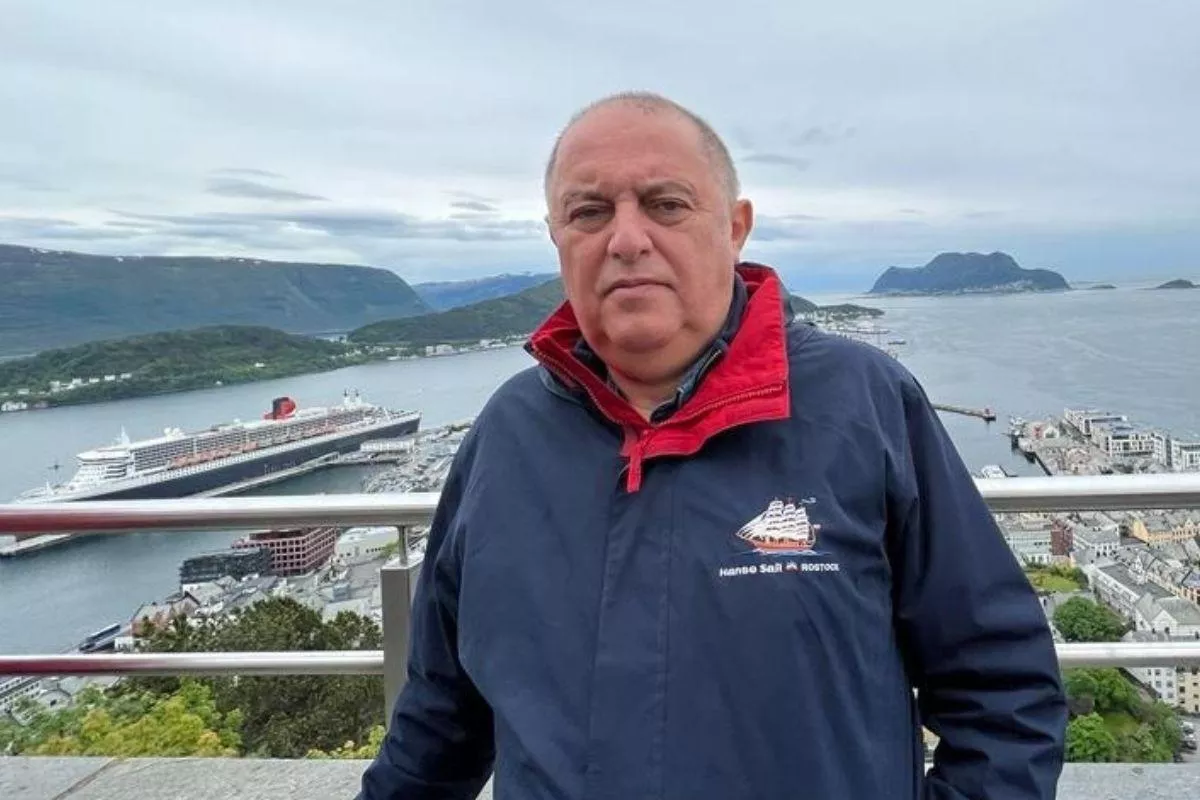
Alexander Cherkassky, an analyst, publisher, and editor-in-chief of the German magazine and YouTube channel Neue Zeiten, noted that the actions of Spain’s left-wing Prime Minister Pedro Sánchez have sparked justified outrage across many European countries.
"Europe is already experiencing a severe migration crisis at present, and Sánchez's steps are effectively pouring oil on the fire. The crisis unleashed by Merkel's rash policy hasn't gone anywhere, even 11 years later. Naturally, such a policy meets and will continue to meet resistance in most European countries," Cherkassky stated.
"I consider Italy's policy toward Spain to be completely justified. Among other consequences of the illegal migrant crisis will be significant success for right-wing parties in upcoming elections. If Sánchez's course continues, it could lead—as I hope—to his isolation within the EU. A majority of European Union countries have already shown resistance to his policy," Cherkassky added.
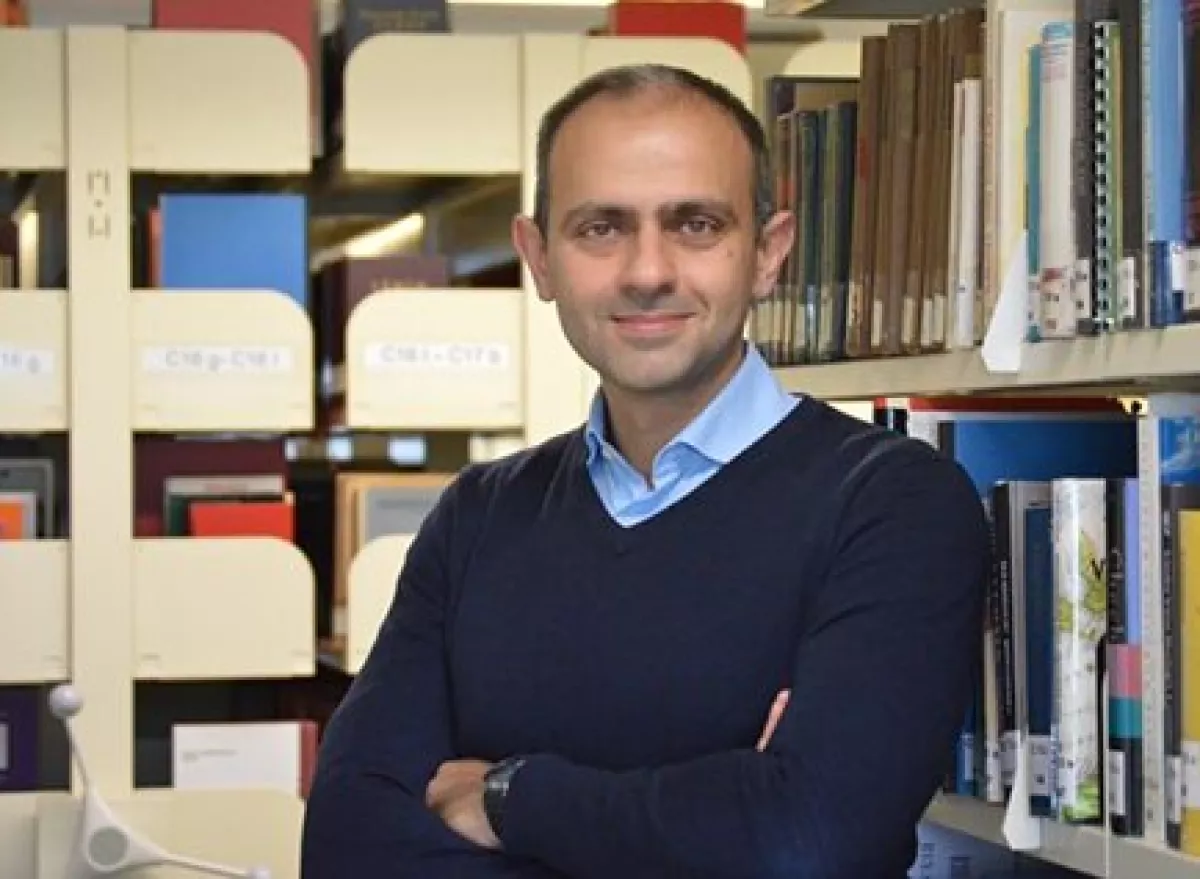
Zaur Gasimov, a professor of political science at Turkish-German University in Istanbul, noted that the migration crisis surrounding Spain’s North African enclave demonstrates once again how crucial migration issues remain in international relations — both broadly and specifically for European Union member states.
"It is not new that Europe, alongside the United States, remains the primary center of attraction for migrants from all over the world. In the case of Ceuta, the situation naturally invites comparisons with the 2015 migration crisis. There are similarities, but there are also major differences. In 2015, the majority of refugees were from Syria, and the decision by Angela Merkel's government to accept them generated significant goodwill toward Germany, including across the Middle East. On the other hand, a civil war was raging in Syria at the time, Russia intervened on the side of Bashar al-Assad, and this intensified migrant flows from the country," Gasimov stated.
"In Ceuta, the situation today is different. The majority of refugees from Morocco or other countries who entered Ceuta—meaning Spanish territory from Morocco—are so-called economic refugees. Material and economic factors are at play here, rather than military ones. In fact, there are no obvious grounds for granting asylum to these people. However, the Spanish government, known for its liberal stance, demonstrated a significant degree of leniency toward those who found themselves in Ceuta," he explained.
"This crisis has highlighted, perhaps, the weakness of the European Union in its ability to defend its external borders — not only against military intrusion, but even against large groups of people attempting to enter its territory all at once. Parallels with Merkel’s position are partly apt, but I still maintain that the situation in Ceuta is fundamentally different from what happened in Germany in 2015," the professor added.
Regarding the events of 2015 and the famous slogan "Wir schaffen das" ("We can manage this"), Gasimov pointed out that opinions were divided back then and remain split today.
"Opinions are still divided: in Germany itself, a large part of the electorate believes that it worked out, but there are also many sceptics. These sceptics mostly represent the electorate of the Alternative for Germany (AfD), the Sahra Wagenknecht Alliance, and perhaps to some extent the Christian Democratic Union," Gasimov noted.
He emphasised that while Germany certainly faces challenges with illegal migration and the integration of individuals from non-European cultural backgrounds, these issues existed well before 2015 and were not solely triggered by the influx of Syrian, Afghan, and Iraqi refugees.
Furthermore, Gasimov highlighted that European nations hold vastly different stances depending on their political leadership and geographical position:
"The positions of European countries vary. First, this is determined by the types of governments in power and which parties are leading them—whether liberal, conservative, or right-wing. Another factor is geography. Naturally, landlocked countries without external EU borders take a different approach than states located directly along the Mediterranean or on Europe's eastern frontier."
To illustrate this divide, he cited the migration standoff along the Belarus-Poland border a few years ago, where Warsaw took a firm, uncompromising stance by refusing entry to migrants—a stark contrast to Madrid's current approach. According to Gasimov, this reflects broader social differences, as Spanish society and Polish society differ significantly in their societal liberalism and internal development.







 editor@caliber.az
 +994 55 444-88-98
 Азербайджан, Баку, ул. Низами, 203, Af Business House, 5-й этаж