










Restless Paris: why France is reigniting tensions over Karabakh Expert opinions on Caliber.Az
Against the backdrop of the fact that the official Yerevan has no claims against Azerbaijan regarding the situation in its Karabakh region, French politicians are once again demonstrating an incomprehensible zeal in this direction. Figuratively speaking, they are getting ahead of themselves.
On May 6, during public hearings in the upper chamber of the National Assembly, Senator Étienne Blanc asked French Foreign Minister Jean-Noël Barrot what actions Paris is taking in response to the “destruction by Azerbaijan of Christian heritage in Nagorno-Karabakh, as well as the detention of Armenian prisoners in inhumane conditions.” In response, the French minister proposed sending an UNESCO assessment mission to Azerbaijan’s Karabakh region.
The next day, official Baku openly called Barrot’s statement a provocation. The Azerbaijani Foreign Ministry said that such statements hinder the peace process between Baku and Yerevan.
“The calls by France regarding the deployment of an assessment mission by UNESCO to Azerbaijan’s Garabagh region are a clear distortion of realities. It is Azerbaijan that has repeatedly called for such assessment missions, while unfortunately their realization has been hindered precisely due to the known obstacles created by countries such as Armenia and France. This fact was confirmed by UNESCO’s own 2005 report. Such statements by the French Minister do not serve for lasting and sustainable peace in the region,” the statement noted.
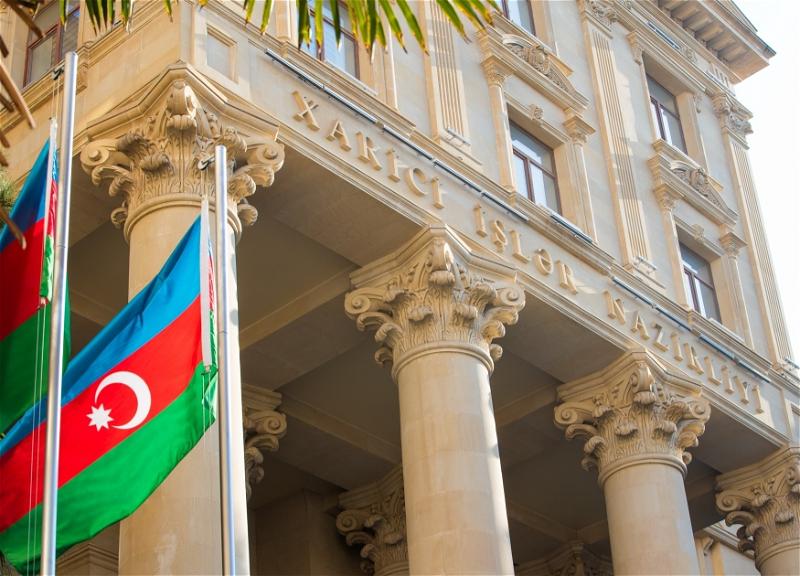
The Azerbaijani Foreign Ministry also stated that France, for some reason, ignores the fact of the destruction of hundreds of mosques and other examples of cultural heritage in Azerbaijani territories during the period of Armenian occupation, which constitutes a policy of double standards. The Ministry added that historical and religious monuments located on the sovereign territories of Azerbaijan are part of the country’s national cultural heritage and are protected regardless of their origin.
“It is a clear example of a double standards that the French Minister, who ignores the destruction of hundreds of mosques and other cultural heritage sites in the Azerbaijan’s territories during Armenia’s occupation, comments on the demolition of certain structures dating back to the occupation period and makes inappropriate references to the proceedings before the International Court of Justice,” the Azerbaijani Foreign Ministry noted.
The question is how to explain such an attitude among French politicians toward developments on the sovereign territory of Azerbaijan, even though Armenia’s own authorities do not see any grounds to make similar accusations against Baku. What drives them to make statements that clearly do not serve to improve the already complicated relations between France and Azerbaijan?
Well-known analysts shared their views on this matter with Caliber.Az.
According to Azerbaijani political commentator Murad Sadaddinov, the reason is that both French deputies and politicians often sacrifice France’s national interests for their own personal financial gains, serving the wishes and preferences of the Armenian diaspora.
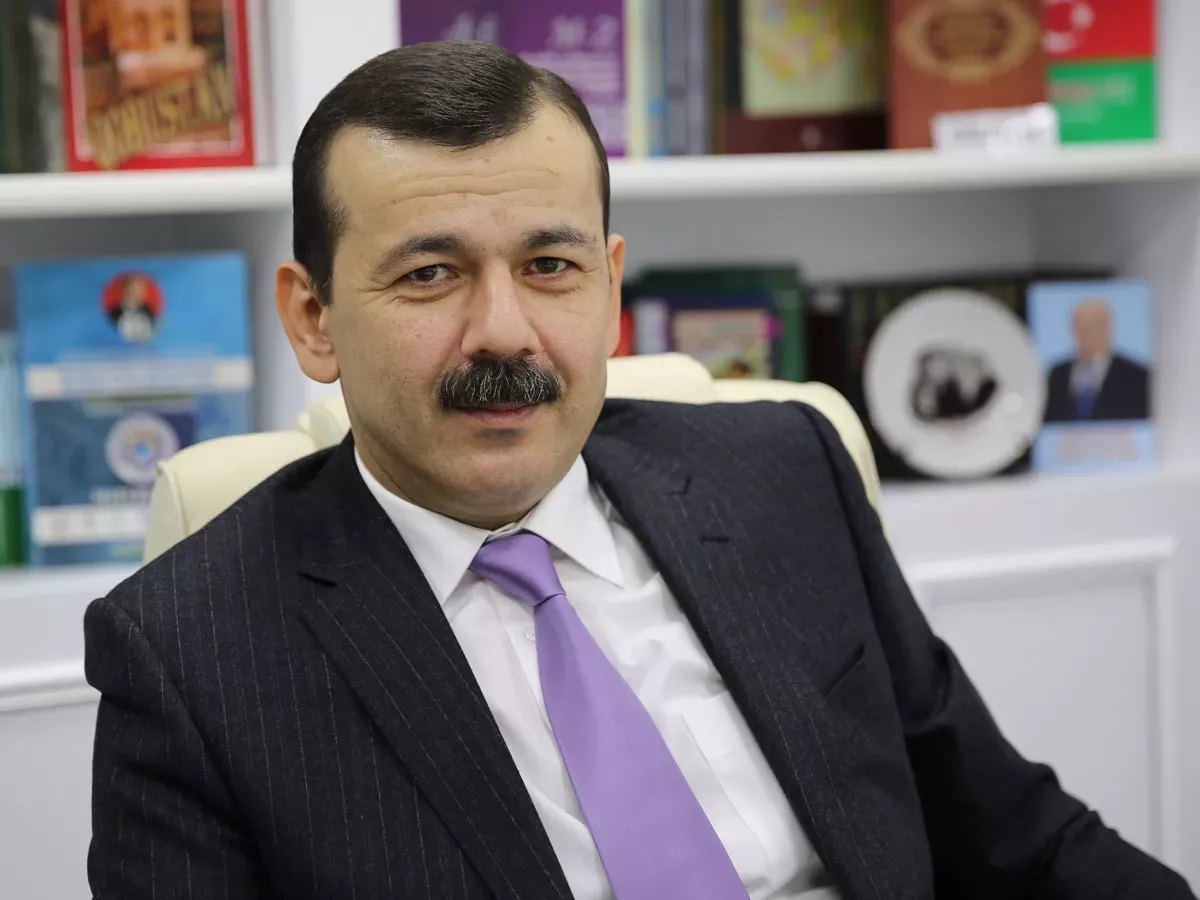
“As a result, the strategic objectives of the French Republic in various regions, and especially in the South Caucasus, are being undermined. Analysing the activities of the French establishment, we come to the conclusion that this is precisely why France has lost all its opportunities and influence in the South Caucasus. Today, it is attempting to restore that influence, but with such an attitude from state officials and members of parliament toward France’s national interests, no meaningful results will be achieved in the future. France will continue to lose its influence both in the South Caucasus and in other regions,” the expert believes.
He further continued that it should also be noted that the Armenian diaspora in France, according to various estimates, numbers between half a million and 700,000 people.
“It is very well organised politically and has fairly significant leverage over electoral processes, as well as considerable financial resources. This is one of the factors that leads many members of the French parliament to try to please their voters.
After Azerbaijan, in accordance with international law, liberated its territories and restored its territorial integrity, we see that both within the diaspora and among politicians who are ‘fed by this diaspora,’ there is no willingness to calm down. Now, on the eve of elections in Armenia—outcomes of which will determine the future of the peace process in the South Caucasus—these politicians are once again trying to drive a wedge into an already difficult peace process that is currently underway.
We see how many external forces, including France, which for many years pursued a policy of fostering hostility in the South Caucasus in order to advance its political and economic interests, are doing everything possible to return to the old times. However, the fact is that today it is not external players, despite their significantly greater economic and political power compared to our country, who set the agenda in the South Caucasus.
Today, the agenda is set by Azerbaijan. Azerbaijan, as the leading country in the South Caucasus, has declared this peace agenda. I believe that, despite these provocations, we will ultimately achieve full peace in the South Caucasus. All these external actors will not be able to implement their previous plans and actions in the region,” Sadaddinov believes.
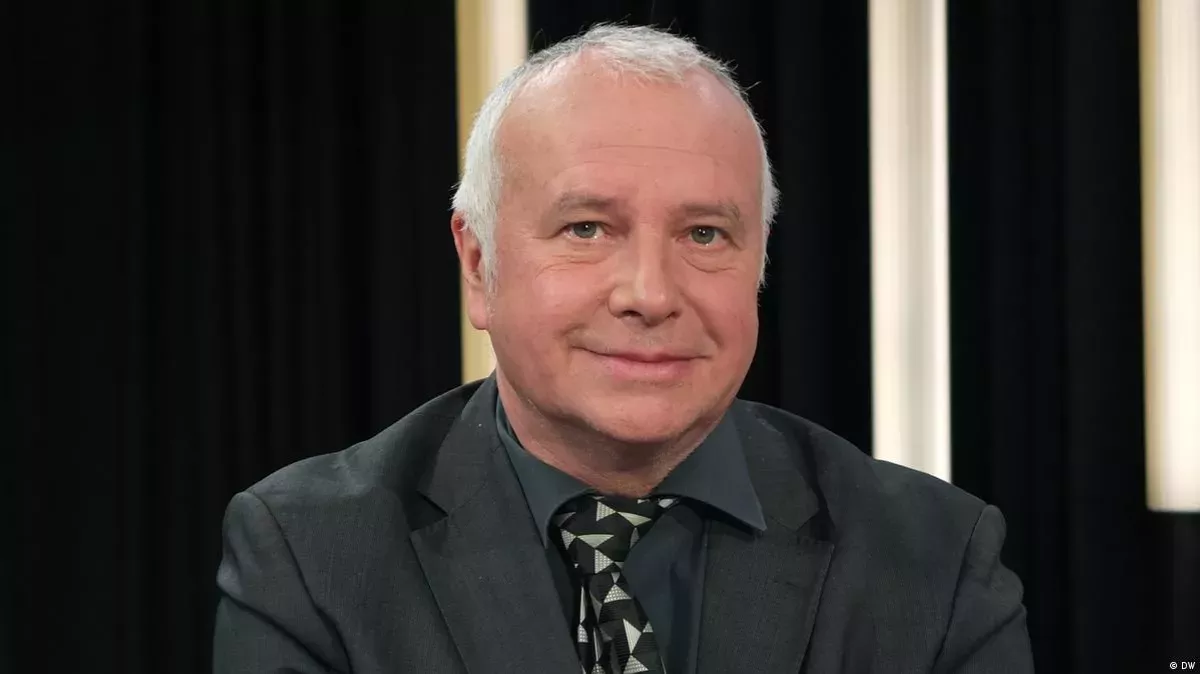
German political scientist and Professor at the WeltTrends Institute for International Politics (Potsdam), Alexander Rahr, recalled that relations between Azerbaijan and France have been poor for quite some time.
“Recently, from Baku’s perspective, Paris has increasingly acted as a one-sided supporter of Armenia, and apparently for this reason it is demonstrating a loss of neutrality regarding the former conflict over Karabakh. However, France’s position is explained not only by sympathy for Armenia, but also by a combination of historical, domestic political, and geopolitical factors. France has traditionally had close ties with Armenia. A large Armenian diaspora in France, along with the strong political and cultural influence of Armenian organisations, has shaped French policy over decades. At the same time, Paris increasingly views Türkiye as a geopolitical rival in the Mediterranean, North Africa, and the post-Soviet space. Since Azerbaijan is closely linked to Türkiye, Baku automatically becomes part of this strategic rivalry in France’s eyes,” the professor explained.
In addition, he emphasised that following the weakening of Russian influence due to the war in Ukraine, France is seeking to expand its presence in the South Caucasus.
“Paris is providing Armenia with diplomatic and military support and is trying to present itself as a security guarantor in a region where Russia’s authority has significantly weakened. For the European Union, Armenia has also become strategically more important, as Brussels is gradually seeking to pull the country out of Russia’s orbit. After the events of 2023, many Armenians felt disappointed with Russia. Therefore, Prime Minister Nikol Pashinyan is increasingly orienting himself towards Europe and the United States.
At the same time, the European Union is pursuing a complex dual policy. On the one hand, Brussels is seeking to bring Armenia closer to the West, while on the other hand, Azerbaijan remains an important energy partner for Europe. Especially after the reduction in Russian gas supplies, the importance of Azerbaijani gas for European energy security has significantly increased. While countries such as Germany or Italy prefer to maintain pragmatic relations with Baku, France follows a much tougher line. This is precisely where Azerbaijan sees the main cause of the crisis: Paris combines moral rhetoric with geopolitical interests and simultaneously seeks to limit the influence of Türkiye, Russia, and Azerbaijan in the South Caucasus,” Rahr outlined the situation.







 editor@caliber.az
 +994 55 444-88-98
 Азербайджан, Баку, ул. Низами, 203, Af Business House, 5-й этаж