










French ambitions without Israeli trust Expert opinions on Caliber.Az
France’s foreign policy under President Macron has largely been based on attempts to position the country as a peacemaker and a key actor across a broad geopolitical space, albeit in a somewhat, to put it mildly, unsuccessful and unconstructive manner.
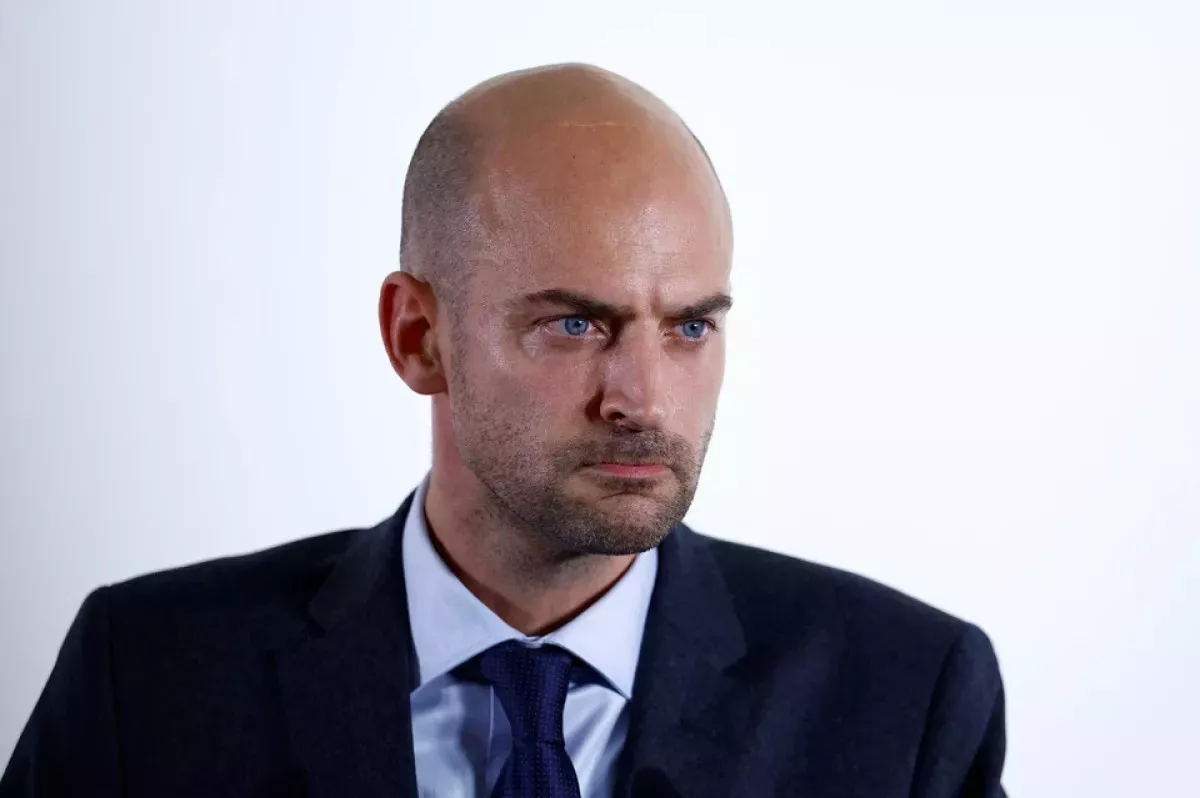
This context also naturally includes the recent statement by French Foreign Minister Barrot, made in response to remarks by Israel’s Ambassador to the United States, Yechiel Leiter. Following the first round of Lebanon–Israel negotiations in Washington, Leiter stated that “the French should be kept as far away as possible” from the negotiation process with Lebanon.
In response, the French minister said that without France’s involvement in the settlement in Lebanon, there would likely have been no ceasefire agreement and no start of negotiations between Israel and Lebanon, thereby underlining the role of French diplomacy in stabilising the situation in the Middle East.
So, why is the Élysée Palace so eager to present the Fifth Republic as a mediator and peacemaker between Lebanon and Israel? And why does the Israeli side believe that “the French should be kept away” from the negotiations? The specifics of Paris’s political game and the position of the Israeli authorities were analysed for Caliber.Az by Israeli experts.

Journalist and publicist, head of the International Relations Commission of the Union of Journalists of Israel, Rostislav Goltsman, noted that Israel supports any peace initiatives regarding a settlement with Lebanon, but under one single condition — if they are truly constructive.
“What can currently lead to a resolution of the conflict? It is what is stipulated in the ceasefire agreement of November 2024. Let me remind you that at that time the Lebanese government and president committed to the complete and unconditional disarmament of Hezbollah, which was supposed to transform into a political party and cease to exist as a military formation and a proxy force receiving assistance from Tehran. This was supposed to happen by December 31, 2025. The Lebanese authorities failed to do so. However, the Israeli side agreed to extend the ceasefire until the end of February, but the issue was still not resolved, which led to the resumption of the conflict, because on February 28, Hezbollah opened fire on Israel.
Thus, without the disarmament of Hezbollah, a settlement of the issue of a peace treaty with Lebanon, as well as other matters including border demarcation, is impossible, since it is a factor of instability. Hezbollah, as is known, provoked the 2006 war, the current war, and other conflicts. And if any party wants to participate in the settlement process as a mediator between Israel and Lebanon, it must be based exclusively on this approach. Otherwise, the position is inherently destructive, which, unfortunately, France has demonstrated by demanding a ceasefire without the disarmament of Hezbollah. It is interesting how they imagine this? That Hezbollah will continue firing at Israel while Israel refrains from responding? Apparently, they have an exotic understanding of peace. But such an approach will not work in this matter,” the expert said.
He also noted that France has demonstrated a destructive position in the Lebanese–Israeli conflict for decades, recalling historical facts in this regard.
“In May 1983, a peace agreement was signed between Lebanon and Israel. However, unfortunately, France acted as its guarantor, sending its troops there — paratroopers who shamefully fled under attacks by terrorists. As a result, the peace treaty, unfortunately, did not last even a year. Now Paris is once again eager to act as a mediator and is again talking about how necessary it is. But what trust can there be in the French? I am even afraid to imagine how this ‘peace mediation’ could be implemented.
Let me give you facts: just in the past week, two French servicemen who were stationed in southern Lebanon as part of UN forces were killed, having been shot at by Hezbollah. And yet the French side continues to demand anything except the disarmament of Hezbollah? Maybe in France there is such a tradition — not to care about their own servicemen, and this is how they understand peace. They were killed, and instead of taking action to stop escalation, they simply lament that one more has been killed, as if expecting more to die.
However, the French may dispose of their soldiers as they see fit, but they will not be allowed to dispose of the lives of Israelis. Therefore, until France understands that the only path to de-escalation and to saving Lebanon as a sovereign state is the complete and unconditional disarmament of Hezbollah, there can be no question of its role as a mediator,” Goltsman stated.

In turn, a specialist on the Caucasus, the Islamic world, and the Middle East, and Chairman of the Eastern Partnership Institute, Abraham Shmulevich, expressed confidence that Minister Barrot is not merely defending French involvement, but is instead attempting to politically reframe Paris’s role as an indispensable actor. Meanwhile, the essence of the Israeli reaction lies not in personal antipathy, but in deep distrust of France’s policy line on Lebanon, Iran, and Israel itself.
“Jean-Noël Barrot’s statement should be seen not as a neutral description of reality, but as a political manifesto. Paris says: without us, there would have been no ceasefire. Formally, there is some truth in this, because the ceasefire agreement between Israel and Hezbollah in November 2024 was indeed brokered with the participation of the United States and France. But in the current context, something else is more important: Paris is trying to prove that it remains an indispensable player in Lebanon even at a time when the United States and Israel are seeking to conduct key negotiations without the French.
What does France want? First of all, to preserve its status as Lebanon’s traditional external patron. This is not merely a matter of diplomatic ambition; it is a matter of historical legacy, political networks of influence, and strategic presence in the Eastern Mediterranean. France’s ties with Lebanon date back to the Mandate period after the First World War, and Paris still views the country as a space where it has a special right to speak. That is why it seeks not only to participate in negotiations, but to secure for itself the status of a permanent co-architect of any Lebanese settlement,” he said.

According to the expert, in addition to historical inertia, Paris also has very practical motivations: it seeks to prevent full American monopoly control over the process, preserve channels of influence in Beirut, maintain the relevance of UNIFIL, where French troops are deployed, and demonstrate that Europe is also capable of playing a role in regional security. Against this backdrop, it is not surprising that Barrot is so strongly emphasising France’s contribution precisely now, when new Lebanon–Israel negotiations are taking place in Washington and France does not occupy a central position in them.
“Why does the Israeli side want to keep the French away? Because in Israel, France is increasingly seen not as an honest mediator, but as a player with its own agenda, often misaligned with Israel’s. This distrust sharply intensified in 2026. The French special envoy publicly stated that demanding the disarmament of Hezbollah during Israeli strikes was unrealistic, while French proposals included a de facto softer approach, up to the idea of a non-aggression pact. Israel interpreted such approaches as an attempt to impose restrictions on itself without a real mechanism for dismantling Hezbollah’s military infrastructure.
There is also a broader crisis of trust between Israel and France. At the end of March, Reuters reported that Paris did not allow the use of French airspace for the transfer of American weapons to the Middle East during the war with Iran. After this, according to Israeli sources and Reuters, the Israeli Ministry of Defence halted defence procurement from France. Against this backdrop, the words of Ambassador Yechiel Leiter that the French should be kept as far away as possible from negotiations do not look like a diplomatic outburst, but rather a reflection of an already established line: Israel considers France politically unreliable and strategically biased.
Therefore, the current dispute is not only about Lebanon. It is a dispute about who will have the right to shape the post-war order on Israel’s northern border. France seeks to restore its role as a mediator power and patron of the Lebanese track, the United States aims to keep the process under its own control, while the State of Israel wants a mediator that will primarily pressure Beirut and the issue of Hezbollah, rather than restrict Israel’s freedom of action. This is why Paris speaks in the language of historical mission, while Israel responds with a language of firm distancing.
The conclusion here is simple: France is not ‘intruding’ into the process by accident. It is trying to regain its lost centrality. But for Israel, French involvement today carries the risk that negotiations will not become a mechanism for disarming Hezbollah and ensuring the security of northern Israeli regions, but rather a platform where Paris will promote a balance more convenient for Beirut and partially for Hezbollah itself. Therefore, Israel’s irritation toward France is not emotional, but strategic,” Shmulevich concluded.







 editor@caliber.az
 +994 55 444-88-98
 Азербайджан, Баку, ул. Низами, 203, Af Business House, 5-й этаж