










Türkiye’s role in Europe’s security framework Expert opinions on Caliber.Az
Turkish President Recep Tayyip Erdoğan has described relations between Ankara and the European Union as geopolitically important. In his view, Türkiye’s participation in EU defence initiatives serves the common interests of both sides.
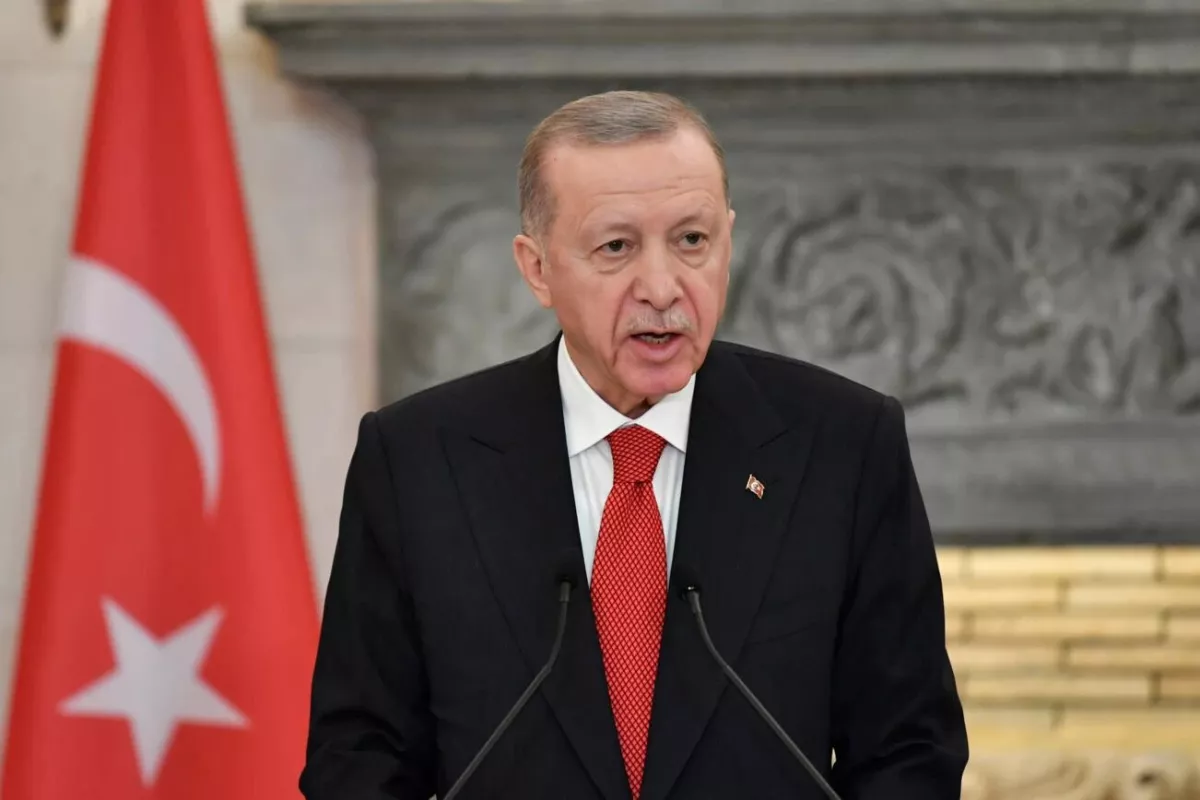
“Recent developments in our region have once again demonstrated the geopolitical importance of relations between Türkiye and the EU, that the modernisation of the Customs Union in line with new conditions is among the priority tasks requiring urgent resolution in the period leading up to Türkiye’s full accession to the European Union, and that our participation in EU defence initiatives serves common interests,” Erdoğan said during a meeting with Queen Mathilde of Belgium in Istanbul. His remarks were reported by the communications department of the Turkish presidency.
According to Erdoğan, there is significant potential for cooperation between Türkiye and Belgium in various fields — from trade to the defence industry, energy, and agriculture. The Turkish president also identified green energy as an important area of cooperation with Belgium.
“The capacity of renewable energy sources in Türkiye is among the leading in Europe,” he noted.
Türkiye has been officially pursuing full EU membership since 2005. Erdoğan has repeatedly stated that today the European Union needs Türkiye more than Türkiye needs the EU.
Is contemporary Europe, amid all the surrounding threats, capable of heeding Erdoğan’s calls? If Brussels previously responded to such statements in a rather detached manner, do the new conditions not now dictate the need to consider a much closer rapprochement with Türkiye, at least in the interest of ensuring the EU’s security?
Well-known foreign experts shared their views with Caliber.Az on this issue.

Political commentator of the Turkish TV channel NTV and PhD candidate in political science, Ümit Nazmi Hazır, said that following the outbreak of the Russia–Ukraine war and the election of Donald Trump as President, the conditions for the European Union have changed significantly.
“The EU has realised that under the new circumstances it cannot act solely as a ‘soft power’. If it wants to be a global actor and does not want to remain dependent on the US in the field of security, it must also become a military power and pursue a policy of strategic autonomy. The European Union seeks to become an independent centre of power and a global actor.
If the European Union wants to build military power, it needs Türkiye, as it has the second strongest army in NATO. Türkiye is the only country in Europe with such a significant military capacity. Europe must recognise the advantages of Türkiye.
The EU needs to form the concept of a ‘Greater Europe’ and include Türkiye in it. In my view, Türkiye is a Southern European country. Moreover, even Zelenskyy recently made the following statement: ‘For the defence and security of Europe, a new military-political bloc should be created consisting of Türkiye, Ukraine, the United Kingdom, and Norway,’” the political scientist said.
He also considers it necessary to update the EU–Türkiye Customs Union.
“Since Türkiye is not yet a member of the EU, it cannot participate in decision-making and policy-shaping processes within the Customs Union. At the same time, Türkiye is required to adapt to free trade agreements that the EU signs with third countries, but it is not automatically included in these negotiation processes. This situation leads to countries such as the Republic of South Africa, Mexico, Algeria, Japan, Vietnam, and India being able to access the Turkish market via the EU without sitting at the negotiating table with Türkiye. This has become even more necessary, especially after the signing of the agreement between the EU and India. The Customs Union must be updated, and a much deeper agreement must be concluded. The modernisation and upgrading of the Customs Union could help create a new atmosphere of trust between Türkiye and the EU and give new momentum to their relations,” Hazır said.
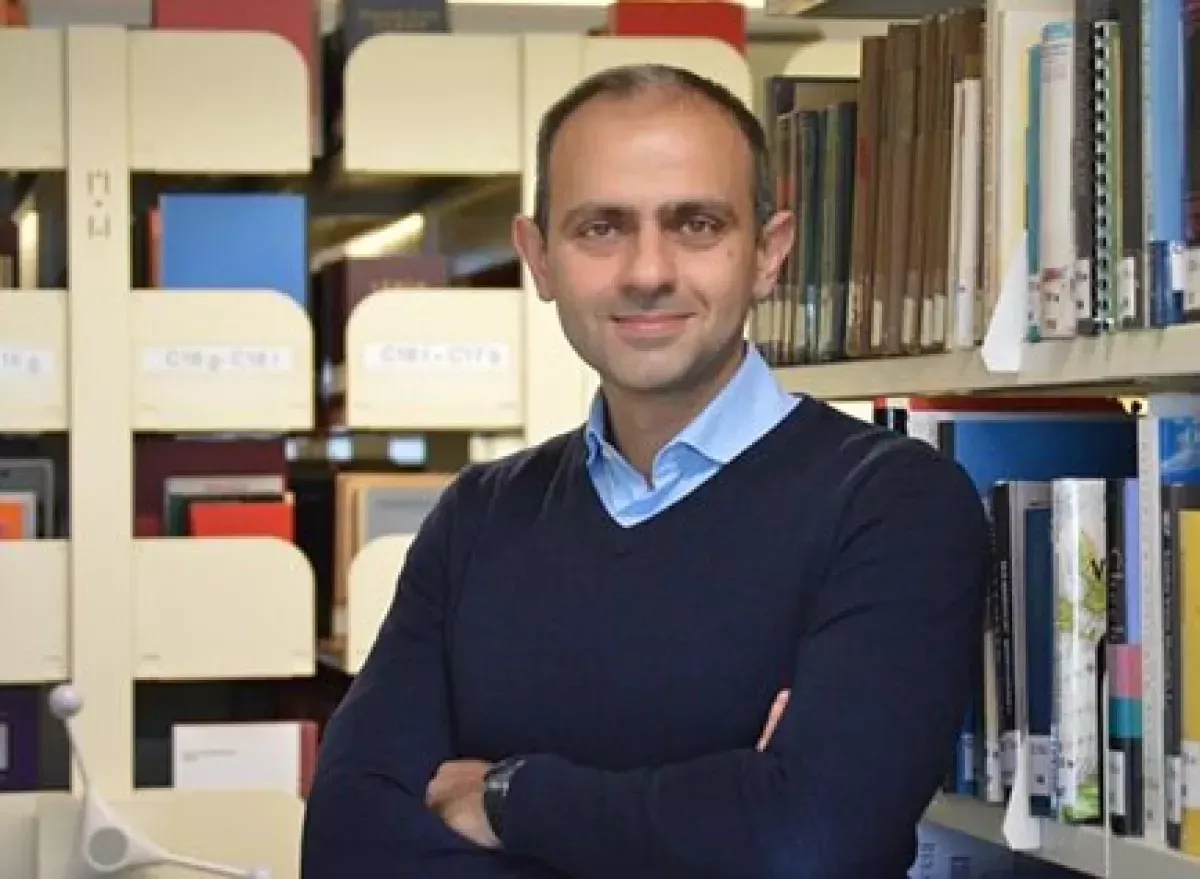
Professor of political science at the Turkish-German University (Istanbul), Zaur Gasimov, in turn, noted that close relations between Türkiye and European Union countries are rooted in traditions and history spanning several decades.
“Türkiye has developed special ties with leading EU members such as France and Germany. Cooperation in the military field has gained particular importance in recent decades, not only due to Türkiye’s role in North Africa, the Caucasus, the Middle East and the Balkans, but also thanks to the development of its own military technologies. These achievements are directly linked to the period of governance of the AKP (Justice and Development Party). Türkiye has made a significant leap in producing not only drones but also in almost all areas of military development.
Turkish projects include Altay tanks, the construction of warships, and research in the space sector. At present, the Turkish army provides 75% of its own needs independently, which is an extremely high figure compared to most EU countries within NATO. Although EU membership remains an orientation of Ankara’s foreign policy, the significance of this step for Türkiye itself has decreased over time.
The question of the necessity of EU membership, given Türkiye’s geopolitical and military importance, can be bypassed, since most EU members are already in NATO.
Türkiye has been a member of NATO since 1952 and represents the second-largest and most combat-capable force in the alliance after the United States, excluding the nuclear factor.
The Turkish army possesses not only high-quality weaponry but also unique combat experience, which within NATO is comparable only to that of the US Army. Almost all other European armies remain ‘barracks-based’ and have virtually no direct combat experience,” the professor noted.
At the same time, he continued, Türkiye exports its military technologies (primarily drones) or produces them jointly with partners under its own models.
“There has long been cooperation with Poland and Romania — both of these countries are members of both NATO and the European Union. In recent weeks, cooperation between Germany and Türkiye in the field of drone production has significantly deepened. These processes are developing very actively and do not depend on EU membership.
The European Union is perceived by its own members not as a military organisation — this function is performed by NATO. However, if the Trump administration’s threats that America could leave NATO are realised, the importance of Türkiye for the security of the European continent will increase even further. In such a case, key EU countries such as France, Germany, and to some extent Italy are likely to seek opportunities to create new military alliances. In this context, Türkiye’s role becomes undeniably important,” Gasimov concluded.







 editor@caliber.az
 +994 55 444-88-98
 Азербайджан, Баку, ул. Низами, 203, Af Business House, 5-й этаж