










Countries of Central and South Asia in the US military puzzle Experts on Caliber.Az
The United States Central Command (CENTCOM) will conduct military exercises in June on the territory of the United States with representatives of the armed forces of 10 countries from Central and South Asia under the name Regional Cooperation 2026.
As noted in the command’s statement, “nearly a dozen countries will train in the United States to sharpen their operational skills, enhance readiness, and promote regional security cooperation.”
Although such activities are, so to speak, of a systematic nature, today—against the backdrop of global political turbulence and the escalation of a series of conflicts, including in the Middle East—such large-scale military training exercises under US auspices appear to be something more than just routine drills involving partner countries.
What do experts and political analysts from Central Asian states think about the objectives of such a global initiative? How do they assess the potential of these activities, which South Asian countries will take part in this partnership programme, and how are China and Russia reacting to it? These questions are addressed for Caliber.Az by a military expert from Kazakhstan and a political analyst from Kyrgyzstan.

According to Kazakh military analyst Amangeldy Kurmetuly, the plan to conduct joint military exercises involving ten Central and South Asian states represents another step in the development of security cooperation and signals the steady strengthening of US military-political ties in the region.
“At present, there is no official information on which specific countries will take part in the exercises. However, it can be assumed that from Central Asia the participating states will include Kazakhstan, Uzbekistan, Kyrgyzstan, Tajikistan, and possibly Turkmenistan, although doubts about its participation are linked to its official neutral status. At the same time, considering that in February this year US military aircraft used Turkmen airports, its participation cannot be ruled out. From South Asia, likely participants may include India, Pakistan, Nepal, Bangladesh, and Bhutan.
It is also possible that countries of the South Caucasus—Azerbaijan, Armenia, and Georgia—will take part in these exercises. This is explained by the fact that Baku and Yerevan occupy a significant place in US strategic projects. Of particular interest is the TRIPP project, or the ‘Trump Route,’ which is currently being actively discussed in expert circles. Georgia also plays an important role, as it consistently develops cooperation with the United States and NATO in the field of security,” the military expert noted.
At the same time, according to him, the exercises will most likely not involve large-scale manoeuvres with major military formations, and each country may be represented by no more than 100 servicemen or officers. Thus, these will not be battalion-, regiment-, or brigade-level drills, but rather an activity focused primarily on improving operational skills, coordination and interoperability, as well as exchanging professional experience.
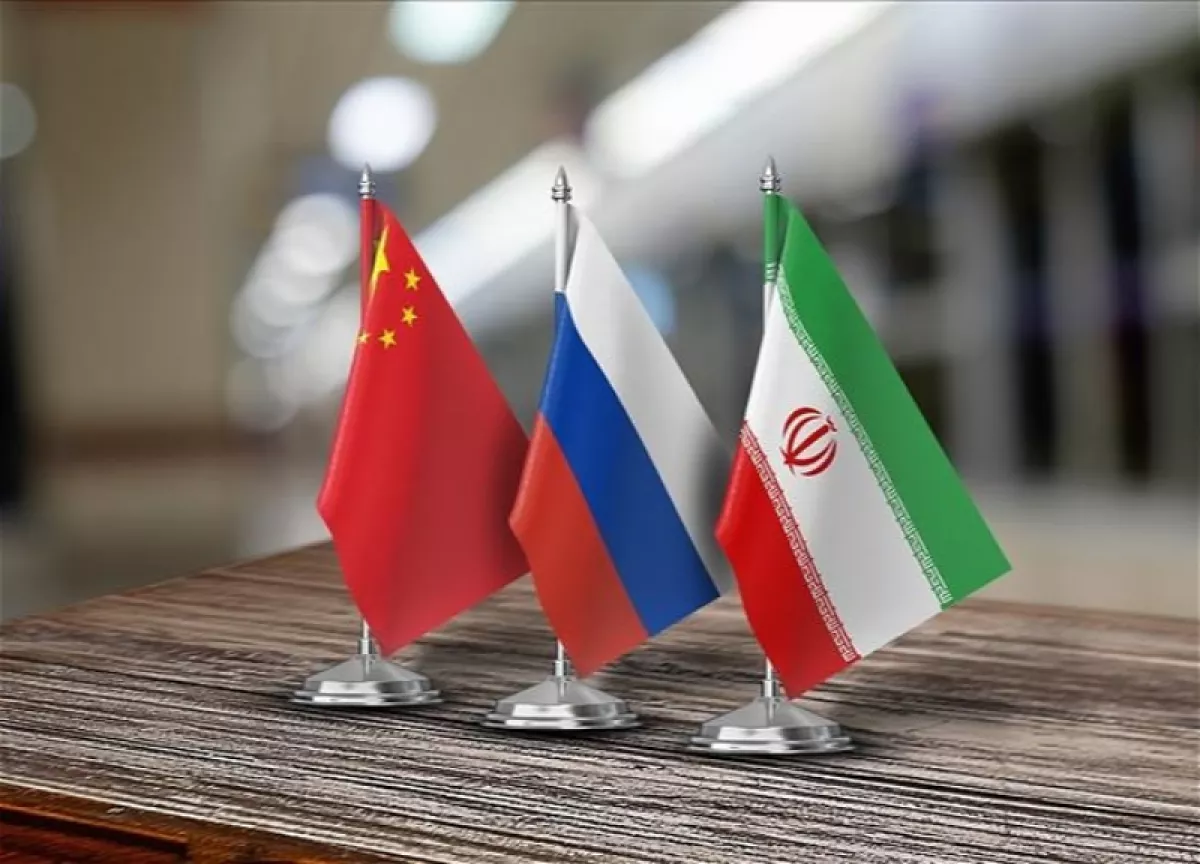
“Nevertheless, they carry not only practical but also important strategic significance, as they send a certain political message. For this reason, the exercises will likely attract the attention of regional powers such as Russia, China, and Iran. Overall, this initiative can be seen as one of the elements of the United States’ strategy to strengthen its network of partnerships and maintain its influence across the Eurasian space,” the interlocutor said.
Regarding the simultaneous participation of both India and Pakistan in the exercises, the military expert considers this scenario quite likely: “There is active military cooperation between the United States and India. In 2025, the two sides signed a 10-year agreement in this field. The fact is that Washington views India as a counterbalance to China in the Indo-Pacific region, so it will most likely promote this initiative. Moreover, these are not strategic-level exercises but operational ones. Therefore, I do not rule out such a possibility—in fact, I believe it is quite highly probable.”
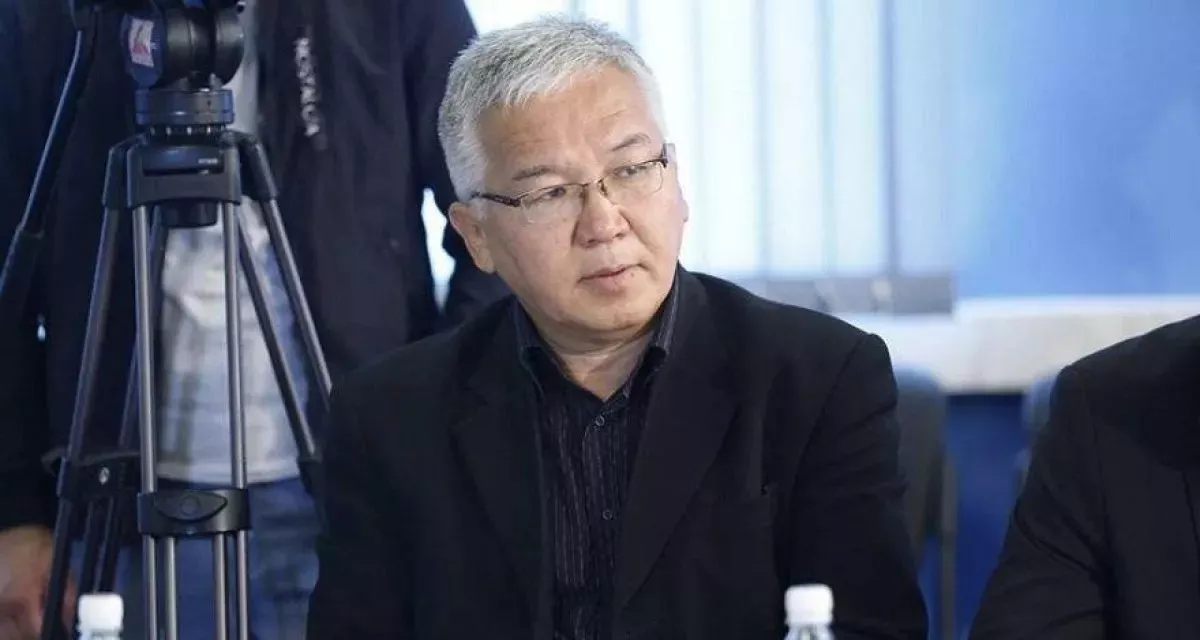
Meanwhile, Kyrgyz political analyst, former diplomat, and security expert Mars Sariev believes that exercises conducted under the format of United States Central Command almost always have not only a practical but also a cultural and institutional impact. This, he notes, applies not only to the United States—Russia, China, Türkiye, and other NATO countries operate in a similar way.
“When officers undergo joint training, they inevitably absorb the decision-making system, methods of staff planning, standards of unit command and control, attitudes toward junior officers’ initiative, organisational military culture, as well as communication language and terminology. Therefore, the thesis about the influence on the ‘mentality’ of military personnel does not seem unfounded. Any long-term officer training programme creates a network of personal contacts, professional habits, and psychological compatibility with the armed forces of the host country.
The United States traditionally emphasises concepts such as interoperability, network-centric warfare, and decentralised command—where technology and intelligence play a key role in decision-making. This objectively differs from many post-Soviet military traditions, where historically a more vertical command structure and stronger centralisation have been dominant. In this sense, it can be argued that such exercises do indeed expand the influence of the Western military school, as they introduce officers to its standards, form an alternative professional environment outside exclusively Russian approaches, and partially dilute the monopoly of the CSTO on security issues in the region,” the political analyst stated.
He also noted that Central Asian states are pursuing a highly pragmatic policy: their militaries simultaneously take part in exercises with Russia, attend programmes with the United States, engage with China, purchase Turkish technologies, and study different models of warfare.
“In other words, this is more about multi-vector adaptation than a rapid shift in geopolitical identity. The elites of Central Asian countries are trying to prevent a full ideological drift of their armed forces toward any single centre of power. It is fundamentally important for them to maintain a balance between Russia as a traditional security guarantor, China as the main economic player, the United States as a source of technology, training, and international legitimacy, and Türkiye as a growing military-cultural partner.
At the same time, in Russia and China, US activity in Central Asia is often seen not as a set of isolated technical exercises, but as part of a long-term strategy to build an alternative security architecture and gradually reduce the region’s dependence on Moscow and Beijing. Therefore, Russia’s response has long been systematic: it strengthens the training of Central Asian officers in Russian military academies, develops programmes for special services and internal troops, conducts joint CSTO exercises, and promotes military-technical cooperation through humanitarian and information channels, the Russian language, and Soviet military-historical heritage.
For Russia, it is particularly important to maintain influence at the level of the officer corps and security elites, because in the post-Soviet space personal ties between generals, academy graduates, and intelligence services traditionally play a major role. Moscow understands that if the worldview of the mid-level and younger officer generation changes, then in 10–15 years the strategic orientation of the states themselves may also change.
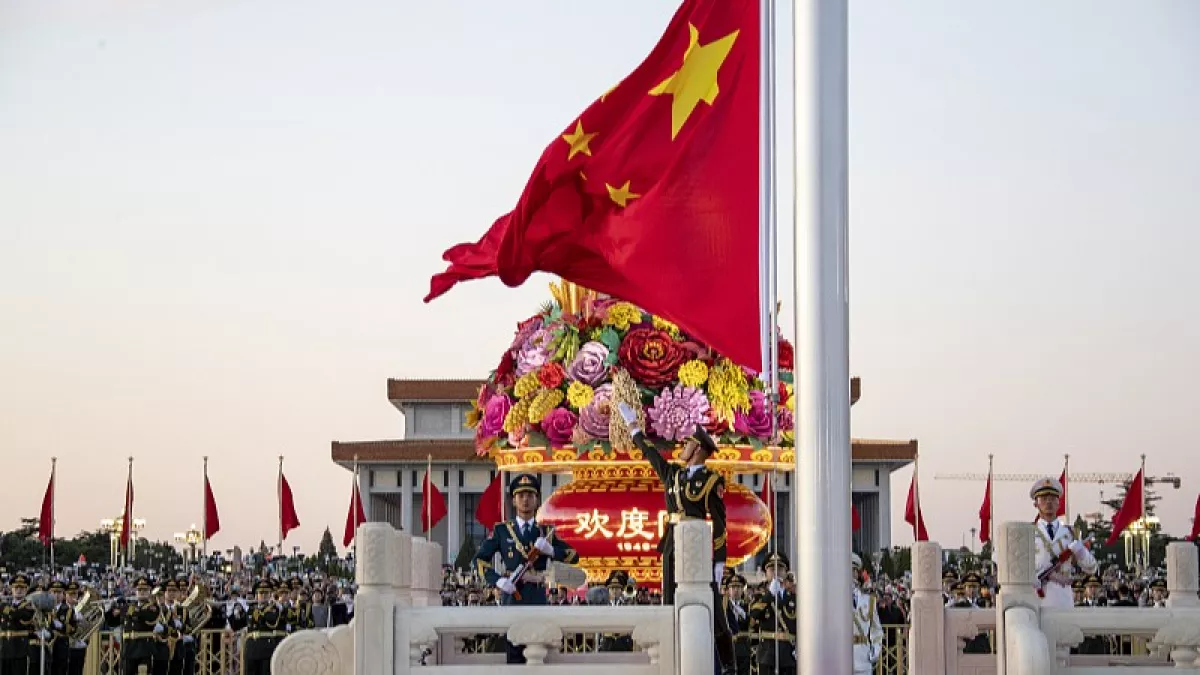
China views the situation somewhat differently, but its conclusions are largely similar. Beijing regards Central Asia as a critically important buffer for the security of Xinjiang, for the overland routes of the ‘Silk Road,’ and for energy and transport corridors. Therefore, it remains wary of any strengthening of Western military and political presence near its borders. In particular, the PRC is concerned about the potential emergence of a sustained US intelligence infrastructure, channels of influence over security elites, systems for monitoring transport corridors, and elements of long-term American military presence. However, both Russia and China understand the limitations of US strategy.
At the same time, Central Asian states do not wish to become an arena for direct geopolitical confrontation. Their elites seek to use competition among major powers to their advantage—namely, obtaining technology and training from the United States, maintaining security ties through Russia, attracting Chinese investment, and developing relations with Türkiye, Gulf countries, and the EU. Therefore, the issue is not a short-term ‘geopolitical shift’ in the region, but rather a gradual competition for influence over future elites, governance standards, and the security architecture.
It is precisely in this sense that Central Asia and the South Caucasus are becoming a space of long-term strategic competition, where the struggle is not only for bases or weapons, but also for educational environments, military culture, languages of communication, digital systems, logistics routes, and the worldview of a new generation of administrators and officers,” concluded Sariev.







 editor@caliber.az
 +994 55 444-88-98
 Азербайджан, Баку, ул. Низами, 203, Af Business House, 5-й этаж