










Not peace, just a pause: US and Iran divide Strait of Hormuz Expert opinions on Caliber.Az
It cannot be ruled out that the United States and Iran are on the verge of signing a temporary peace agreement intended to halt a full-scale war in the Middle East that began in late February 2026. US President Donald Trump stated that the text of the memorandum is “largely agreed upon,” however, both sides emphasise that the negotiations remain extremely difficult.
So what is the real situation surrounding the deal between Iran and the United States? What is known today, and what are the real chances of reaching a peace agreement?
Caliber.Az asked well-known regional experts to answer these questions.

Israeli Iranologist and researcher, author of the Telegram channel Oriental Express, Michael Borodkin, notes that in reality, very little is known for certain.
“Everything looks as if the Iranian regime has managed to replace the main nuclear issue in the negotiations — it has become the Strait of Hormuz. Indeed, from what has become somewhat clearer over recent days, one can conclude that Iran appears ready to open the strait in exchange for the lifting of the American blockade of its southern ports. This is essentially a return to the pre-war status quo, if we do not take into account the fact that the Iranian regime is, apparently, seriously considering creating a new mechanism for charging ships passing through for certain ‘services’. But even if this does not happen, the negotiated permission to sell oil allows the Iranian regime to claim that it has emerged from this round as the political winner, despite a clear military defeat,” the expert says.
According to him, the sides have reportedly agreed to discuss the nuclear programme within 60 days after the conclusion of a preliminary ceasefire.
“However, we do not see any real readiness for concessions from the Iranian regime. The generals who seized power after the death of Ali Khamenei do not see any need to make a genuine compromise with the United States.
The only chance for a peace agreement is if one of the sides backs down. The generals would prefer to drag out time in order to strengthen their positions domestically. The absence of a full agreement allows them to maintain a state of war and keep power firmly in their hands. Trump also, it seems, is not ready to accept a political defeat and step aside. As long as neither side is willing to retreat, the likelihood of a resumption of hostilities in one form or another is significantly higher than the likelihood of reconciliation,” Borodkin believes.
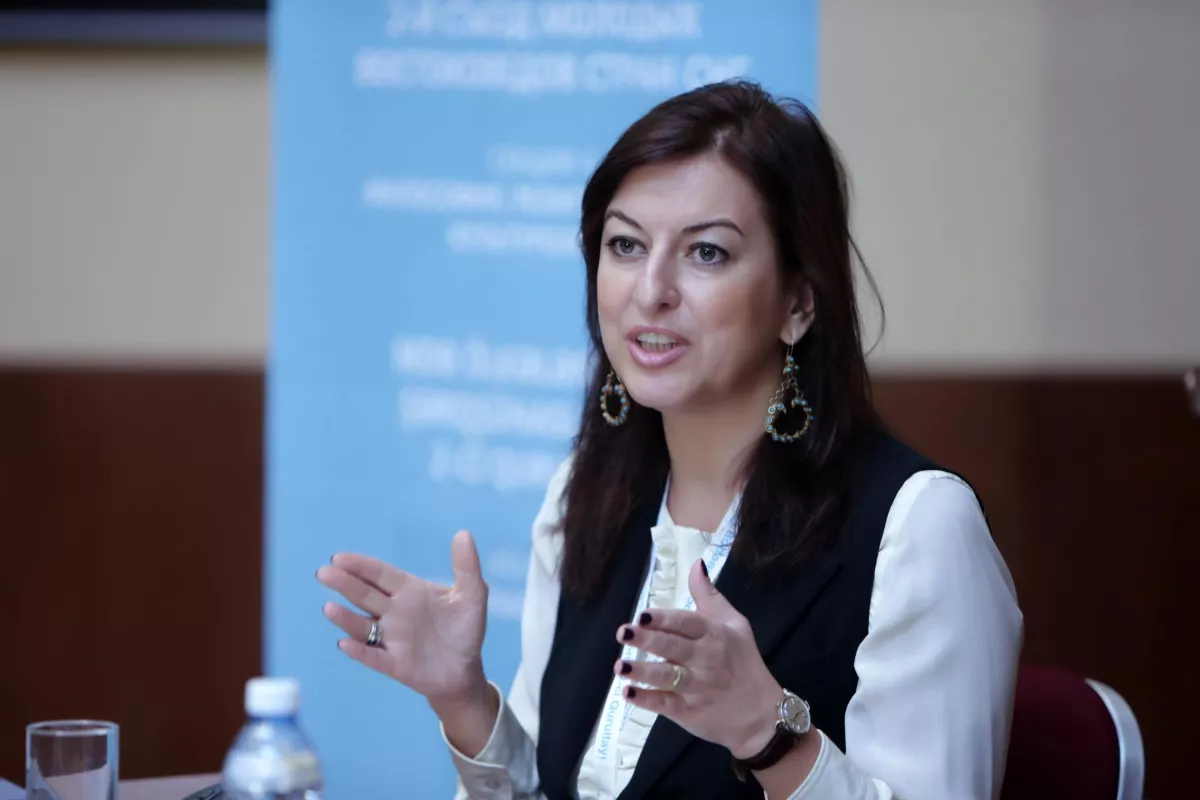
Associate Professor at the Department of Modern East and Africa Studies at RSUH, and senior researcher at the Institute of Oriental Studies of the Russian Academy of Sciences, Lana Ravandi-Fadai, in turn, acknowledged that the situation surrounding a possible temporary agreement between Iran and the United States indeed looks extremely complex and, in many respects, unprecedented.
“We are not dealing with classical peace negotiations after the end of a war, but with an attempt to develop a limited framework for de-escalation right in the midst of an ongoing conflict, amid deep mutual distrust.
The problem is that all previous negotiations around Iran and the region ultimately ended in military escalation. For Tehran, the issue of security cannot be discussed in isolation — only in terms of the nuclear programme or the Strait of Hormuz. In Iran’s view, it concerns the entire regional security architecture. That is why they are closely monitoring the situation in Lebanon. When, in parallel with talks about de-escalation, Israeli strikes on Lebanese territory continue, Tehran perceives it as a signal: one hand is offering negotiations, while the other maintains a mechanism of pressure.
It is precisely here that the key contradiction arises: it is difficult for Iran to accept a sustainable agreement if its regional allies continue to live under constant military threat. Therefore, for Tehran, the issues of Lebanon, the Strait of Hormuz, sanctions, and the nuclear programme are elements of a single regional security system.
This is why the information space creates a sense of contradiction: negotiations are taking place simultaneously with ongoing military pressure, while each side is trying to convince its domestic audience that it is not capitulating.
In Tehran, the current process is perceived not as a path toward ‘reconciliation with the United States,’ but as an attempt to establish a new balance of power after the scenario of rapid military pressure failed to deliver Washington’s expected results.
The key change is that the initial American logic — military pressure, blockade, and threats aimed at forcing political concessions from Iran — has not worked. Yes, Iran has suffered serious economic and infrastructural losses. But at the same time, Tehran has managed to maintain system stability, avoid internal collapse, preserve its regional ties, and turn the Strait of Hormuz into a factor of global pressure.
This is precisely what has become the turning point. The issue of Hormuz is no longer purely military — it has evolved into a matter of international energy security and the global economy. The negotiations are now not limited to the nuclear programme. In practice, three interconnected tracks are being discussed: the security of Hormuz, sanctions and oil exports, and the parameters of a nuclear compromise. Moreover, Hormuz itself has become Iran’s main bargaining chip,” the expert believes.
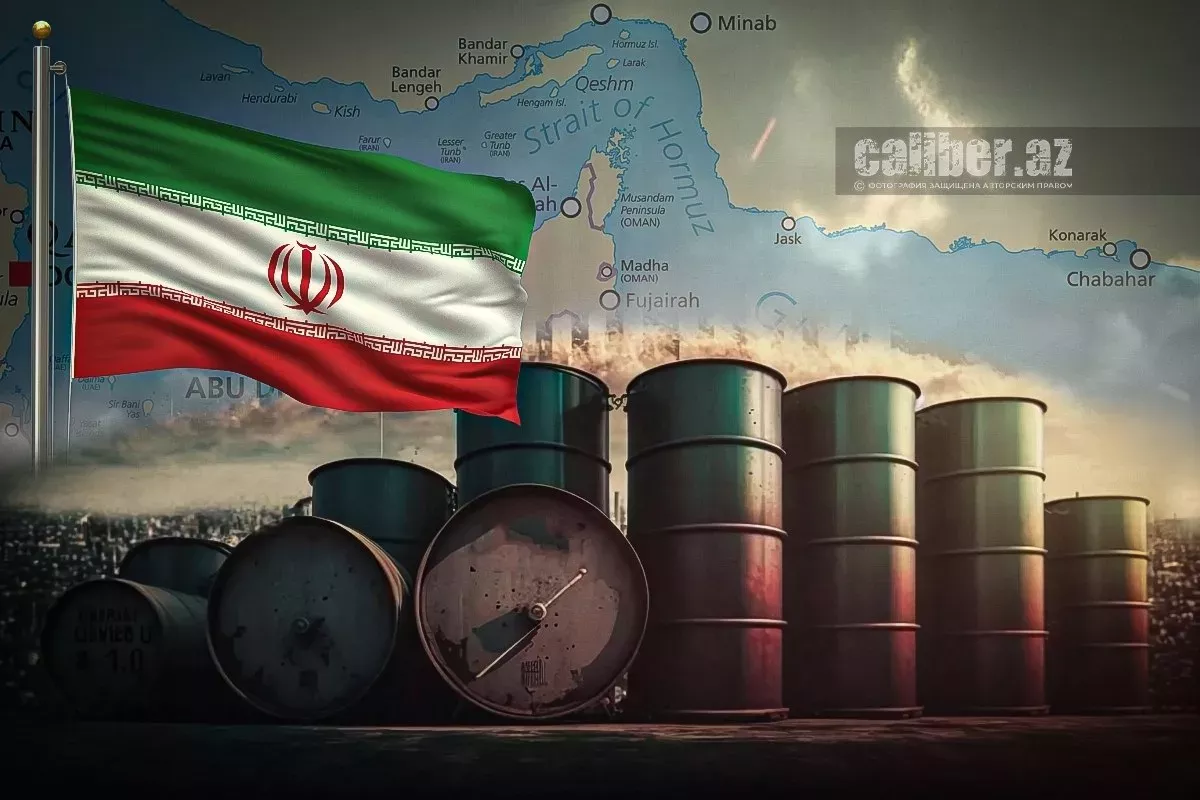
According to her, the draft memorandum therefore includes provisions on reopening the strait, demining operations, a partial lifting of the maritime blockade, and the restoration of oil exports.
“The fact that the nuclear issue is being considered separately is one of the most telling elements. The sides have concluded that a comprehensive agreement on the nuclear programme is currently impossible. Therefore, an interim scheme is being discussed: Iran would temporarily freeze the expansion of its programme but would not give up its right to peaceful enrichment, while the United States would not demand the immediate transfer of all enriched uranium. This is what allows the negotiation process to continue.
For Tehran, it is crucial to avoid a situation in which concessions look like capitulation. That is why the demand for the unfreezing of funds in Qatar is not only an economic issue but also a political one — a kind of test of Washington’s seriousness of intent.
Israel, in turn, remains one of the main destabilising factors around the deal. The Israeli leadership fears that a temporary agreement would give Iran breathing space, allow it to preserve its nuclear infrastructure, and cement Tehran’s role as an important actor in the regional security architecture. Therefore, within Israeli elites, there is strong pressure on Washington to tighten the terms of any deal and maintain the option of continued military leverage.
In Iran itself, there is also no full unity on tactics. However, there is a consensus on key issues: sovereignty, the right to a peaceful nuclear programme, rejection of external diktat, and the security of the Strait of Hormuz. Even pragmatic forces are not ready to sign an agreement that would be perceived by society as humiliation.
In my view, the chances of a limited temporary agreement are fairly high — especially because the United States has not achieved a rapid result, Iran is not interested in endless escalation, and China and the Gulf states are demanding stabilisation of the situation around Hormuz. However, this would be an extremely fragile construct. Strategic distrust has not disappeared, positions on the nuclear issue remain far apart, and in both countries, there are strong opponents of compromise.
Today, the discussion is not about a full peace between Iran and the United States, but rather an attempt to create a crisis-management mechanism. After the start of the war, it became clear that the United States is not able to impose its will on Iran, and Washington has faced a high economic and political cost of escalation. Therefore, the current memorandum is more of an attempt to buy time and stabilise the situation than a final settlement. This is precisely why the negotiations appear so complex and contradictory: the sides are discussing not just a technical agreement, but effectively a new balance of power in the Middle East,” Ravandi-Fadai concluded.







 editor@caliber.az
 +994 55 444-88-98
 Азербайджан, Баку, ул. Низами, 203, Af Business House, 5-й этаж