










“Armenians shot themselves in the foot by starting a war in the South Caucasus” Israeli expert on Caliber.Az
In an interview with Caliber.Az, Israeli writer, publicist, and military expert Peter Lukimson reflects on his deep personal and professional ties with Azerbaijan, the transformation of Baku since the 1990s, and the broader geopolitical shifts reshaping the South Caucasus and the Middle East.
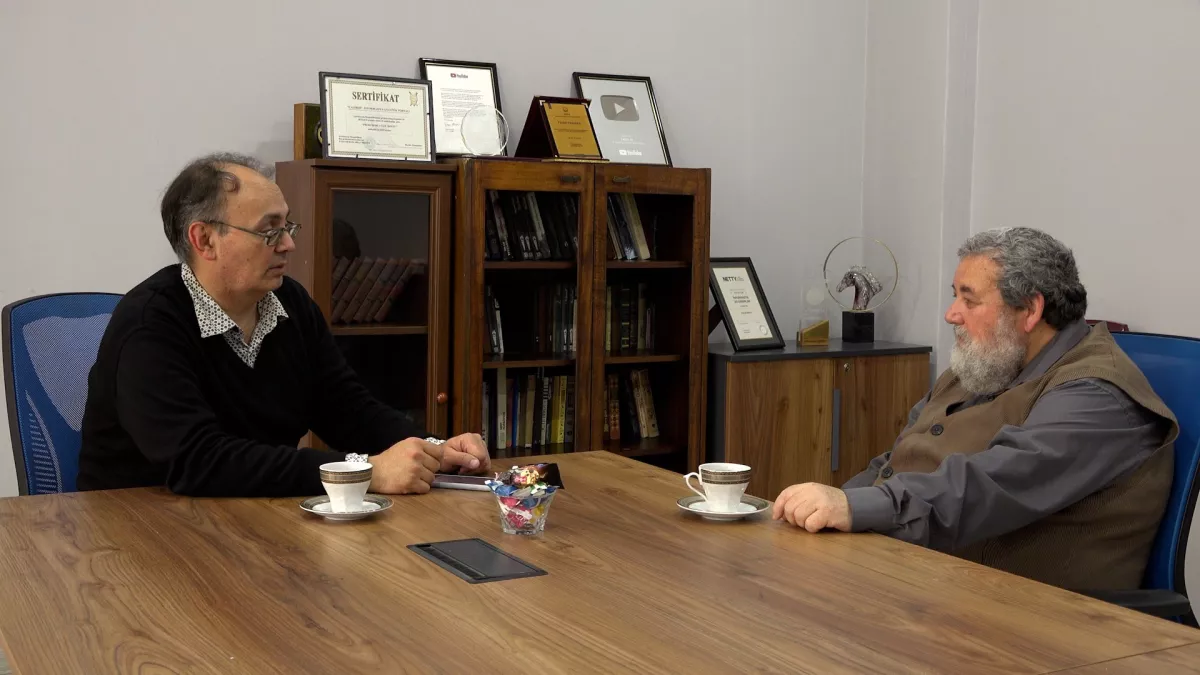
— You left Baku in the 1990s, a transitional period for Azerbaijan. What is it like to return now to the capital of a country that has restored its territorial integrity?
— I left what is, to me, the most beloved city in the world, a place that is incredibly dear to me, and it truly felt like leaving for a different era… It was an entirely different time, very difficult for all the republics of the former Soviet Union, and the Karabakh conflict left its mark on Azerbaijan, which had just regained its independence. At the time, I worked as a journalist for a Baku newspaper, so I was quite well-versed in the situation, kept up with developments, and studied the history and background of the conflict in depth.
The essence of my departure is that I was leaving for my historical homeland, to which I was bound to return sooner or later. However, I never mentally parted ways with Azerbaijan: I eagerly absorbed every piece of information coming from Baku, followed the course of the Karabakh war, worked as an editor for the newspaper “Russian Israeli” and as a correspondent for the “Vestnik Kavkaza” news outlet covering Azerbaijan. Thus, even while being in Israel, I kept my finger on the pulse and clearly understood what was happening in my beloved Azerbaijan.
In addition, almost immediately after moving to Israel, I wrote a long essay dedicated to Karabakh, giving it a fairly neutral title: “Nagorno-Karabakh. Chronicle of Events Through the Eyes of a Baku Jew.” In 1992, it was published in five issues of one of the Israeli newspapers. Later, that publication somehow reached Baku, and in Azerbaijan it was published in book form. Those were turbulent times; it was very difficult to find and contact someone in another country. The book was published without my approval, but I did not take issue with it—instead, I felt joy that I had managed to do something useful for my homeland.
For many years, I didn’t even know what it looked like. And then, more than a decade later, I came to Azerbaijan as part of an Israeli delegation. At a meeting with representatives of Azerbaijani intellectual circles, a man approached me, handed me my book, and asked me to sign it, adding that it was one of his favourite books and one of the first to tell the truth about what was happening in Karabakh. One copy of this book, as far as I know, is kept in the collection of the M.F. Akhundov National Library.
Over time, many Baku Jews who had already settled in Israel began travelling back to Baku, and upon returning would share their impressions. Some of them sadly noted that the city had changed for the worse and was not at all like before. But, to be honest, I did not really believe this. And when I visited the capital myself, I felt relieved: the same people, the same smiles, the same familiar city—only improved and beautiful.
I can say that today the Azerbaijani capital is one of the most popular destinations for Israeli tourists. They gladly visit Azerbaijan, where they feel truly comfortable and at home. I will share one story that clearly shows what Azerbaijan means for Jews. A large group of Israeli tourists was supposed to arrive in Baku before the start of Shabbat (Shabbat is a day of rest and spiritual renewal, dedicated to God, family, and rest from everyday work — ed.), but problems arose on the way: someone broke their leg, and it became clear that they would not make it in time.
For a religious Jew, this is a very serious matter: during Shabbat, one is not only forbidden to continue travelling but also, for example, to turn on lights or, in general, perform any kind of activity. In addition, there is the issue of kosher food and a proper place to observe Shabbat with dignity.
At that point, the group leader called a rabbi—originally from Baku—who heads the Mountain Jews synagogue in Tel Aviv. He immediately provided an address, if I’m not mistaken, in the Oghuz district, which was quite close to the group’s route. They went there and were warmly received: they were given accommodation, kosher food, and all the necessary conditions to observe Shabbat properly, as required.
This case very clearly shows how comfortably Jews feel in Azerbaijan.
I would say that the connection between Azerbaijan and Israel has only grown stronger in recent years. Israel certainly sees Baku not only as an important ally but also as a reliable partner in other areas—economy, culture, and human relations. And this cooperation has very deep roots.
— How is the relatively calm situation in the Middle East currently perceived in Israel?
— It is difficult to call it calm; in essence, the war is still ongoing—if not in the Gulf, then nearby. The threat in Gaza has not disappeared, Hamas refuses to disarm, and the vast network of underground tunnels used by militants has still not been fully studied or eliminated. In fact, they have created something unique—unfortunately not for good purposes—a real underground city larger than the Moscow metro, through some of whose tunnels trucks carrying rockets and other weapons can easily pass.
So this problem remains very relevant. There is also no peace in Lebanon, where the government has expressed a desire to get rid of Hezbollah, but does not have the resources to do so: the Lebanese army is inferior to it in capabilities. This means that without Israeli intervention, it will not be possible to resolve the issue.

Regarding Israel’s actions against Iran, I will clarify an important point that not everyone is aware of. The fact is that Israel began military actions against this country in the summer of 2025, not because Tehran has been promising for many years to destroy Israel, or because of the well-known clocks showing the time remaining until the disappearance of the Jewish state. The war happened because our intelligence received absolutely clear information that Iran could develop and build a nuclear bomb within the coming months.
Of course, if Tehran has a nuclear bomb, it does not necessarily mean it would immediately use it against Israel. However, the very fact of its creation indicates that the Iranian side could destroy Israel—in other words, it could turn its threats into reality. The issue of U.S. involvement in the June war was decided at the final stage, as it became clear that the main laboratories for building the bomb were located at such depth that only American weapons could strike them.
As for the joint U.S.-Israeli operation against Iran in 2026, one of the reasons that prompted Israel to take action was credible information that Tehran still possessed nuclear material sufficient to build about five bombs. For Israel, even one would be enough—our country is small in size.
— How would you characterise the current level of relations between Israel and Arab countries, especially given that during this period, in addition to the Gaza operation, there were essentially two wars in the Gulf?
— Today, Arab states are almost open to dialogue. One could say that after Iranian strikes on their territories, many of them realised they are in the same boat as Israel and need to build ties. By the way, Israel has excellent relations with the UAE; Israelis very much enjoy travelling to Dubai and Oman. In general, we have good relations with a number of Arab countries.
However, until normalisation with Saudi Arabia takes place, it will not be possible to establish official relations with other Arab states, since Riyadh is a key player—other Arab countries largely orient themselves toward it.
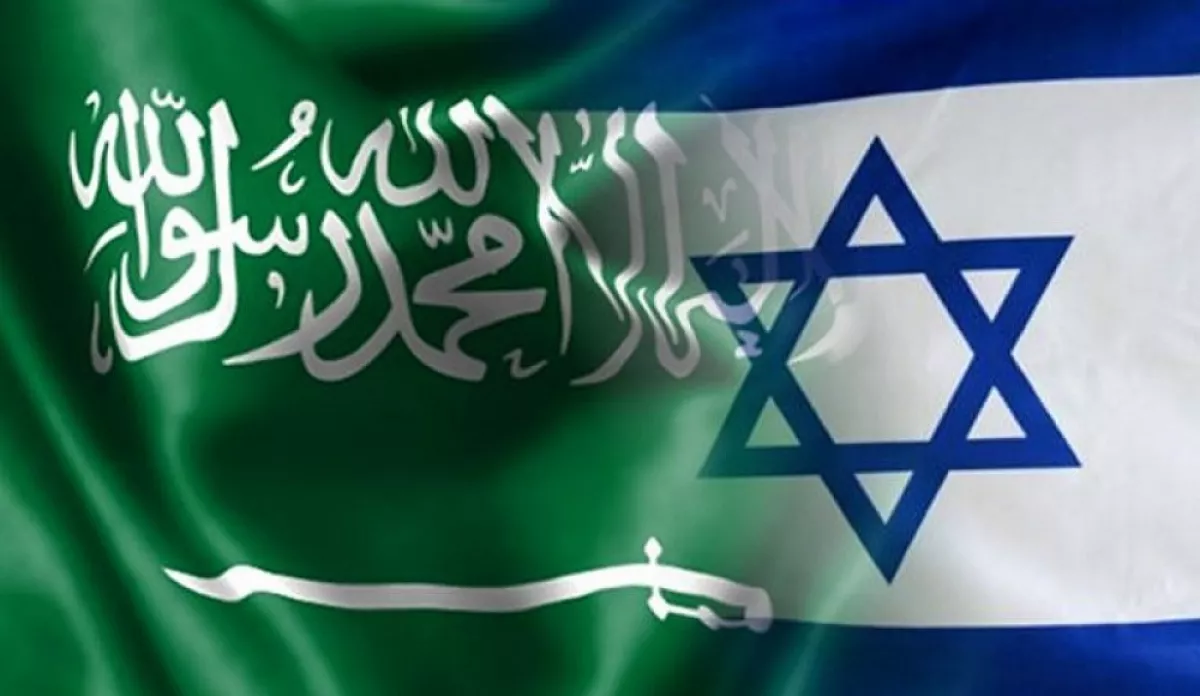
At the same time, negotiations with Saudi Arabia have been going on for a long time. We have nothing to divide; Jews and Arabs share a common ancestor and common Semitic roots—for example, the Prophet Abraham, or Ibrahim, whose name is simply pronounced differently in different languages in the two sacred texts of Jews and Muslims. By the way, Hebrew and Arabic are phonetically very close.
So, negotiations with Riyadh have intensified not only because Iran struck Arab countries. When Tehran blocked the Strait of Hormuz, it became clear that things could not continue like this and that another route had to be found for transporting oil—for example, laying a pipeline to the Arab port of Jeddah on the Red Sea, from where it would be shipped by sea to Eilat, where there is an oil pipeline; from there to Haifa and then through the Mediterranean to Europe.
Or another option, more expensive but more reliable: to lay an oil pipeline directly overland from Saudi Arabia to the Israeli city of Eilat. From there, oil would follow the same route to Europe and global markets.
Arab countries are now very interested in this option. I don’t know how things will develop, but I will note one point: if 10 years ago someone had said that flights from Israel could pass through Saudi Arabian airspace, it would have seemed like pure fantasy. Such routes shorten our aircraft’s travel time to Asia by several hours. There are still no official relations with Riyadh, however Israeli scientists and businesspeople are constantly visiting Saudi Arabia, establishing business contacts, and concluding deals.
But there are still obstacles. Riyadh insists that Israel take steps toward the creation of a Palestinian state. However, what our country was willing to agree to quite recently is now something it cannot accept after the events of October 2023. We do not want an aggressive military entity next to us that could theoretically repeat the tragedy of October 7.
— The peace process between Baku and Yerevan is currently moving forward actively: representatives of civil society from both countries are establishing contacts with one another, fuel is being supplied from Azerbaijan to Armenia, and various goods are being transported in transit to the neighbouring republic through Azerbaijani territory. In your opinion, will the two countries ever be able to reach the level of truly good-neighbourly relations, where hostility and distrust are completely overcome?
— In Israel, at the supermarket I regularly go to, there is a security guard originally from Armenia. Knowing that I am from Baku, he would often ask me what would happen next between our countries. And I always told him: the best thing Armenia can do is abandon its territorial claims and make peace with Azerbaijan.
Why? At the very least, because peace with Baku opens up enormous opportunities for Armenia, which at that time was in isolation. These include economic and infrastructure opportunities, along with many other advantages—in other words, tremendous benefits that are difficult even to fully assess right away.
So everything that happened was a natural development. And for Armenia, this is the best possible outcome that could have happened.
I remember that at the university where I studied in the 1980s, there were two girls from Karabakh in our group—an Armenian and an Azerbaijani—who were the closest of friends. And whenever people asked them where they lived and what life there was like, both of them would repeat the same phrase: “Karabakh is paradise on earth.”
And then, suddenly, Armenian separatists decided to put an end to that paradise for completely irrational reasons, although events could have unfolded differently. Armenians could have continued living in Karabakh if they had truly wanted peace. But unfortunately, they did not want it.
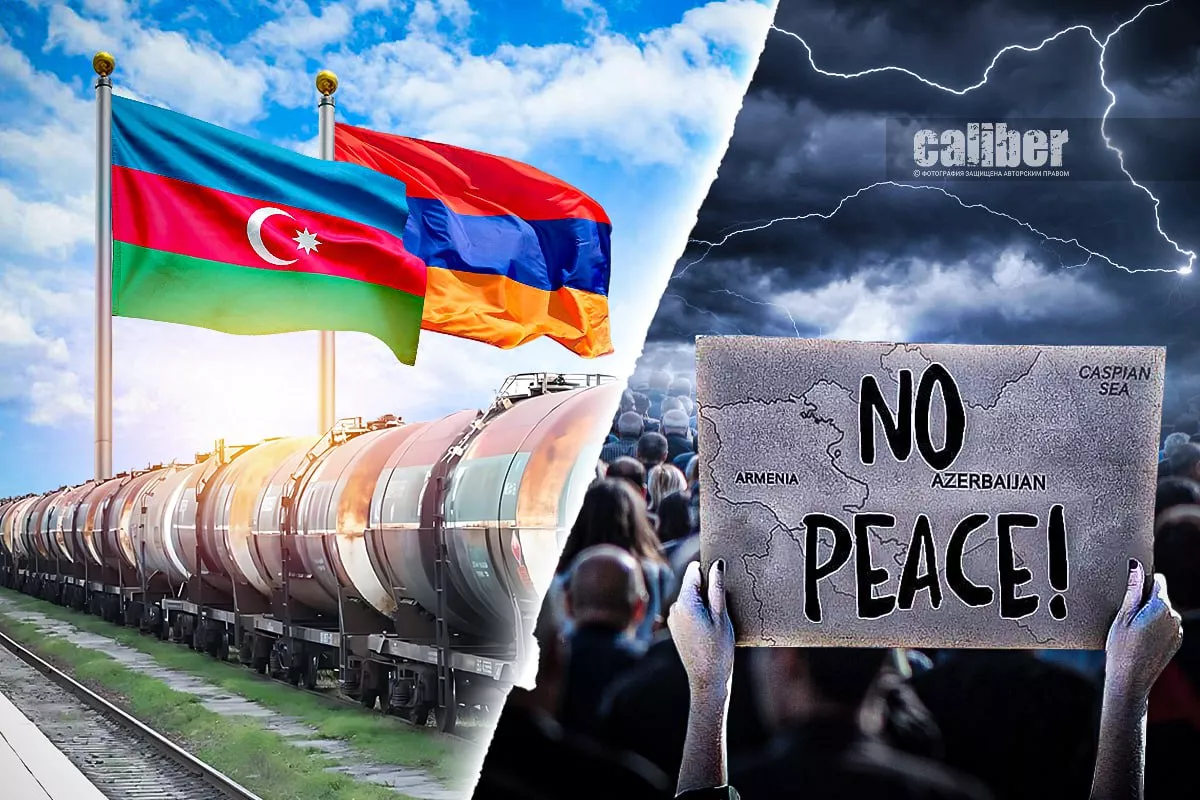
Not long ago, I wrote an article based not on Armenian or Azerbaijani sources, but on Russian historical records. In it, using factual examples, I demonstrated that both in the Erivan Governorate and in Karabakh, the ratio between Azerbaijanis and Armenians was practically the same. Yet, for some reason, Azerbaijanis disappeared from Armenia, while in Azerbaijan, in Karabakh, the proportion of Armenians and Azerbaijanis remained virtually unchanged for a very long time.
What does this indicate? That ethnic cleansing against Azerbaijanis took place in Armenia about a hundred years ago. In my opinion, Armenians shot themselves in the foot back in the last century, when the Transcaucasian Federation was created in the South Caucasus, uniting Azerbaijan, Armenia, and Georgia within one framework. Such a political decision would have allowed the countries to consolidate their efforts, jointly develop the region’s rich natural resources, and create a full-fledged model for coexistence. It was a brilliant idea, but the Armenians destroyed it by starting a war in the South Caucasus.
In my view, the person who spoke best about peace was the chairman of the Azerbaijan Writers’ Union, Anar, when he visited Israel. We spoke during a meeting in Tel Aviv, and he said: “Look at what hatred leads to. In Armenia, there is a catastrophic decline in the birth rate, many people are fleeing the country because of the difficult economic situation, and there is no faith in the future. And all because hatred does not give birth to new life. Only love gives rise to new life and hope, and that is what they lack—and that is what I sincerely wish for them.” These are not my words. These are the words of my favourite Azerbaijani writer, which, in my opinion, are more accurate than any others.







 editor@caliber.az
 +994 55 444-88-98
 Азербайджан, Баку, ул. Низами, 203, Af Business House, 5-й этаж