










Winter is coming: Kyiv sets timeline for the end of the war Expert opinions on Caliber.Az
Ukrainian President Volodymyr Zelenskyy has instructed his team to end the war as soon as possible, the head of the Presidential Office of Ukraine, Kyrylo Budanov, said at the Architecture of Security Forum in Kyiv, the public broadcaster Suspilne reports.
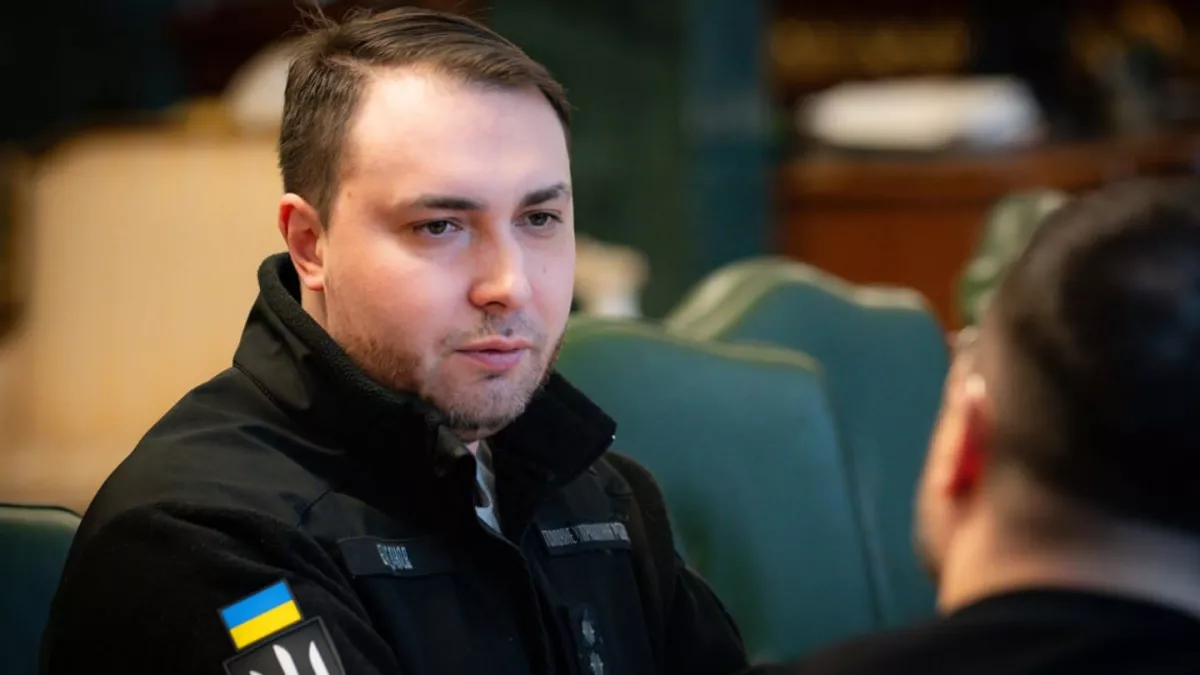
“This is the president’s directive — to try to bring this war to an end as quickly as possible. Preferably before winter. As head of the Presidential Office, I will do everything in my power to achieve this goal,” Budanov said.
Budanov added that all relevant government agencies are also working on implementing the task set by Zelenskyy in a “timely and well-considered manner.” Previously, Budanov headed the Main Directorate of Intelligence of Ukraine’s Ministry of Defence (HUR).
According to him, Kyiv possesses the necessary capabilities to achieve this objective, although Moscow may ultimately reject any corresponding agreements.
He acknowledged that such a scenario could unfold “at the final stage”: “That is also a possibility — do not forget that. However, there are now real signs that the conditions for ending the hostilities already exist.”
At the beginning of May, Bloomberg sources reported that President Zelenskyy had asked Western allies to accelerate deliveries of air defence systems and interceptor missiles, based on the assumption that the war would continue at least through the winter and that additional weaponry was needed to prepare for attacks on energy infrastructure and cities.
What details is Budanov withholding? Is it really possible to assume that certain circumstances could emerge that would persuade Moscow to agree to at least a temporary peace by the end of 2026? And what might those circumstances be?
Prominent Ukrainian experts commented on the situation for Caliber.Az.
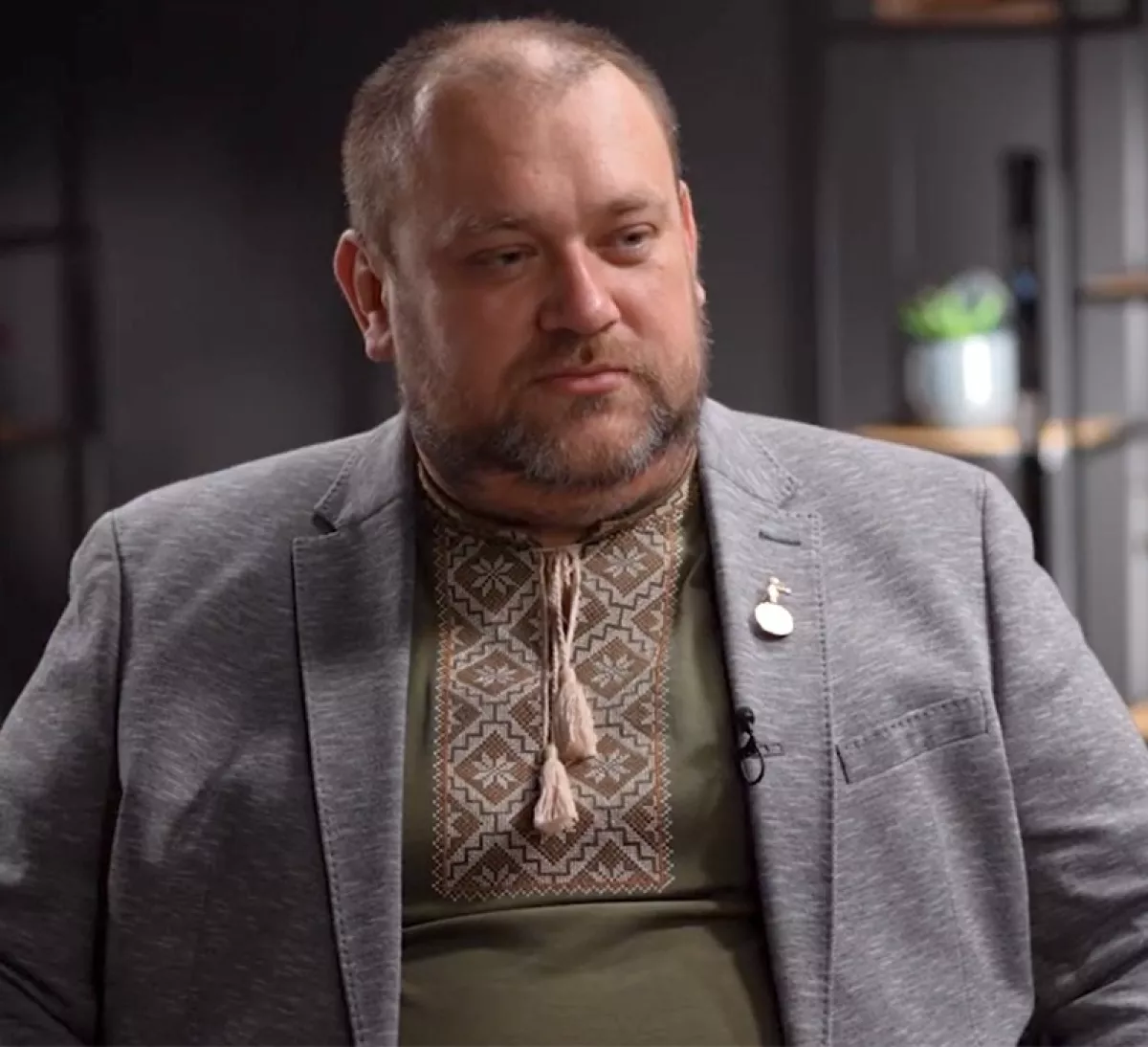
Ukrainian analyst, PhD in Political Science, and head of the Association of Local Self-Government Bodies, the “International Association of Small Communities,” Oleksii Buriachenko, first of all noted that Budanov, given his intelligence background, has a deep understanding of the economic and social situation inside Russia, as well as the challenges currently facing the Russian political system.
“The President’s decision to task the head of the Presidential Office with securing a swift end to the war, preferably before winter, is driven not by a single factor but by a whole set of circumstances that should push Putin toward negotiations on an equal footing rather than the issuance of ultimatums to Ukraine.
These factors include the situation on the battlefield, external political pressure, as well as the Russian Federation’s own domestic political and economic difficulties. The war is having a negative impact on Putin’s approval ratings, and he himself has already acknowledged the existence of systemic problems in the Russian economy, directly linking them to the ongoing military operations.
Representatives of the Russian government and members of the State Duma have also begun speaking about the need to end the war because of its extremely negative impact on the economy. These problems have become apparent to ordinary Russians as well, creating a threat to the regime’s legitimacy.
In the territories occupied by Russia, particularly in Crimea, there is an acute fuel shortage. Gasoline and diesel fuel were initially sold using ration coupons, and are now unavailable altogether.
Russia has also failed to demonstrate any significant successes on the front. Ukraine, in turn, has not only stabilised the frontlines in recent months but has also liberated more territory than Russia has managed to capture over the same period. A parity has been achieved in the use of drones, and the depth of the strike zone has significantly increased, making it more difficult for the opposing side to deploy equipment in many areas. Russian assaults are yielding limited results due to a lack of high-quality regular reinforcements and mobilisation issues.
This military situation is prompting the Kremlin to seek ways to ‘reformat’ the war. This could involve launching an endless negotiation process (a so-called ‘Minsk-3’), aimed not at a lasting peace but at a ceasefire. Therefore, Russians may agree to halt hostilities along the line of contact, even abandoning their ultimatum demands regarding the seizure of the unoccupied parts of the Donetsk and Luhansk regions,” the analyst suggests.
According to him, among the external factors behind Russia’s weakening, one should also note the loss of influence in Armenia, the Middle East, the South Caucasus, Central Asia, and Africa.
“The longer the war drags on, the weaker Russia becomes in this major geopolitical game. The time frame (autumn) is linked to the U.S. midterm elections, the outcomes of the NATO summit in Ankara, the meeting between Trump and Xi Jinping in September, as well as the elections to the Russian State Duma.
There is also an alternative viewpoint: Russia’s signals of readiness for negotiations may be an attempt to intimidate Europeans or to remove the Ukraine factor ahead of a possible operation against EU and NATO countries.
For the Kremlin, it is critically important to put the war against Ukraine on pause, since Ukraine has the only combat-ready, high-tech army in Europe. Without such a pause, opening a ‘second front’ would become a catastrophe for the Russian leadership.
In the absence of military and economic arguments, Russia’s only remaining instrument of pressure is terror against the civilian population and the use of conflicts in the Middle East to divert U.S. attention.
Zelenskyy and Budanov are aware of these pressure points and are using them to force Russia into a ceasefire before winter. Whether it will be possible to achieve this on fair terms and with security guarantees remains unclear. At present, these initiatives appear to be a strategic signal to the United States, demonstrating Ukraine’s willingness to negotiate.
The situation is developing dynamically: the process is influenced by potential destabilisation within NATO and the EU, elections in the United States, social tensions in Russia, and internal political processes in Ukraine. All of these factors can either strengthen Ukraine’s position or, situationally, weaken it,” Buriachenko concludes.
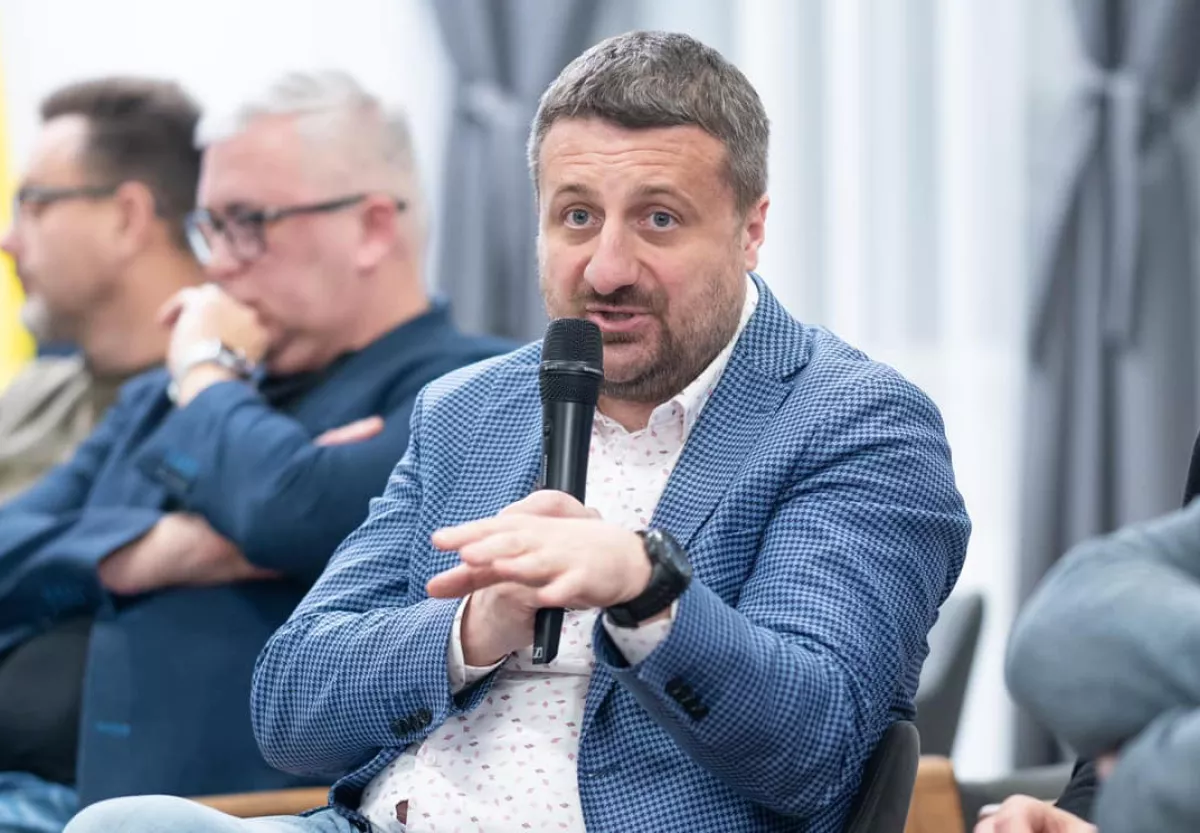
Ukrainian political strategist Taras Zahorodniy believes that diplomatic statements by Zelenskyy and Budanov about a “near peace” and positive shifts are primarily a gesture toward the West.
“The United States and Europe are extremely concerned about an uncontrolled collapse of Russia, so the Ukrainian leadership says what they want to hear. In reality, this resembles old Soviet logic: formally, we are for peace, but the struggle for it will be so intense that there may be nothing left of the opponent.
In my view, what actually reflects the real situation are concrete actions: increasing intensity of strikes on Crimea and the systematic destruction of the land logistics corridor. Ukraine already has the capability to create ‘sanitary zones’ on Russian territory up to 200 km deep, and strikes on oil refineries and other critical infrastructure continue.
Zelenskyy constantly monitors the state of the Russian economy, understanding that Putin will continue the war until economic collapse leads to a change of power, destabilisation, and ultimately the disintegration of Russia,” the political strategist said.
According to the expert, even if one assumes that Putin is replaced by someone else, such as Mishustin, that successor would still find themselves trapped.
“The new leadership will not be able to simply step out of the paradigm in which four Ukrainian regions have already been incorporated into Russia. Thus, it will be forced to continue spinning the war machine until the country’s complete self-destruction.
I believe that this summer will be a very difficult and ‘interesting’ period for Russians. By autumn, it will become clear what part of Russia we will actually have to deal with and in what condition it will be. All official statements about peace initiatives are merely part of a strategy designed around the inevitable end of this system,” Zahorodniy noted.







 editor@caliber.az
 +994 55 444-88-98
 Азербайджан, Баку, ул. Низами, 203, Af Business House, 5-й этаж