










Israel–Hezbollah confrontation: what lies ahead for Lebanon? Expert opinions on Caliber.Az
At present, the military situation between Israel and the Hezbollah group looks like full-scale hostilities in southern Lebanon, with regular reciprocal shelling.
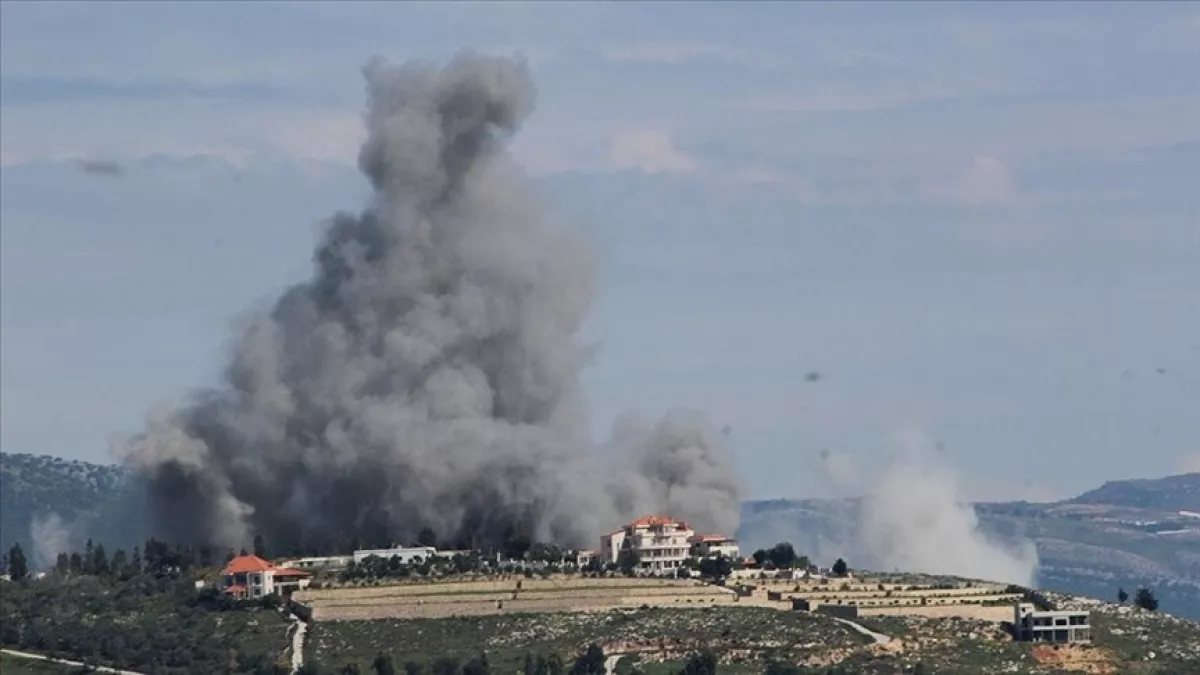
The Israel Defense Forces (IDF) are conducting active offensive operations in the southern regions of the country. The main epicentre of clashes in recent days has been the city of Bint Jbeil, which the Israeli side reportedly aims to bring under full control in the near future. At the same time, Hezbollah continues to carry out heavy rocket attacks on the northern and central regions of Israel. Reports indicate that rockets have struck the city of Safed, resulting in injuries among civilians.
The escalation is a result of the failure of previous agreements. The ceasefire regime, which had been in effect since late 2024 and was extended into early 2025, has now completely collapsed. The parties have failed to agree on a new truce. Hezbollah leaders state that they intend to wage war “until their last breath” and categorically reject disarmament or direct negotiations between the Lebanese government and Israel.
In turn, Israel's prime minister and the defence minister emphasised that operations against the group will continue until the threat to the country’s northern borders is completely eliminated. Israel states that it is ready to discuss the future of Lebanon only on the condition that Hezbollah is excluded from the decision-making process.
Amid the conflict in Lebanon, tensions are rising, and the internal political crisis is deepening. Hezbollah does not rule out the possibility of a new civil war and is threatening a coup in Beirut in response to attempts to limit its military influence.
How might this confrontation develop further? How large are Hezbollah’s arsenals? Is the organisation capable of overthrowing Lebanon’s government and parliament and seizing power? And does Israel have the resources to completely destroy Hezbollah’s military capabilities?
Well-known regional experts have agreed to answer these questions for Caliber.Az.
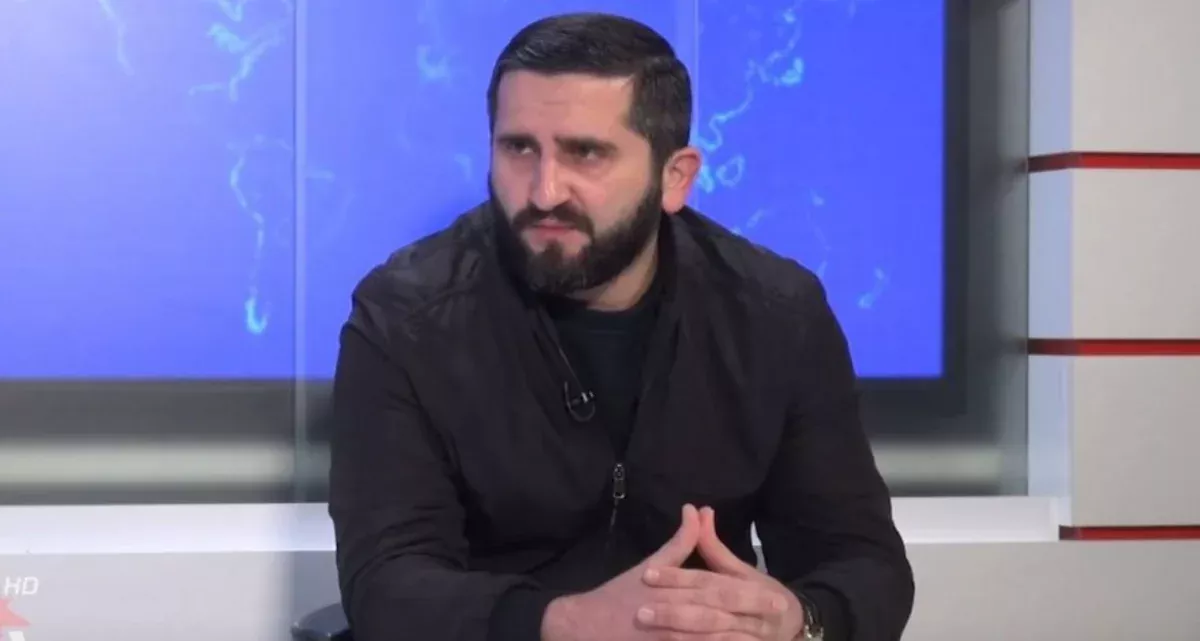
As stated by Middle East specialist and Georgian political scientist Vasily Papava, the current dynamics indicate a transition of the conflict into a phase of attrition, where a political solution is being pushed into the background in favour of military objectives.
“Israel is seeking to establish a deep buffer zone, while Hezbollah is trying to demonstrate the viability of its concept of ‘resistance’ even under conditions of losing key logistical hubs.
The question of resources is becoming crucial. The group’s arsenals, despite intensive IDF strikes on storage sites and supply routes, still remain significant — especially in terms of short-range rockets and anti-tank systems.
However, the organisation’s ability to maintain administrative control in Beirut is questionable: it is one thing to have a military presence, and quite another to govern a state amid a deep financial crisis and opposition from other confessional groups in Lebanon,” the expert noted.
According to him, within Lebanon itself, a noticeable political desire has emerged to end Hezbollah’s dominance, but it is paralysed by a lack of real willingness to support such a scenario through force.
“Most Lebanese political elites and ordinary citizens understand that any step in favor of actions by the IDF could be instantly interpreted by the group as betrayal. In that case, Hezbollah is capable of turning its weapons inward, which would inevitably lead to a repeat of the scenario of a bloody civil war, still vividly remembered in society.
Israel, despite its undeniable technological superiority, faces the problem of a deeply layered guerrilla infrastructure. The network of tunnels and hidden positions is extremely difficult to eliminate completely without a prolonged and exhausting ground presence. As a result, the situation reaches a deadlock: external military pressure cannot yet be translated into internal change due to Lebanese society’s fear of internal chaos, which for many appears even more dangerous than a prolonged border conflict,” Papava concluded.
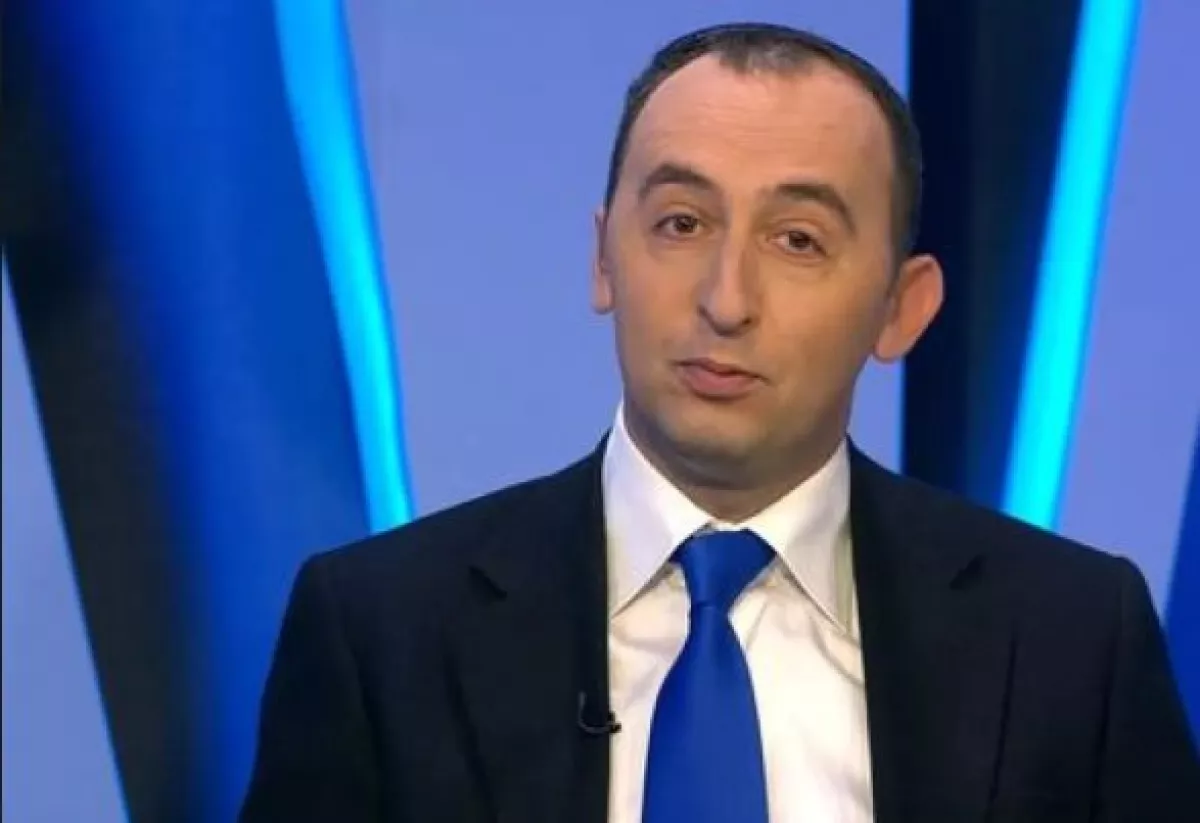
Israeli journalist and historian Shimon Briman, in turn, noted that, according to Israeli assessments, Hezbollah retains only 20–30 per cent of the rocket capability it possessed before September 2024.
“Hezbollah has been significantly weakened: thousands of its fighters have been eliminated, as well as senior and mid-level commanders. Since the beginning of the war against Iran on February 28, 2026, Israel has eliminated around 1,400 fighters of this pro-Iranian group.
Large-scale destruction in the Dahiyeh district — Hezbollah’s stronghold in Beirut, the destruction of bank branches that are part of the organisation’s financial network, as well as the emergence of nearly 800,000 Shiite refugees from southern Lebanese villages seeking shelter in the centre and north of the country — are putting serious pressure on the group.
There is also a growing level of dissatisfaction with Hezbollah among the rest of Lebanon’s population, which increasingly sees it as the cause of the country’s destruction. In Lebanon, a near-consensus has formed among political forces on the need to dismantle Hezbollah’s military structure. However, orders from the weak government to disarm it remain only on paper.
The only force capable of breaking Hezbollah’s backbone is the IDF. And this is not because Israel ‘dreams of occupying Lebanese territory,’ but because it is the only way to ensure the security of residents in northern Israel.
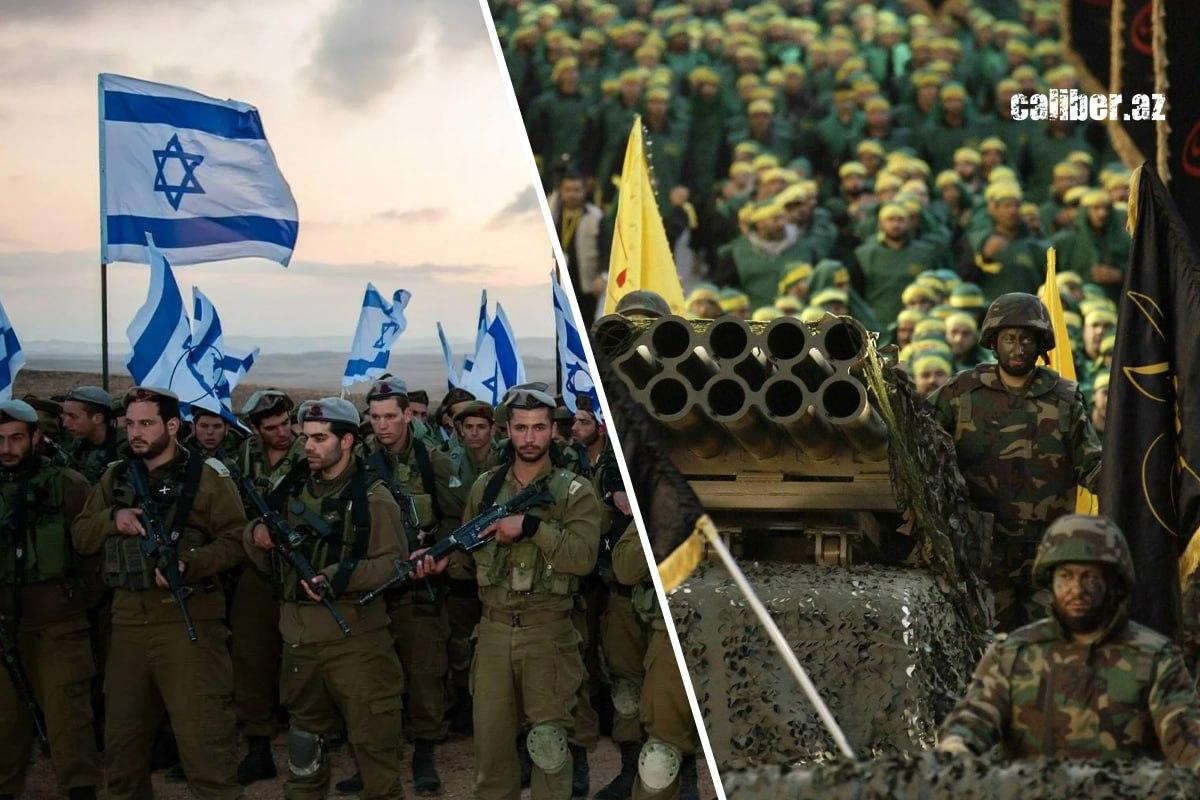
Within Israeli society, it is no longer just isolated opinions being voiced — a consensus is forming on the need to entrench the IDF along the line of the Litani River, establish military bases there, and effectively clear southern Lebanon of the hostile population that serves as the demographic base of Hezbollah, especially since a significant part of it has already left the region.
A new Israeli policy would send a clear message: any aggression against Israel, rocket fire on its cities, and plans for mass killings of civilians would end for the attacking side in territorial losses and the displacement of its population. In this sense, Hezbollah becomes the primary cause of suffering for its own Shiite population,” the historian emphasised.
He also drew attention to the fact that the city of Bint Jbeil is already fully encircled by Israeli forces, which have entered its key districts and established positions there.
“In the morning of April 14, a photograph was published showing the commander of the Golani Brigade standing in front of the main Hezbollah monument with the names and photos of fallen fighters in the ‘Alley of Martyrs’ in Bint Jbeil. On the same day, three Hezbollah fighters surrendered. Images of them with raised hands undermine the group’s Secretary-General’s emphatic claims of a ‘fight until the last breath.’
Arabic social media is filled with messages from Hezbollah supporters expressing shame and loss of respect in connection with the city’s capture by Israeli forces. In Bint Jbeil, around a hundred fighters are reportedly encircled, with the only options left being to die or surrender.
Notably, Bint Jbeil holds not only strategic but also symbolic significance for Hezbollah. It was here, at the city stadium, 26 years ago — in 2000 — that a famous speech by Sheikh Nasrallah, the former Secretary-General of the organisation, was delivered, in which he stated that Israel had shamefully withdrawn from southern Lebanon and was a ‘fragile web’ that could be torn apart with a single movement. Today, that stadium has been completely destroyed.
The final clearance of Bint Jbeil would become a symbol of a double defeat for Hezbollah, signifying the loss of one of its key strongholds in southern Lebanon.
The organisation’s supporters’ morale has been undermined. Links with the Iranian clerical regime have been significantly weakened both by IDF strikes and by the fact that Tehran has effectively distanced itself from Hezbollah, agreeing to negotiations with the United States without a halt to Israeli operations in Lebanon.
Trump has given Israel a free hand to complete the destruction of Hezbollah, which ‘has already become a nuisance to everyone in Lebanon and is a cancerous tumour for this country — and I hope its military defeat happens in the near future,’” Briman concluded.







 editor@caliber.az
 +994 55 444-88-98
 Азербайджан, Баку, ул. Низами, 203, Af Business House, 5-й этаж